The Salmon and Sweet Potato Recipe is a premier example of a nutritionally balanced, “one-pan” meal that caters to both the aesthetic and dietary requirements of modern home cooking. This combination is highly regarded by nutritionists and culinary professionals alike for its synergy of high-quality proteins, healthy omega-3 fatty acids, and complex carbohydrates.
For the home cook, the Salmon and Sweet Potato Recipe offers a streamlined cooking process that does not sacrifice flavor for health. The natural sweetness of the potatoes provides a pleasant counterpoint to the savory, rich profile of the salmon. When prepared correctly, the textures range from the slight crunch of roasted tubers to the tender, flaky consistency of a perfectly seared fish fillet. This article provides a comprehensive, technical guide to mastering this dish in a standard home kitchen.
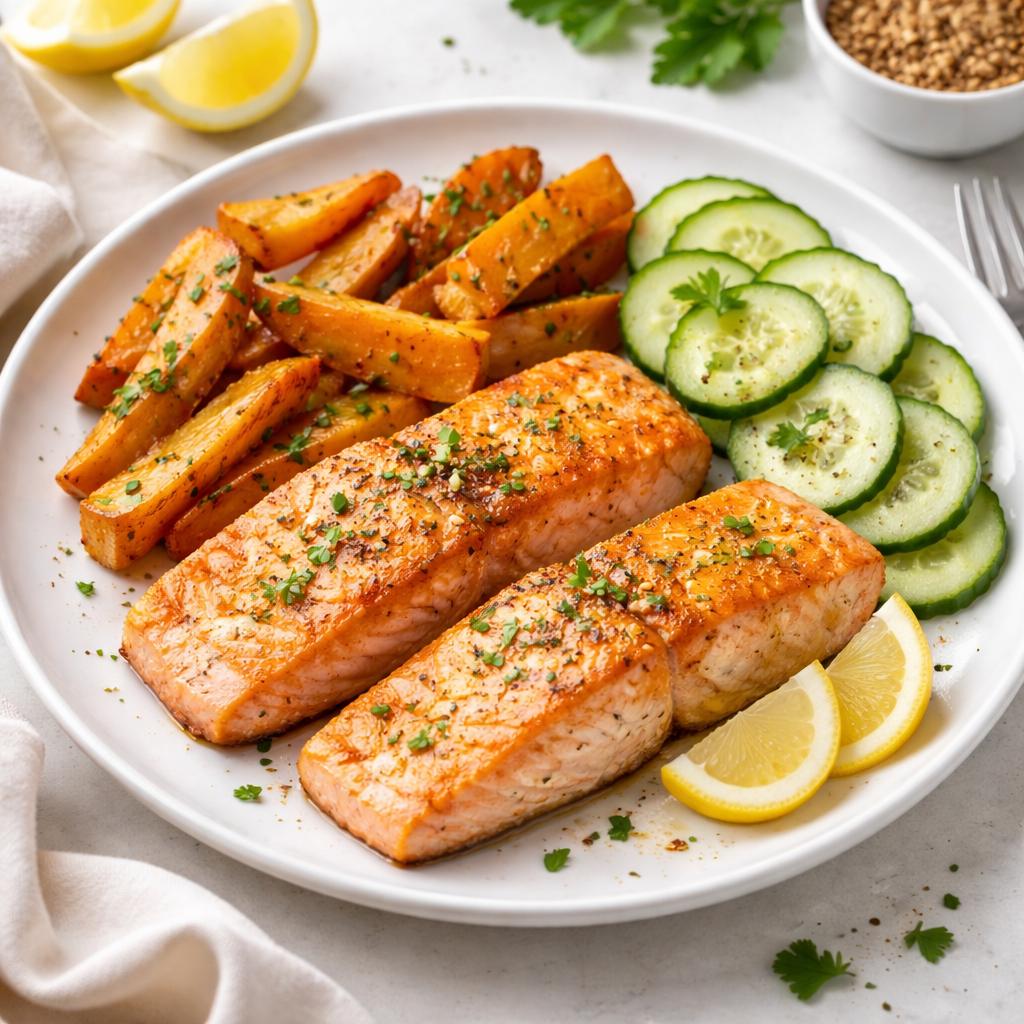
Understanding the Cooking Method
To execute a successful Salmon and Sweet Potato Recipe, one must account for the vastly different cooking times of the two primary ingredients. Sweet potatoes are dense root vegetables that require significant time to break down starches into sugars, whereas salmon is a delicate protein that can become dry and unpalatable if exposed to heat for more than a few minutes.
The Staggered Roasting Technique
The most effective method for this recipe is staggered roasting. By beginning the sweet potatoes in a high-heat oven and adding the salmon during the final stages of the process, you ensure that both components reach their peak texture simultaneously. This prevents the common error of served “mushy” fish alongside undercooked potatoes.
Heat Distribution and Airflow
Using a sheet pan or a wide roasting dish is essential. Overcrowding the pan will cause the ingredients to steam in their own moisture rather than roasting. For a Salmon and Sweet Potato Recipe to achieve a professional finish, the potatoes must have enough space for air to circulate, allowing the edges to caramelize through the Maillard reaction.
Ingredients and Portion Guidelines
Selecting high-quality ingredients is the foundation of any successful Salmon and Sweet Potato Recipe. Precision in portioning ensures that the nutritional balance remains intact.
The Protein: Salmon
- Quantity: 2 large fillets (approximately 6 ounces each).
- Selection: Look for wild-caught or high-quality sustainably farmed Atlantic salmon. The flesh should be firm to the touch and free of any “fishy” odor. Skin-on fillets are recommended as the skin acts as a protective barrier during roasting and provides extra flavor.
The Starch: Sweet Potatoes
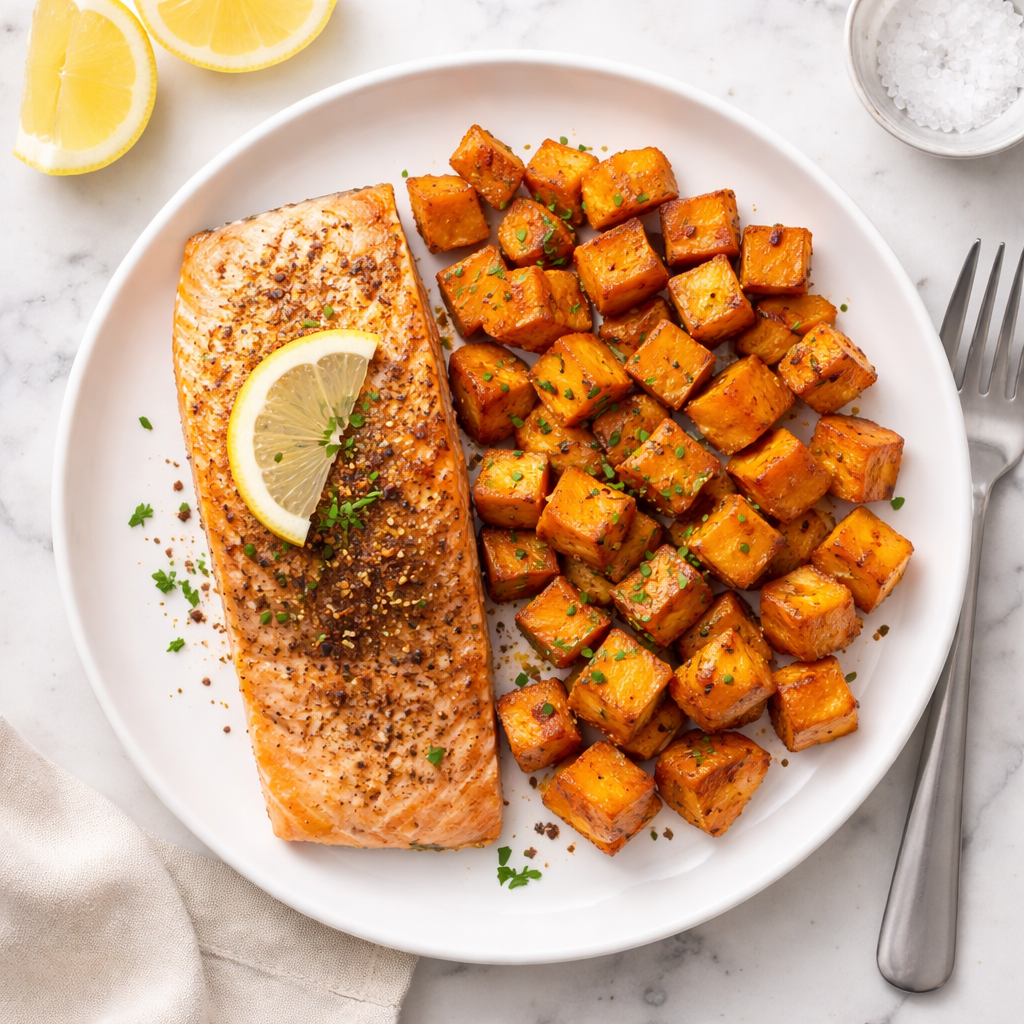
- Quantity: 2 medium sweet potatoes (approximately 1 pound).
- Preparation: Scrubbed and cut into 1-inch cubes. Smaller cubes will cook faster but may lose their structural integrity.
The Aromatics and Fats
- Olive Oil: 2–3 tablespoons. Use a high-quality extra virgin olive oil for its healthy fats and smoke point suitability.
- Seasonings: 1 teaspoon of smoked paprika, ½ teaspoon of garlic powder, and a generous pinch of kosher salt and black pepper.
- Fresh Citrus: 1 lemon, sliced into rounds. The acidity of the lemon cuts through the fat of the salmon.
- Herbs: Fresh dill or parsley for a bright, aromatic finish.
Tools for Home Cooking
To ensure consistency in your Salmon and Sweet Potato Recipe, utilize the following standard kitchen equipment:
- Large Rimmed Sheet Pan: A 13×18 inch (half-sheet) pan provides ample surface area for roasting.
- Parchment Paper or Silicone Mat: This prevents the natural sugars in the sweet potatoes from sticking to the pan and simplifies cleanup.
- Digital Meat Thermometer: This is the only way to ensure the salmon is cooked to safety standards without overcooking it.
- Chef’s Knife and Cutting Board: For uniform cubing of the potatoes.
- Large Mixing Bowl: For tossing the potatoes in oil and spices before they are placed on the pan.
Cooking Schedule Overview
Efficiency in the kitchen is achieved by understanding the timeline of your Salmon and Sweet Potato Recipe.
- Prep Time: 15 minutes (washing, peeling, and cubing).
- Sweet Potato Roasting: 20–25 minutes.
- Salmon Roasting: 10–12 minutes.
- Resting Time: 3 minutes.
- Total Time: Approximately 45 minutes.
Temperature Setting: Preheating your oven to 400°F (200°C) is critical. This temperature is high enough to roast the vegetables effectively while being gentle enough to finish the salmon once the pan is reintroduced to the heat.
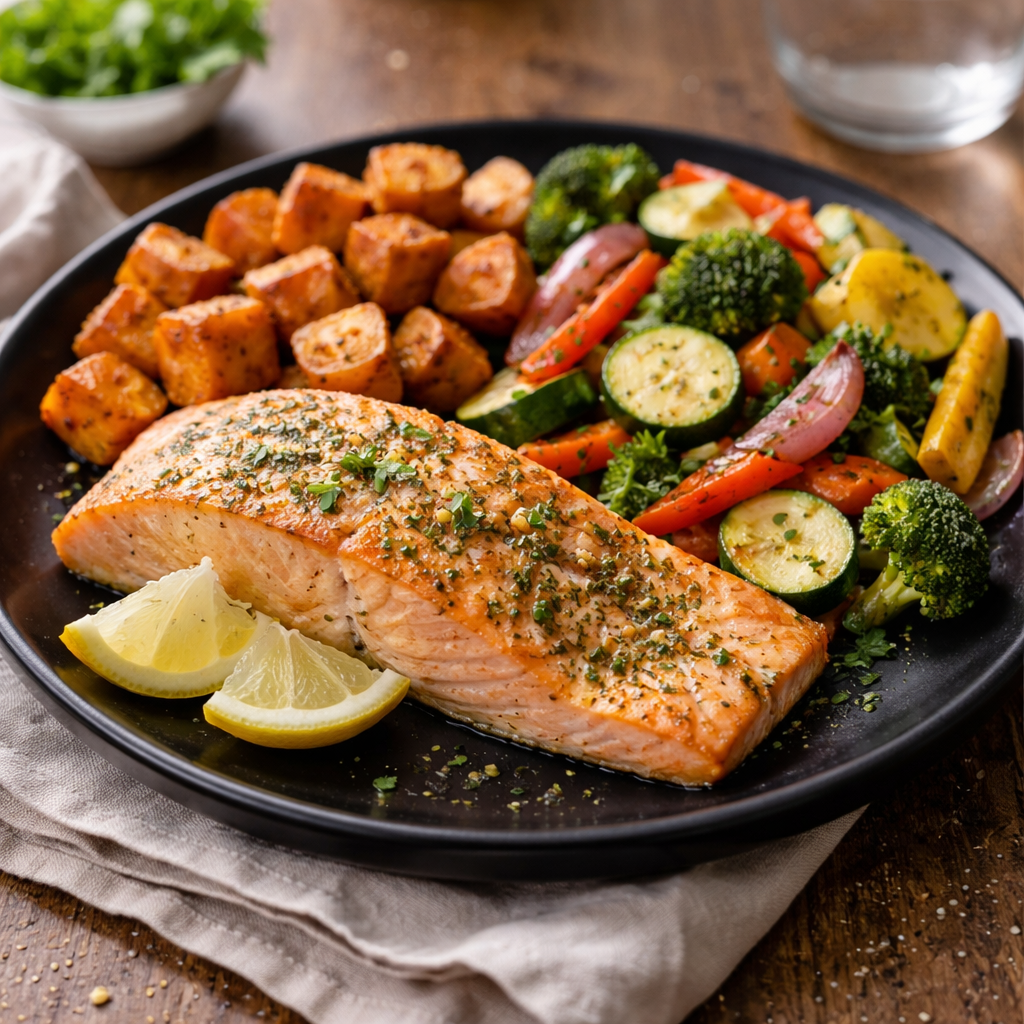
Practical Salmon and Sweet Potato Recipe Guide
1. Oven and Pan Preparation
Preheat your oven to 400°F. Line your sheet pan with parchment paper. Ensure the oven rack is positioned in the center for even heat distribution.
2. Seasoning the Sweet Potatoes
Place the cubed sweet potatoes in a large bowl. Drizzle with 2 tablespoons of olive oil and add the smoked paprika, garlic powder, salt, and pepper. Toss until the potatoes are evenly coated. Spreading the oil evenly is the secret to achieving golden, crispy edges.
3. The First Roast
Spread the sweet potatoes onto the sheet pan in a single layer. Place them in the oven and roast for 20 minutes. At the halfway mark (10 minutes), use a spatula to flip the potatoes to ensure uniform browning.
4. Preparing the Salmon
While the potatoes are roasting, pat the salmon fillets dry with paper towels. Season them simply with salt, pepper, and a light drizzle of olive oil.
5. Combining the Ingredients
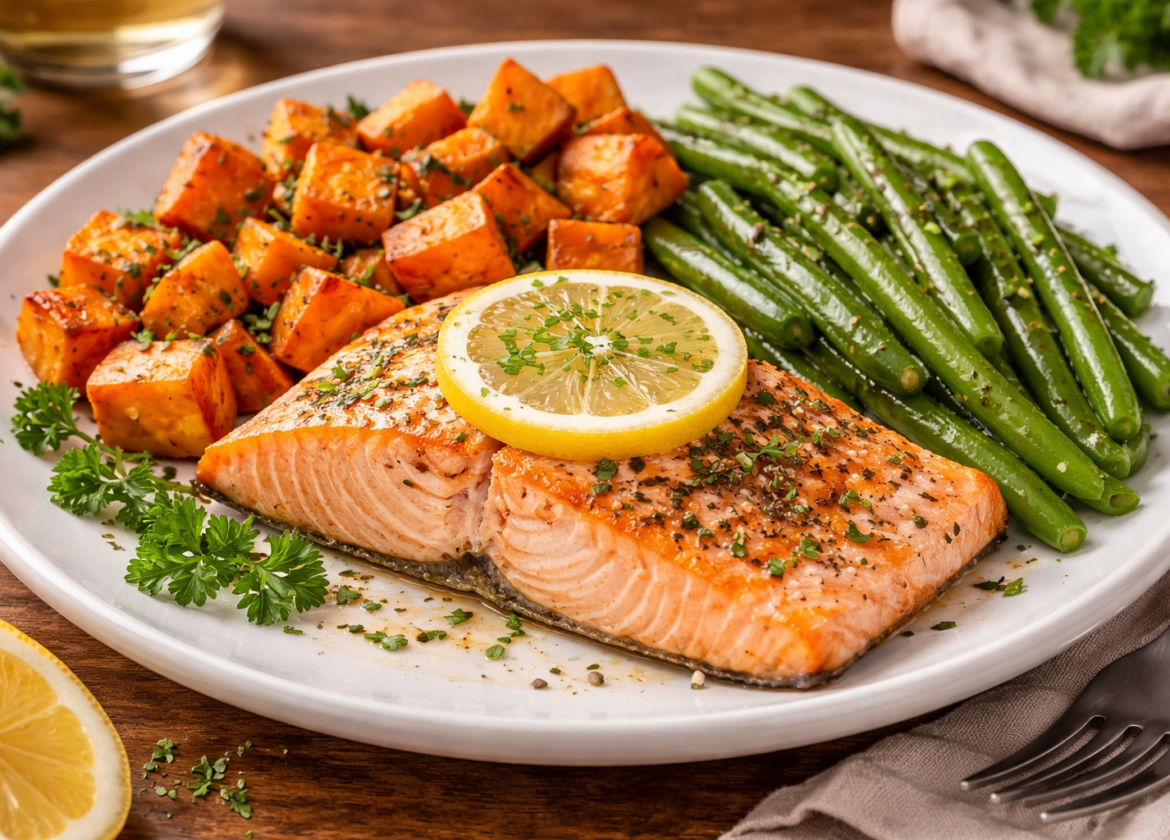
After the sweet potatoes have roasted for 20 minutes, remove the pan from the oven. Use a spatula to move the potatoes to the edges of the pan, creating a clear space in the center. Place the salmon fillets in this space. Top the salmon with lemon slices.
6. The Final Roast
Return the pan to the oven and cook for an additional 10–12 minutes. The salmon is done when it is opaque throughout and flakes easily with a fork.
7. Internal Temperature Check
For the best results, use a digital thermometer. The salmon should reach an internal temperature of 145°F (63°C).
Home Cooking Errors to Avoid
Even a simple Salmon and Sweet Potato Recipe can be compromised by a few common technical mistakes.
- Overcrowding the Sheet Pan: If the potatoes are touching or stacked, they will release steam and become soft. Use two pans if necessary.
- Skipping the “Pat Dry” Step: If the salmon is wet when it goes into the oven, the skin will be rubbery. Always remove surface moisture with a paper towel.
- Cutting Potatoes Unevenly: Varied sizes mean some cubes will be burnt while others are raw. Aim for uniform 1-inch pieces.
- Ignoring the Rest Period: Allowing the salmon to rest for 3 minutes after removal from the oven allows the juices to redistribute, resulting in a much moister fillet.
Frequently Asked Questions for Home Cooks
Can I use frozen salmon for this recipe?
Yes, but it must be completely thawed before cooking. Cooking salmon from frozen will lead to uneven results and may result in the potatoes overcooking while the center of the fish remains cold.
How do I store leftovers?
Store the salmon and sweet potatoes in an airtight container in the refrigerator for up to 2 days. To reheat, use the oven at 325°F or a skillet on the stove. Avoid the microwave if possible, as it can make the salmon rubbery.
Can I leave the skin on the sweet potatoes?
Absolutely. The skin of the sweet potato contains significant fiber and nutrients. If you choose to leave the skin on, ensure you scrub the potatoes thoroughly before cubing.
What are some good variations for this Salmon and Sweet Potato Recipe?
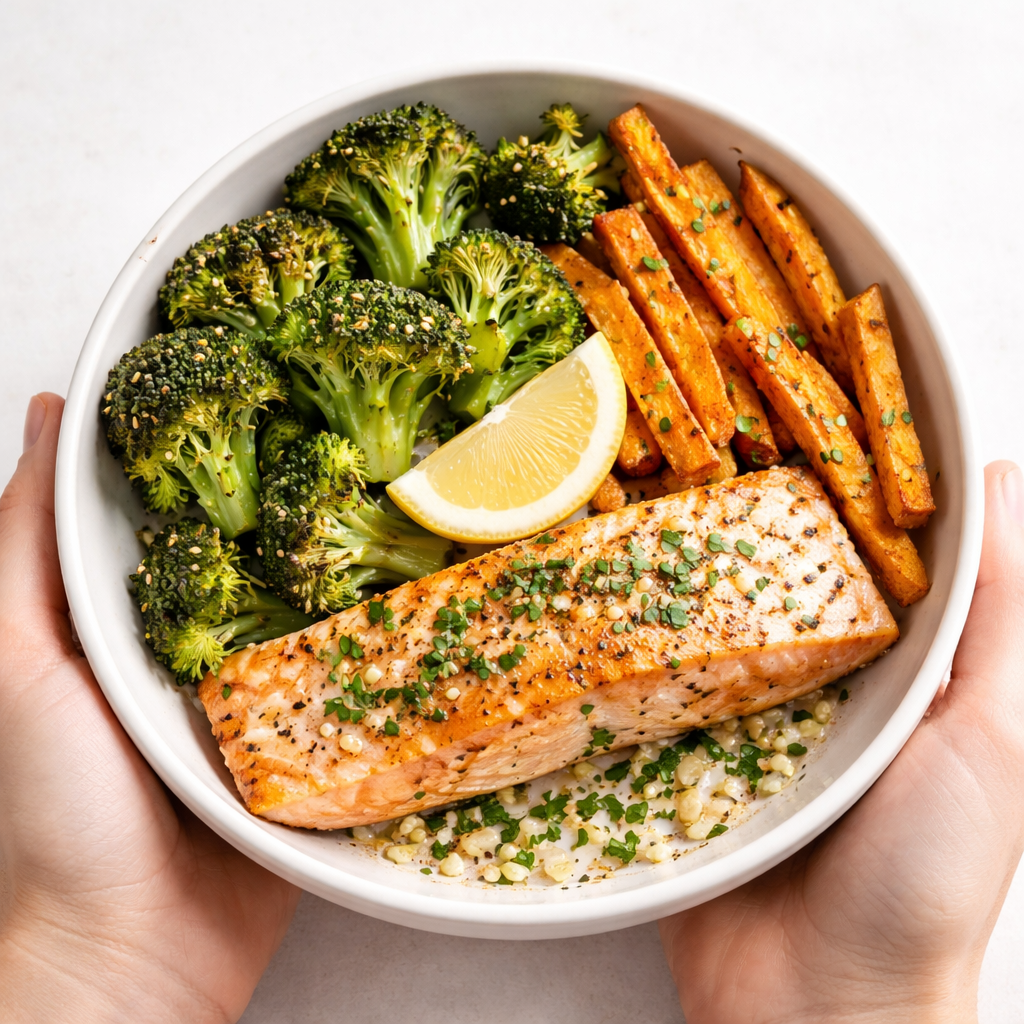
You can add green beans or asparagus to the pan at the same time as the salmon for a complete “power bowl” experience. Alternatively, change the flavor profile by using a honey-mustard glaze on the salmon during the last 5 minutes of roasting.
Is this recipe suitable for meal prep?
The Salmon and Sweet Potato Recipe is excellent for meal prep. However, it is recommended to undercook the salmon by about 2 minutes (to an internal temp of 135°F) if you plan on reheating it, as the reheating process will finish the cooking without drying it out.
Easy Coho Salmon Recipe – Tender & Flavorful
Easy Salmon Poke Bowl Recipe – Fresh & Healthy
Restaurant-Style Cedar Plank Salmon Recipe
Homemade Teriyaki Salmon Recipe with Sticky Glaze