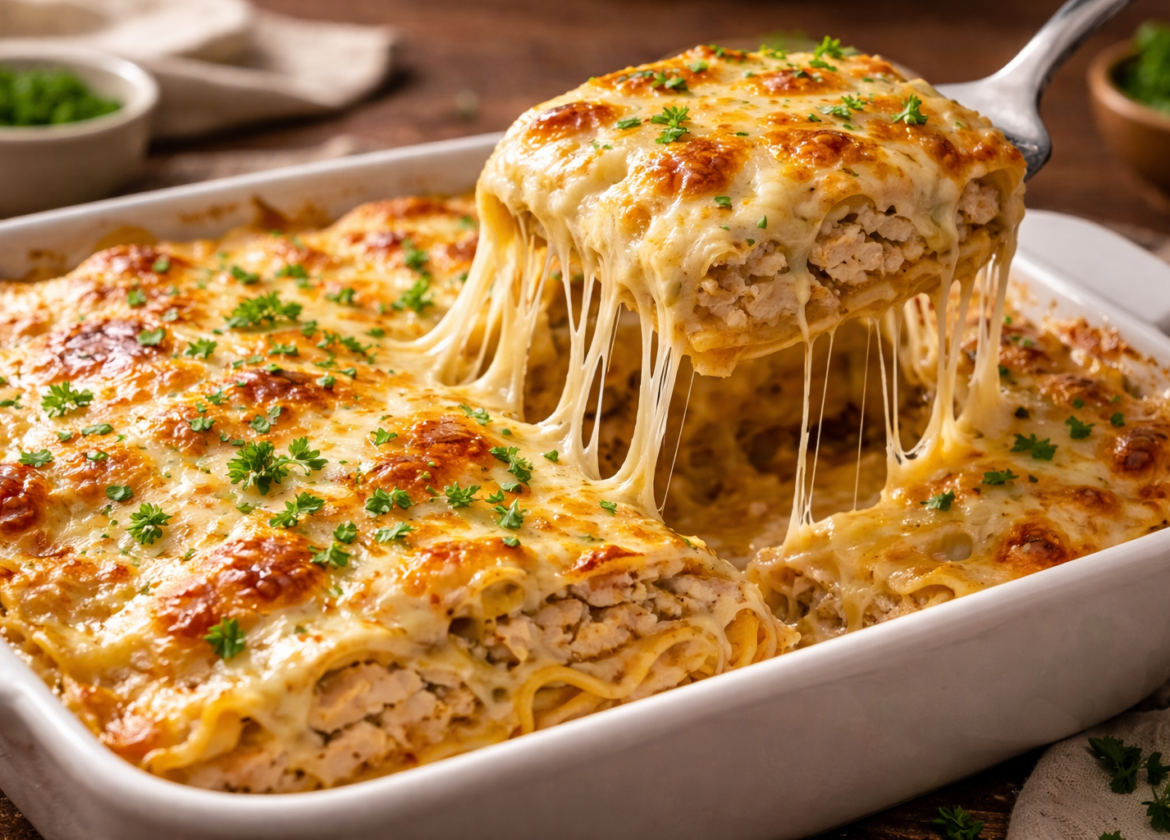
The Chicken Alfredo Lasagna Recipe represents a sophisticated fusion of two iconic Italian-American comfort foods: the structural complexity of a layered lasagna and the rich, creamy profile of Fettuccine Alfredo. While traditional lasagna relies on a tomato-based ragù and acidic notes to balance the fats, the white lasagna variation utilizes a Béchamel-derived Alfredo sauce. This shift in base ingredients creates a dish that is velvety, savory, and significantly more indulgent.
In a professional culinary context, the Chicken Alfredo Lasagna Recipe is a study in moisture management and protein integration. Unlike red sauces, which are relatively stable under high heat, cream-based sauces can break or separate if not properly emulsified. Furthermore, the inclusion of poultry necessitates a pre-cooking strategy to ensure the meat remains succulent after the secondary baking process. Mastering this recipe requires an understanding of how starches, fats, and proteins interact within the enclosed environment of a baking dish.
How Cooking Affects Texture and Flavor
Success with a Chicken Alfredo Lasagna Recipe is determined by the chemical transformations that occur during the boiling, layering, and baking phases. Each stage contributes to the final “mouthfeel” and flavor density of the dish.
The Maillard Reaction in Poultry
For the chicken to contribute more than just texture, it must undergo the Maillard reaction prior to being layered. By searing the chicken breasts or thighs at high heat, you create complex flavor compounds that infuse the surrounding cream sauce. If the chicken is simply boiled, the flavor profile remains flat.
Starch Gelatinization and Sauce Stability
The Alfredo sauce in a Chicken Alfredo Lasagna Recipe acts as the hydrating agent for the pasta. During baking, the starch in the lasagna noodles absorbs moisture from the sauce. If the sauce is too thick initially, the noodles will remain brittle; if it is too thin, the lasagna will lack structural integrity. Achieving a “nappe” consistency—where the sauce coats the back of a spoon—is essential for a clean slice.
Lipid Emulsification
Alfredo sauce is essentially an emulsion of butter, heavy cream, and Parmesan cheese. High temperatures can cause the proteins in the cheese to clump or the fats to separate. By using a stabilized base (often involving a small amount of flour or a reduction technique), the sauce remains homogenous even under the intense heat of the oven.
Ingredients Required for Chicken Alfredo Lasagna
To execute a high-quality Chicken Alfredo Lasagna Recipe, ingredient selection should prioritize fat content and freshness. Low-fat substitutions often result in a watery sauce that compromises the pasta’s texture.
The Protein and Pasta
- Chicken Breast or Thighs: 1.5 pounds. Thighs offer more moisture, while breasts provide a leaner, cleaner bite.
- Lasagna Noodles: 12 to 15 sheets. Traditional boil-style noodles are recommended over “no-bake” varieties for better structural control.
The Alfredo Sauce Base
- Heavy Cream: 3 cups. Use cream with a minimum of 36% milkfat for stability.
- Unsalted Butter: 1/2 cup (1 stick).
- Parmesan Cheese: 2 cups, freshly grated. Avoid pre-shredded varieties, as they contain anti-caking agents like cellulose that prevent smooth melting.
- Garlic: 4 cloves, finely minced.
The Filling and Cheese Blend
- Ricotta Cheese: 15 ounces. This provides the “loft” and creamy texture between layers.
- Egg: 1 large. Acts as a binder for the ricotta.
- Mozzarella Cheese: 3 cups, shredded. Provides the “stretch” and browning for the top crust.
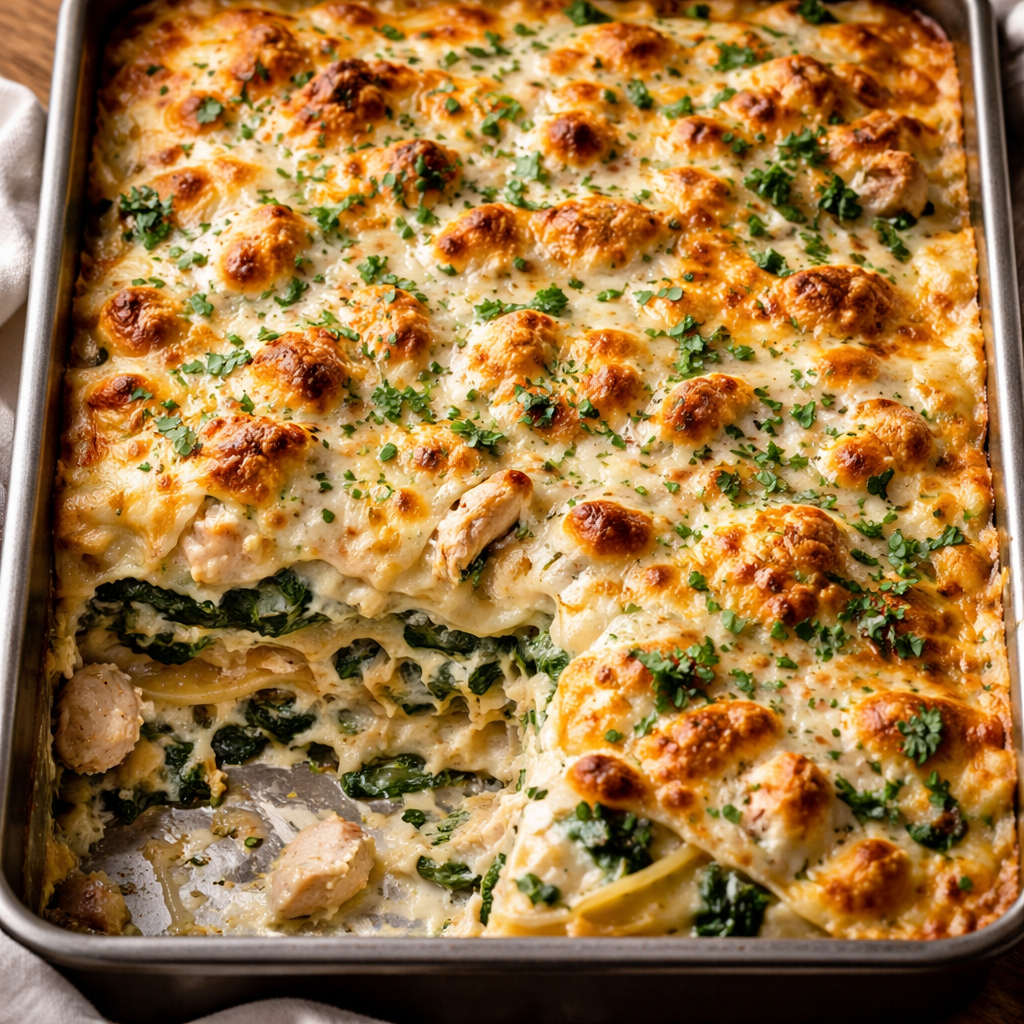
- Fresh Spinach: 2 cups, chopped (optional). Adds a visual contrast and a subtle earthy note.
Aromatics and Seasoning
- Nutmeg: A pinch. This is a traditional addition to white sauces that enhances the creaminess.
- Fresh Parsley: 1/4 cup, chopped.
- Salt and White Pepper: White pepper is preferred to maintain the pristine color of the sauce.
Equipment Needed for Accurate Results
The precision of your Chicken Alfredo Lasagna Recipe is aided by utilizing the correct culinary tools.
- 9×13 Inch Ceramic or Glass Baking Dish: These materials retain heat more evenly than thin metal pans, preventing the edges from scorching.
- Large Heavy-Bottomed Saucepan: Essential for reducing the cream without burning the milk solids at the bottom.
- Whisk: For maintaining the emulsion of the Alfredo sauce.
- Meat Thermometer: To ensure the chicken reaches exactly 165°F (74°C) during the initial prep.
- Large Stockpot: For par-boiling the lasagna sheets.
- Colander and Clean Towels: Lasagna sheets must be drained and patted dry to prevent excess water from diluting the Alfredo sauce.
Temperature and Time Guidelines
Managing the thermal stages of the Chicken Alfredo Lasagna Recipe ensures that the dish is safe to consume and aesthetically pleasing.
- Oven Temperature: 375°F (190°C). This temperature is high enough to brown the mozzarella topping but low enough to heat the internal layers without boiling the cream sauce to the point of breaking.
- Chicken Preparation: 10–12 minutes of searing or roasting.
- Pasta Boiling: 7–9 minutes (aim for al dente).
- Baking Time: 30 minutes covered with foil, followed by 10–15 minutes uncovered.
- Resting Time: 15–20 minutes. This is a mandatory step. If sliced immediately, the lasagna will collapse. Resting allows the sauce to thicken and the cheese to set.
Chicken Alfredo Lasagna Recipe: Step-by-Step Method
1. Preparing the Chicken
Season the chicken with salt, pepper, and garlic powder. Sear in a skillet over medium-high heat until fully cooked. Once cooled, shred or dice the meat into small, uniform pieces. This ensures that every bite of the Chicken Alfredo Lasagna Recipe has an even distribution of protein.
2. Par-Boiling the Pasta
Boil the lasagna noodles in heavily salted water. Cook them for roughly 2 minutes less than the package instructions. They should be pliable but still have a firm “bite.” Drain and lay them flat on parchment paper or clean towels to prevent sticking.
3. Creating the Alfredo Sauce
In a saucepan, melt the butter over medium heat. Add the minced garlic and sauté for 60 seconds. Pour in the heavy cream and bring to a gentle simmer. Whisk in the Parmesan cheese gradually until the sauce thickens. Season with nutmeg, salt, and white pepper. Set aside one cup of sauce for the final topping.
4. The Ricotta Binding
In a small bowl, combine the ricotta cheese, the egg, half of the parsley, and a pinch of salt. Mix until the egg is fully incorporated. This mixture will act as the stabilizer for the internal layers of the Chicken Alfredo Lasagna Recipe.
5. Layering Strategy
- Base: Spread a thin layer of Alfredo sauce on the bottom of the baking dish to prevent sticking.
- Layer 1: Place three lasagna sheets over the sauce.
- Layer 2: Spread half of the ricotta mixture, followed by half of the chicken and a generous sprinkle of mozzarella.
- Layer 3: Drizzle Alfredo sauce over the cheese.
- Repeat: Repeat the layers until all ingredients are used, ending with a final layer of pasta sheets.
6. The Final Topping
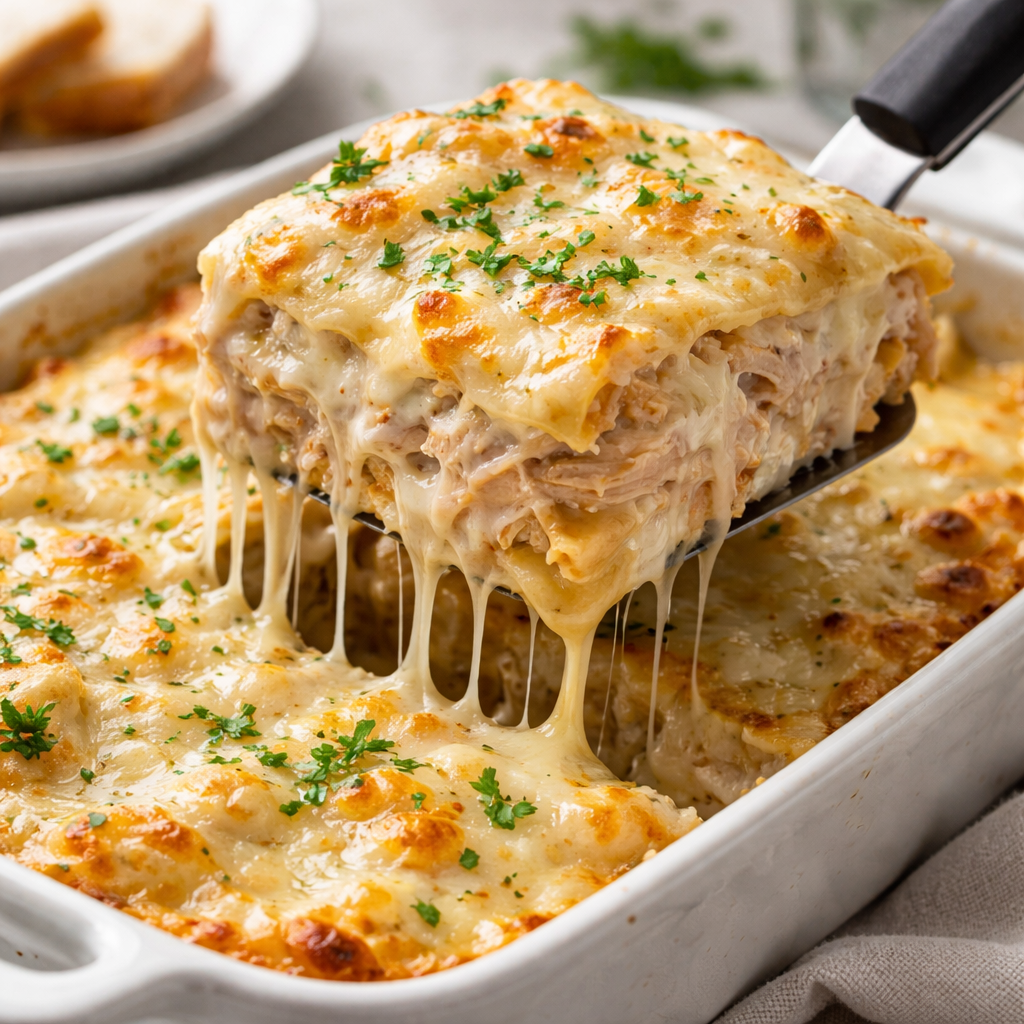
Pour the reserved cup of Alfredo sauce over the top layer of pasta. Cover completely with the remaining mozzarella and a dusting of Parmesan.
7. The Bake
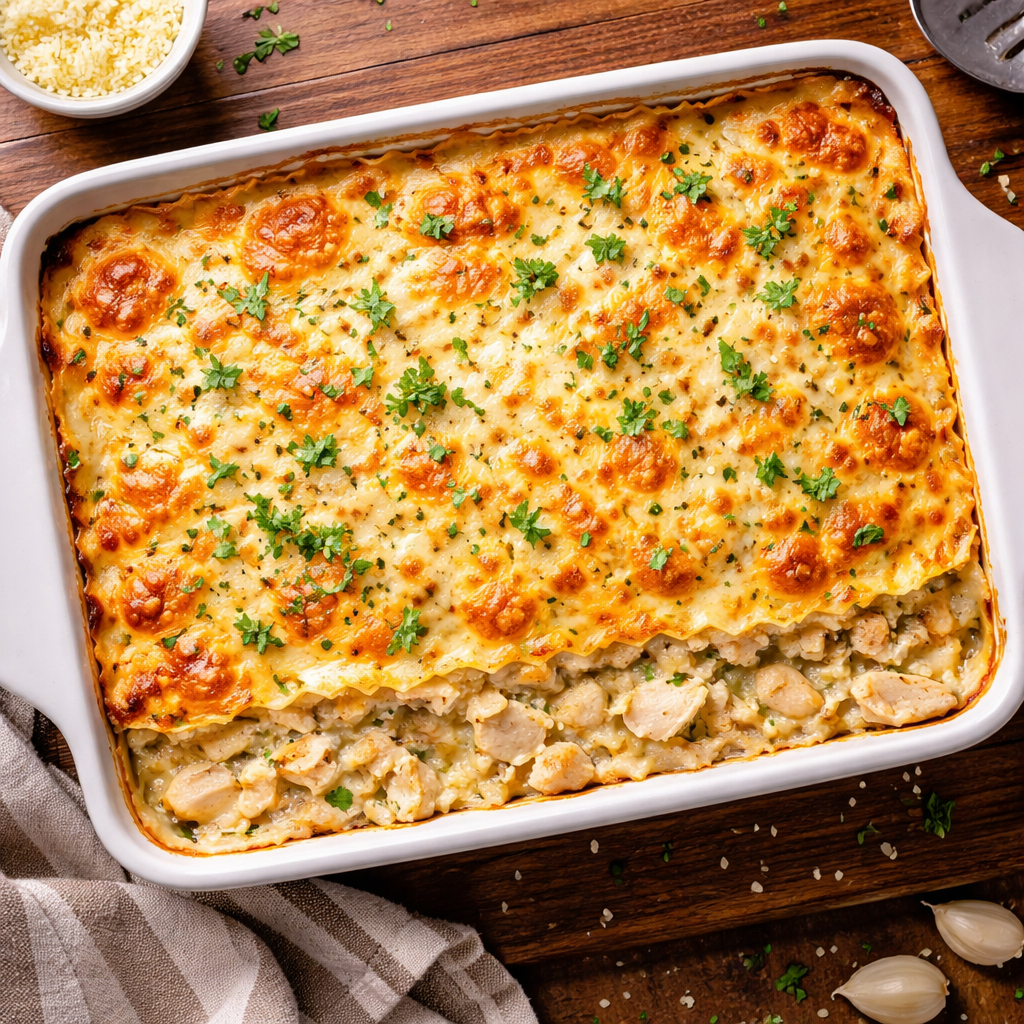
Cover the dish tightly with aluminum foil. Bake at 375°F for 30 minutes. Remove the foil and bake for an additional 10–15 minutes, or until the cheese is bubbling and has developed golden-brown spots.
Technical Mistakes That Reduce Quality
Even a well-planned Chicken Alfredo Lasagna Recipe can suffer from common execution errors.
- Using Pre-Cooked “No-Boil” Noodles: These noodles absorb a significant amount of moisture from the sauce. In a white lasagna, this often leaves the dish dry and the sauce “clumpy” rather than creamy.
- Excessive Moisture in Spinach: If you include spinach, ensure it is thoroughly sautéed and squeezed dry. Failure to do so will result in a green, watery pool at the bottom of the lasagna dish.
- Boiling the Alfredo Sauce: If the sauce reaches a hard boil after the cheese is added, the Parmesan will string together and separate from the fats. A gentle simmer is the maximum heat allowed.
- Inadequate Slicing: Using a dull knife will tear the noodles and pull the chicken out of the layers. Use a sharp, serrated knife for the cleanest presentation.
Presentation, Serving, and Conclusion
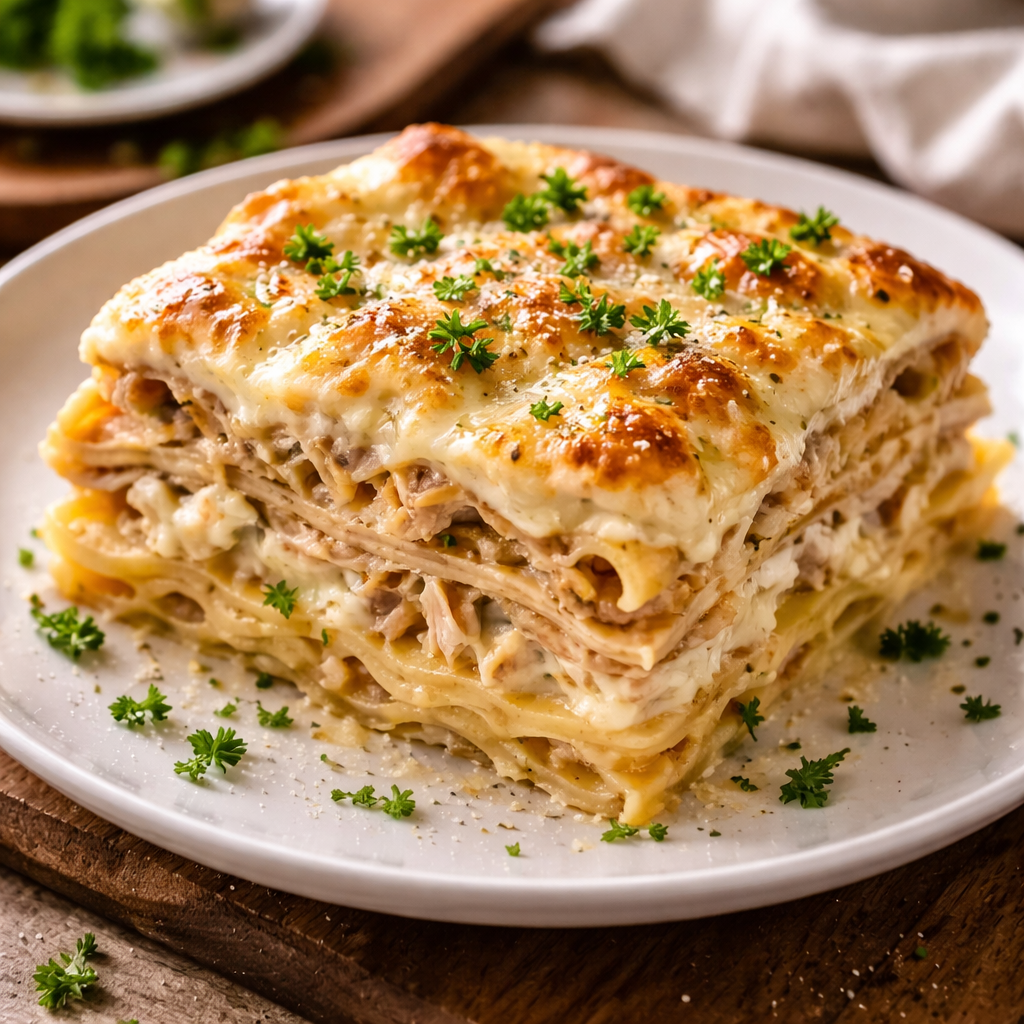
The visual appeal of the Chicken Alfredo Lasagna Recipe is defined by its clean layers and the contrast between the white cream sauce and the golden cheese crust. To finish the dish, garnish with the remaining fresh parsley and perhaps a light dusting of red pepper flakes for those who prefer a hint of heat.
When serving, consider acidic side dishes to provide a palate cleanse. A crisp arugula salad with a lemon vinaigrette or roasted balsamic Brussels sprouts complements the richness of the Alfredo sauce exceptionally well.
The Chicken Alfredo Lasagna Recipe is a rewarding culinary project that demonstrates the importance of temperature control and ingredient quality. By following these structured
The Best Chicken Feet Recipe Made at Home
Healthy White Chicken Chili Recipe Made Simple
Classic Chicken Salad Recipe with Grapes Everyone Loves
The Best Chicken and Biscuits Recipe for Family Dinners
Classic Chicken Marsala Recipe Everyone Will Love
Quick Hibachi Chicken Recipe Made at Home