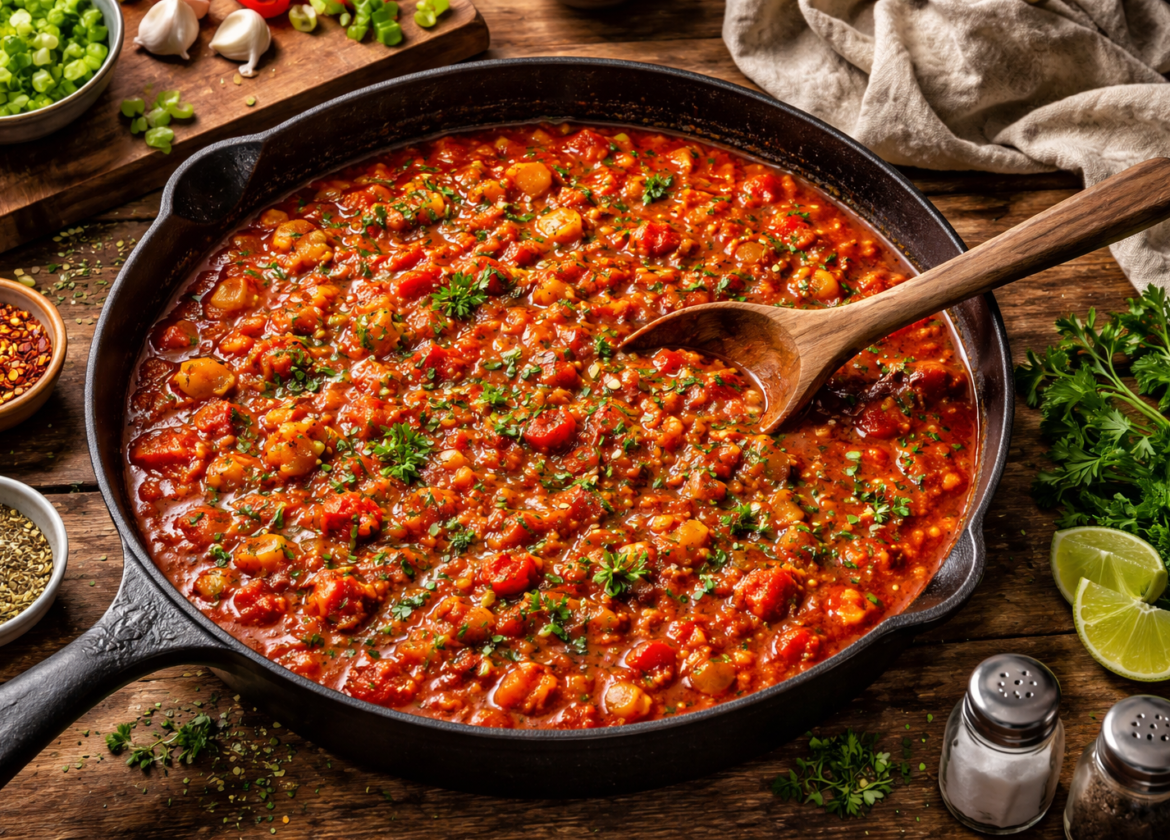
Approaching a Creole Sauce Recipe requires a shift in perspective from traditional French mother sauces. While much of Louisiana’s culinary heritage is rooted in French technique, Creole cooking is defined by its vibrancy, its use of “The Holy Trinity,” and a certain rustic elegance. To cook this sauce correctly, you must adopt a mindset of patience and observation.
Unlike a quick marinara, a Creole sauce is a building project. You are not just heating tomatoes; you are layering flavors—starting with the sweet, softened crunch of aromatics and ending with a deep, complex heat that lingers without overpowering. As a cook, your goal is to manage the moisture levels so that the vegetables become tender and translucent before the tomatoes are introduced to provide the acidic backbone. If you rush the initial sauté, the sauce will feel disjointed, with the individual flavors of onion and pepper standing apart rather than unified.
Understanding the Cooking Environment
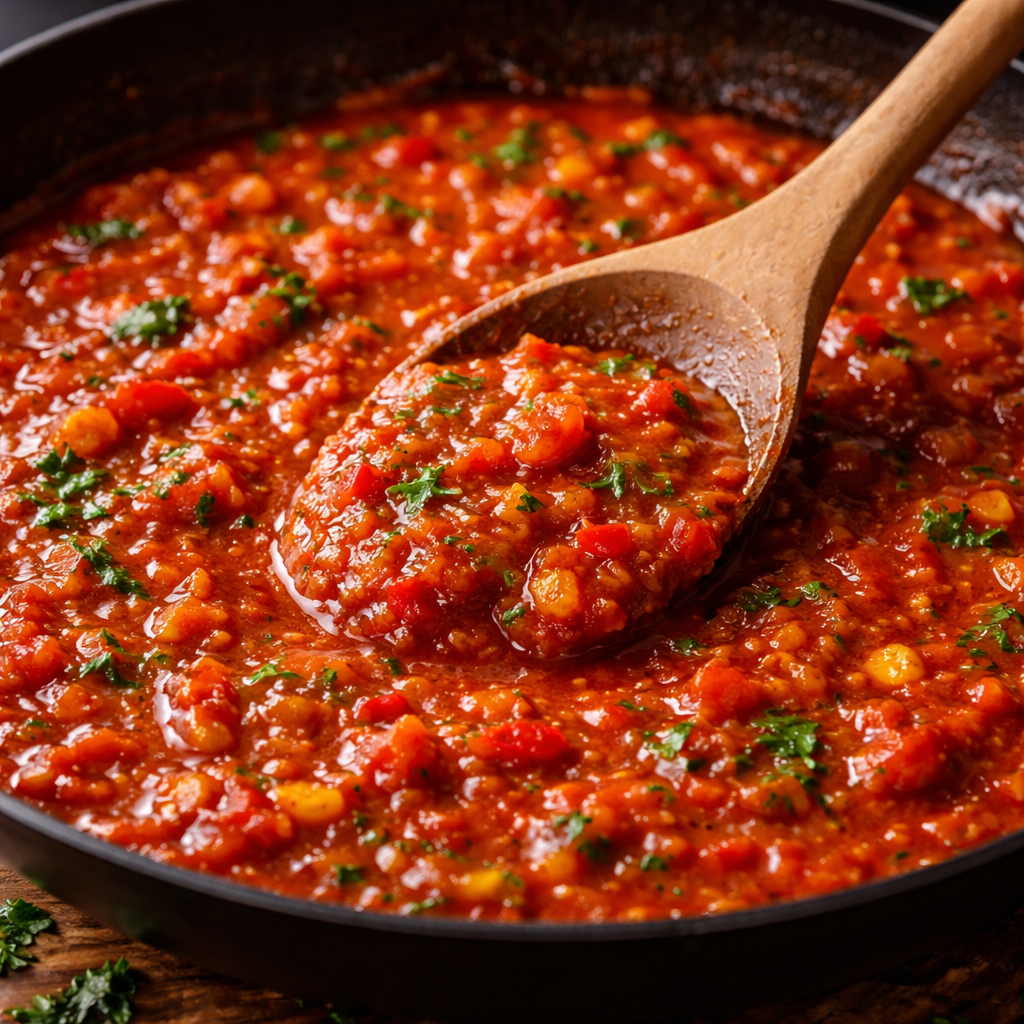
The “environment” of a Creole Sauce Recipe is almost entirely dependent on the heat of your pan and the order of operations. This is a stovetop sauce that thrives on medium-low heat. Because this recipe contains a significant amount of chopped vegetables, the pan can quickly become crowded.
In a crowded pan, vegetables steam rather than sauté. To get the authentic flavor profile, you need to hear a gentle sizzle. This indicates that the natural sugars in the onions and bell peppers are beginning to caramelize, which provides a necessary sweetness to counter the acidity of the tomatoes. Furthermore, the environment inside the pot changes once the liquid is added. You move from a dry-heat sauté to a wet-heat simmer, and it is during this transition that the “smoky” notes of the Creole spices truly begin to hydrate and bloom.
Preparing Ingredients With Purpose
In Creole cooking, the preparation of the “Trinity” is arguably more important than the cooking itself. Each ingredient in a Creole Sauce Recipe has a functional role that dictates how it should be handled.
The Holy Trinity
- Onions: Use yellow or white onions. They should be diced to a uniform 1/4-inch size to ensure they disappear into the sauce texture.
- Green Bell Peppers: These provide a specific earthy, slightly bitter note that defines Creole cuisine. Avoid red or yellow peppers, as they are too sweet for this particular profile.
- Celery: This provides the “saltiness” and structural backbone. Slice it thinly so the fibers break down during the simmer.
The Tomatoes
For a reliable Creole Sauce Recipe, I recommend a combination of crushed tomatoes and tomato paste. The crushed tomatoes provide the volume and texture, while the paste provides the “umami” punch and a rich, dark red color. If you use fresh tomatoes, ensure they are peeled and seeded to avoid a watery sauce.
The Aromatics and Heat
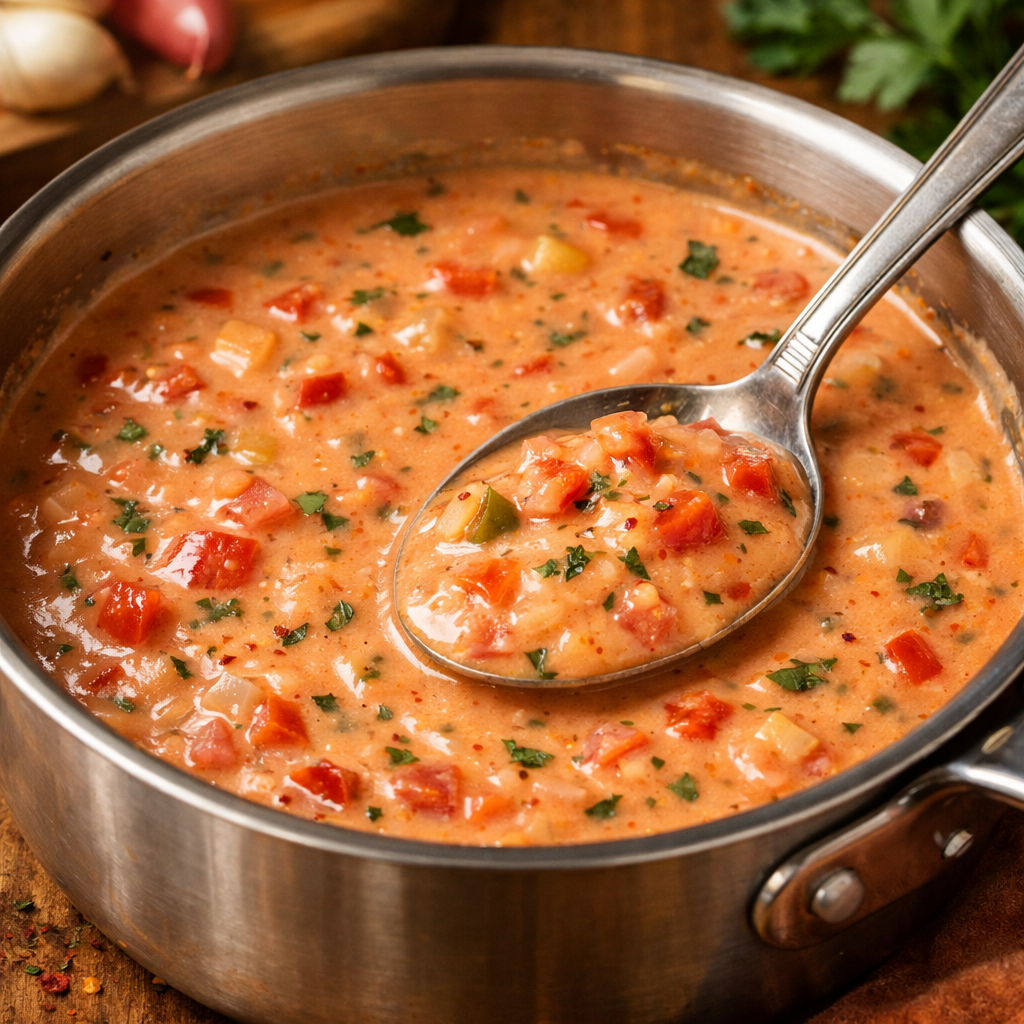
Garlic, bay leaves, and a dash of hot sauce (specifically a vinegar-based Louisiana style) are essential. Garlic should be minced finely but added only after the Trinity has softened to prevent it from turning bitter.
Equipment Readiness and Setup
Precision in a Creole Sauce Recipe is supported by using tools that allow for even heat distribution and easy reduction.
- Dutch Oven or Heavy-Bottomed Saucier: Thin stainless steel pots often create “hot spots” that scorch the tomato solids. A heavy cast-iron or enameled Dutch oven is ideal for maintaining a steady simmer.
- A Sharp Chef’s Knife: Because the Trinity requires a fine dice, a dull knife will bruise the vegetables, causing them to release water too quickly and turn mushy.
- Wooden Spoon: This is the best tool for scraping the “fond” (the browned bits) from the bottom of the pot, which contains concentrated flavor.
- A Fine-Mesh Sieve: Useful if you are using canned tomatoes and want to control exactly how much juice enters the pot at once.
Timing Decisions Before Cooking
Before you ignite the burner, you must decide on the final application of your Creole Sauce Recipe. The timing changes based on whether you are serving it over shrimp, chicken, or fried grit cakes.
- The Quick Application (30 Minutes): If you want a brighter, more “tomato-forward” sauce, a 20-minute simmer after assembly is sufficient. The vegetables will still have a slight bite.
- The Deep Braise (1 Hour+): For a sauce that is dark, rich, and velvety, you need a long, low simmer. This allows the celery and pepper fibers to fully disintegrate into the tomato base.
Bold Tip: Always prep your Trinity entirely before you start. Once the oil is hot, the process moves quickly, and you do not want to be chopping celery while the onions are already browning.
Cooking Through the Creole Sauce Recipe
1. The Sauté
Heat 2 tablespoons of oil (or butter, for a richer taste) in your pot over medium heat. Add your diced onion, celery, and green pepper. Sauté for 8–10 minutes. You are looking for the onions to become translucent and the peppers to soften.
2. The Aromatic Bloom
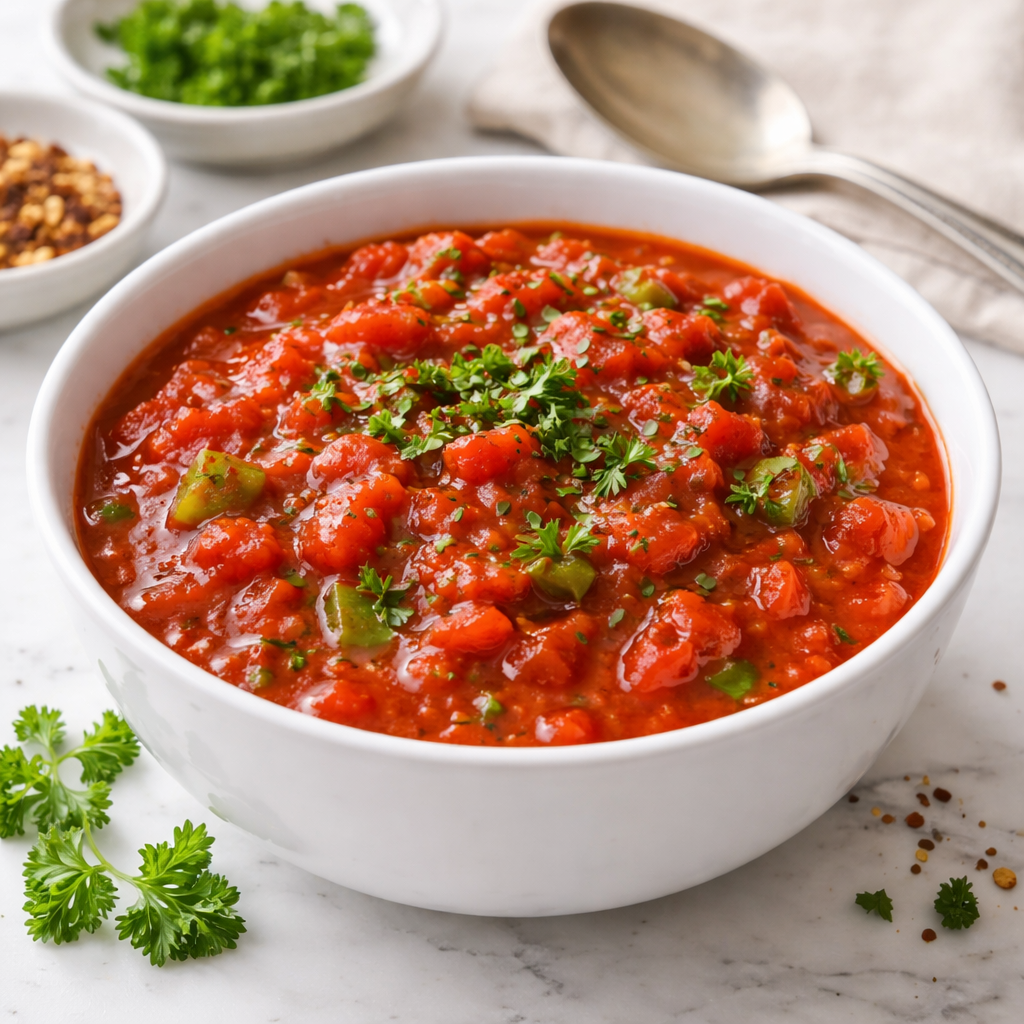
Add your minced garlic and a tablespoon of tomato paste. Stir constantly for 2 minutes. The tomato paste should turn from a bright red to a brick-red color. This “toasts” the paste and removes the “tinny” taste from the can.
3. The Liquid Base
Pour in 28 ounces of crushed tomatoes and 1/2 cup of chicken or vegetable stock. The stock provides the necessary moisture to allow for a long simmer without the sauce becoming a paste.
4. Seasoning the Soul
Add two bay leaves, a teaspoon of dried thyme, a teaspoon of oregano, and a pinch of cayenne pepper. Add a teaspoon of Worcestershire sauce and a few dashes of Louisiana hot sauce. Do not add salt yet. As the sauce reduces, the saltiness will naturally concentrate.
5. The Simmer
Lower the heat to the lowest possible setting. Cover the pot partially to allow some steam to escape. Simmer for at least 45 minutes, stirring occasionally to ensure nothing is sticking to the bottom.
6. The Finish
Taste the sauce. Now is the time to add kosher salt and black pepper. If the sauce is too acidic, add a half-teaspoon of sugar to balance the tomatoes. Remove the bay leaves before serving.
Signs Something Is Going Wrong
Even with a classic Creole Sauce Recipe, the high sugar content in tomatoes and onions can lead to minor setbacks.
- The Sauce is Scorching: If you smell burning, do not stir the pot. If you stir, you will incorporate the burnt flavor into the whole batch. Immediately transfer the “clean” sauce from the top into a new pot and leave the burnt layer behind.
- The Color is Orange, Not Red: This usually means the tomato paste wasn’t cooked long enough or the sauce hasn’t reduced sufficiently. Simmer the sauce uncovered for another 15 minutes to deepen the color and concentration.
- The Sauce is Too Watery: This happens if the vegetables weren’t sautéed long enough or too much stock was added. The Fix: Increase the heat slightly and simmer with the lid off to evaporate the excess moisture.
- The Flavor is “Flat”: If the sauce tastes one-dimensional, it likely needs more acid. Add a teaspoon of lemon juice or apple cider vinegar to “wake up” the spices.
FAQ for First-Time Users
What is the difference between Creole sauce and Cajun sauce?
A Creole Sauce Recipe almost always includes tomatoes, whereas traditional Cajun sauces often rely on a dark flour-and-fat roux and rarely use tomatoes. Creole cooking is “City Food,” influenced by European imports like canned tomatoes, while Cajun cooking is “Country Food.”
Can I make this sauce in advance?
Yes. Like many stews and sauces, Creole sauce is actually better the next day. The spices have more time to permeate the tomato solids. It will stay fresh in the refrigerator for up to 5 days.
Is Creole sauce very spicy?
Not necessarily. While it contains “heat” elements like cayenne and hot sauce, the primary flavor should be savory and aromatic. You can easily control the heat by adjusting the amount of cayenne pepper you include.
Can I freeze Creole sauce?
Absolutely. This sauce freezes exceptionally well for up to 3 months. To use, thaw it overnight in the fridge and reheat it slowly in a saucepan, adding a splash of water if it has thickened too much in the freezer.
What are the best proteins to serve with this?
While Shrimp Creole is the most famous application, this sauce is incredible over blackened fish, pan-seared chicken thighs, or even as a base for a Creole-style pasta. It also works perfectly as a topping for savory breakfast omelets.
Homemade Peruvian Green Sauce Recipe Everyone Loves
Quick Garlic Cream Sauce Recipe in 10 Minutes
Homemade Hot Honey Sauce Recipe Everyone Loves
Quick Gyoza Sauce Recipe You Can Make at Home
Quick Taco Sauce Recipe in Just 10 Minutes