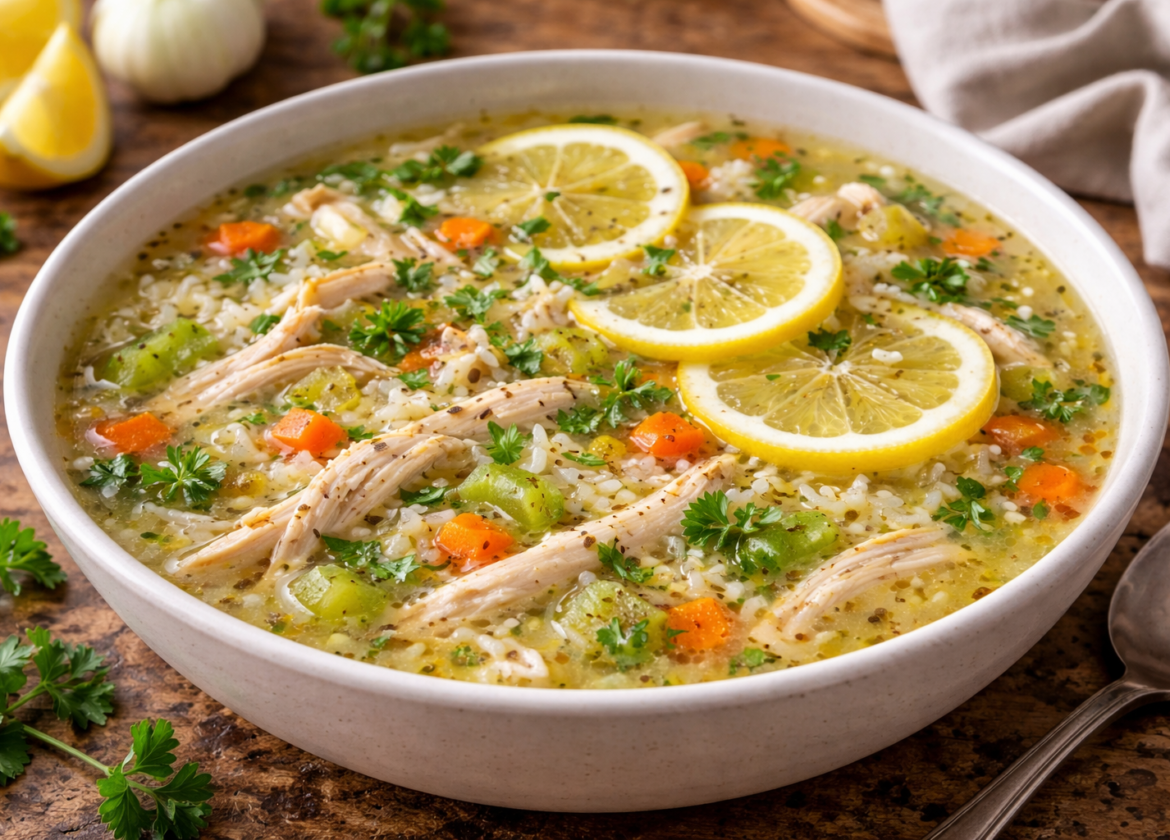
When we discuss a Chicken Lemon Rice Soup Recipe, we are often talking about a dish that feels like a cross between a traditional chicken noodle soup and a sophisticated Mediterranean tonic. In Greek kitchens, this is known as Avgolemono, and it represents a masterclass in how to use eggs and citrus to create a creamy texture without a drop of dairy. For the home cook, however, the “realistic look” at this dish involves managing the delicate balance between high acidity and protein stability.
Cooking this soup isn’t just about boiling ingredients in a pot; it is about managing a sequence of temperatures. Most people expect a thin, watery broth, but a properly executed Chicken Lemon Rice Soup Recipe results in a silken, opaque liquid that coats the back of a spoon. The reality of making this at home is that it requires about 20 minutes of active prep and 40 minutes of patient simmering. It is the kind of recipe that rewards those who pay attention to the “state” of the rice and the temperature of the eggs rather than just the clock.
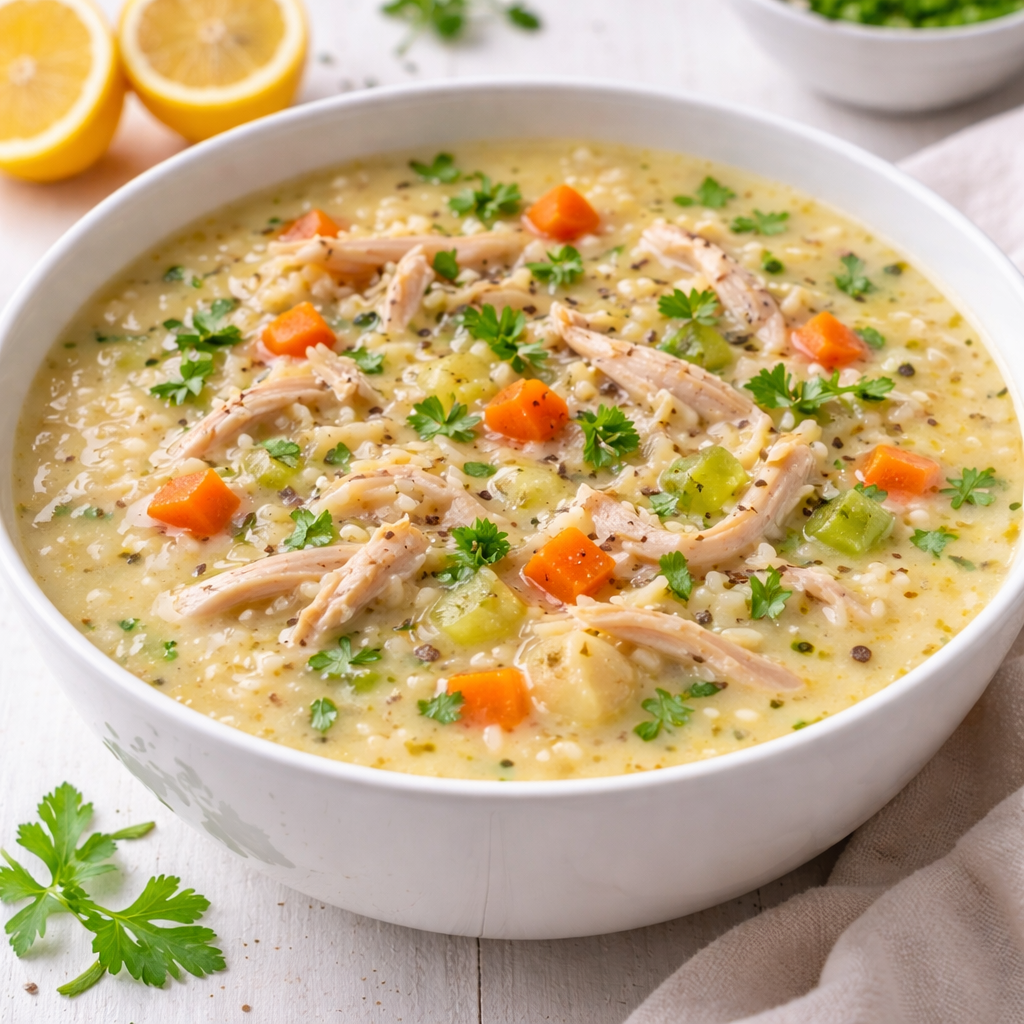
What Actually Happens During Cooking
To master a Chicken Lemon Rice Soup Recipe, you have to understand the science of emulsification. The most interesting part of the cooking process happens at the very end. You aren’t just adding lemon juice for flavor; you are using the lemon’s acidity to denature egg proteins in a controlled way.
As the rice simmers in the chicken broth, it releases starch. This starch acts as a secondary stabilizer. When you whisk together lemon juice and eggs and slowly introduce hot broth (a process called tempering), the egg proteins begin to stretch and bond with the starch from the rice. If you were to dump the eggs directly into the boiling soup, they would scramble instantly. By tempering them, you create a smooth, custard-like suspension. This transition changes the soup from a clear yellow broth into a rich, velvety gold.
Ingredient Roles and Preparation Logic
Every ingredient in a Chicken Lemon Rice Soup Recipe serves a structural or aromatic purpose. Choosing the right version of these staples is the difference between a mediocre meal and a restaurant-quality result.
The Chicken: Thighs vs. Breasts
While many prefer chicken breast for its leanness, chicken thighs provide a much better result for soup. Thigh meat contains more connective tissue, which breaks down into gelatin as it simmers, adding “body” to the broth. If you use breast meat, I recommend poaching it gently and shredding it at the very end to prevent it from becoming dry and stringy.
The Rice: Starch is Key
Standard long-grain white rice is the traditional choice, but Arborio or medium-grain rice actually works better for this specific recipe. Because these varieties have a higher surface starch content, they contribute more to the creamy thickness of the final broth.
The Lemon-Egg Liaison
You need fresh lemons. Bottled lemon juice has a one-dimensional metallic tang that can ruin the soup. As for the eggs, using a mix of whole eggs and extra yolks will give you a richer color and a more stable emulsion.
The Aromatics
The “Holy Trinity” for this soup is onion, celery, and carrots (mirepoix), but the addition of fresh dill or flat-leaf parsley at the final stage is what provides the signature Mediterranean brightness.
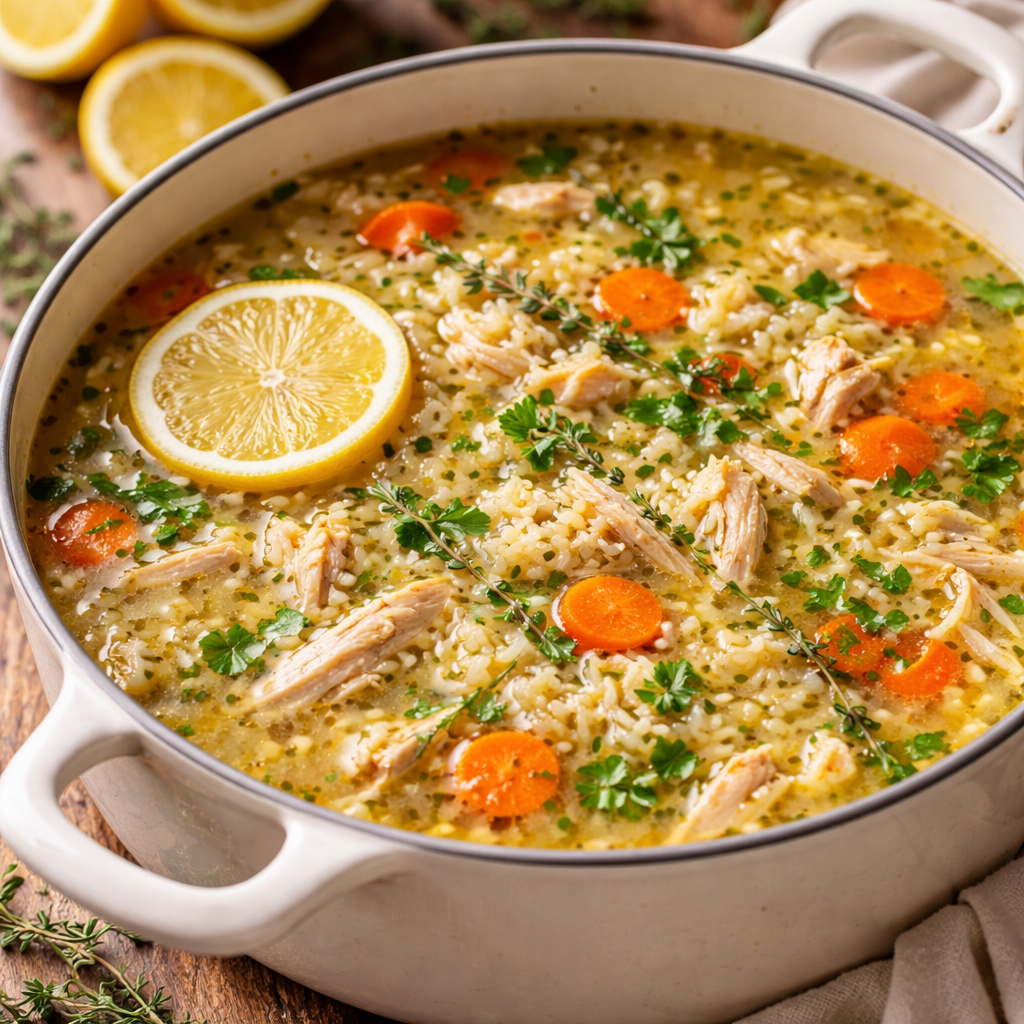
Tools That Influence Cooking Accuracy
Precision in a Chicken Lemon Rice Soup Recipe is made easier by using tools that allow for gradual temperature control.
- Heavy-Bottomed Dutch Oven: A thin pot will create hot spots, causing the rice to stick to the bottom and potentially scorch, which would ruin the delicate lemon flavor.
- Fine-Mesh Whisk: Essential for the Avgolemono stage. You need to aerate the eggs and lemon juice until they are frothy before adding the hot broth.
- A Large Ladle: For the tempering process. You need to be able to pull exactly one cup of hot liquid at a time to slowly warm the egg mixture.
- Instant-Read Thermometer: If you are new to tempering eggs, a thermometer can help. You want the egg mixture to reach about 140°F (60°C) during tempering before it enters the main pot.
Structuring the Cooking Process
Efficiency in making a Chicken Lemon Rice Soup Recipe involves a “staged” approach. You cannot rush the rice, nor can you ignore the eggs.
- Stage 1: The Flavor Base (10 Minutes): Sautéing the mirepoix until softened but not browned.
- Stage 2: The Simmer (20–25 Minutes): Cooking the chicken and rice in the broth until the grains are tender.
- Stage 3: The Tempering (5 Minutes): The critical window where the lemon and eggs are integrated.
- Stage 4: The Finish (2 Minutes): Adding the herbs and adjusting the seasoning.
Bold Tip: Always keep an extra cup of warm chicken broth on the side. This soup thickens as it sits, and you may need to thin it slightly before serving.
Writing a Natural Chicken Lemon Rice Soup Recipe Walkthrough
1. Building the Broth
Start by heating 2 tablespoons of olive oil in your Dutch oven over medium heat. Add one diced onion, two sliced carrots, and two stalks of celery. Cook for about 8 minutes until the onions are translucent. Add two cloves of minced garlic and cook for just 30 seconds more.
2. Adding the Solids
Pour in 8 cups of high-quality chicken stock. Add 1 lb of chicken thighs (whole) and 3/4 cup of long-grain or Arborio rice. Bring the pot to a boil, then immediately reduce the heat to a low simmer. Cover and cook for about 20 minutes.
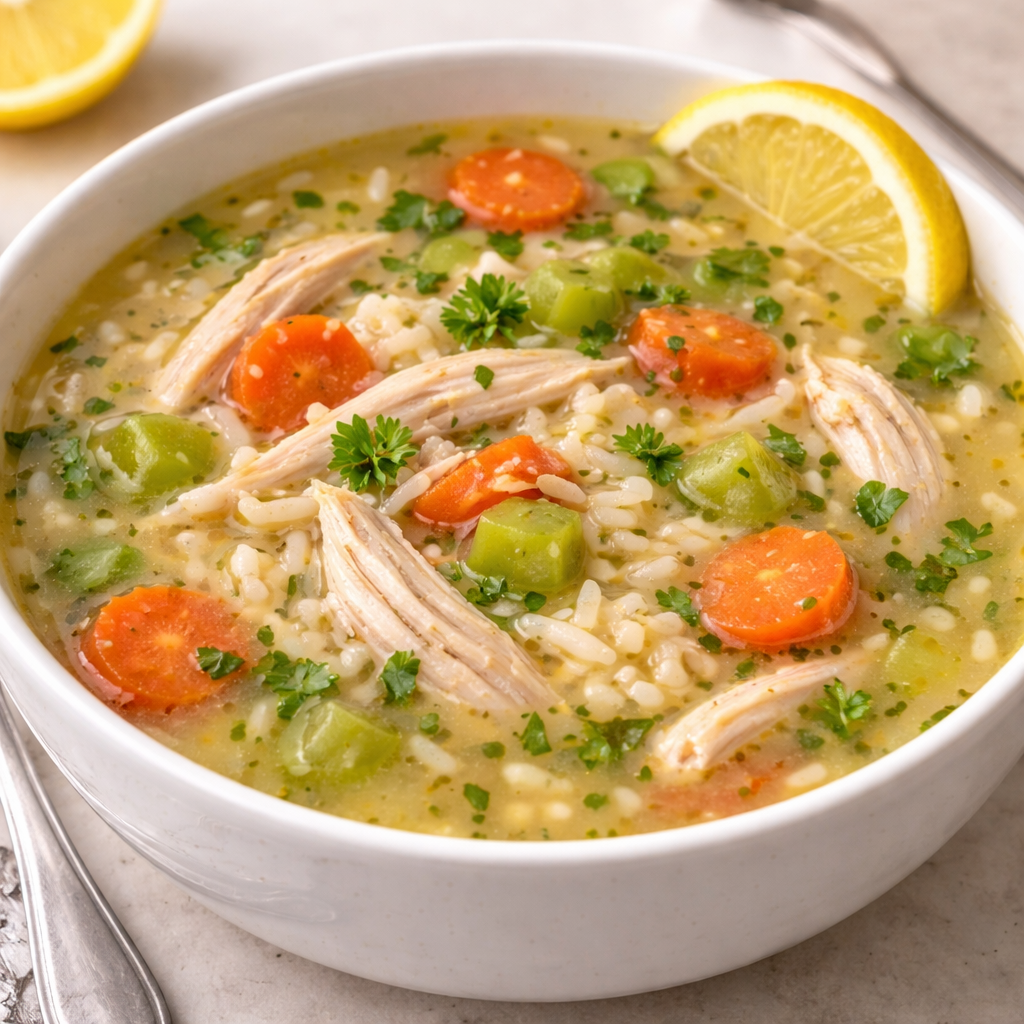
3. Shredding the Protein
Once the chicken is cooked through, remove the thighs from the pot and place them on a cutting board. Use two forks to shred the meat into bite-sized pieces. Return the shredded chicken to the pot. At this point, the rice should be very soft.
4. The Avgolemono Technique
In a medium bowl, whisk together 3 large eggs and the juice of 2 large lemons (about 1/2 cup) until the mixture is frothy and pale.
Now, pay close attention: While whisking the egg mixture constantly, use a ladle to slowly pour 2 cups of the hot soup broth into the bowl. This warms the eggs gradually. Once the bowl feels warm to the touch, slowly pour the tempered egg mixture back into the large pot of soup.
5. Final Thickening
Turn the heat to low. Stir the soup constantly for 2–3 minutes. You will see the broth transform from clear to creamy. Do not let the soup boil once the eggs are added, or the mixture will curdle.
6. Seasoning
Stir in a handful of fresh chopped dill and season with plenty of black pepper and kosher salt. Serve immediately with a slice of crusty bread.
Practical Issues Encountered During Cooking
Even a seasoned cook can run into trouble with a Chicken Lemon Rice Soup Recipe. Here is how to handle the most common real-world setbacks.
- The Soup is Grainy or Curdled: This happens if the eggs were added too fast or if the soup was too hot. The Fix: While you can’t “un-curdle” the eggs, you can use an immersion blender to quickly pulse the soup. This will smooth out the texture, though the soup will be slightly thicker.
- The Rice Absorbed All the Liquid: If you find yourself with a pot of lemon-chicken porridge rather than soup, it usually means the rice was overcooked or the ratio was off. The Fix: Stir in more warm broth and a squeeze of fresh lemon to restore the balance.
- The Lemon Flavor is Too Harsh: If the citrus is overwhelming the chicken, you need fat and salt to balance it. The Fix: Stir in a tablespoon of butter or a splash of heavy cream. The fat will coat the tongue and mellow the acidity of the lemon.
- The Chicken is Tough: This occurs if the chicken was boiled at too high a temperature. The Fix: Next time, ensure the pot stays at a gentle simmer (barely bubbling) rather than a hard boil.
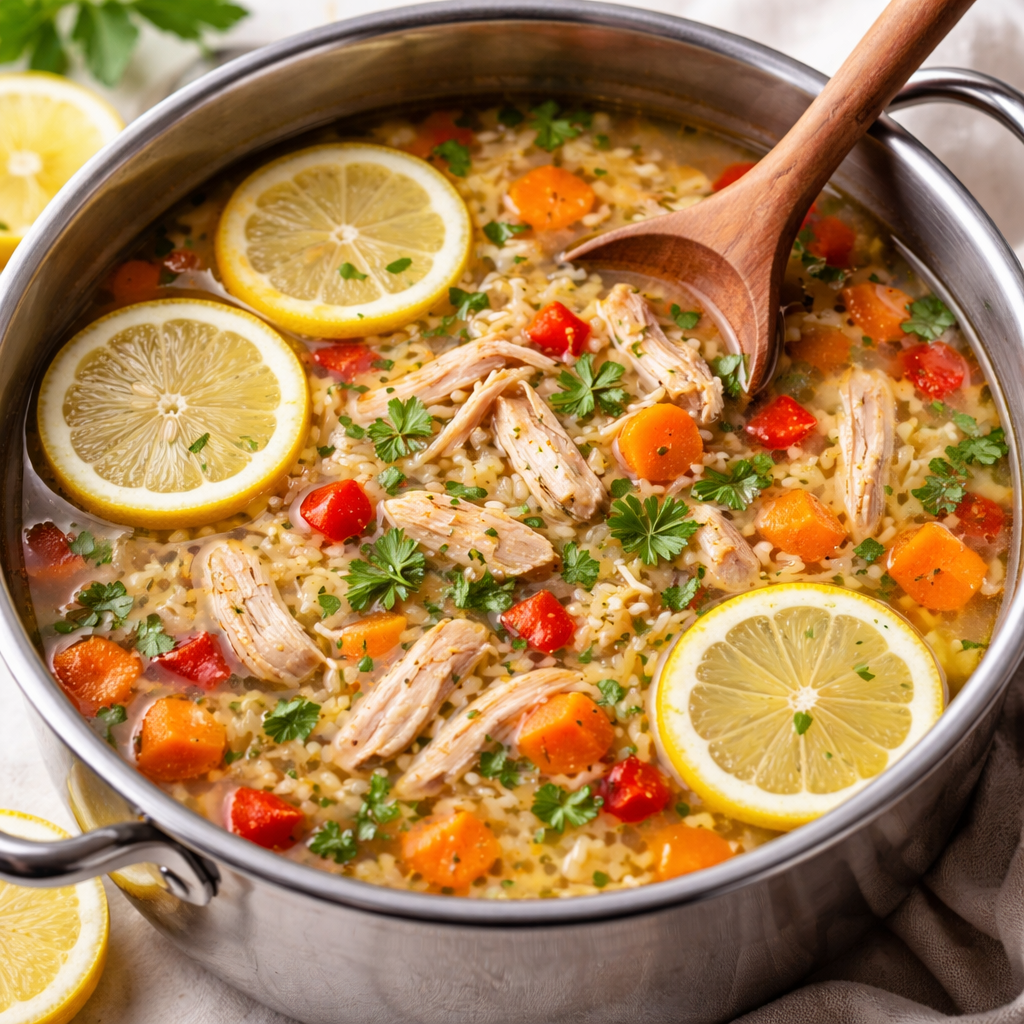
FAQ Based on Common Reader Concerns
Can I use leftover rotisserie chicken?
Absolutely. Using rotisserie chicken makes this Chicken Lemon Rice Soup Recipe much faster. Simply skip the chicken-cooking stage and add the shredded rotisserie meat at the same time you begin the egg-tempering process.
Can I make this soup in advance?
You can, but be aware that rice continues to absorb liquid as it sits. If you make it a day ahead, the soup will be very thick the next morning. When reheating, add a cup of water or broth to bring it back to the proper consistency.
Is this soup gluten-free?
Yes, as long as your chicken broth is certified gluten-free. Rice is naturally gluten-free, making this an excellent alternative to chicken noodle soup for those with dietary restrictions.
Why do I have to whisk the eggs until they are frothy?
Whisking introduces air and breaks down the egg proteins. Frothy eggs are more resilient during the tempering process and contribute to a much lighter, fluffier texture in the finished broth.
Can I use brown rice instead?
It is not recommended for this specific Chicken Lemon Rice Soup Recipe. Brown rice takes much longer to cook (about 45 minutes) and does not release enough starch to create the signature creamy texture of the Avgolemono style.
How do I store leftovers?
Store the soup in an airtight container in the refrigerator for up to 3 days. I do not recommend freezing this soup; the egg and lemon emulsion tends to separate and become “weepy” once thawed and reheated.
Easy French Onion Rice Recipe – Rich & Savory
The Best Pineapple Rice Recipe for Quick Weeknight Meals
Simple Chipotle Lime Rice Recipe Made at Home
Simple Jasmine Rice Recipes for Lunch & Dinner
The Best Ham Fried Rice Recipe for Busy Nights
Easy Salmon Rice Bowl Recipe – Healthy & Delicious