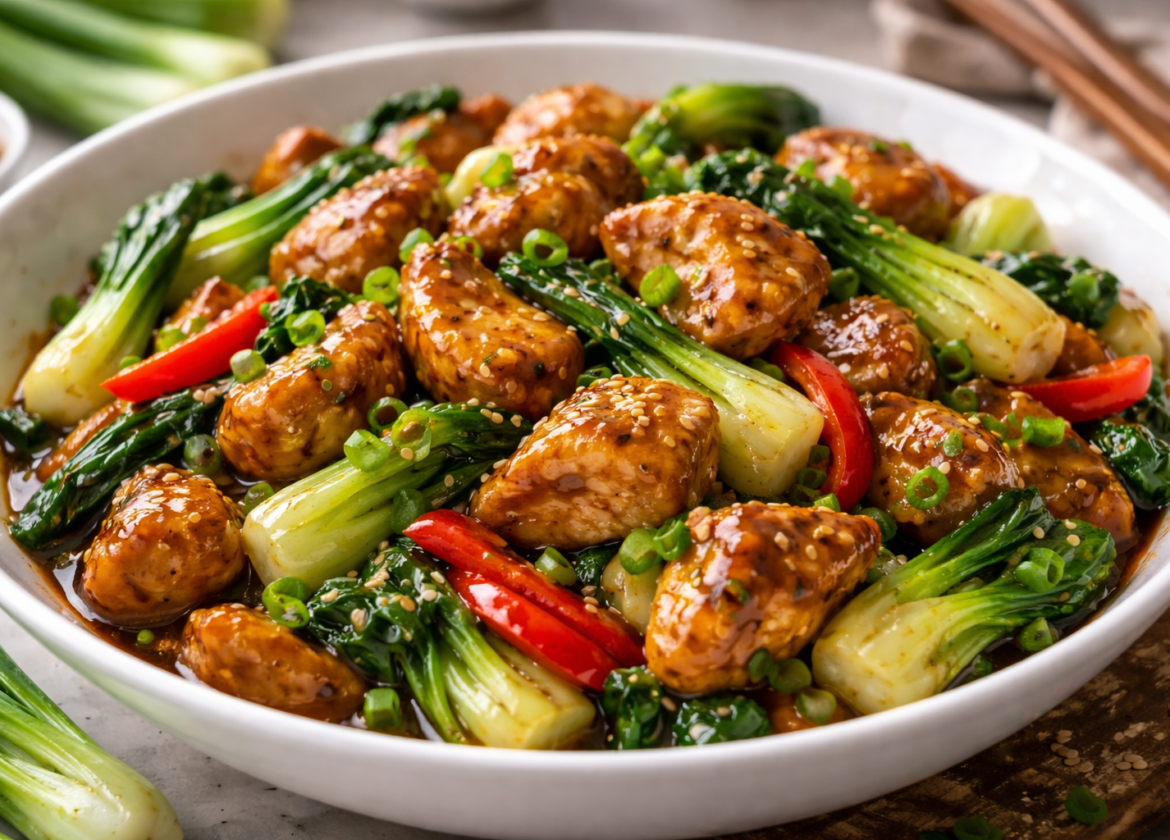
When most cooks search for a Chicken Bok Choy Recipe, they are looking for a meal that offers a specific balance of high-protein nutrition and refreshing vegetable crunch. The expectation is usually a dish that feels “clean”—meaning it isn’t weighed down by heavy breading or overly sugary sauces—and one that can be prepared quickly on a weeknight.
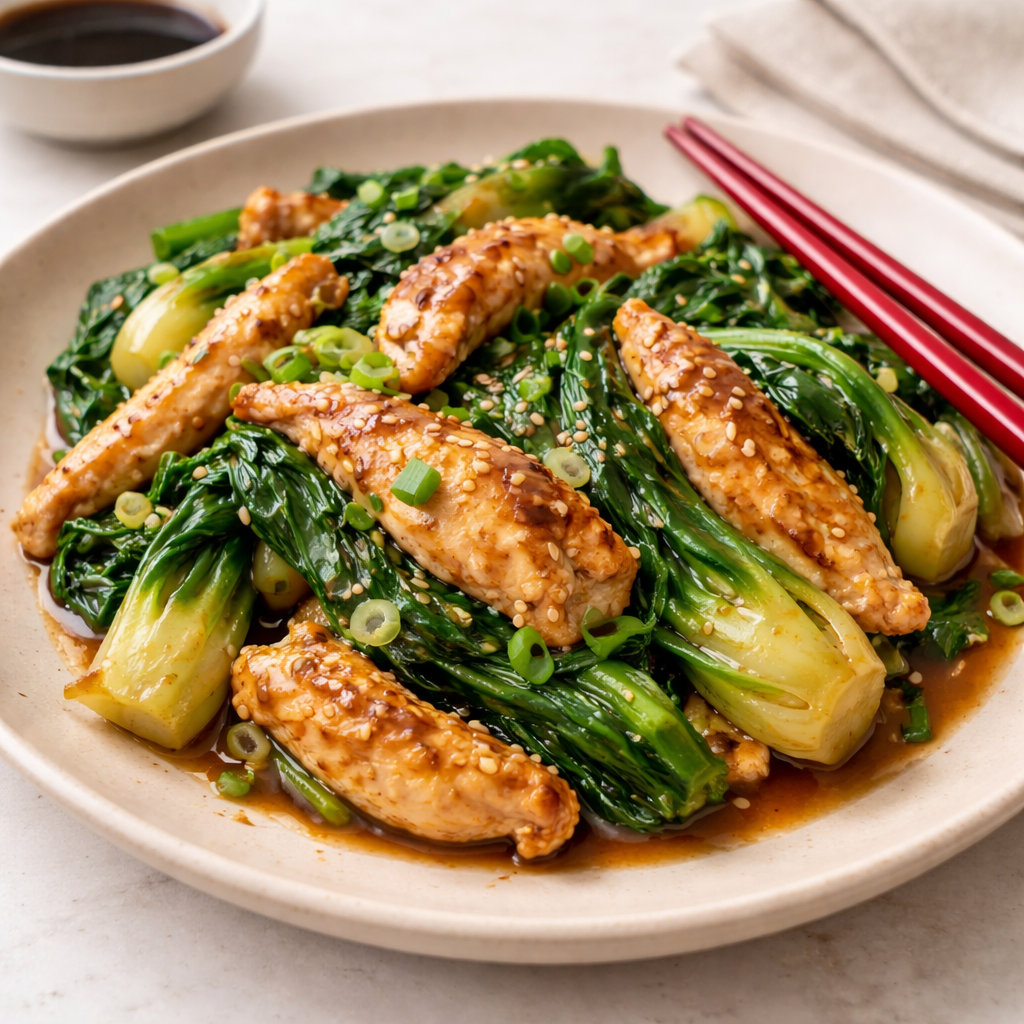
Technically, a high-quality Chicken Bok Choy Recipe should showcase the structural contrast of the bok choy itself. This leafy green is unique because it features a thick, watery white stem and tender, delicate green leaves. People expect the stems to stay crisp-tender while the chicken remains succulent and the leaves wilt just enough to soak up a savory, ginger-garlic sauce. If the result is a soggy pile of greens or dry chicken, the recipe hasn’t met the functional requirements of the dish.
How Chicken Bok Choy Delivers Better Results
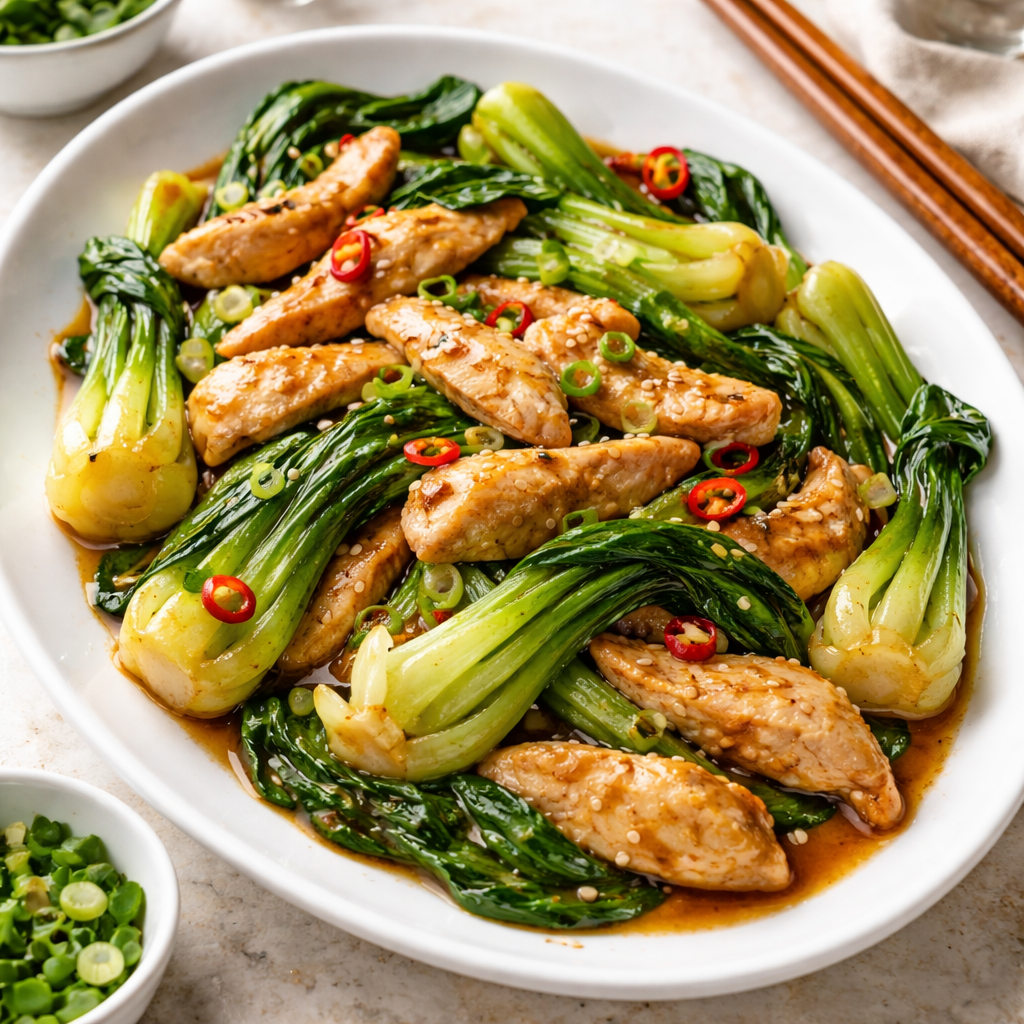
This combination is a staple in healthy cooking for several strategic reasons. First, bok choy is a member of the cruciferous vegetable family, which means it holds its water content well under high heat. Unlike spinach, which can disappear into a dish, bok choy provides “volume” and texture that makes the meal feel more substantial without adding significant calories.
Furthermore, a Chicken Bok Choy Recipe utilizes the concept of “flash cooking.” Because both ingredients can reach their peak flavor in under ten minutes of pan time, the nutrients in the vegetables are preserved rather than boiled away. From a flavor perspective, the peppery, slightly mustard-like notes of the bok choy perfectly complement the neutral palate of chicken breast or thighs, especially when tied together with a classic umami-based sauce.
Ingredient Planning and Preparation
The success of your stir-fry is decided on the cutting board. Because this dish moves fast once the heat is on, your preparation must be precise.
Choosing the Bok Choy
I recommend using Baby Bok Choy for this recipe. The smaller heads are more tender and have a better leaf-to-stem ratio than the large, mature versions. Bold Tip: Cut the bok choy into quarters lengthwise, then wash thoroughly between the stalks to remove trapped grit.
The Chicken
For the best texture, use boneless, skinless chicken thighs. They have a higher fat content than breasts, which prevents them from drying out during a high-heat sear. Slice them into thin, uniform strips across the grain.
The Sauce Components
A reliable stir-fry sauce for a Chicken Bok Choy Recipe usually includes:
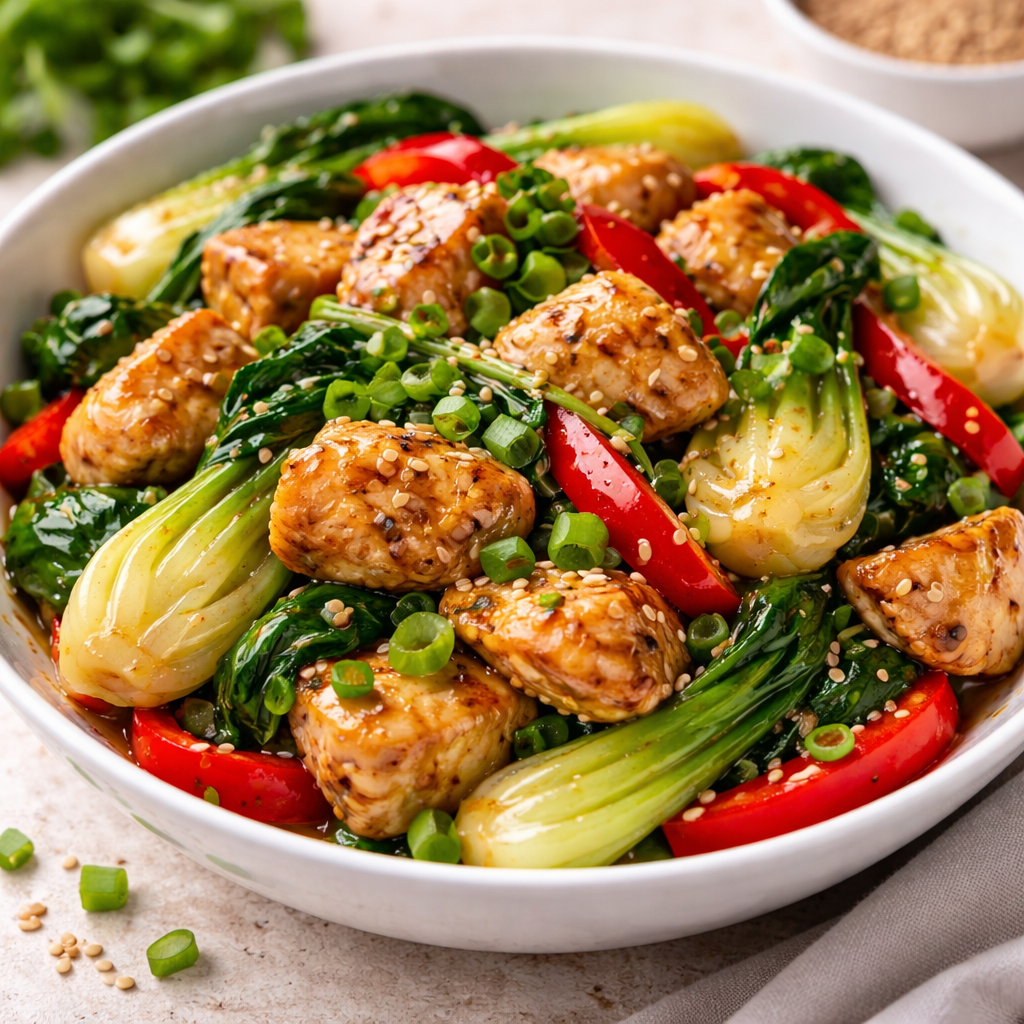
- Soy Sauce: For salt and depth.
- Oyster Sauce: For thickness and a hint of sweetness.
- Toasted Sesame Oil: For an aromatic finish.
- Cornstarch: This is essential for creating a “glaze” that clings to the ingredients.
Required Equipment Overview
You do not need an authentic wok to make a great Chicken Bell Pepper Recipe, but you do need equipment that manages heat effectively.
- Large Skillet or Wok: If using a standard skillet, ensure it is stainless steel or cast iron. Non-stick pans often struggle to reach the temperatures required to “sear” the chicken; instead, the meat ends up steaming in its own juices.
- A Sharp Chef’s Knife: Since you are dealing with fibrous vegetable stems and raw poultry, a sharp blade is necessary for clean, safe cuts.
- Mixing Bowls: You will need one for the chicken marinade and a small jar or bowl to whisk the sauce.
- Tongs or a Flat Spatula: These tools allow you to move the ingredients rapidly across the hot surface, ensuring even cooking.
Time and Temperature Planning
The key to a professional Chicken Bok Choy Recipe is “Heat Recovery.” When you add cold meat to a hot pan, the temperature drops. If it drops too much, you lose the sear.
- Prep Time: 15 minutes (chopping and whisking).
- Marination: 10 minutes (allowing the chicken to absorb seasoning).
- Cooking Time: 8–10 minutes total.
- Temperature: Medium-high to High. You want the oil to be shimmering, almost at the smoking point, before the first piece of chicken touches the pan.
Clear and Natural Chicken Bok Choy Recipe Steps
1. Marinate the Chicken
In a bowl, toss your sliced chicken with a tablespoon of soy sauce and a teaspoon of cornstarch. Let this sit for 10 minutes. This technique, often called “velveting,” creates a protective layer that keeps the chicken juices locked inside.
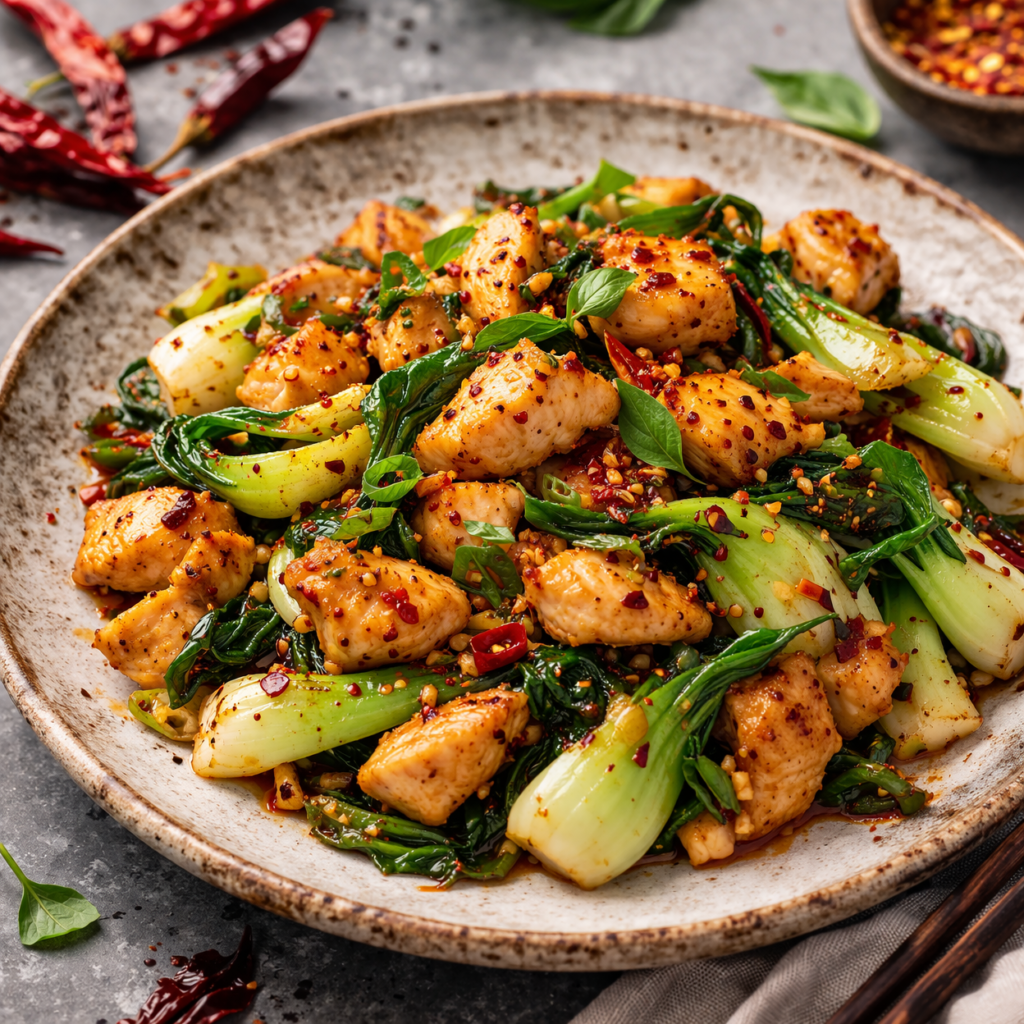
2. Whisk the Sauce
In a small jar, combine 3 tablespoons of soy sauce, 1 tablespoon of oyster sauce, 1 teaspoon of grated ginger, 2 cloves of minced garlic, and 1 teaspoon of sugar. Whisk in 1 teaspoon of cornstarch until no lumps remain.
3. The First Sear
Heat your pan with a tablespoon of high-smoke-point oil (like grapeseed or avocado oil). Add the chicken in a single layer. Do not move it for 2 minutes. Let a golden crust form. Flip and cook for 2 more minutes, then remove the chicken and set it aside.
4. Sauté the Bok Choy
Add another teaspoon of oil to the same pan. Toss in the bok choy quarters. Add a splash of water (about 1 tablespoon) to create steam. Toss for 3 minutes until the green leaves have wilted but the white stems are still crisp.
5. The Final Integration
Return the chicken to the pan. Give your sauce a final whisk and pour it over the ingredients. Toss everything constantly for 60 seconds. You will see the sauce bubble and transform into a glossy, dark glaze.
6. The Finish
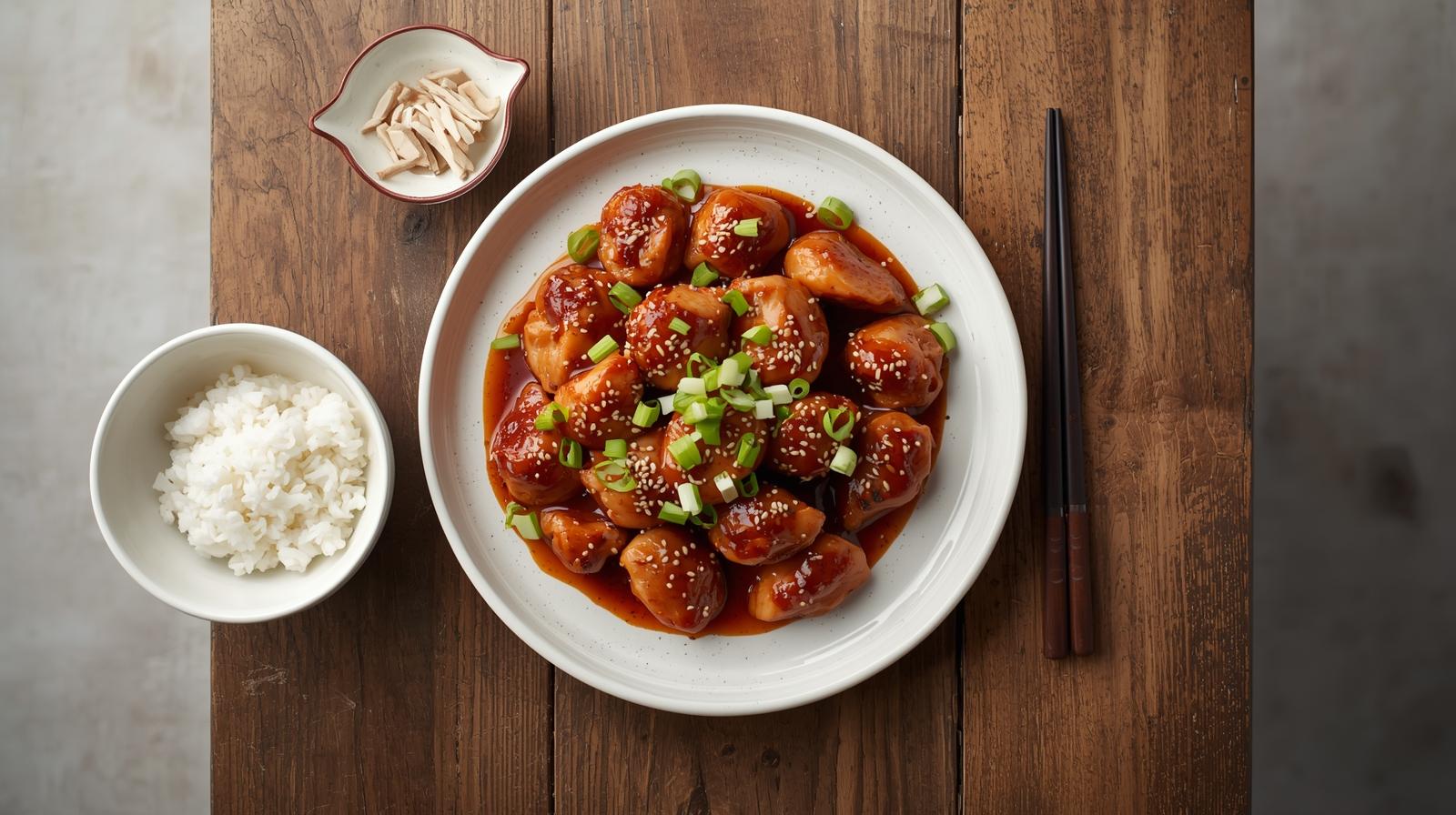
Remove from the heat immediately. Drizzle with a few drops of sesame oil and sprinkle with sesame seeds or sliced scallions for a professional look.
Mistakes That Affect Final Results
Even with a simple Chicken Bok Choy Recipe, a few common errors can ruin the experience:
- Crowding the Pan: If you put too much chicken in at once, the temperature crashes. The chicken will turn grey and release all its water, resulting in a “boiled” taste. Cook in batches if necessary.
- Ignoring the Grit: Bok choy grows in sandy soil. If you don’t cut the base and wash between the layers, you will likely end up with a “crunch” that isn’t from the vegetable.
- Overcooking the Greens: Bok choy should not be soft. If the white stalks have turned translucent, they have been on the heat too long and will lose their refreshing quality.
- Adding Garlic Too Early: Garlic burns in seconds at high stir-fry temperatures. Always add it as part of the sauce or at the very end of the vegetable sauté.
FAQ: Honest Answers for Beginners
Can I use different vegetables in this Chicken Bok Choy Recipe?
Yes. Bell peppers, snap peas, or mushrooms are excellent additions. Just remember to add the “hardest” vegetables first so they have more time to soften.
Is this recipe gluten-free?
Standard soy sauce contains wheat. To make this dish gluten-free, substitute the soy sauce with Tamari or liquid aminos, and ensure your oyster sauce is a gluten-free variety.
How do I store and reheat leftovers?
Store in an airtight container for up to 3 days. When reheating, I suggest using a skillet over medium heat with a tiny splash of water. Microwaving can make the bok choy stems quite limp.
Can I use frozen bok choy?
I do not recommend it. Frozen bok choy loses its cellular structure once thawed, which means you will lose the “crisp” part of the “crisp-tender” result. Always use fresh greens for this dish.
What should I serve with this?
This Chicken Bok Choy Recipe is traditionally served over steamed jasmine rice or brown rice. For a low-carb version, it is hearty enough to eat on its own or over cauliflower rice.
Easy Chicken Casserole Recipe (Ritz)
Healthy Chicken and Orzo Recipes Made Simple
The Best Chicken Lettuce Wraps Recipe for Quick Dinners
The Best Blackened Chicken Recipe for Quick Dinners
The Best Chipotle Honey Chicken Recipe for Dinner Tonight
The Best Nashville Hot Chicken Recipe You’ll Ever Try