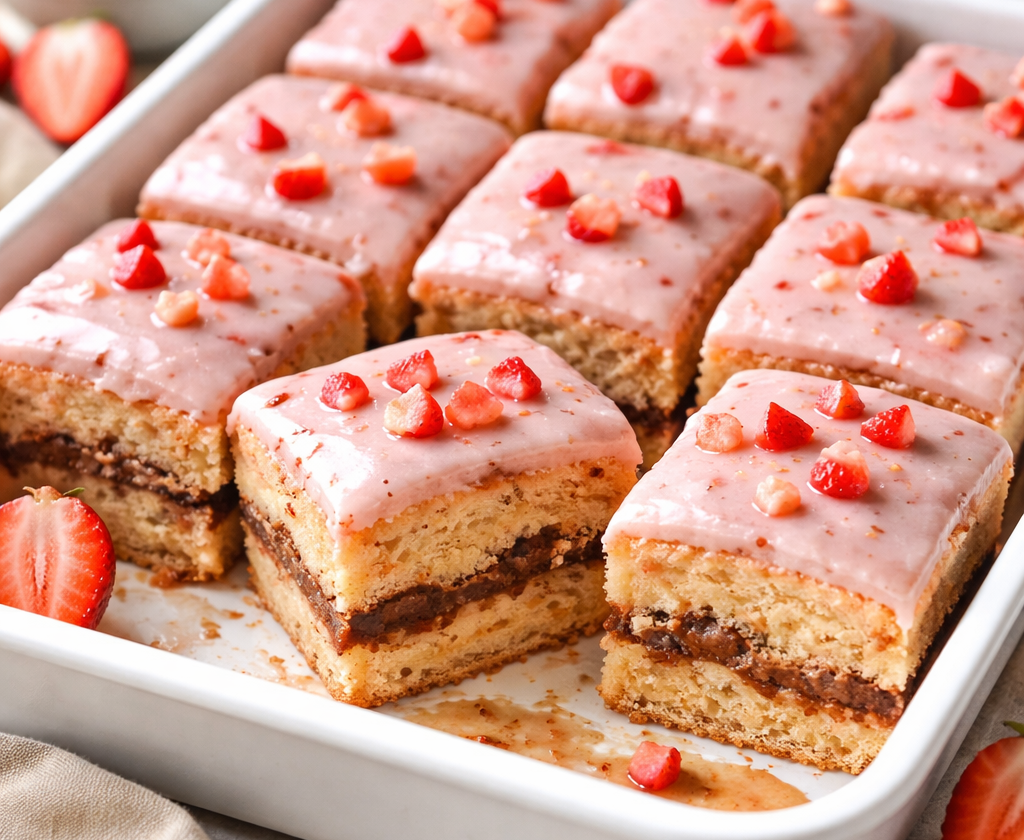
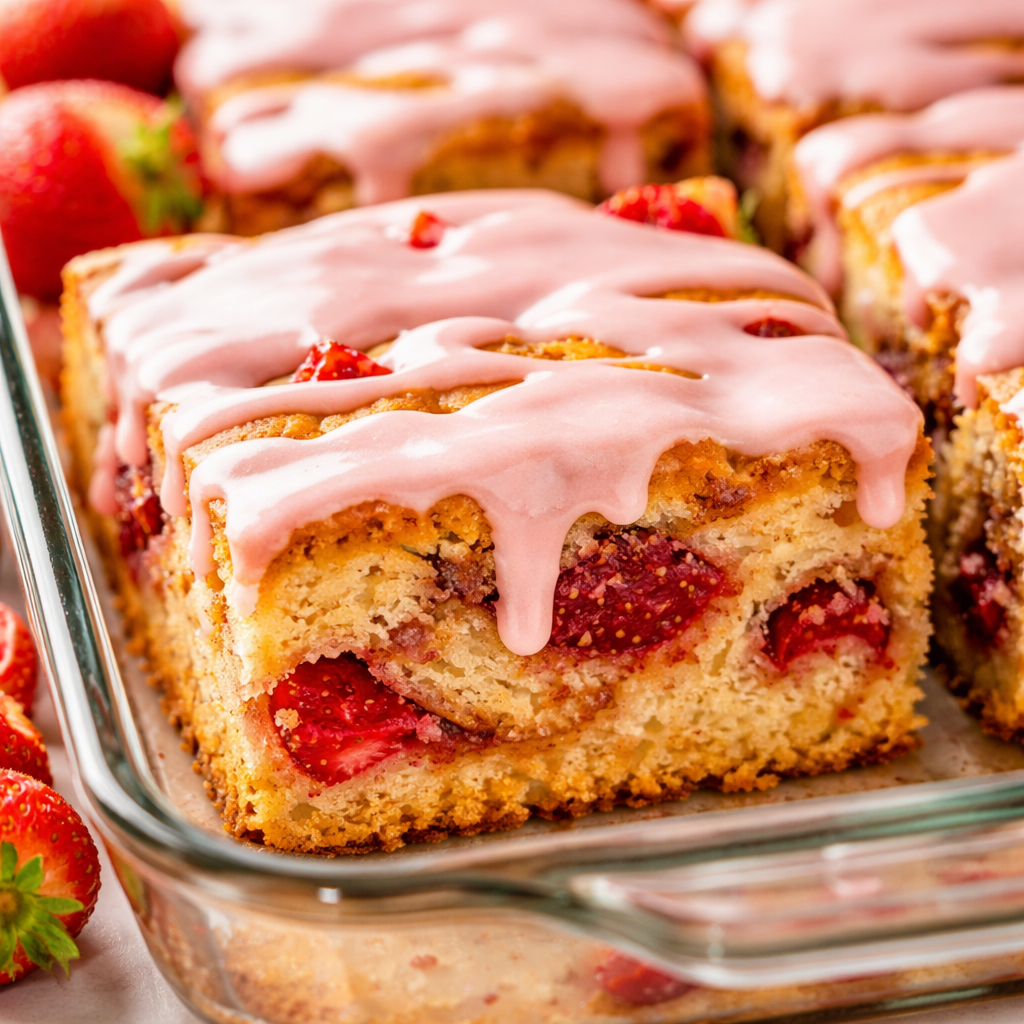
When you first hear of a Strawberry Honey Bun Cake Recipe, it sounds like a collision of too many desserts—a breakfast pastry, a classic boxed cake, and a seasonal fruit treat. However, from the perspective of a seasoned baker, this recipe is remarkably reliable because it utilizes a “structured moisture” approach. By combining the convenience of a cake mix with the density of sour cream and the fat from vegetable oil, you create a crumb that is far sturdier than a standard cupcake but lighter than a traditional pound cake.
The reliability comes from the fact that it is nearly impossible to end up with a dry cake. The “honey bun” aspect refers to the swirling technique, where a cinnamon-sugar mixture is ribboned through the batter, creating pockets of caramelized spice. Adding strawberry into this mix provides a necessary acidity that cuts through the heavy sweetness of the glaze. It is the kind of recipe that works for a high-volume potluck or a quiet family Sunday because it holds its moisture for several days, tasting just as fresh on Tuesday as it did on Sunday morning.
Cooking Insights You Learn From Experience
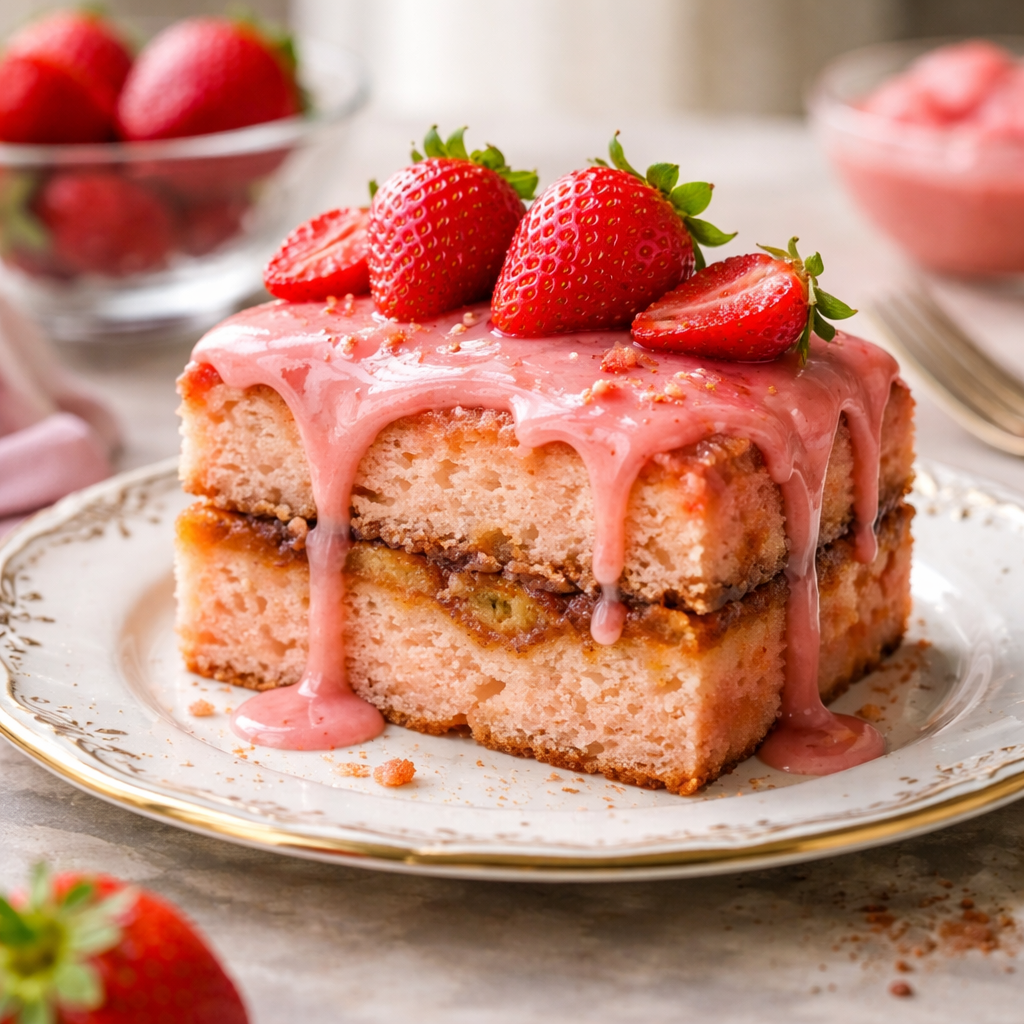
After making this cake several times, you start to notice things that aren’t usually written in a standard instruction manual. One of the biggest insights is the behavior of the strawberry component. If you are using fresh strawberry puree, the water content can fluctuate depending on how ripe the berries are. This affects the “lift” of the cake. Experience teaches you that reducing your strawberries on the stovetop into a concentrated jam-like consistency provides a much more intense flavor without making the batter too “soupy.”
Another learned insight is the importance of the swirl. In early attempts, I would swirl too aggressively, essentially mixing the cinnamon sugar into the strawberry batter. This ruins the “honey bun” effect. To get those distinct, sugary tunnels that define a true honey bun cake, you have to use a gentle “figure-eight” motion with a butter knife. You want to see the marble effect; if the batter looks like one solid color, you’ve gone too far. Finally, the glaze must be applied while the cake is screaming hot—this allows it to seep into the pores of the cake, creating that signature sticky-sweet crust.
Ingredient Preparation Details
The success of a Strawberry Honey Bun Cake Recipe depends on the temperature and quality of your base ingredients. Cold ingredients do not emulsify well, leading to a “tight” crumb that can feel rubbery.
The Cake Base
A standard yellow or white cake mix works best as a canvas. However, I’ve found that a “Butter Recipe” yellow cake mix offers a richer flavor that stands up better to the strawberries. You will be discarding the instructions on the back of the box and replacing the water with sour cream and extra eggs.
Strawberry Integration
You have two paths here: Strawberry gelatin or a fresh reduction.
- Gelatin: Provides a predictable, bright pink color and a nostalgic “candy” flavor.
- Fresh Reduction: Provides a sophisticated, tart flavor. If you choose fresh, you must strain the seeds out to keep the texture of the cake velvet-smooth.
The Swirl Mixture
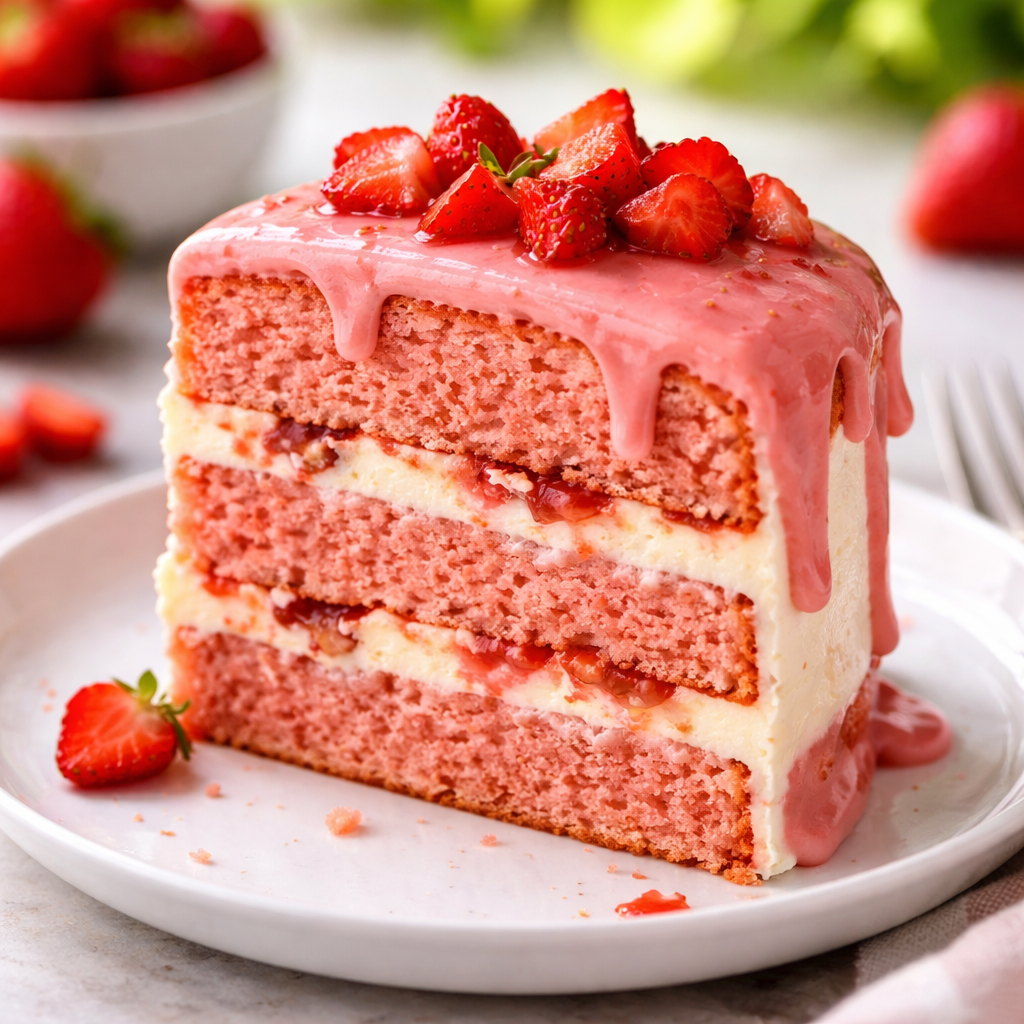
This is a blend of brown sugar and cinnamon. Use dark brown sugar if you want a more molasses-forward, “sticky” result, or light brown sugar for a traditional honey bun taste.
The Glaze
This is a simple whisking of powdered sugar, milk, and vanilla. Bold Tip: Sift your powdered sugar. If there are lumps in the sugar before you add the milk, they will be nearly impossible to whisk out once the liquid is introduced, leaving white spots on your finished cake.
Equipment Setup Explained Clearly
To ensure the cake bakes evenly and releases from the pan without tearing, your equipment setup needs to be deliberate.
- 9×13 Inch Metal Baking Pan: While glass pans are common, metal conducts heat more efficiently, which helps caramelize the sugar swirl at the bottom and sides of the cake.
- Offset Spatula: This is the best tool for smoothing the thick batter into the corners of the pan. Because the batter is denser than a standard cake, it won’t “self-level” in the oven.
- Fine-Mesh Sieve: Essential for sifting the powdered sugar for the glaze and for straining strawberry puree if you are taking the fresh fruit route.
- Stand Mixer or Hand Mixer: You need to beat the eggs and sour cream for at least two minutes to incorporate enough air to lift the heavy batter.
Managing Time and Temperature
Timing in a Strawberry Honey Bun Cake Recipe is divided into the “Rise” and the “Soak.”
- Preheating: Ensure your oven is at a true 325°F (163°C). Many bakers default to 350°F, but for a dense honey bun cake, a slightly lower temperature for a longer time prevents the edges from burning before the center is set.
- The Mixing Window: Do not overmix once the flour (cake mix) is added. Overmixing develops gluten, which will make your cake tough. Mix only until the white streaks disappear.
- The Cooling Window: This is counter-intuitive. Do not let the cake cool before glazing. You have a 2-minute window from the moment the pan leaves the oven to pour the glaze over the top.
Cooking Strawberry Honey Bun Cake: A Realistic Guide
1. Preparing the Batter
In a large bowl, combine the cake mix, 4 large eggs, 1 cup of sour cream, and 3/4 cup of vegetable oil. If you are using strawberry gelatin for flavor, add the dry powder now. Beat on medium speed for 2 minutes. The batter should look thick and glossy.
2. Folding in the Fruit
If you are using a strawberry reduction, fold it in gently at the very end. You want a marbled look in the bowl before it even reaches the pan.
3. Creating the Honey Bun Layer
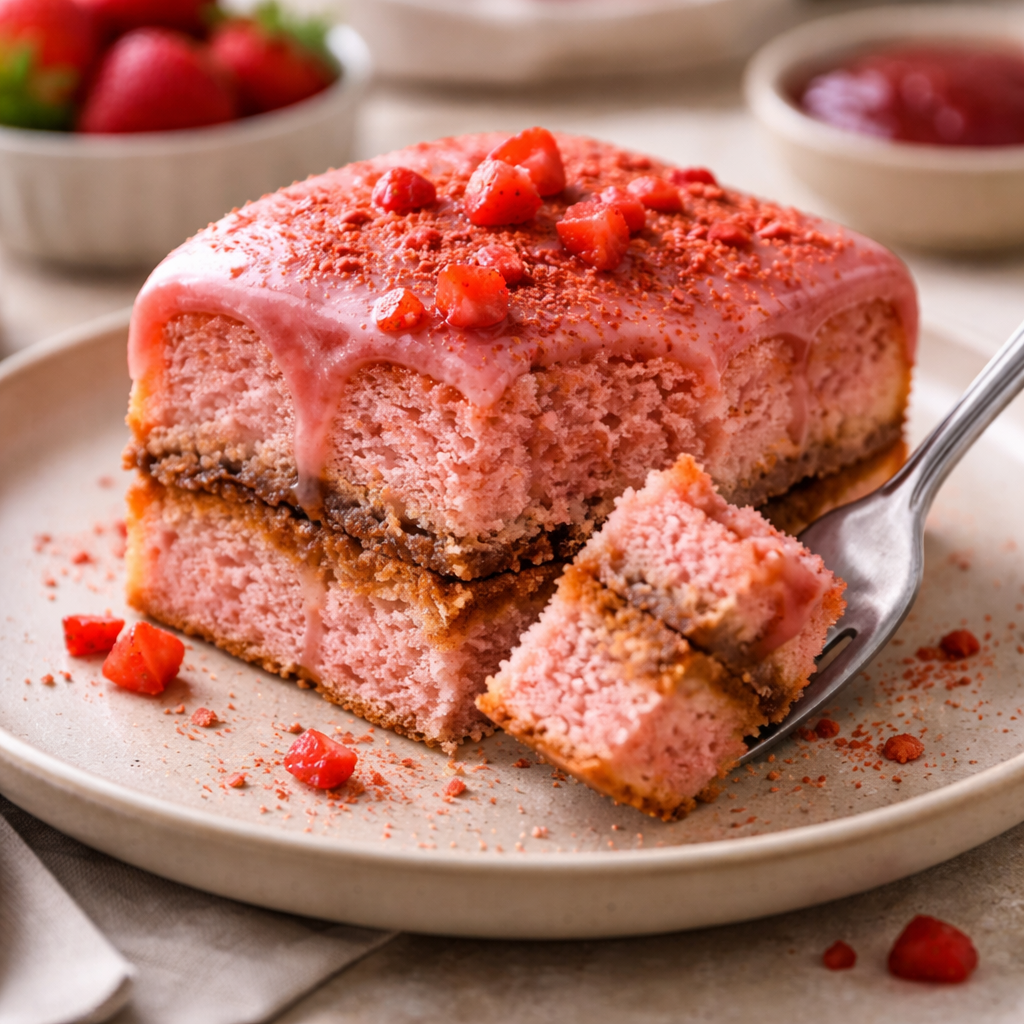
Pour half of the strawberry batter into your greased 9×13 pan. Sprinkle a mixture of 1 cup brown sugar and 1 tablespoon of cinnamon over the surface. Carefully pour the remaining batter over the sugar.
4. The Figure-Eight Swirl
Take a butter knife and dip it into the batter. Drag it in a figure-eight pattern across the pan three or four times. Do not over-swirl.
5. The Bake
Slide the pan into the center rack of the oven. Bake for 38 to 42 minutes. The cake is ready when a toothpick inserted into the center comes out with a few moist crumbs—if it comes out “clean,” the cake might be slightly overbaked.
6. The Glaze Application
While the cake is in its final minutes of baking, whisk together 2 cups of powdered sugar, 1/4 cup of milk, and 1 teaspoon of vanilla. The moment the cake comes out, pour the glaze over the entire surface. It will bubble and then sink into the cake as it cools.
Practical Errors and How to Fix Them
From my experience, even when you follow a Strawberry Honey Bun Cake Recipe perfectly, environmental factors like humidity or oven calibration can cause issues.
- The Cake Sinks in the Middle: This is usually caused by opening the oven door too early or underbaking. The Fix: If it’s already out of the oven, don’t panic. The glaze will fill in the dip, and once you slice the cake, no one will notice. To prevent this, ensure your sour cream is at room temperature before mixing.
- The Sugar Swirl is “Crunchy”: This happens if the brown sugar didn’t have enough moisture to melt. The Fix: Next time, ensure your brown sugar is fresh and soft. If it’s already baked, the glaze soak will eventually soften those sugar pockets over the next few hours.
- The Glaze is Too Thin and Disappears: If the glaze is watery, it will just soak into the cake without leaving that beautiful white crackle on top. The Fix: Whisk in an extra half-cup of powdered sugar and apply a second “top-coat” once the cake has cooled for 15 minutes.
- The Strawberry Flavor is Muted: Sometimes the baking process dulls the fruit flavor. The Fix: Add a half-teaspoon of strawberry extract to the glaze to bring that fruitiness back to the forefront.
Frequently Asked Questions From Practice
Can I use strawberry pie filling instead of fresh strawberries?
You can, but it changes the texture significantly. Pie filling is very heavy and contains cornstarch, which can make the cake feel “gummy.” If you use it, reduce the amount of sour cream by 1/4 cup to compensate for the extra moisture.
Why is my cake sticking to the pan?
This cake has a high sugar content due to the cinnamon-brown sugar swirl. If that sugar touches the side of the pan, it turns into “glue.” Bold Tip: Use a “baking spray” that contains flour, or grease the pan with shortening and dust it with flour to create a barrier.
Does this cake need to be refrigerated?
Because of the sour cream and the fresh fruit (if used), I recommend refrigerating it after the first 24 hours. However, it is best served at room temperature. A quick 10-second zap in the microwave makes it taste like it just came out of the oven.
Can I make this in a Bundt pan?
Yes, but the timing is different. A Bundt pan is deeper and will require 50–60 minutes of bake time. Also, you must be extremely careful with the swirl—if the sugar mixture touches the center tube or the walls of the Bundt pan, the cake may not release in one piece.
What if I don’t have sour cream?
Full-fat Greek yogurt is an excellent 1:1 substitute. It provides the same acidity and fat content required to keep the Strawberry Honey Bun Cake Recipe moist and tender.
The Best Coca Cola Cake Recipe for Chocolate Lovers
Wacky Cake Recipe – Chocolatey, Soft & Easy to Make
Homemade Whiskey Cake Recipe – Perfect for Celebrations
The Best 7UP Pound Cake Recipe You’ll Ever Bake
Easy Oreo Mug Cake Recipe – Ready in 5 Minutes
Moist Blueberry Dump Cake Recipe Everyone Will Love