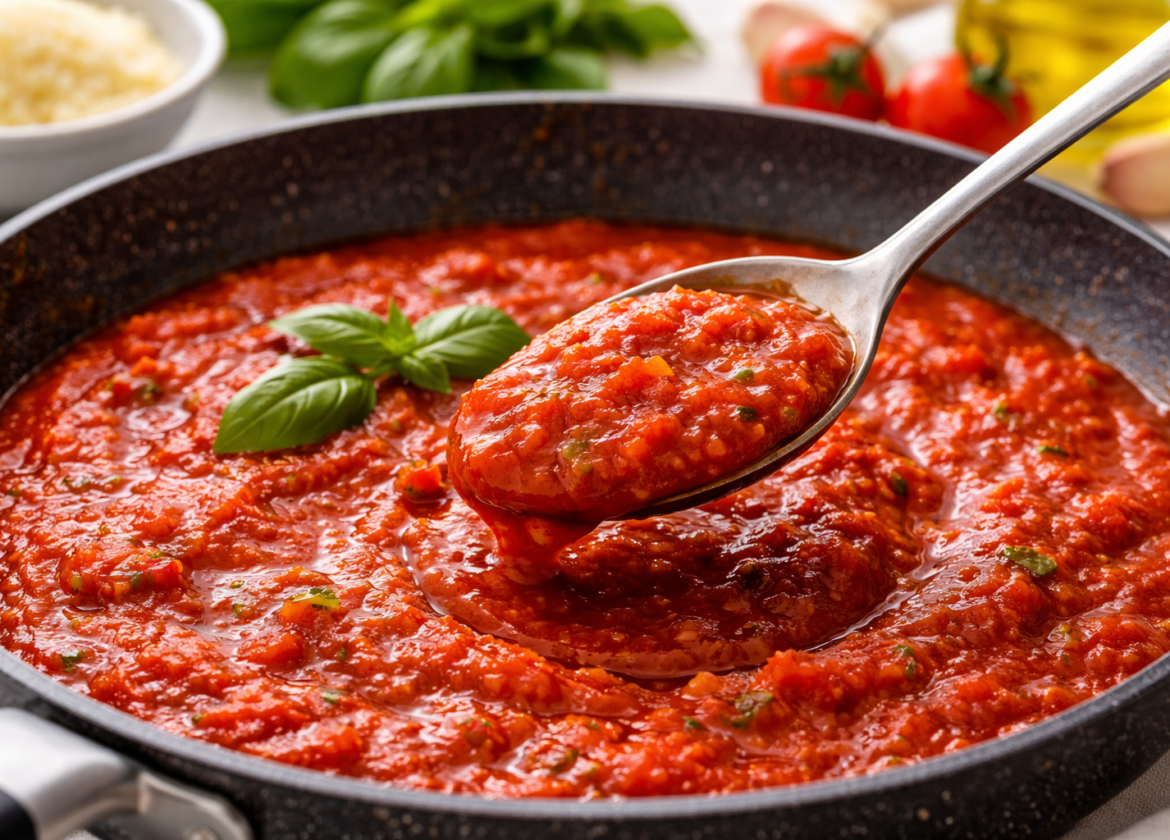
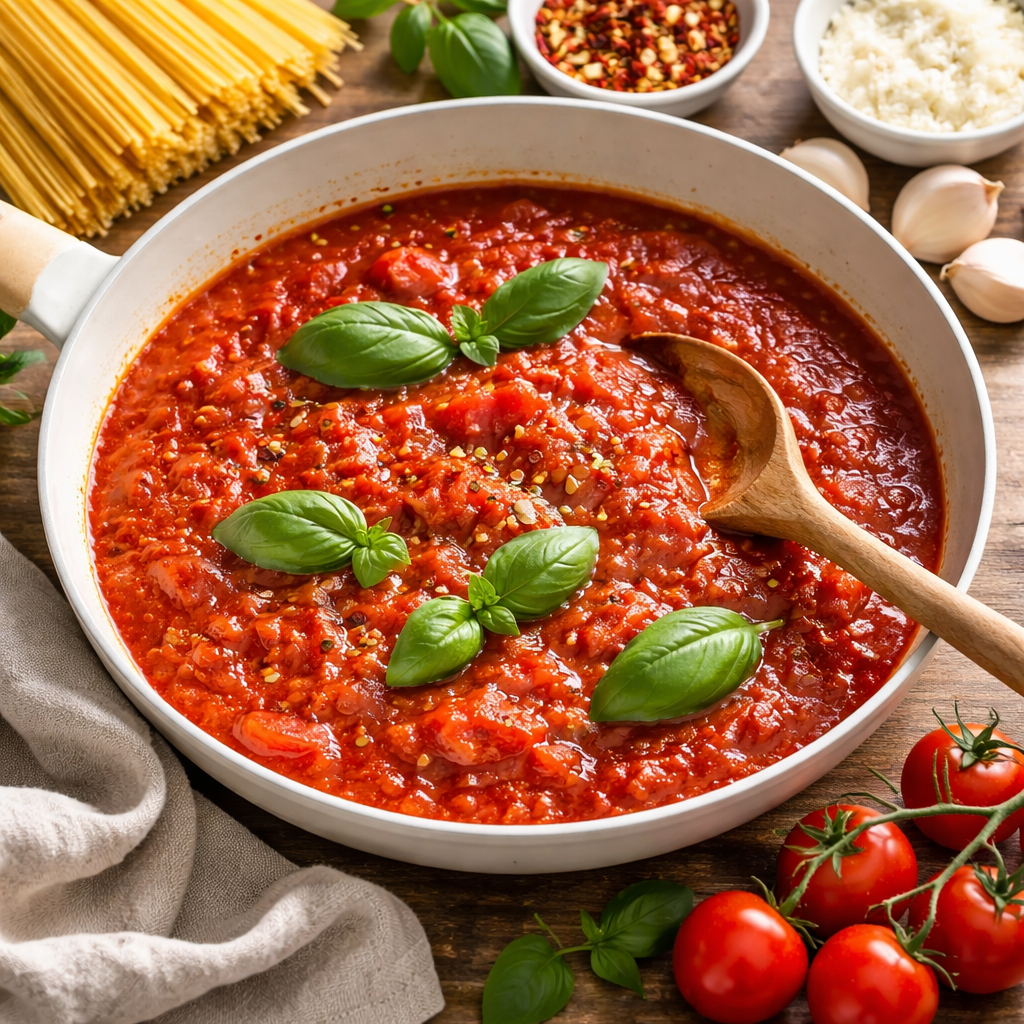
The Italian Tomato Sauce Recipe is the cornerstone of Mediterranean culinary traditions. For the home cook, mastering this sauce represents a transition from relying on pre-packaged goods to understanding the fundamental balance of acidity, sweetness, and savoriness. A true Italian sauce—often referred to as pomodoro or marinara depending on the specific aromatics used—is characterized by its simplicity and the high quality of its raw materials.
At its core, this recipe is about the slow concentration of tomato flavors. Unlike many modern “quick” sauces, a traditional approach focuses on allowing the tomatoes to break down naturally, releasing their juices and integrating with the olive oil to create a stable emulsion. This article provides a professional framework for producing a consistent, high-quality sauce that can be used immediately or stored as a base for more complex dishes like lasagna, parmigiana, or various pasta preparations.
Understanding the Cooking Method
The methodology behind a professional Italian Tomato Sauce Recipe involves two primary phases: the infusion of aromatics and the reduction of the tomatoes. The goal is to cook the sauce long enough to remove the “raw” metallic edge of the tomatoes without over-cooking the fresh notes of the basil and olive oil.
- Infusion: This begins by gently heating aromatics (usually garlic or onion) in extra virgin olive oil. This is not a high-heat sauté; the goal is to flavor the fat, which then carries those flavors throughout the entire batch of sauce.
- Simmering: Once the tomatoes are added, the heat must be maintained at a “lazy bubble.” A rapid boil can cause the sugars in the tomato to scorch or the red pigments to oxidize, resulting in a brownish sauce with a bitter aftertaste.
- The Emulsion: As the water evaporates, the tomato solids and the olive oil begin to bond. This is what gives the sauce its glossy appearance and rich mouthfeel.
Ingredients and Portion Guidelines
To achieve a balanced Italian Tomato Sauce Recipe, the ratio of fat to acid is critical. Using the following guidelines ensures a sauce that is neither too greasy nor unpleasantly sharp.
The Tomatoes
The most important decision is the choice of tomato. For an authentic result, San Marzano tomatoes (DOP certified) are the industry standard. These are plum tomatoes grown in volcanic soil, known for their thick flesh, low seed count, and natural sweetness. If using canned tomatoes, look for “whole peeled” rather than “diced,” as diced tomatoes are often treated with calcium chloride to help them keep their shape, which prevents them from breaking down into a smooth sauce.
The Fat
Extra virgin olive oil is an ingredient, not just a medium for cooking. It provides the “body” of the sauce. For every 28-ounce can of tomatoes, use approximately 3 to 4 tablespoons of high-quality oil.
The Aromatics
- Garlic: Use fresh cloves, either sliced thinly or smashed.
- Basil: Fresh whole leaves added toward the end of the cooking process preserve the herb’s volatile oils.
- Salt: Sea salt is preferred for a clean flavor profile.
Portion Table for Scaling
| Ingredient | Small Batch (4 Servings) | Large Batch (12 Servings) |
| Whole Peeled Tomatoes | 1 can (28 oz) | 3 cans (84 oz) |
| Extra Virgin Olive Oil | 3 tbsp | 1/2 cup |
| Garlic Cloves | 2-3 cloves | 8 cloves |
| Fresh Basil | 5 leaves | 1 small bunch |
| Salt | 1/2 tsp (to taste) | 1.5 tsp (to taste) |
Tools for Home Cooking
Precision in an Italian Tomato Sauce Recipe is often dictated by the heat conductivity of the cookware.
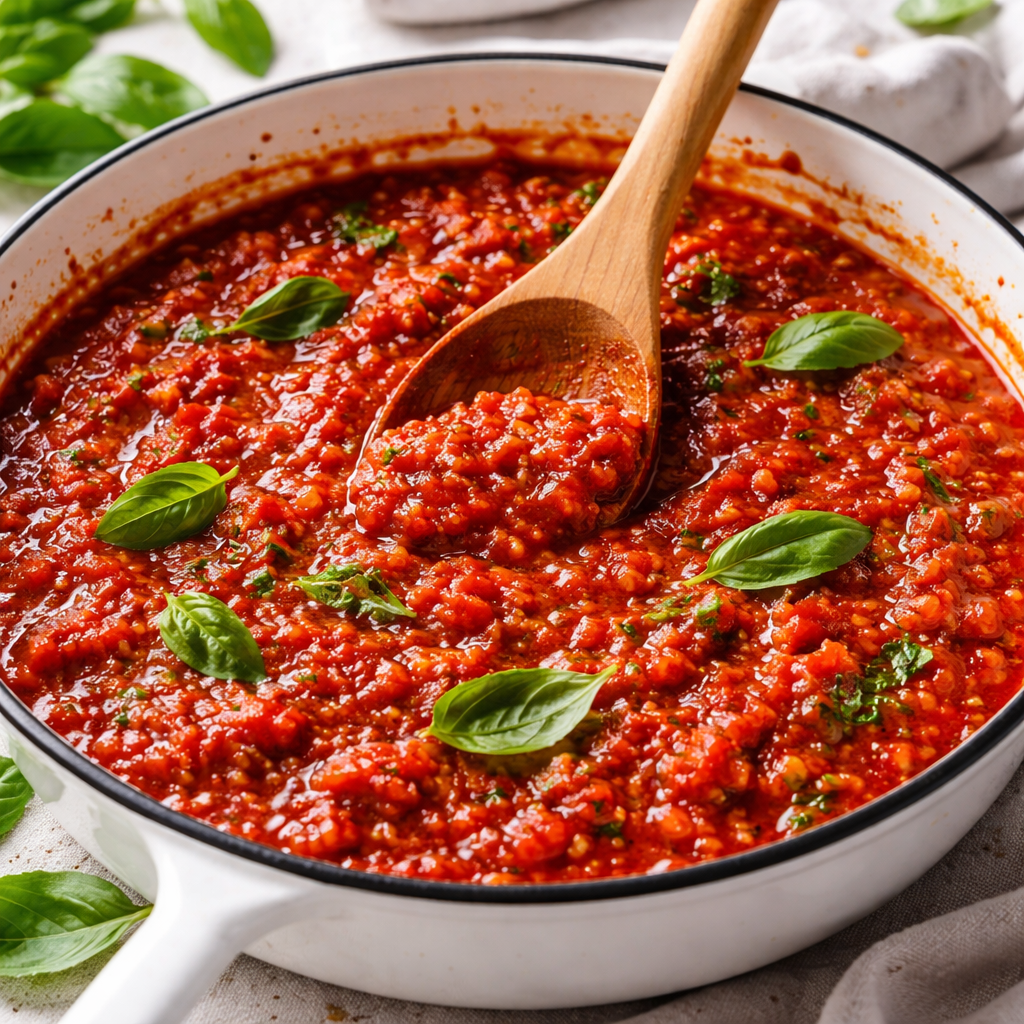
- Heavy-Bottomed Pot or Dutch Oven: A thick base is essential to prevent the sauce from sticking and burning during the simmering phase. Enameled cast iron or heavy stainless steel are the best choices.
- Food Mill or Immersion Blender: If you prefer a smooth, velvety texture, a food mill is superior as it removes seeds and skins without incorporating too much air. An immersion blender is a faster alternative but may turn the sauce a lighter orange color by aerating the fats.
- Wooden Spoon: A wooden spoon is ideal for scraping the bottom of the pot without scratching the surface, ensuring that no “fond” or tomato solids become permanently attached to the base.
- Fine-Mesh Strainer: If using fresh tomatoes, a strainer is necessary to remove the seeds after blanching and peeling.
Cooking Schedule Overview
Time management is the differentiator in a professional Italian Tomato Sauce Recipe. While some modern recipes suggest a 15-minute cook time, a traditional sauce requires a specific window to develop depth.
- Prep Time (10 Minutes): Peeling garlic and crushing tomatoes by hand.
- Infusion (5 Minutes): Warming the oil and aromatics.
- Active Simmer (30–45 Minutes): This is the window where the water evaporates and the acidity mellows.
- Resting Phase (10 Minutes): Allowing the sauce to sit off the heat allows the flavors to settle and the texture to thicken slightly before serving.
Practical Italian Tomato Sauce Recipe Guide
1. The Oil Infusion
Place your heavy-bottomed pot over medium-low heat. Add the extra virgin olive oil and the sliced or smashed garlic. Bold Tip: Start the garlic in cold oil and bring it up to heat slowly; this prevents the garlic from browning too quickly and becoming bitter. Sauté until the garlic is fragrant and just barely golden.
2. Preparing the Tomatoes
Open the can of whole peeled tomatoes and pour them into a bowl. Use your hands to crush them into small, irregular pieces. This creates a “rustic” texture that is traditional in an Italian Tomato Sauce Recipe. Alternatively, you can use kitchen shears to cut them while still in the can.
3. Combining and Simmering
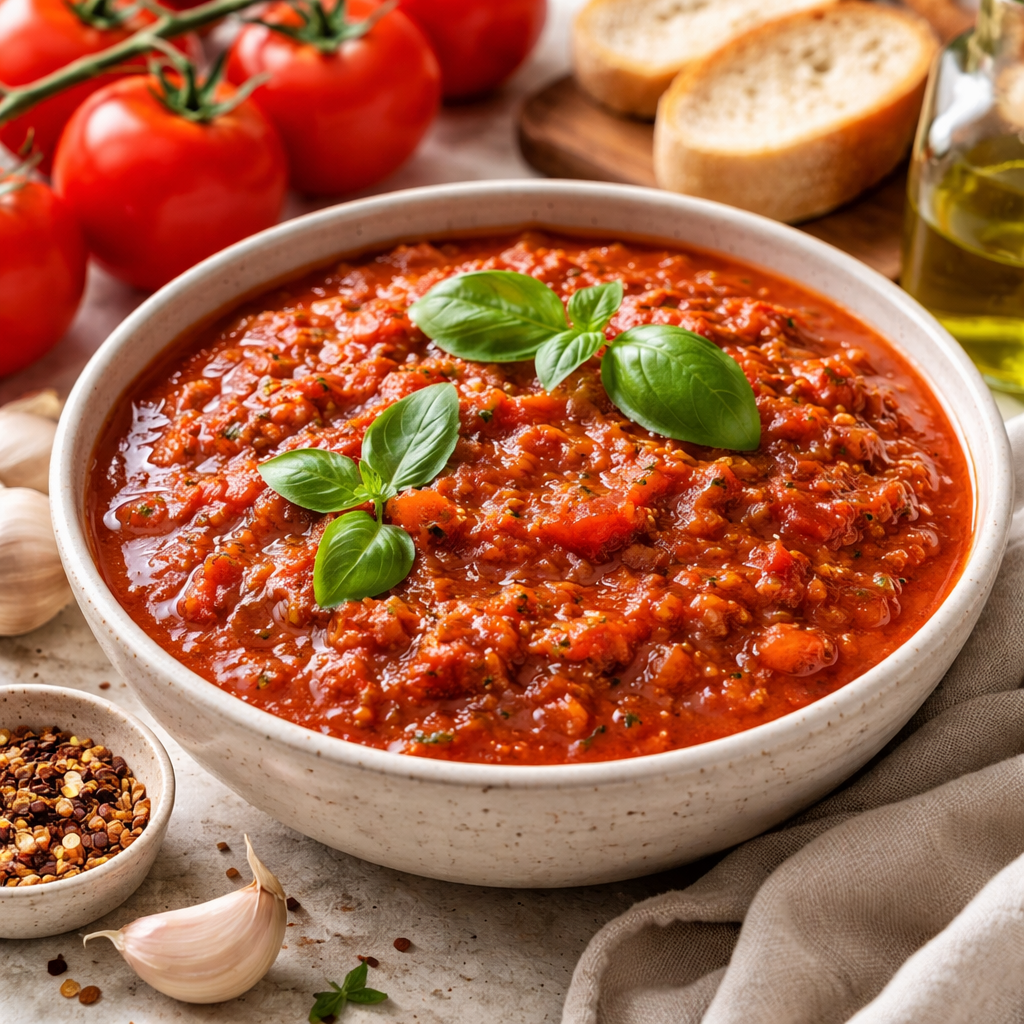
Carefully pour the crushed tomatoes and their juices into the pot with the oil and garlic. Add a pinch of salt. Increase the heat slightly until the sauce reaches a simmer, then immediately reduce the heat to low. The sauce should show only occasional bubbles.
4. The Reduction Phase
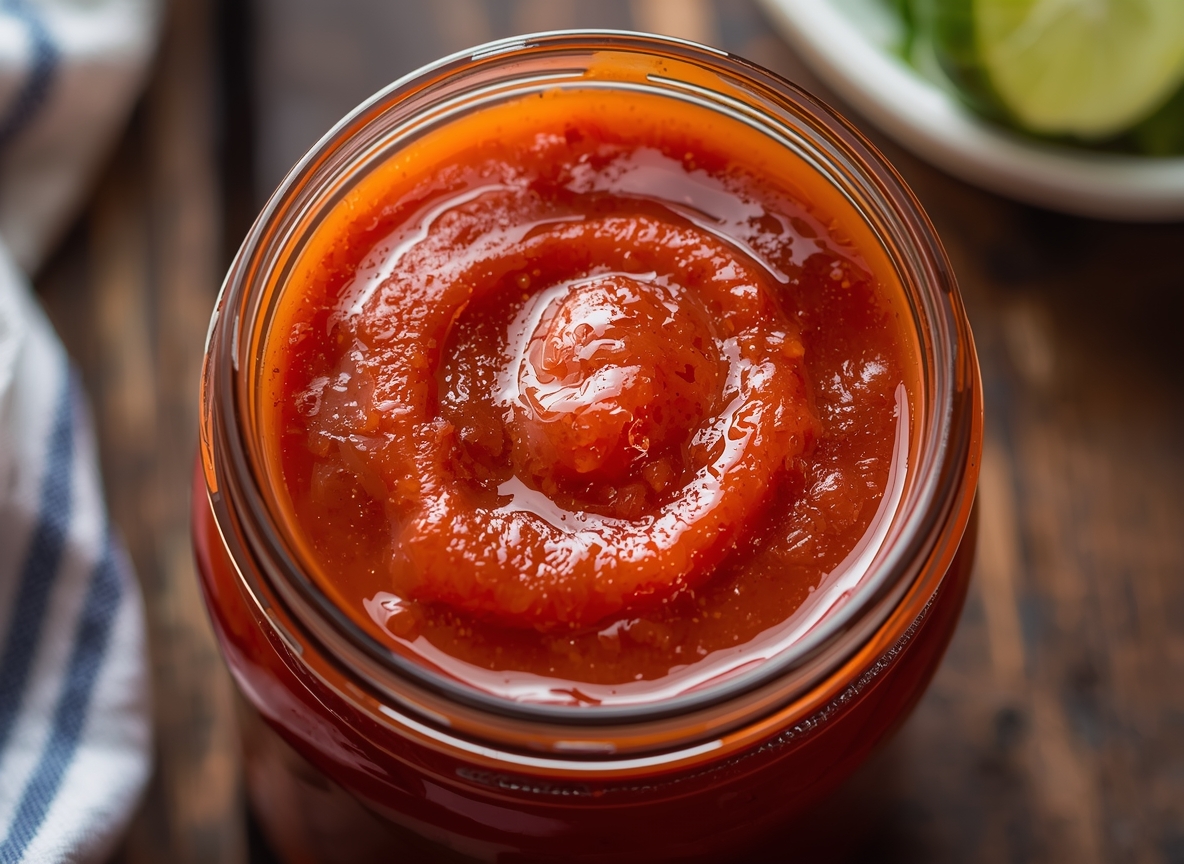
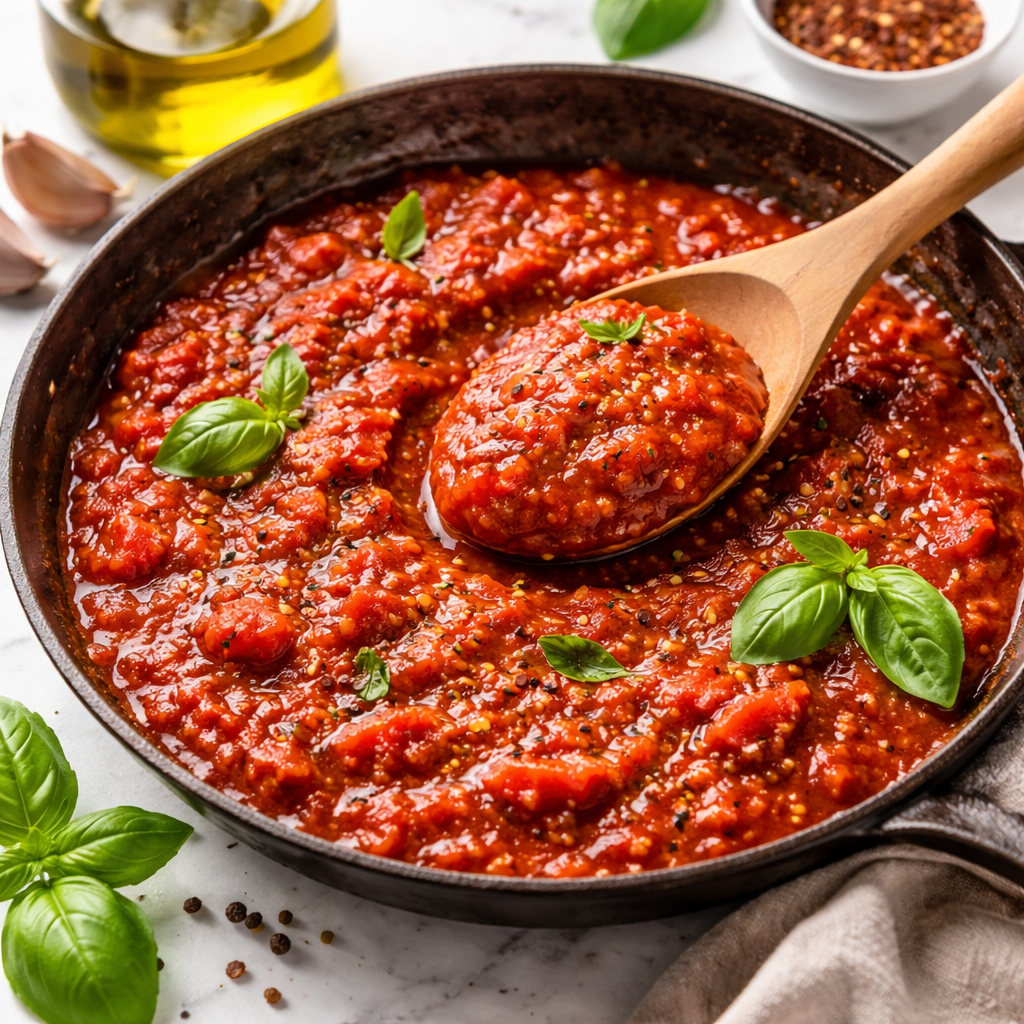
Cook uncovered for 30 to 45 minutes. Stir every 10 minutes to ensure even heating. As the sauce reduces, you will see a layer of orange-tinted oil beginning to separate at the edges; this is a sign that the emulsion is forming.
5. Finishing with Herbs
Five minutes before the end of the cooking time, stir in the fresh basil leaves. If you prefer a smooth sauce, use an immersion blender now. Taste for seasoning and add more salt if necessary. Bold Tip: If the sauce tastes too acidic, do not add sugar immediately. Instead, let it simmer for another 10 minutes; often, additional cooking time is all that is needed to mellow the acidity.
Home Cooking Errors to Avoid
Even a simple Italian Tomato Sauce Recipe can be compromised by a few common mistakes:
- Over-Browning the Garlic: If the garlic turns dark brown or black, it will permeate the entire sauce with a bitter, burnt flavor. If this happens, it is best to discard the oil and garlic and start over.
- Using Dried Basil Early: Dried herbs can taste “dusty” if cooked for a long time. If you must use dried herbs, add them at the beginning, but fresh basil should always be added at the end to maintain its bright, floral profile.
- Boiling Instead of Simmering: High heat destroys the delicate nuances of the olive oil and can cause the tomato solids to separate from the liquid.
- Adding Too Much Water: Unless you are making a very long-cooked meat sauce (ragu), do not add water to your tomato sauce. The goal is to remove moisture to concentrate flavor, not add to it.
- Using Aluminum Cookware: Tomatoes are highly acidic. Cooking them in reactive aluminum pans can result in a metallic taste and can damage the cookware.
Frequently Asked Questions for Home Cooks
How long does this sauce stay fresh?
An Italian Tomato Sauce Recipe can be stored in an airtight container in the refrigerator for up to 5 days. For longer storage, the sauce freezes exceptionally well for up to 6 months.
Should I remove the garlic before serving?
This is a matter of personal preference. In many Italian households, smashed garlic cloves are removed after the infusion phase to leave a subtle flavor. If the garlic is sliced thinly and cooked gently, it becomes soft and sweet, making it perfectly suitable to leave in the sauce.
Can I use fresh tomatoes instead of canned?
Yes. However, fresh tomatoes must be blanched in boiling water, peeled, and seeded before use. You will also likely need to increase the simmer time, as fresh tomatoes have a significantly higher water content than canned San Marzano varieties.
Why is my sauce orange instead of deep red?
This usually occurs if the sauce was blended at high speed. The aeration of the fats (olive oil) creates an emulsion that reflects light differently, resulting in an orange hue. It does not affect the flavor, but for a deep red color, hand-crushing or a food mill is recommended.
How do I fix a sauce that is too thin?
The most effective way to thicken an Italian Tomato Sauce Recipe is through continued simmering uncovered. Avoid using thickeners like cornstarch or flour, as these will alter the flavor and clarity of the sauce.
Is sugar necessary in tomato sauce?
In a professional Italian Tomato Sauce Recipe, sugar is rarely needed if you use high-quality San Marzano tomatoes. If you find the sauce too tart, a very small pinch of baking soda can neutralize the acid more effectively than sugar without altering the flavor profile.
Remoulade Sauce Recipe – Tangy, Creamy & Easy to Make
Big Mac Sauce Recipe – Easy, Classic & Homemade
Homemade Hot Fudge Sauce Recipe – Chocolate Lovers’ Dream
Easy Adobo Sauce Recipe for Beginners
Easy Boom Boom Sauce Recipe – Creamy, Spicy & Delicious
Hainanese Chicken Rice Chilli Sauce – Authentic, Fresh & Spicy