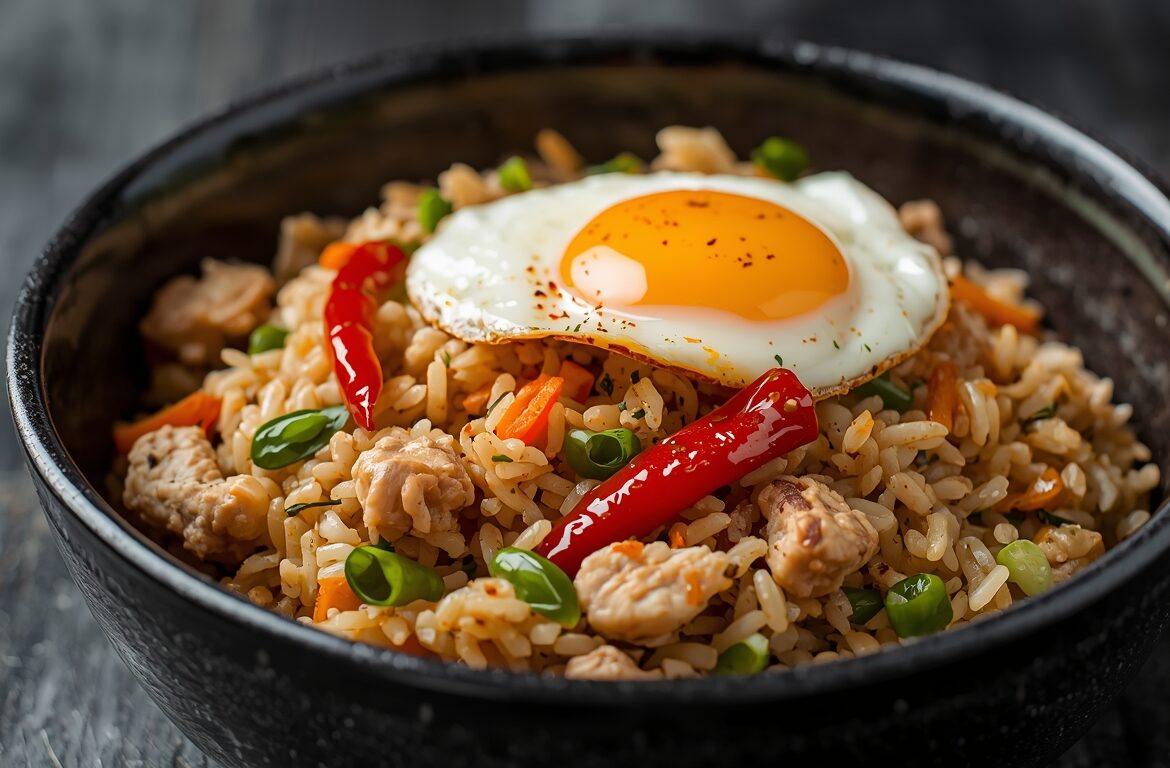
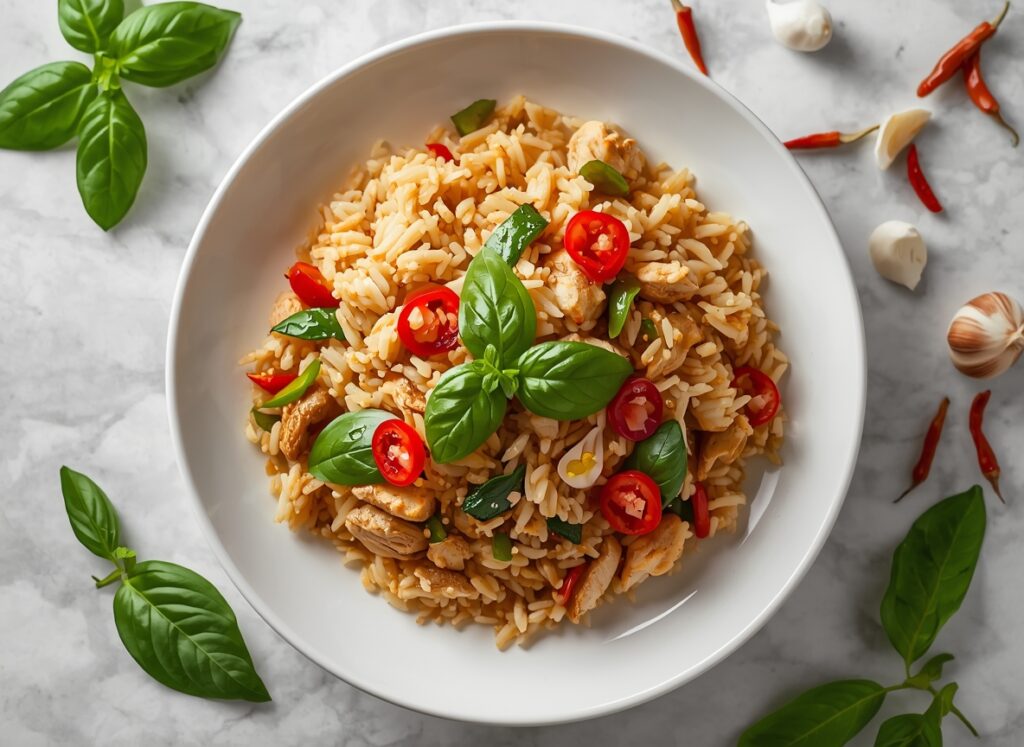
The Thai Basil Fried Rice Recipe, known in Thailand as Khao Pad Krapow, is a pillar of Southeast Asian street food culture. Unlike many Chinese-style fried rice variations that focus on subtle ginger and toasted sesame notes, the Thai version is defined by its bold, aromatic, and spicy profile. The soul of the dish lies in the interaction between the peppery notes of Holy Basil and the sharp heat of Thai bird’s eye chilies.
For the home cook, mastering this recipe requires a shift in perspective. It is not merely a way to use up leftover rice; it is a high-heat stir-fry technique designed to create a complex umami foundation. A professional-grade Thai Basil Fried Rice Recipe achieves a “dry” texture where every grain of rice is separate, glossy, and infused with the fragrance of the herbs. This article provides a technical framework to replicate these authentic results using standard kitchen equipment.
How Cooking Improves Chicken Quality
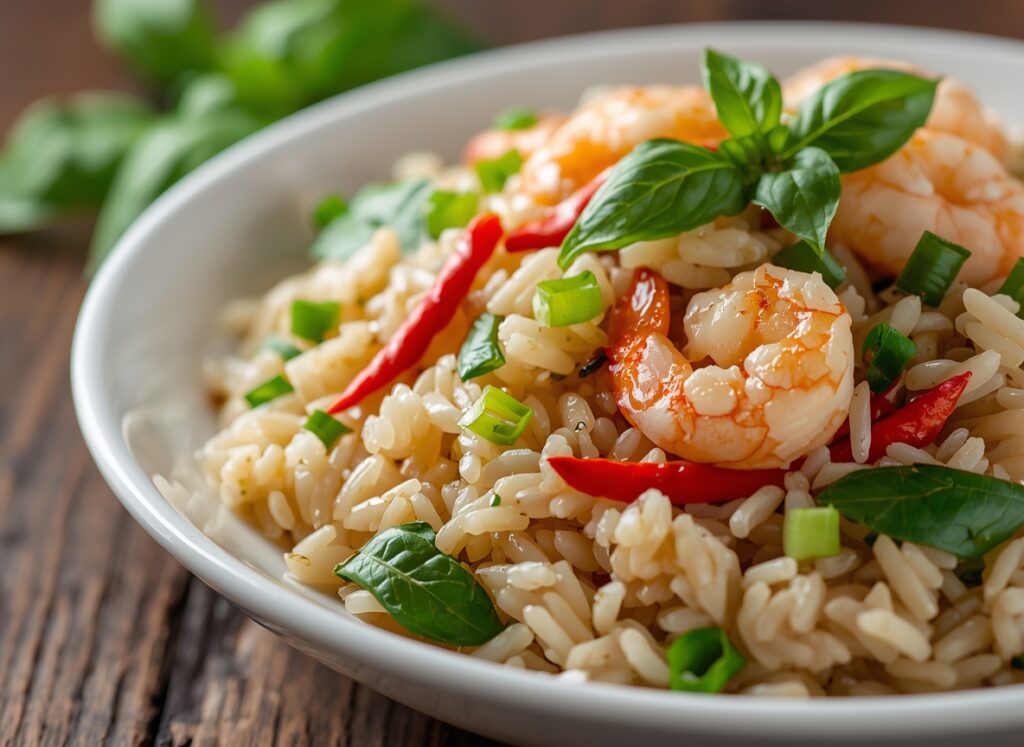
Protein choice is a critical component of the Thai Basil Fried Rice Recipe. While pork or beef are common, chicken is arguably the most popular protein for its ability to absorb the savory sauce without overwhelming the delicate aroma of the basil. However, chicken can easily become dry and stringy when subjected to the intense heat of a wok.
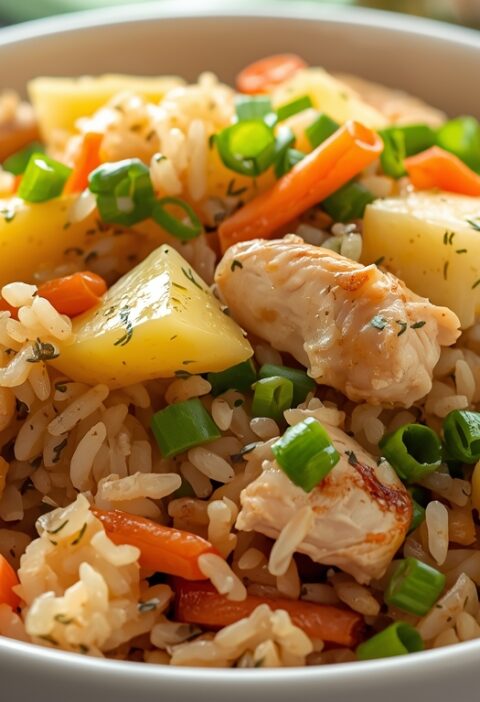
Using the correct cooking method significantly improves chicken quality in this dish. By dicing the chicken into small, uniform pieces (approximately 1/2 inch), you increase the surface area for the Maillard reaction—the chemical process that creates a savory, browned crust. Furthermore, flash-frying the chicken at the start of the process ensures the interior remains succulent while the exterior develops a deep, caramelized flavor. This par-cooking step prevents the chicken from overcooking during the subsequent phases when the rice and vegetables are added.
Ingredients Breakdown for Thai Basil Fried Rice
Achieving the specific flavor profile of an authentic Thai Basil Fried Rice Recipe depends on the selection of high-quality, traditional ingredients.
The Rice
For the best structural results, use long-grain jasmine rice. Bold Tip: The rice must be “day-old” or chilled for at least 6 hours. Freshly cooked rice contains too much moisture, which leads to a gummy or mushy texture. Chilling the rice allows the starch to undergo retrogradation, resulting in firm grains that can withstand the high-heat stir-fry process.
The Basil
There is a significant difference between sweet Italian basil and the basil used in a Thai Basil Fried Rice Recipe.
- Holy Basil (Krapow): The authentic choice, offering a spicy, peppery, and clove-like aroma.
- Thai Basil (Horapa): A common and acceptable substitute with an anise or licorice-like profile.
The Aromatics and Sauce
- Thai Bird’s Eye Chilies: These provide the characteristic sharp heat.
- Garlic: Freshly smashed or minced to release essential oils.
- Fish Sauce: Provides the foundational saltiness and fermented depth.
- Oyster Sauce and Dark Soy Sauce: These add body, sweetness, and the rich caramel color associated with the dish.
Tools and Equipment You Must Have
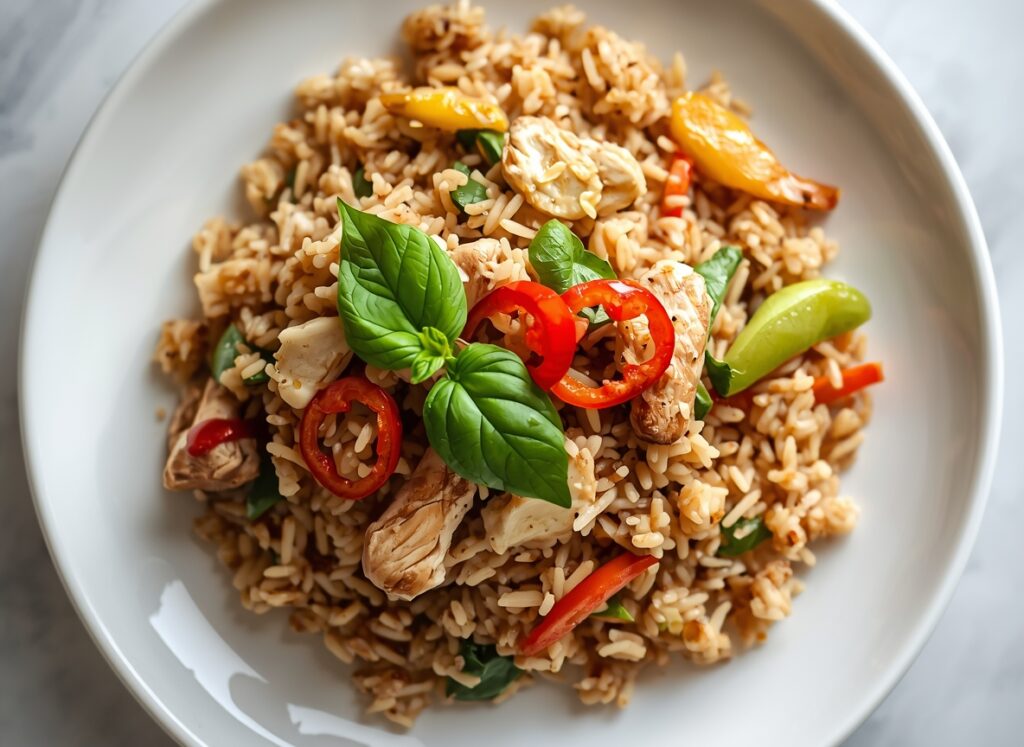
To execute the Thai Basil Fried Rice Recipe with precision, specific tools are required to manage high heat and rapid movement.
- Carbon Steel Wok or Large Cast-Iron Skillet: These materials have high thermal emissivity, allowing the rice to “sear” rather than steam.
- Mortar and Pesto: Traditionally used to crush the garlic and chilies together. This releases the juices and oils more effectively than a knife, creating a more pungent flavor base.
- Wok Spatula (Chuan): The curved edge is essential for getting under the rice and flipping it quickly to ensure even heat distribution.
- High-BTU Burner: If cooking on an electric or induction stove, ensure the pan is fully preheated until a drop of water evaporates instantly upon contact.
Timing and Temperature Explained Clearly
Thermal management is the most important technical aspect of the Thai Basil Fried Rice Recipe. The entire cooking process, from the first drop of oil to the final toss, should take less than 10 minutes.
- Infusion Phase (Medium Heat): Aromatics like garlic and chili are sautéed briefly. If the heat is too high here, the garlic will burn and turn bitter.
- Searing Phase (High Heat): Once the protein and rice are added, the heat must be increased to its maximum. The goal is to hear a constant sizzling sound.
- The “Wok Hei” Effect: This refers to the “breath of the wok.” High heat causes the sugars in the sauces to caramelize against the hot metal, creating a smoky, charred flavor that is essential to the dish.
- The Final Wilt (Off Heat): Basil is a delicate herb. It should be added only after the heat is turned off. The residual heat of the rice is sufficient to wilt the leaves and release their oils without destroying their color or flavor.
Step-by-Step Guide to Thai Basil Fried Rice Recipe
1. Preparation of the Paste
In a mortar and pestle, crush 4-5 Thai bird’s eye chilies and 4 cloves of garlic into a coarse paste. If you prefer less heat, de-seed the chilies before crushing.
2. The Protein Sear
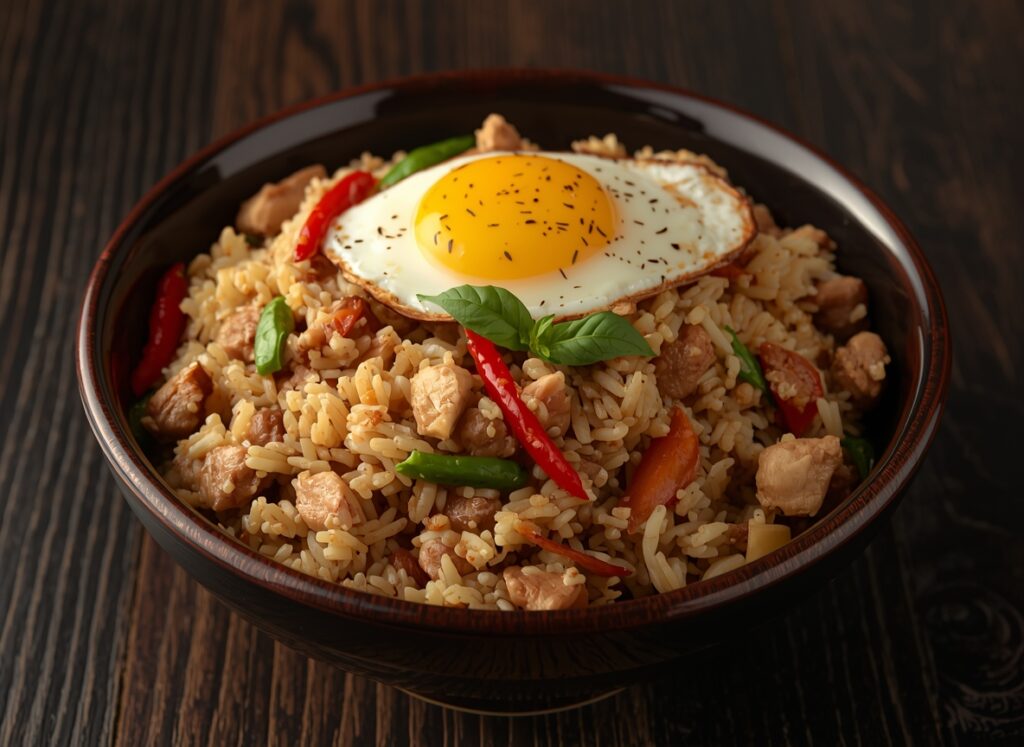
Heat 2 tablespoons of neutral oil (such as canola or vegetable) in your wok over high heat. Add 1/2 lb of diced chicken. Spread the chicken out and let it sit for 60 seconds to develop a golden-brown crust before stirring. Once cooked through, remove the chicken and set it aside.
3. Infusing the Aromatics
Add another tablespoon of oil to the hot wok. Add the chili-garlic paste. Sauté for 30–45 seconds until the aroma is pungent and the garlic is golden.
4. Frying the Starch
Add 3 cups of chilled jasmine rice to the wok. Bold Tip: Use your spatula to break up any clumps of rice before adding it to the pan. Stir-fry for 2-3 minutes, ensuring the rice is coated in the flavored oil and begins to “pop” or toast against the wok.
5. Seasoning the Dish
Add the chicken back into the pan. Drizzle 1 tablespoon of oyster sauce, 1 tablespoon of fish sauce, and 1 teaspoon of dark soy sauce around the edges of the wok. This allows the sauces to caramelize slightly before they are tossed with the rice. Add 1/2 teaspoon of sugar to balance the salt.
6. The Basil Finish
Turn off the heat. Add 1 cup of fresh Holy Basil or Thai Basil leaves. Toss the rice 3-4 times until the basil is just wilted. Serve immediately, traditionally topped with a crispy fried egg (Kai Dao).
Common Errors and How to Prevent Them
Even with a detailed Thai Basil Fried Rice Recipe, certain technical mistakes can compromise the quality of the final dish.
- Gummy or Clumpy Rice: This is the most frequent issue. It is caused by using fresh, warm rice. Always use cold, day-old rice that has had time to dry out in the refrigerator.
- Burnt Garlic: Because garlic is minced finely, it burns in seconds on a hot wok. Keep the aromatics moving constantly and be ready to add the rice immediately to lower the pan’s temperature.
- Lack of Basil Aroma: This occurs when the basil is added too early or cooked for too long. Adding basil to a boiling or intensely hot pan for more than 30 seconds will cause it to lose its volatile oils.
- Soggy Vegetables: If adding vegetables like bell peppers or onions, sauté them quickly and ensure they retain a “crunch.” Overloading the pan with vegetables can release too much water, steaming the rice instead of frying it.
Frequently Asked Questions About Thai Basil Fried Rice
Can I make this Thai Basil Fried Rice Recipe vegetarian?
Yes. Substitute the chicken with firm tofu or mushrooms. For the sauce, replace the fish sauce with a high-quality light soy sauce and use a mushroom-based vegetarian oyster sauce.
What is the best way to reheat leftovers?
To maintain the texture, reheat the fried rice in a skillet over medium-high heat with a teaspoon of oil. Avoid the microwave if possible, as it can make the rice grains soft and damp.
Can I use Italian Basil instead?
If you cannot find Holy or Thai basil, Italian basil can be used, but the flavor will be significantly different. Italian basil is much sweeter and lacks the spicy, peppery undertones required for an authentic Thai Basil Fried Rice Recipe. Adding a pinch of black pepper can help mimic the Holy Basil profile.
Why is my fried rice pale in color?
The dark, rich color comes from the dark soy sauce. If your rice looks pale, you may have used only light soy sauce. Dark soy sauce is thicker and less salty, used primarily for its deep caramel color and mild sweetness.
How do I get a perfectly crispy fried egg for the top?
To make a Thai-style fried egg, use a generous amount of oil in a small pan. Heat the oil until it is shimmering, then crack the egg in. The edges should bubble and turn crispy and golden immediately, while the yolk remains runny.
Is this recipe gluten-free?
Standard soy sauce and oyster sauce contain wheat. To make a gluten-free Thai Basil Fried Rice Recipe, ensure you use Tamari and a certified gluten-free oyster sauce. Fish sauce is naturally gluten-free.
By focusing on the technical milestones of ingredient preparation and heat management, you can master a Thai Basil Fried Rice Recipe that rivals the best street vendors in Bangkok. The key is speed, high heat, and the freshest aromatics available.
Quick Cuban Rice Recipe Perfect for Dinner
The Best Shrimp with Rice Recipes for Family Dinners
Easy Spinach Rice Recipe – Healthy & Flavorful
Easy French Onion Rice Recipe – Rich & Savory