Achieving the Best Basmati Rice Recipe requires a transition from intuitive cooking to a technical, process-oriented approach. Basmati, a long-grain aromatic rice primarily grown in the foothills of the Himalayas, is prized for its slender shape and its ability to remain distinct and fluffy after cooking. However, the very characteristics that make it desirable—its length and delicate structure—also make it prone to breaking or becoming gummy if the preparation is inconsistent.
To produce professional-quality results, one must master the relationship between starch removal, hydration, and steam pressure. This guide focuses on a high-reliability method that eliminates the guesswork often associated with stovetop rice preparation. By following a structured protocol, you can ensure that every grain is elongated, separate, and aromatic, meeting the standards of the Best Basmati Rice Recipe every time you cook.
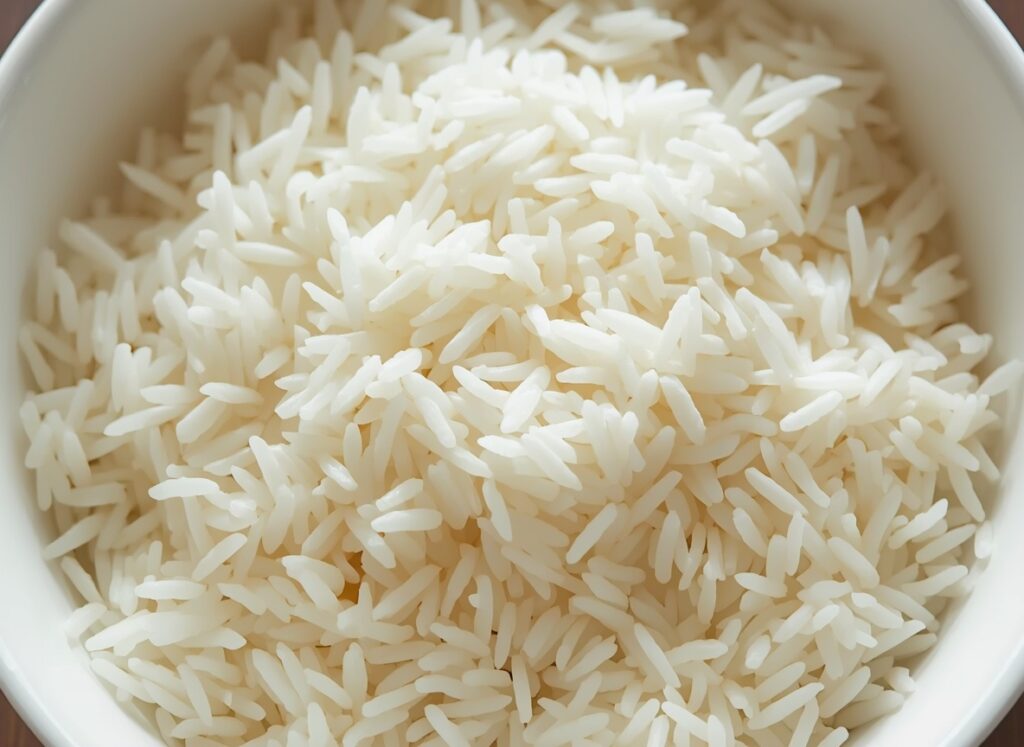
Variables That Affect Cooking Accuracy
The lack of consistency in home-cooked rice usually stems from a failure to control environmental and ingredient-specific variables. To master the Best Basmati Rice Recipe, you must account for the following:
- Age of the Rice: Older, aged Basmati (often aged 12–24 months) absorbs water differently than “new” rice. Aged rice is preferred as it is less sticky and expands more significantly.
- Surface Starch: Residual starch on the exterior of the grain acts as a thickening agent. If not removed, it creates a “glue” that bonds the grains together.
- Evaporation Rates: The seal of your pot’s lid and the diameter of the cooking vessel dictate how much steam escapes. This directly affects the final water-to-rice ratio.
- Altitude: At higher altitudes, water boils at a lower temperature, necessitating longer cooking times and slightly higher hydration levels.
Ingredient Prep for Reliable Outcomes
Preparation is the most significant phase of the Best Basmati Rice Recipe. Bypassing these steps will invariably lead to a sub-optimal texture.
1. The Rinsing Protocol
Place the dry rice in a fine-mesh sieve or a bowl. Rinse under cold running water, agitating the grains gently with your fingers. Continue until the water runs completely clear. Bold Tip: Do not skip this step; the white “milkiness” in the water is excess starch that will cause the rice to clump.
2. The Soaking Phase
Once rinsed, submerge the rice in cold water for 20 to 30 minutes. This allows the moisture to penetrate the core of the grain. Properly hydrated grains expand more evenly during the boiling phase and are less likely to crack under sudden heat.
3. Salt and Fat
Reliability in flavor requires early seasoning. Adding salt to the cooking water ensures the grain is seasoned from the inside out. A small amount of neutral oil or clarified butter (ghee) coats the grains, providing an extra layer of protection against sticking.
Equipment Calibration and Setup
For the Best Basmati Rice Recipe, your equipment must facilitate even heat distribution and a perfect steam seal.
- Heavy-Bottomed Saucepan: A thick base prevents hot spots that can scorch the bottom layer of rice before the top layer is steamed.
- Tight-Fitting Lid: If your lid has a steam vent, plug it with a small piece of foil or cover the pot with a layer of parchment paper before placing the lid on top to create a true hermetic seal.
- Digital Kitchen Scale: Volume measurements (cups) are notoriously inaccurate. For maximum reliability, use a 1:1.5 ratio by weight (e.g., 200g rice to 300g water).
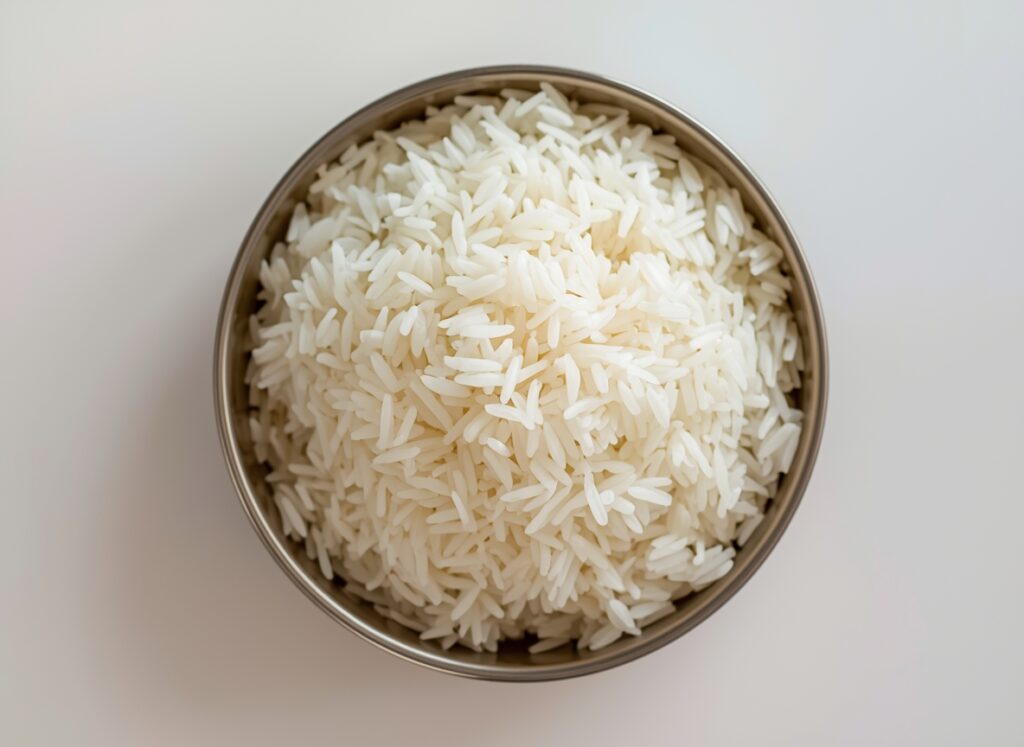
Timing Strategy for Best Results
Precision timing is the final pillar of the Best Basmati Rice Recipe. The process is divided into three distinct thermal phases:
- The Boil (2–3 Minutes): High heat to bring the internal temperature of the water to $100^{\circ}C$.
- The Simmer (10–12 Minutes): The lowest possible heat setting to allow the grains to absorb moisture without agitated boiling.
- The Rest (5–10 Minutes): Off-heat steaming. This is when the moisture redistributes evenly throughout the pot, ensuring the top layer is as tender as the bottom.
Reliable Best Basmati Rice Recipe Method
1. Measure and Rinse
Measure 1 cup (approx. 200g) of aged Basmati rice. Rinse 4–5 times until the water is clear.
2. Hydrate
Soak the rice in 2 cups of water for 30 minutes. Drain thoroughly in a fine-mesh sieve.
3. Combine and Season
Place the drained rice into the saucepan. Add 1.5 cups of fresh water (or 1.5 parts by weight). Add 1/2 teaspoon of kosher salt and 1 teaspoon of neutral oil.
4. Initial Boil
Bring the water to a rolling boil over high heat. Stir once—and only once—to ensure no grains are stuck to the bottom.
5. The Sealed Simmer
Turn the heat to the absolute lowest setting. Place the lid (with a parchment paper seal) on the pot. Set a timer for 12 minutes. Bold Tip: Do not open the lid under any circumstances during this phase; releasing the steam will instantly ruin the hydration cycle.
6. The Rest
After 12 minutes, turn off the heat. Do not move the pot or open the lid. Let it rest for 10 minutes. This final step is what creates the “fluffy” texture associated with the Best Basmati Rice Recipe.
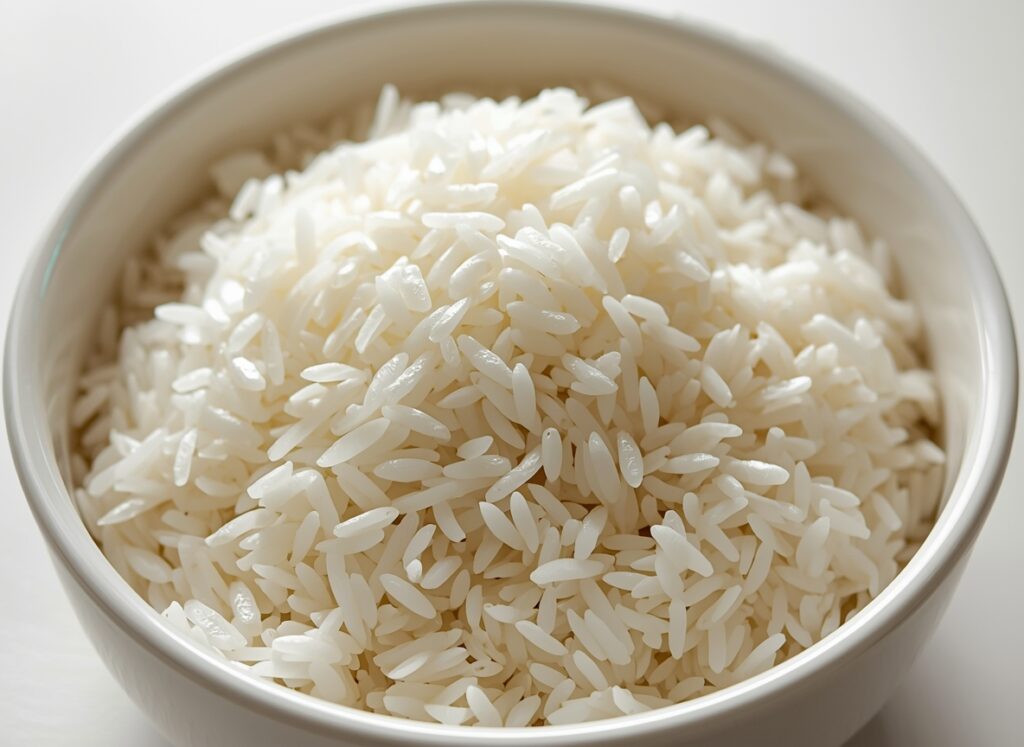
Consistency Issues and Solutions
- Rice is crunchy or undercooked: This usually means the lid was not tight enough, allowing too much steam to escape. Add 1 tablespoon of boiling water, replace the lid, and let it sit on low heat for 3 more minutes.
- Rice is mushy or broken: This is caused by over-stirring or over-soaking. Handle the rice gently when rinsing, and never stir the rice once it has begun to simmer.
- The bottom is burnt: The heat was too high during the simmer phase. Ensure you use the lowest possible “warm” or “low” setting on your burner. Using a heat diffuser can also help.
- The rice is flavorless: Ensure you are using high-quality aged Basmati. Non-aged or “long grain” varieties lack the 2-acetyl-1-pyrroline compound responsible for the signature popcorn-like aroma.
Frequently Asked Questions (FAQ)
What is the best water-to-rice ratio for Basmati?
For the Best Basmati Rice Recipe, a ratio of 1:1.5 (one part rice to one and a half parts water) is standard for the stovetop absorption method. If using a rice cooker, follow the manufacturer’s 1:1 line.
Should I use hot or cold water to start?
Always start with cold or room-temperature water. Starting with hot water will cook the outside of the grain too quickly, leading to a hard center.
Can I add aromatics to the water?
Yes. To elevate the Best Basmati Rice Recipe, you can add a bay leaf, two green cardamom pods, or a small cinnamon stick to the water before boiling.
Why does my rice stick to the pan?
This is usually due to insufficient rinsing of surface starch or a pot with a thin base. Proper rinsing and a teaspoon of oil or ghee will resolve this.
Is Basmati rice gluten-free?
Yes, all pure Basmati rice is naturally gluten-free.
How do I reheat leftover Basmati?
To maintain the integrity of the Best Basmati Rice Recipe, reheat in a microwave with a damp paper towel over the top, or stir-fry it briefly in a pan with a teaspoon of water to re-steam the grains.
The Best Pineapple Rice Recipe for Quick Weeknight Meals
Simple Chipotle Lime Rice Recipe Made at Home
Simple Jasmine Rice Recipes for Lunch & Dinner
Best Curd Recipes for Rice You Can Make Daily