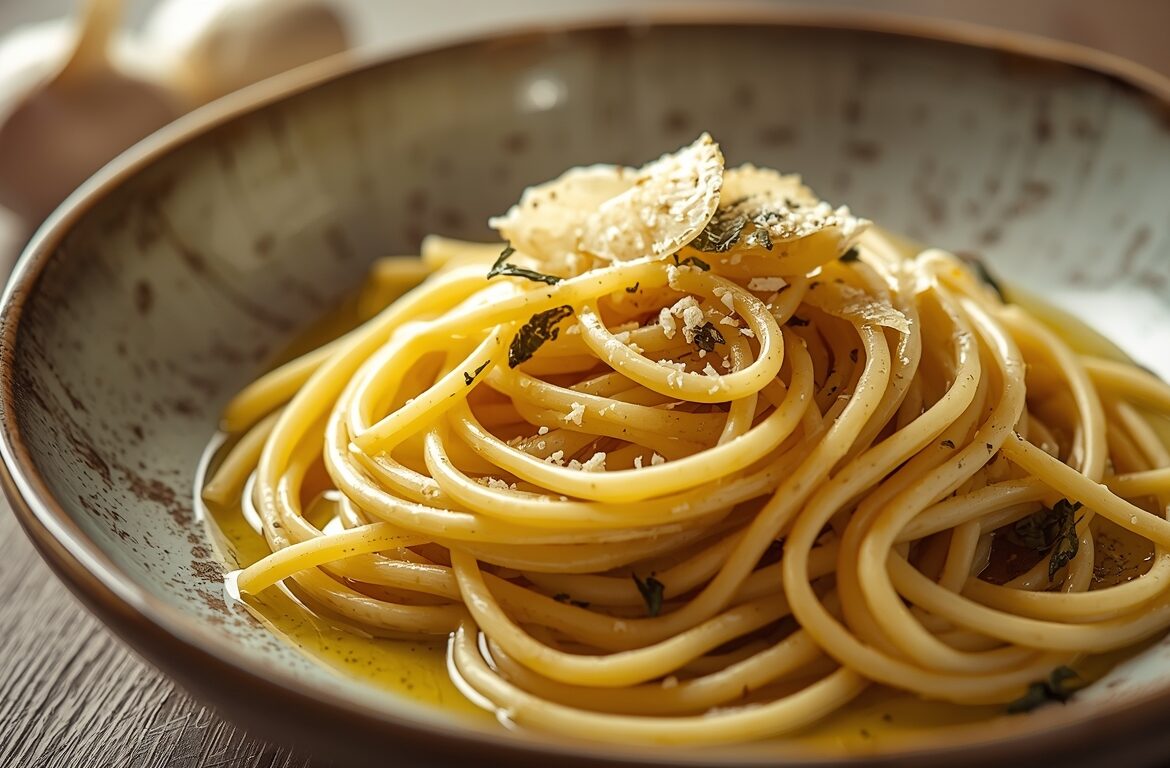
In the world of Italian cuisine, few dishes represent the beauty of simplicity better than Aglio e Olio. This Garlic and Olive Oil Pasta Recipe is the ultimate testament to how a handful of pantry staples can be transformed into a restaurant-quality masterpiece. By focusing on the quality of the oil and the precise tempering of the garlic, you create a sauce that is light, aromatic, and incredibly satisfying.
Unlike heavy cream or tomato-based sauces, a homemade garlic olive oil pasta relies on an emulsion of oil and starchy pasta water. This technique creates a silky glaze that coats every strand of pasta without feeling greasy. It is a fundamental skill for any home cook, offering a quick yet sophisticated solution for late-night cravings or elegant dinner parties alike.
Why Everyone Loves This Dish
The enduring appeal of this easy garlic olive oil pasta recipe lies in its purity of flavor. It celebrates the pungent, nutty notes of toasted garlic and the fruity, peppery finish of high-quality olive oil. Because it requires no elaborate prep, it is the quintessential “emergency meal” that feels like a luxury rather than a compromise.
Furthermore, this dish is naturally vegetarian and can easily be made vegan, making it a crowd-pleaser for diverse dietary needs. Its minimalist nature also makes it the perfect canvas for customization. Whether you add a pinch of red pepper flakes for heat or a handful of fresh herbs for brightness, the foundational balance of garlic and oil remains unmistakably comforting.
Ingredients Breakdown (With Tips)
To achieve a perfect Garlic and Olive Oil Pasta Recipe, you must prioritize the quality of these five core components:
- Long Pasta: Spaghetti is the traditional choice, but linguine or fettuccine also work beautifully. The long strands provide the ideal surface area for the oil emulsion.
- Extra Virgin Olive Oil (EVOO): This is the heart of the sauce. Use the best quality oil you have; it should have a bright, peppery, or grassy aroma.
- Fresh Garlic: Use plump, fresh cloves. Avoid the pre-minced jars, as they lack the essential oils and sweetness of fresh garlic and can often taste bitter.
- Red Pepper Flakes (Peperoncino): Adds a subtle, warming heat that cuts through the richness of the oil.
- Fresh Parsley: Flat-leaf Italian parsley provides a necessary burst of color and a fresh, herbal finish to balance the toasted garlic.
Substitute Options for Missing Ingredients
While the classic version is hard to beat, this homemade garlic olive oil pasta is quite forgiving:
- Gluten-Free: Simply use your favorite gluten-free spaghetti. Since the sauce is naturally gluten-free, the transition is seamless.
- The Herb Factor: If you don’t have parsley, fresh basil or a small amount of dried oregano can offer a different but delicious aromatic profile.
- Cheese Additions: While purists might argue, a dusting of Pecorino Romano or Parmesan adds a salty, umami depth that many diners love.
- Breadcrumbs: If you want extra texture, toasted sourdough breadcrumbs (Pangrattato) can be used as a crunchy garnish.
Must-Have Kitchen Tools
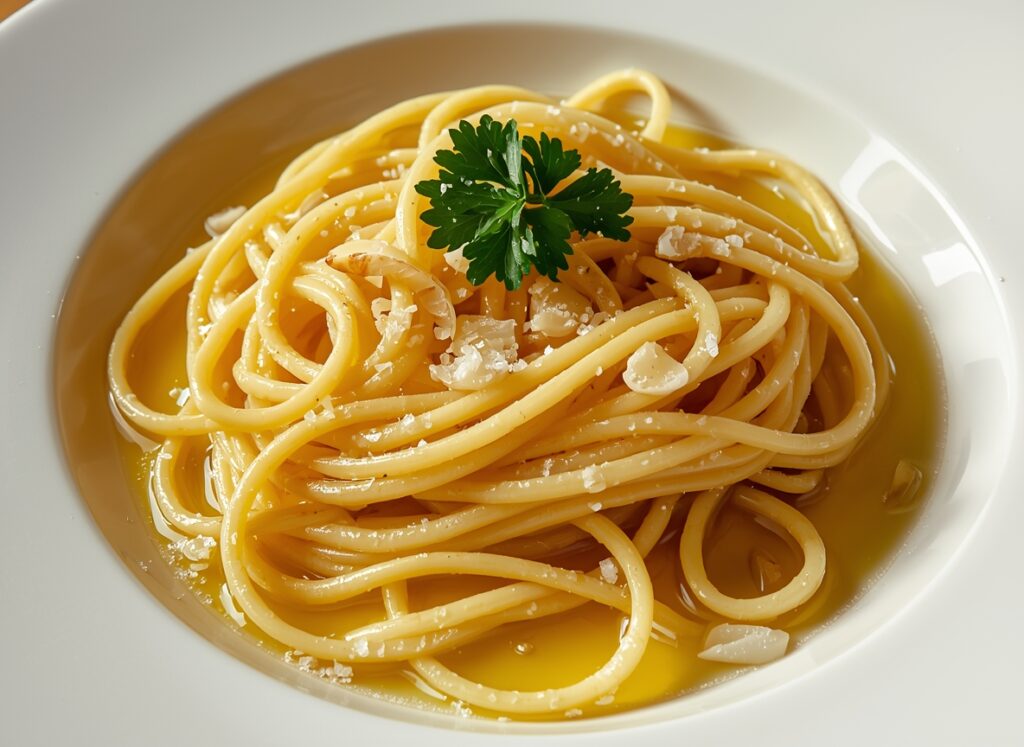
- Large Pasta Pot: To cook the pasta in plenty of heavily salted water, which is essential for flavor and starch release.
- Wide Skillet or Sauté Pan: A large surface area allows you to toss the pasta and oil together effectively to build the emulsion.
- Tongs: The best tool for moving long pasta from the pot to the skillet while bringing a bit of that “liquid gold” pasta water with it.
- A Sharp Knife or Mandoline: For slicing the garlic paper-thin, ensuring it softens and flavors the oil without burning.
Quick Prep & Cooking Schedule
- Prep Time: 5 minutes (slicing garlic and chopping parsley).
- Cook Time: 10–12 minutes (simultaneous pasta boiling and oil infusion).
- Total Time: Approximately 15 minutes.
- Complexity: Easy/Beginner.
How to Cook Garlic and Olive Oil Pasta Recipe Step by Step
1. Boil the Water
Bring a large pot of water to a rolling boil. Add at least a tablespoon of salt—the water should taste like the sea. This is the only chance you have to season the pasta itself.
2. Infuse the Oil
While the pasta cooks, add 1/3 cup of olive oil to a cold skillet. Add 6–8 thinly sliced garlic cloves and a pinch of red pepper flakes. Turn the heat to medium-low. Starting with a cold pan allows the garlic to release its flavor gradually as the oil heats up.
3. The Golden Window
Cook the garlic slowly until it turns a light golden blonde. If it turns dark brown or black, it will be bitter and you must start over. As soon as it reaches a pale gold, remove the pan from the heat or add a splash of pasta water to stop the cooking.
4. Transfer the Pasta
About 2 minutes before the pasta reaches al dente, use tongs to transfer it directly from the boiling water into the skillet with the garlic oil.
5. Emulsify
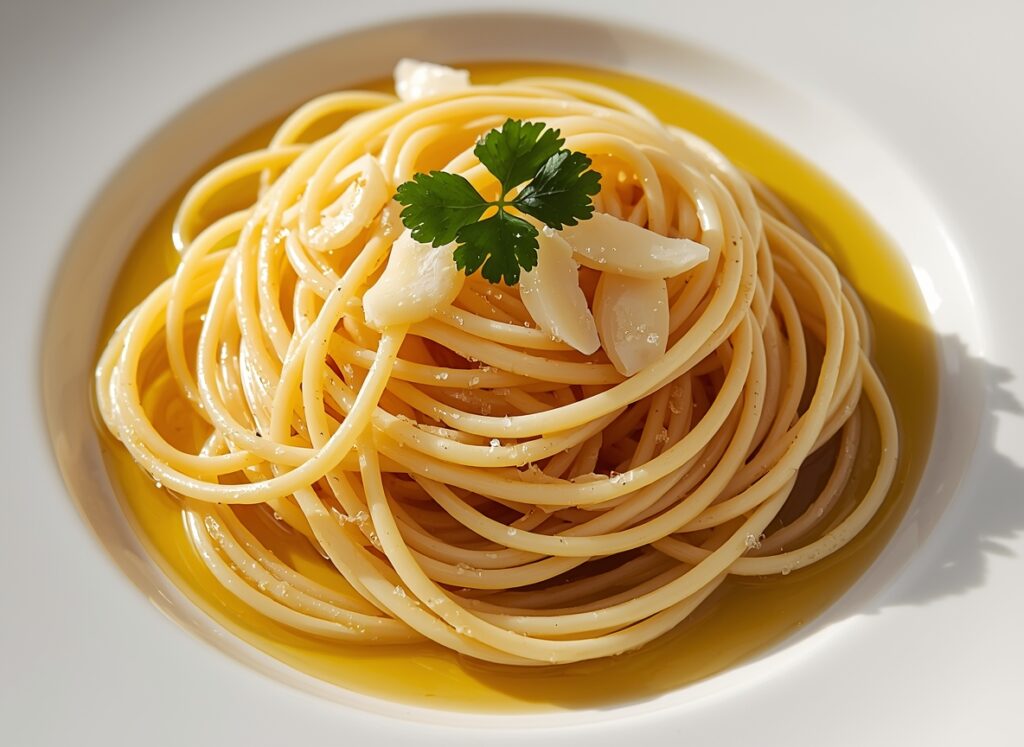
Add 1/2 cup of starchy pasta water to the skillet. Increase the heat to medium-high and toss the pasta vigorously. The starch in the water and the oil will combine to create a creamy, “sticky” sauce that clings to the noodles.
6. The Final Flourish
Remove from heat. Fold in a generous handful of chopped parsley and a final drizzle of fresh olive oil. Serve immediately while piping hot.
Mistakes That Can Ruin Garlic and Olive Oil Pasta Recipe
The most frequent error is burning the garlic. Because the slices are thin, they can go from golden to burnt in seconds. Always keep a close eye on the pan and have your pasta water ready to cool the oil down.
Another mistake is discarding all the pasta water. Without that starchy liquid, you will simply have oily noodles rather than a cohesive sauce. The water is the bridge that turns fat and starch into an elegant glaze.
Expert Tips for Extra Stickiness
In this Garlic and Olive Oil Pasta Recipe, “stickiness” refers to the sauce’s ability to adhere to the pasta. To maximize this, do not rinse your pasta after draining. The surface starch is what allows the oil to “stick.”
Additionally, finishing the pasta cooking inside the skillet (the “risotto method” for pasta) ensures that the noodles absorb the garlic-infused oil. This creates a deeper flavor and a more unified texture that prevents the oil from simply pooling at the bottom of the bowl.
Serving Ideas & Pairings
This easy garlic olive oil pasta recipe is traditionally a standalone dish, but it pairs beautifully with various sides:
- Protein: Serve alongside grilled shrimp, lemon-herb roasted chicken, or a seared steak.
- Vegetables: A side of roasted broccolini or a crisp arugula salad with a lemon vinaigrette provides a fresh contrast.
- Wine: Pair with a crisp, dry white wine like Vermentino or Pinot Grigio to complement the citrusy and oily notes.
Nutritional Value Overview
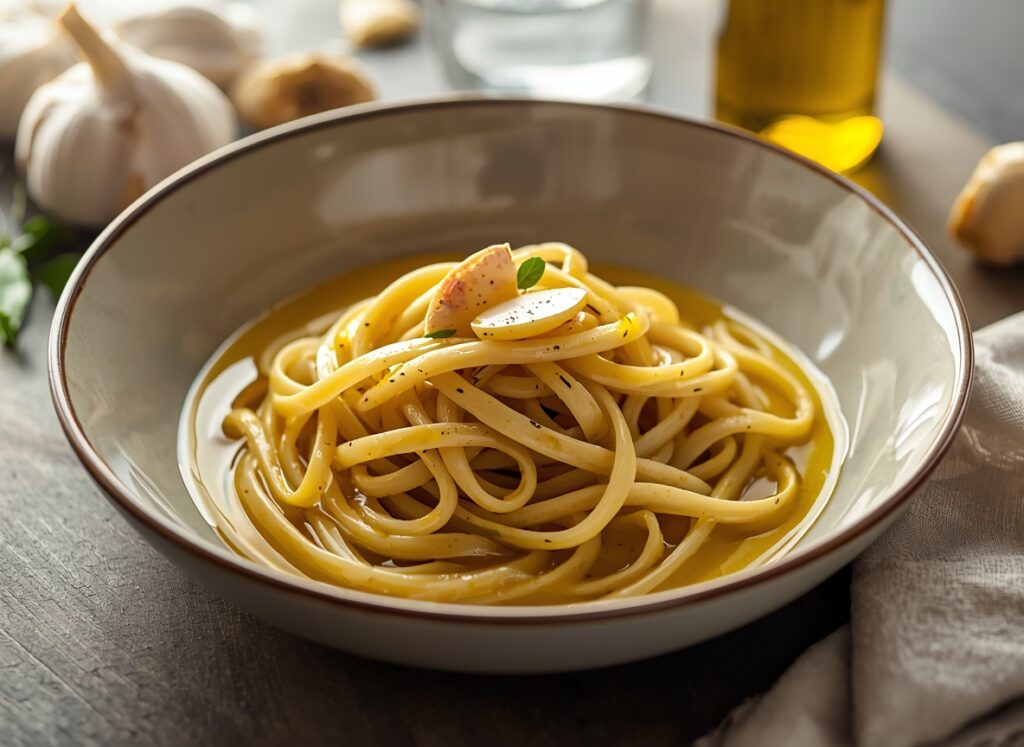
This dish is a staple of the Mediterranean diet, known for its heart-healthy fats. Olive oil is rich in monounsaturated oleic acid and antioxidants. Garlic is well-regarded for its potential to support immune health and reduce blood pressure.
While it is a carbohydrate-focused meal, using a high-quality durum wheat pasta or whole-grain alternative can provide a steady source of energy. It is a clean, “real food” meal that avoids the hidden sugars and preservatives found in many commercial sauces.
Calories, Protein & Carbs
(Per serving, based on 2oz dry pasta)
| Nutrient | Amount |
| Calories | 380 kcal |
| Total Fat | 19g |
| Protein | 8g |
| Carbohydrates | 42g |
| Fiber | 2g |
Make-Ahead & Storage Advice
- Fresh is Best: This dish is best enjoyed immediately. As the pasta cools, it continues to absorb the oil and water, which can lead to a drier texture.
- Refrigeration: Store leftovers in an airtight container for up to 2 days.
- Note: The oil will solidify in the fridge; this is normal and a sign of high-quality extra virgin olive oil.
Reheating Tips for Best Texture
To prevent the pasta from becoming greasy or mushy during reheating, avoid the microwave if possible.
- Place the pasta in a skillet over low heat.
- Add 2 tablespoons of water or chicken broth to help loosen the sauce.
- Toss gently until warmed through.
- Add a fresh squeeze of lemon or a small drizzle of oil to “awaken” the flavors of the Garlic and Olive Oil Pasta Recipe.
FAQs About Garlic and Olive Oil Pasta Recipe
Q: Can I use garlic powder instead of fresh garlic?
A: For this specific recipe, no. The flavor of toasted fresh garlic is the primary component of the dish. Garlic powder will not provide the same depth or texture.
Q: My sauce is too oily and won’t emulsify. What happened?
A: You likely didn’t use enough pasta water or didn’t toss the pasta vigorously enough. The physical action of tossing creates the emulsion.
Q: Should I use cheese?
A: Traditionally, Aglio e Olio does not include cheese, but in modern homemade garlic olive oil pasta preparations, many people enjoy the addition of Parmesan. It is entirely a matter of personal preference.
Q: How do I slice garlic thin enough?
A: Use a very sharp chef’s knife or a handheld mandoline. Aim for translucent, “Goodfellas-style” slices that will melt into the oil.
Quick & Flavorful Elote Pasta Salad Recipe
Quick & Delicious Chicken Fajita Pasta recipe Family Favorite
best way to Make olive garden pasta e fagioli recipe at Home
Boursin Cheese Pasta Recipes – Creamy, Easy & Flavorful
Semolina Pasta Recipe – Simple, Homemade & Delicious