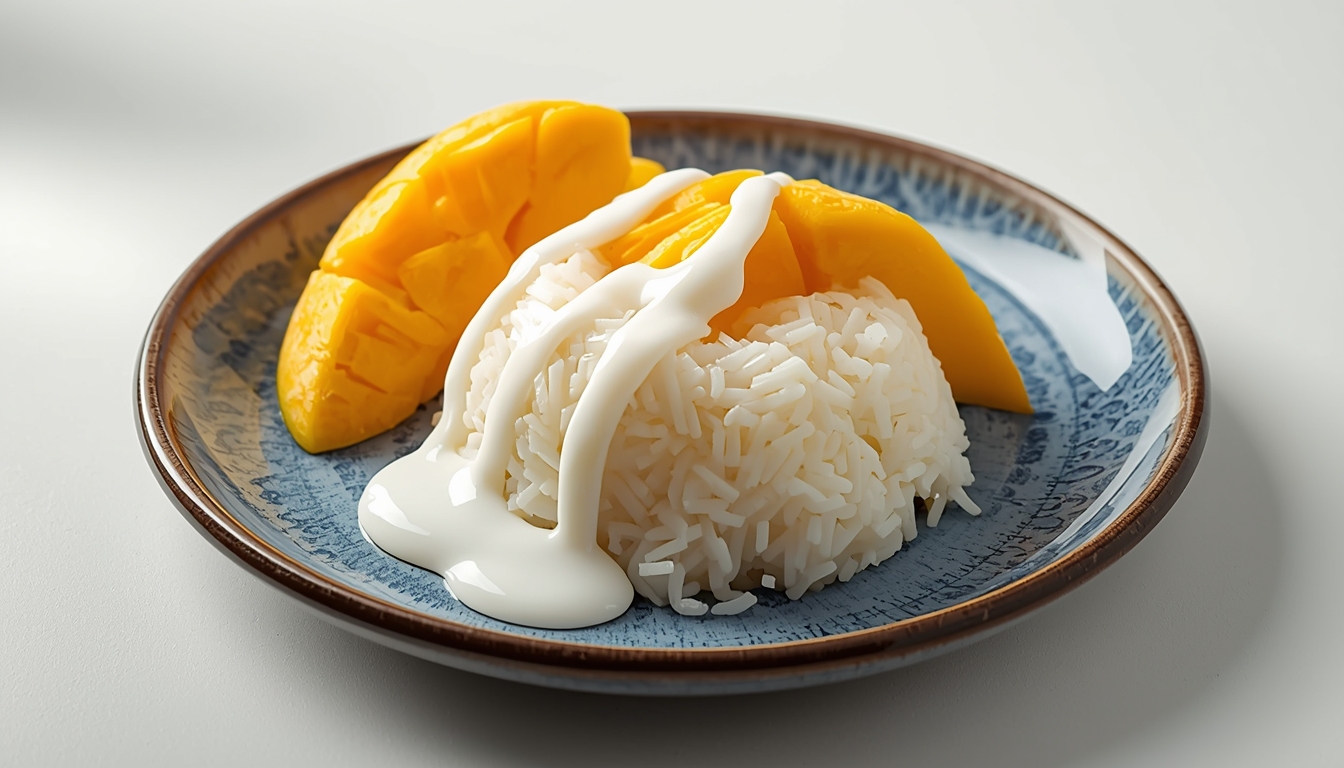
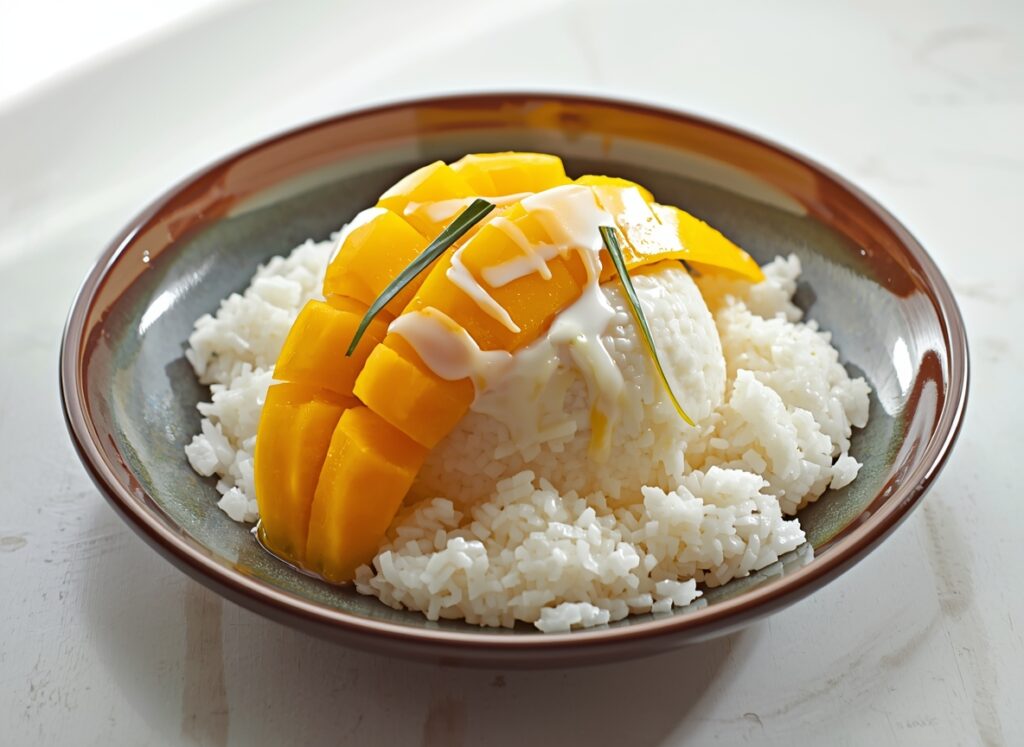
mango sticky rice recipe Picture this: golden mango slices nestled against a mound of glossy, sweet sticky rice, all drizzled with thick coconut cream that melts in your mouth. The air fills with a tropical scent, and each bite blends chewy rice, juicy fruit, and creamy sauce into pure bliss. That’s the magic of mango sticky rice, or Khao Niao Mamuang, Thailand’s beloved street dessert that turns simple ingredients into something unforgettable.
This recipe brings that authentic Thai treat right to your kitchen. You’ll get step-by-step guidance to nail the texture and flavors just like vendors in Bangkok do. No guesswork here—follow along, and you’ll create a dessert that wows guests or satisfies your cravings.
Mastering the Heart of the Dish – Perfect Sweet Sticky Rice
Sticky rice forms the base of your mango sticky rice recipe. Get this right, and the whole dish shines. It takes practice, but the results are worth it.
Selecting the Right Glutinous Rice
You need glutinous rice, also called sweet or sticky rice, for this dessert. Regular long-grain rice won’t work—it stays fluffy and separate, not clingy like you want. Look for Thai brands like Golden Star or Erawan in Asian markets; they offer that perfect chew.
Rinse the rice under cool water until it runs clear. This removes extra starch and prevents gumminess. Soak it in water for at least 4 hours, or overnight if you plan ahead. Drain well before cooking to keep grains intact.mango sticky rice recipe
The Art of Steaming vs. Boiling Sticky Rice
Steaming beats boiling for sticky rice every time. It gives a tender yet chewy bite without turning mushy. Boiling can make it too soft or watery, ruining the balance.
In Thailand, cooks use a bamboo steamer over a pot of simmering water. Line the basket with cheesecloth or a damp towel to hold the rice. Steam for 20 to 25 minutes, checking for doneness—grains should stick together but not stick to your fingers.
If you lack a steamer, improvise with a metal colander over a pot. Cover it tightly with a lid to trap steam. This method keeps the rice fluffy inside while building that signature stickiness.
Crafting the Creamy Coconut Milk Soak
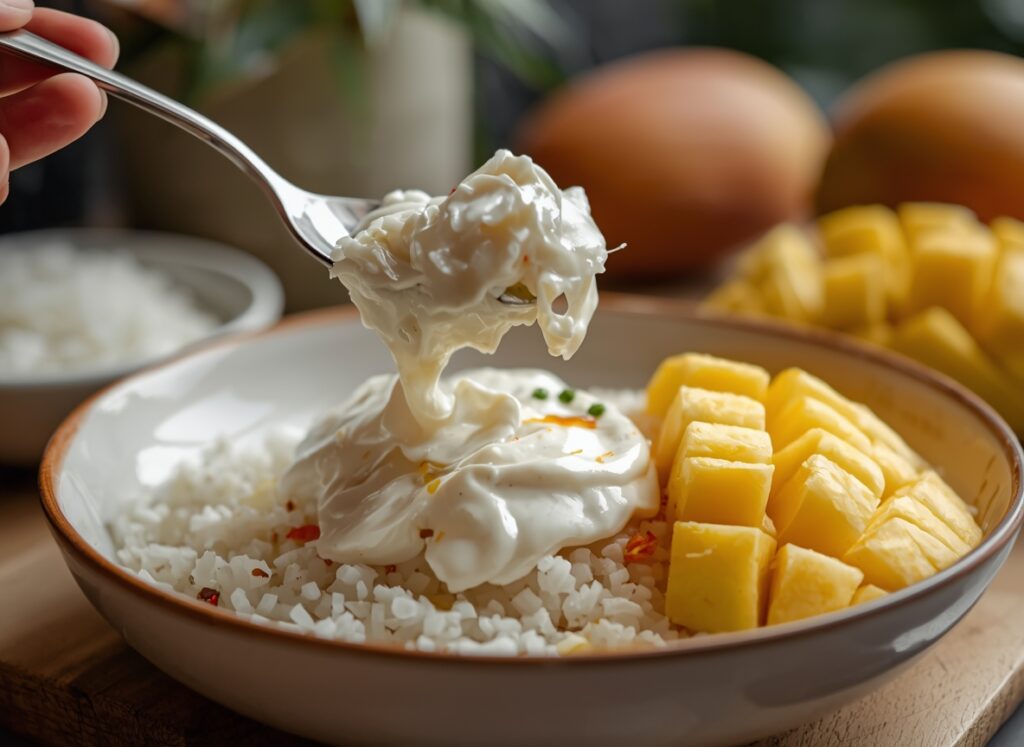
Coconut milk brings the creaminess to your mango sticky rice recipe. Use full-fat canned coconut milk for richness—avoid light versions that lack body. You’ll make two parts: a sweet soak for the rice and a salty topping later.mango sticky rice recipe
Heat 1 cup of coconut milk with 1/2 cup sugar and a pinch of salt over low heat. Stir until sugar dissolves, but don’t let it boil or it might curdle. Let it cool slightly before mixing with the hot rice.
For best results, warm the mixture gently in a double boiler. This keeps the fats emulsified. Taste and adjust sweetness—Thai versions lean toward bold, not cloying.mango sticky rice recipe
Selecting and Preparing the Star Ingredient – Ripe Mangoes
Mangoes steal the show in this authentic Thai dessert. Their sweetness cuts through the rice’s richness. Pick them with care for the best flavor.
Identifying Peak Seasonality and Ripeness
In Thailand, mango season peaks from April to June, when fruits hang heavy on trees during Songkran festivals. Outside Asia, Ataulfo or Champagne mangoes make great swaps—they’re small, sweet, and less fibrous than larger varieties. Avoid Alphonso if you can’t find fresh; they’re premium but seasonal.
Feel for ripeness: the skin yields gently to pressure, like a ripe peach. It should smell fruity at the stem end, not sour. Skip any with brown spots or wrinkles—they’re overripe and mealy.Mango Sticky Rice Recipe
Buy two to three mangoes per serving. In markets like Chatuchak in Bangkok, vendors pick only the juiciest. At home, let them ripen at room temperature in a paper bag to speed things up.
Slicing Techniques for Presentation
Slice mangoes to fan out beautifully over the rice. First, stand the fruit upright and cut off each cheek, avoiding the pit. Score the flesh in a grid pattern without piercing the skin.
Push the skin up from below to pop the cubes out, then slice along the edges for full cheeks. Fan the slices by cutting almost through and spreading them. This creates an eye-catching display that highlights the golden hue.mango sticky rice recipe
For a pro touch, trim the pit’s edges into thin strips. Arrange them artfully on the plate. Practice once, and you’ll get that restaurant-ready look.
Step-by-Step Authentic Assembly and Cooking Instructions
Now comes the fun part: putting it all together. Follow these steps closely for your mango sticky rice recipe. Timing matters to lock in flavors.Mango Sticky Rice Recipe
Preparing the Sweet Rice Base
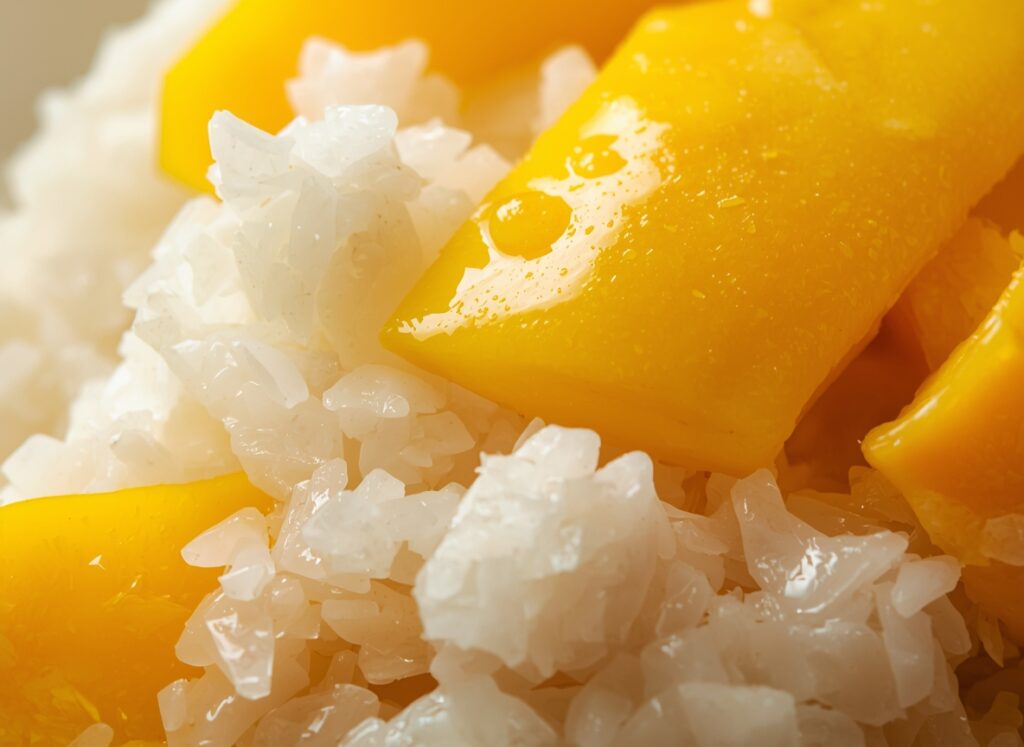
Start with your steamed sticky rice, still warm. Transfer it to a large bowl right away. Pour the cooled sweet coconut milk mixture over it—use about 1 1/2 cups for 2 cups of dry rice.
Stir gently with a spatula to coat every grain. Cover the bowl with a damp cloth and let it sit for 15 to 20 minutes. The rice absorbs the liquid, turning glossy and infused with sweetness.
Fluff lightly before serving. If it’s too dry, add a splash more coconut milk. This step ensures the rice stays moist without sogginess.
Cooking the Finishing Creamy Topping
For the topping, shake a fresh can of coconut cream—thicker than milk for that luxurious pour. In a small pot, combine 1 cup coconut cream, 2 tablespoons sugar, and 1/4 teaspoon salt. Heat on medium-low, stirring until it thickens slightly, about 5 minutes.
Watch closely to avoid separation; if it splits, whisk in a teaspoon of cornstarch slurry. Cool it a bit so it doesn’t wilt the mango. This salty contrast balances the dessert’s sweetness perfectly.
Some recipes add rice flour for extra body. Simmer gently, never boil. Strain if needed for smoothness.
Plating for the Perfect Dessert Experience
Scoop the sweet rice into a shallow bowl or banana leaf for authenticity. Shape it into a dome with a spoon dipped in coconut milk. Lay fanned mango slices alongside, covering half the rice.
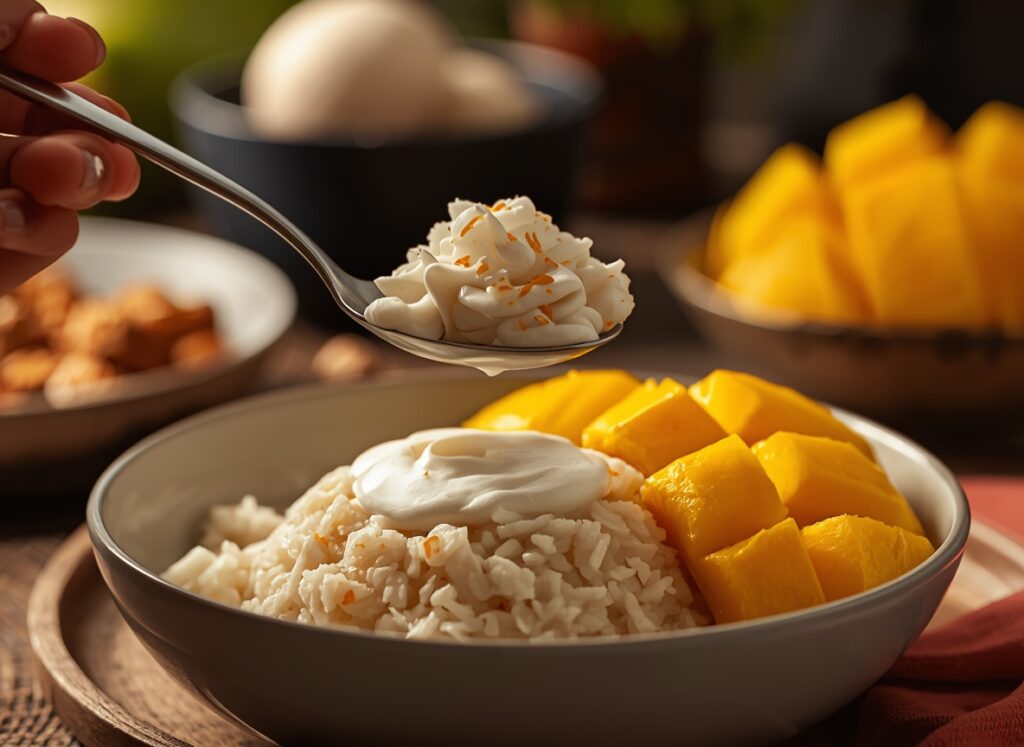
Drizzle 2 to 3 tablespoons of the creamy topping over everything. Let it seep in for a glossy finish. Serve warm or at room temp—cold rice hardens the texture.
Garnish right before eating to keep it fresh. Pair with Thai iced tea for a full treat. Your kitchen now smells like a Bangkok night market.Mango Sticky Rice Recipe
Essential Garnishes and Variations
Garnishes add crunch and depth to mango sticky rice. They prevent the dish from feeling one-note. Keep them simple for true Thai style.mango sticky rice recipe
The Crucial Crispy Garnish
Toasted mung beans or sesame seeds provide that welcome bite. Without them, the dessert might seem too soft. Mung beans are traditional—find them shelled in Asian aisles.
Heat a dry skillet over medium. Add 1/4 cup mung beans and stir for 3 to 5 minutes until golden. Watch them closely; they burn fast if ignored.
Cool on a plate, then sprinkle 1 tablespoon over each serving. Sesame seeds work too—toast the same way for a nutty twist. This contrast makes every bite exciting.
Flavor Boosters and Authentic Additions
Pandan leaves elevate the aroma during steaming. Tie two leaves into a knot and place them over the rice basket. They infuse a subtle vanilla-like scent without overpowering.
Some add a pinch of jasmine essence to the coconut soak. In rural Thailand, cooks use fresh pandan juice for color and taste. Experiment, but start small.Mango Sticky Rice Recipe
Salt in the topping is key—it’s not optional. It tempers the sugar rush. These touches make your version stand out.
Modern Twists and Dietary Substitutions
Cut sugar by half and use coconut nectar for a lighter take. Vegans already love this dish, but swap honey for agave if needed. Gluten-free? Sticky rice is naturally so.
Try grilled mango for a smoky edge, or add passion fruit pulp for tang. For kids, blend in pureed mango to the rice. These changes keep the core authentic while fitting your needs.mango sticky rice recipe
Frozen mango works in a pinch—thaw and drain well. Just don’t microwave; it gets watery.
Spanish Yellow Rice Recipe – Vibrant & Delicious
Delicious Crab and Rice Recipe – Easy & Flavorful
Quick & Tasty Haitian Black Rice Recipe
Charleston Red Rice recipe – Simple & Delicious
1. What type of rice is best for mango sticky rice?
Sticky rice (also called glutinous rice or sweet rice) is the best choice. Regular jasmine or basmati rice won’t give the same chewy, authentic texture needed for mango sticky rice recipe.
2. Can I make mango sticky rice recipe without a steamer?
Yes! If you don’t have a traditional steamer, you can steam sticky rice using a heatproof bowl over boiling water or use a bamboo steamer. The key is steaming, not boiling, to keep the rice sticky and fluffy.
3. What kind of mango should I use for the best flavor?
Ripe, sweet mangoes like Ataulfo (Honey mango) or Nam Dok Mai are ideal. They’re soft, fragrant, and naturally sweet, which balances perfectly with the creamy coconut sauce.
4. Can mango sticky rice be made ahead of time?
You can prepare the sticky rice and coconut sauce a few hours in advance, but it’s best served fresh. If needed, gently reheat the rice and add a little warm coconut milk to restore its softness.
5. Is mango sticky rice served hot or cold?
Mango sticky rice is traditionally served warm or room temperature, with fresh mango slices on the side. This contrast enhances the creamy coconut flavor and the sweetness of the mango.
Conclusion: Savoring Your Homemade Thai Masterpiece
You’ve got the tools to make mango sticky rice that’s sweet, creamy, and spot-on authentic. Focus on quality rice, gentle steaming, and balanced coconut sauces for success. This dessert isn’t just food—it’s a taste of Thailand you can enjoy anytime.mango sticky rice recipe
Here are the three key steps to remember:
- Soak and steam glutinous rice for the right chew.
- Infuse it with sweet coconut milk while warm.
- Top with salted cream and ripe mango for contrast.
Whip this up next time you crave tropical vibes. Share it with friends—they’ll beg for the recipe. Your homemade version beats any takeout.mango sticky rice recipe
[…] Mango Sticky Rice Recipe – Sweet, Creamy & Authentic […]
[…] Mango Sticky Rice Recipe – Sweet, Creamy & Authentic […]
[…] Mango Sticky Rice Recipe – Sweet, Creamy & Authentic […]
[…] Mango Sticky Rice Recipe – Sweet, Creamy & Authentic […]
[…] Mango Sticky Rice Recipe – Sweet, Creamy & Authentic […]
[…] Mango Sticky Rice Recipe – Sweet, Creamy & Authentic […]