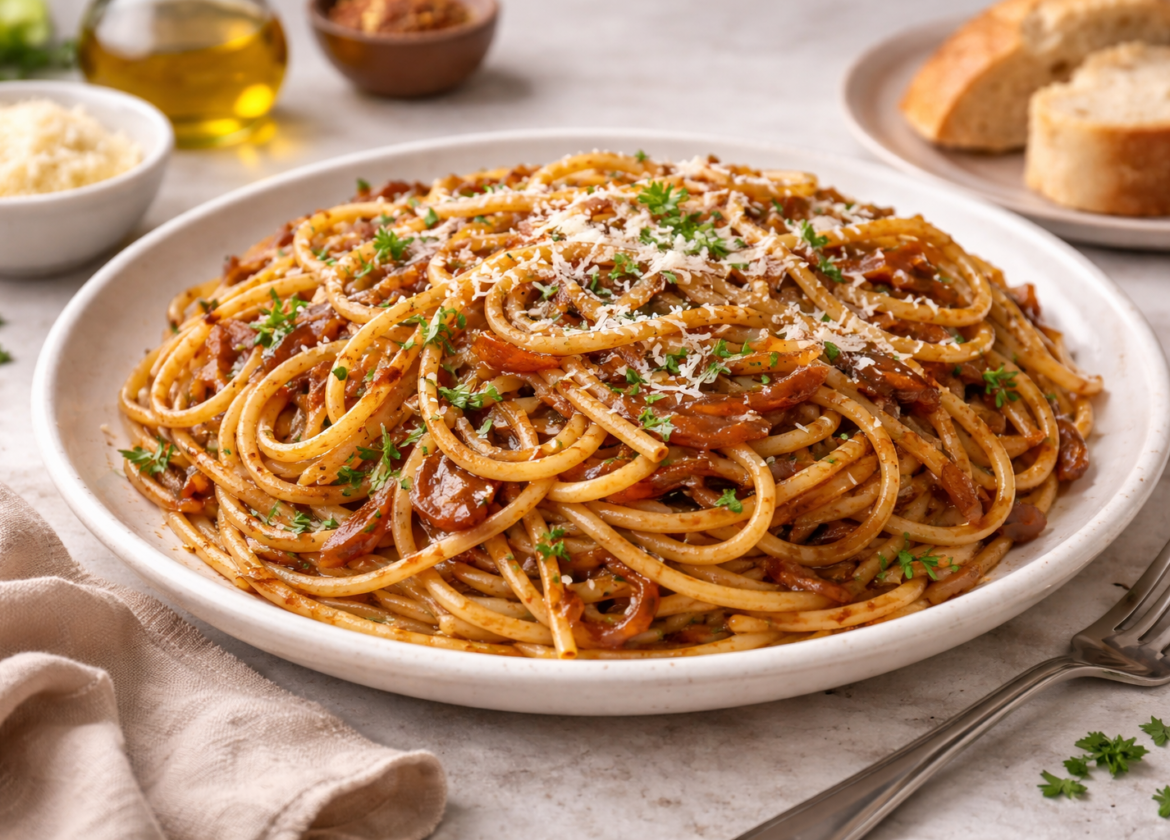
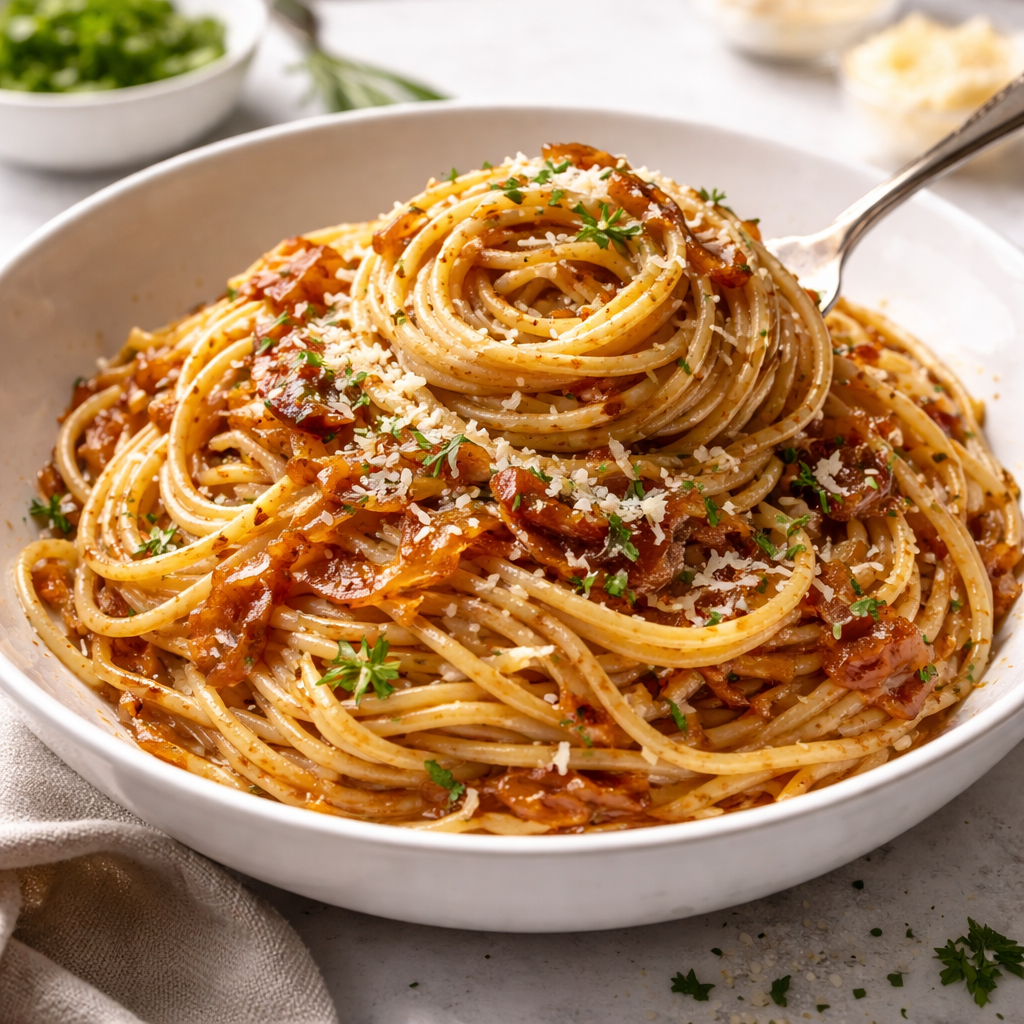
There is a specific kind of kitchen magic that happens when you take one of the most humble, inexpensive ingredients in the pantry and subject it to slow, steady heat. I am talking about the transformation of a raw, pungent yellow onion into a jammy, mahogany-colored concentrate of pure umami. This Caramelized Onion Pasta Recipe is the ultimate expression of that transformation. It isn’t a “quick” meal in the sense of a five-minute stir-fry, but it is one of the most rewarding and reliable dishes you can master.
The beauty of this approach lies in its simplicity. We aren’t relying on a long list of expensive spices or complex techniques. Instead, we are leaning into the Maillard reaction—the chemical process that occurs when the natural sugars in the onion break down and brown. When these onions are tossed with a sturdy pasta and a bit of starchy cooking water, they create a glossy, deeply savory sauce that rivals any long-simmered ragu. It is a dish that feels editorial and sophisticated, yet it is born entirely from the staples you likely already have in your kitchen.
What Makes This Method Worth Using
In a world of “fast” recipes, you might wonder why you should spend forty minutes on a Caramelized Onion Pasta Recipe. The answer lies in the depth of flavor that cannot be replicated by high-heat cooking. Many recipes try to “cheat” caramelization by adding sugar or balsamic vinegar early on. While those are fine additions, they don’t produce the same silky, melt-in-your-mouth texture that a patient, low-heat method provides.
This method is also incredibly forgiving. Once you get the onions started, the work is largely passive. It provides a “flavor base” that is incredibly versatile. Furthermore, this is a highly economical way to eat elegantly. You are taking three or four onions and a box of pasta—pantry staples—and turning them into a meal that feels like it belongs in a high-end bistro. It is the perfect bridge between a “pantry pull” meal and a dinner party centerpiece.
Serving Suggestions
To truly elevate the final plate, I recommend finishing with a bright, textural contrast. A handful of toasted breadcrumbs (pangrattato) adds a necessary crunch, while a zest of lemon can cut through the richness of the onions. If you want to make it heartier, a side of bitter greens like arugula or a crisp radicchio salad provides the perfect acidic foil to the sweet, jammy pasta.
Ingredient Choices That Improve Results
When a recipe has so few components, the quality and type of those components become paramount. Here is what I’ve learned about selecting the best players for your Caramelized Onion Pasta Recipe.
- The Onions: While red onions are beautiful, Yellow Onions or Spanish Onions are the best choice for caramelizing. They have a high sugar content and a robust structure that allows them to soften without completely disintegrating into mush.
- The Fat: I use a combination of extra virgin olive oil and unsalted butter. The oil has a higher smoke point and prevents the butter from browning too quickly, while the butter provides that essential creamy mouthfeel and nutty flavor.
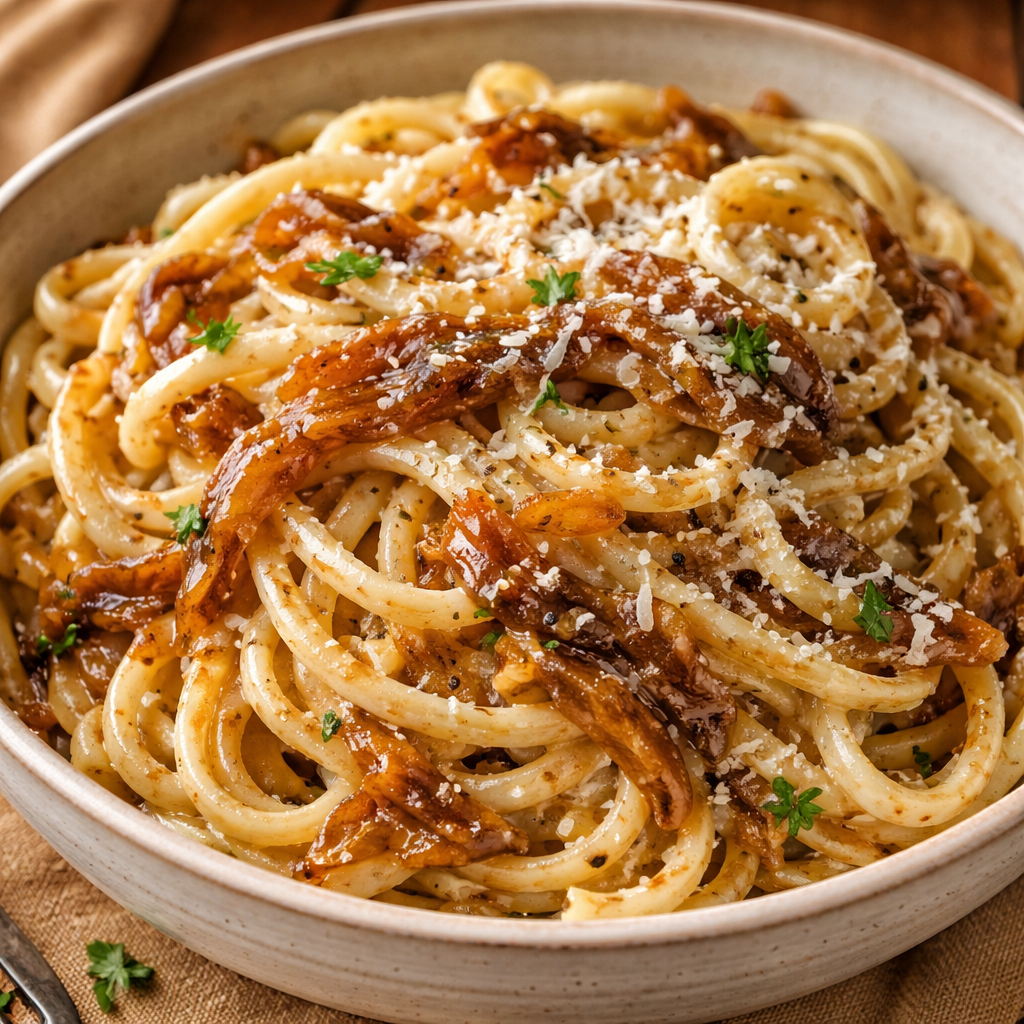
- The Pasta Shape: You want a shape that “grabs” the onions. Long, flat noodles like Linguine or Pappardelle are excellent because the jammy onions coat the wide surface area. Short, ridged shapes like Rigatoni are also fantastic because the onions get trapped inside the tubes.
- The Liquid Gold: Never underestimate the power of Pasta Cooking Water. It is the starch-rich liquid that binds the onions to the noodles. Without it, the onions will just slide to the bottom of the bowl.
tools That Support Consistent Cooking
You don’t need a gadget-filled kitchen, but a few specific tools will make this Caramelized Onion Pasta Recipe much more successful.
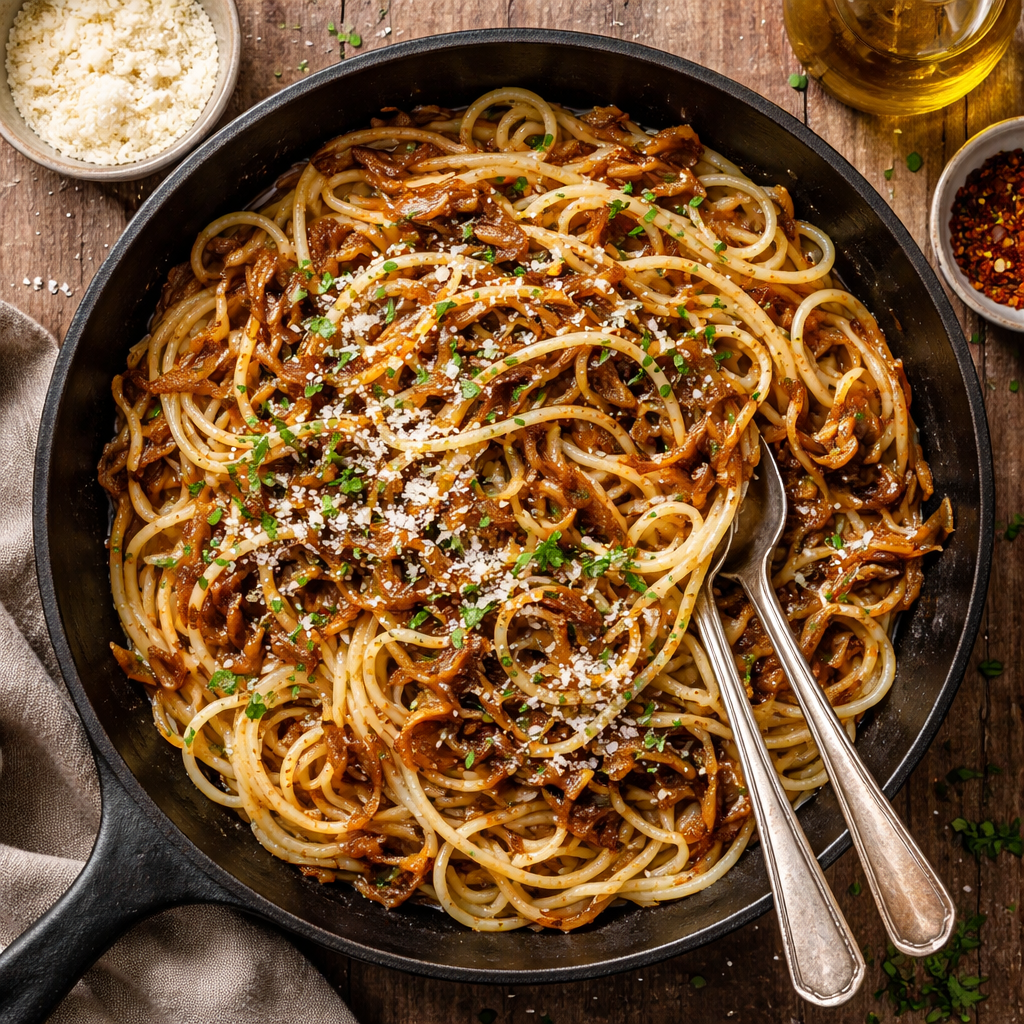
- A Wide, Heavy-Bottomed Skillet: A 12-inch cast iron or stainless steel skillet is ideal. The wide surface area allows the moisture from the onions to evaporate quickly, while the heavy bottom ensures even heat distribution, preventing “hot spots” that might burn the sugar in the onions.
- A Sharp Chef’s Knife: Consistency is key. If your onion slices vary in thickness, the thin ones will burn before the thick ones are soft. Aim for uniform, 1/4-inch slices.
- A Wooden Spoon or Silicone Spatula: You need something sturdy to scrape the “fond” (the brown bits) off the bottom of the pan. This is where the concentrated flavor lives.
- A Large Stockpot: For boiling the pasta. Remember, the pasta needs room to dance so it releases starch into the water without sticking together.
Timing Strategy for Best Texture
The biggest technical challenge of a Caramelized Onion Pasta Recipe is coordinating the “finish.” If the pasta is ready before the onions are jammy, you’ll end up with cold, gummy noodles.
- Minutes 0–10: Prep and the initial sweat. High heat to start, then immediately down to low.
- Minutes 10–35: The slow caramelization. This is when you can relax, but don’t walk away entirely. Stir every 5 minutes.
- Minute 35: Start the pasta water. Most dried pastas take 8–12 minutes. By the time the water boils and the pasta cooks, your onions will be at their peak.
- The Final 2 Minutes: The “marriage” of the pasta and onions in the skillet. This is the most critical time for texture.
Nutritional Benefits
While this feels like an indulgence, onions are packed with antioxidants, specifically quercetin, which supports heart health. By using heart-healthy olive oil and choosing a whole-grain or protein-enriched pasta, you can turn this comfort dish into a balanced, nutrient-dense meal. It is naturally vegetarian and can easily be made vegan by omitting the butter and cheese.
Step-by-Step Caramelized Onion Pasta Recipe (Naturally Written)
1. Slice and Sweat
Peel 4 large yellow onions and slice them into thin half-moons. Heat 2 tablespoons of olive oil and 1 tablespoon of butter in your large skillet over medium-high heat. Toss in the onions with a generous pinch of kosher salt. The salt is crucial—it draws out the moisture so the onions can begin to break down.
2. The Slow Burn
Once the onions have softened and shrunk slightly (after about 8 minutes), turn the heat down to medium-low. This is the “active waiting” phase. You want to see the onions turn from translucent to golden, then finally to a deep, rusty brown. Bold Tip: If the onions look like they are sticking or burning, add a tablespoon of water or white wine to deglaze the pan. This lifts the flavor and keeps the onions moist.
3. Boiling the Pasta
As the onions reach that deep jammy stage, drop your pasta into a pot of boiling, well-salted water. Cook it for 1-2 minutes less than the package instructions. We want it very al dente because it will finish cooking in the onion sauce.
4. The Deglaze
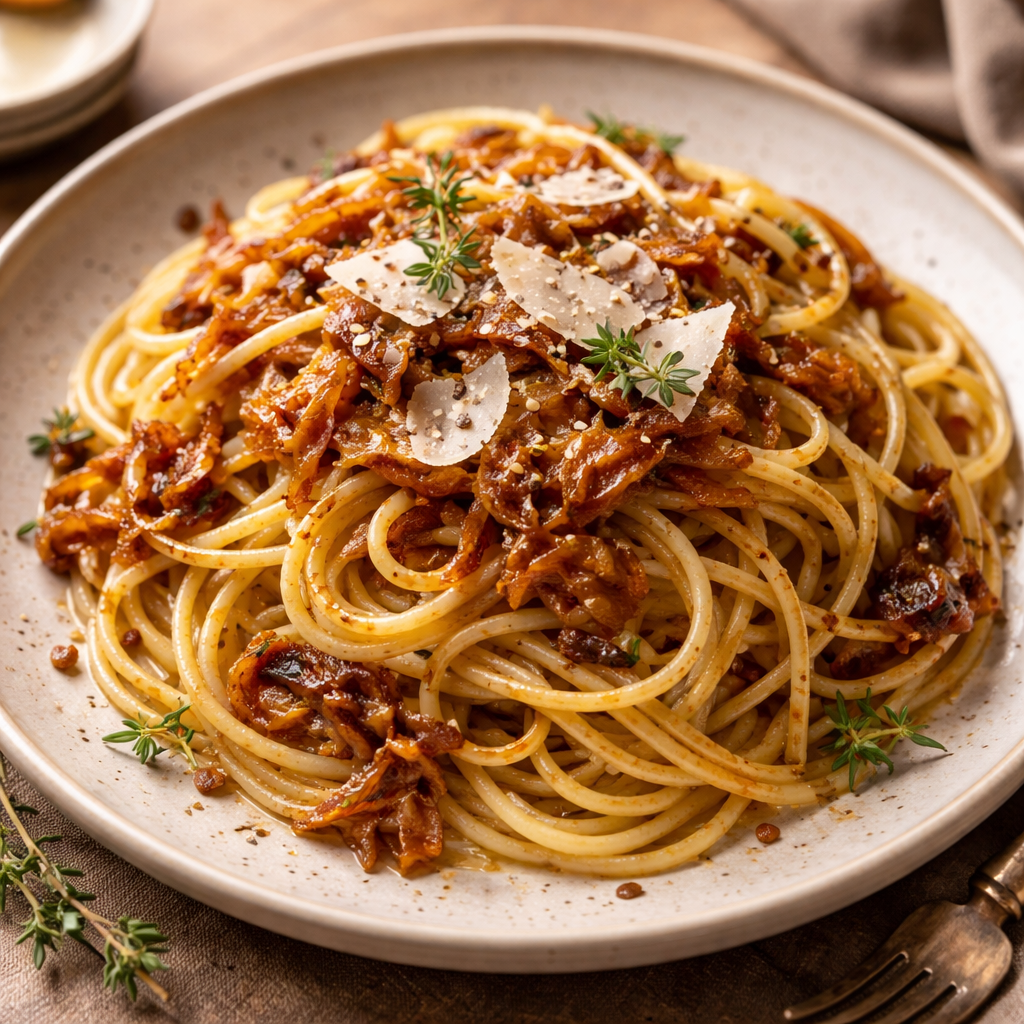
Once the onions are dark and fragrant, add a splash of balsamic vinegar or a squeeze of lemon juice. This acidity cuts through the sweetness and helps scrape up any remaining brown bits from the pan. Add two cloves of minced garlic at this stage and cook for just 60 seconds.
5. The Emulsion
Using tongs, transfer the pasta directly from the water into the skillet with the onions. Bold Tip: Don’t drain the pasta into a colander. You want that residual starchy water to follow the noodles into the pan. Add a half-cup of the pasta water and turn the heat up to medium.
6. The Finish
Toss the pasta and onions vigorously. The water and the fats will emulsify into a creamy, brown sauce that coats every strand. Stir in a handful of grated Parmesan and a crack of fresh black pepper. If it looks dry, add more pasta water. Serve immediately.
Common Cooking Problems and Solutions
- The Onions are Burning: Your heat is too high. Caramelization is a low-temperature process. If they are blackening on the edges, add a splash of water and turn the burner down.
- The Pasta is Dry and Not “Saucy”: You likely didn’t use enough pasta water. That starchy liquid is the difference between a dry bowl of noodles and a restaurant-quality sauce. Don’t be afraid to add more than you think you need.
- The Flavor is Too Sweet: Onions can become incredibly sweet when caramelized. To fix this, increase the acidity (more lemon or vinegar) or add a pinch of red pepper flakes for heat to balance the sugar.
- The Onions are “Stringy”: This usually happens if the onions were sliced with the grain rather than across the grain. To avoid this, slice your onions into rounds or half-moons to break the long fibers.
Estimated Nutrition Facts
A typical serving of this Caramelized Onion Pasta Recipe (approximately 2 oz of dry pasta and 1 large onion) contains roughly 380–420 calories. The fat content comes primarily from the olive oil and butter, while the carbohydrates are provided by the pasta. For a lower-glycemic option, try using chickpea-based or lentil-based pasta.
FAQ Based on Real User Questions
Can I make the onions in advance? Absolutely. In fact, caramelized onions stay delicious in the fridge for up to 5 days. If you have the onions ready, the Caramelized Onion Pasta Recipe comes together in the time it takes to boil the water. Just reheat the onions in the skillet with a splash of water before adding the pasta.
Is it okay to use a different type of onion? You can use red onions, which will result in a slightly more peppery, darker sauce. Sweet onions (like Vidalias) also work, but they contain so much water that they can take significantly longer to caramelize. Avoid white onions, as they are often too sharp and lack the sugar content for deep browning.
How do I make this recipe vegan? Simply swap the butter for more olive oil or a vegan butter substitute. For the cheese, use nutritional yeast or a vegan Parmesan. The starch in the pasta water does most of the “creamy” work, so you won’t miss the dairy.
Why is my pasta water not thickening the sauce? Make sure you are using a pot that isn’t too large for the amount of pasta. If there is too much water, the starch becomes too diluted. A smaller pot results in “murkier,” starchier water, which creates a better emulsion.
Can I add other vegetables? Sautéed mushrooms are a natural partner for caramelized onions. I also love adding a handful of baby spinach at the very end—the heat of the pasta will wilt it in seconds, adding color and nutrients without extra effort.
What is the best way to reheat leftovers? Pasta with a starchy sauce tends to dry out in the fridge. To reheat, place it in a pan with a splash of water or broth. This will re-emulsify the sauce and prevent the noodles from becoming gummy in the microwave.
By following this patient, editorial approach to the Caramelized Onion Pasta Recipe, you’re not just making dinner; you’re practicing the art of flavor extraction. It is a slow, rhythmic process that rewards you with a plate of food that tastes like much more than the sum of its parts.
Easy Pistachio Paste Recipe – Smooth & Homemade
Quick Spinach Tomato Pasta Recipe – Healthy & Flavorful
Simple Creamy Tomato Pasta Recipe with Fresh Flavor