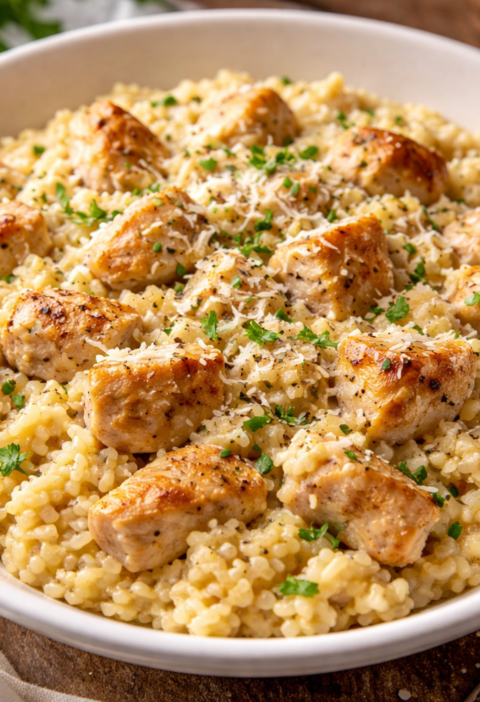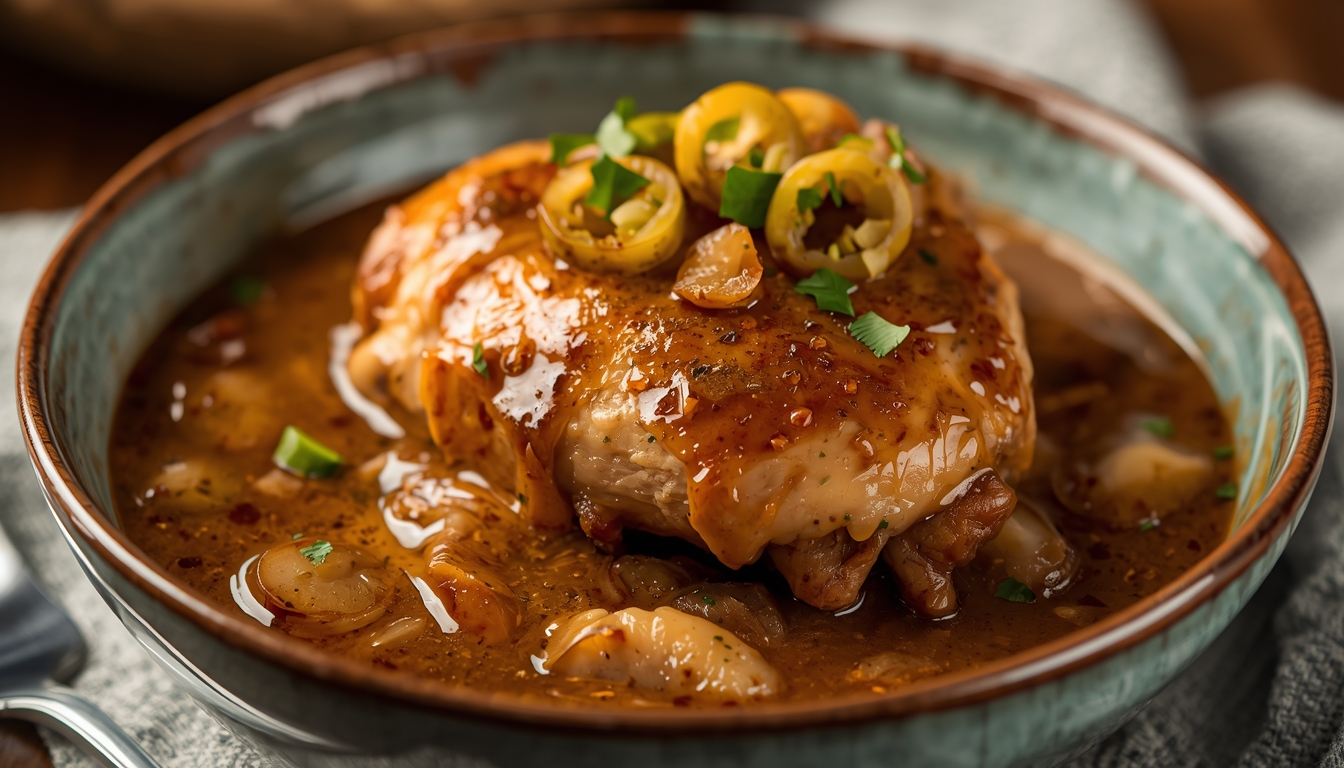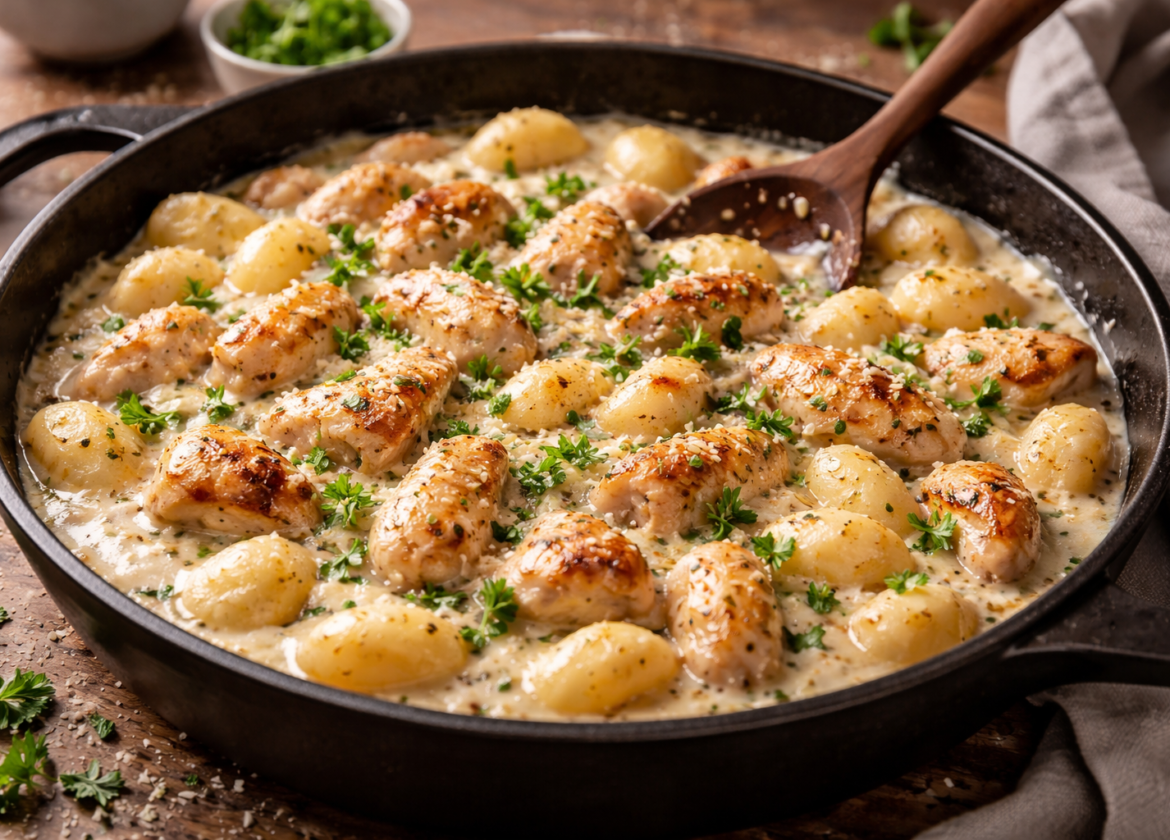
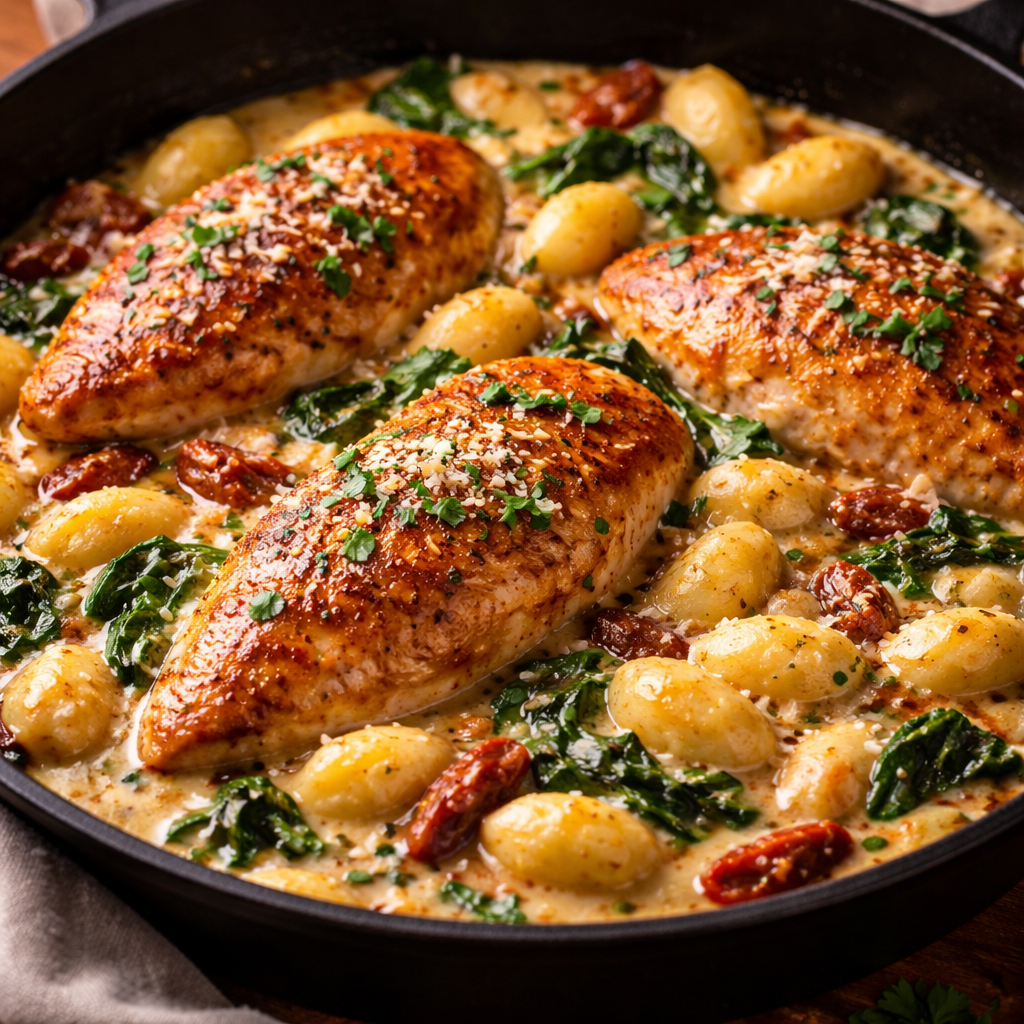
The Chicken and Gnocchi Recipe is a centerpiece of Italian-American comfort cuisine, offering a sophisticated balance of lean protein, soft potato dumplings, and a rich, savory base. While many recognize this combination from popular casual dining menus, the homemade version allows for a much higher degree of texture control and flavor depth. At its core, the dish relies on the interaction between tender seared chicken and the pillowy nature of gnocchi, usually unified by a velvety cream sauce or a light, aromatic broth.
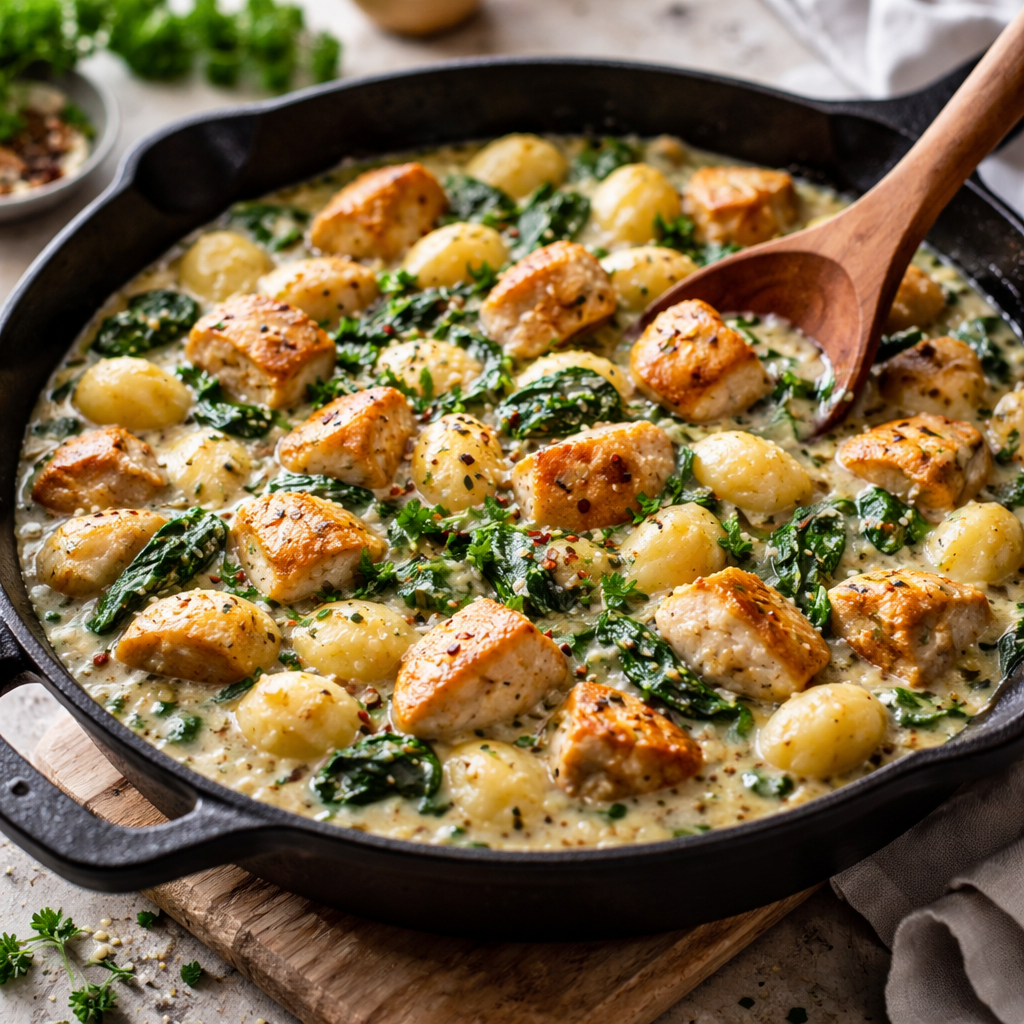
For the home cook, mastering a Chicken and Gnocchi Recipe is an exercise in timing. Because gnocchi—traditional Italian dumplings made from potato, flour, and egg—cook very rapidly, the preparation of the chicken and the sauce must be synchronized to ensure no component is overcooked. This article provides a professional, step-by-step framework to execute this dish with restaurant-quality results, focusing on the technical nuances that elevate simple ingredients into a gourmet meal.
How Cooking Improves Quality
The transition from raw ingredients to a completed Chicken and Gnocchi Recipe involves several key culinary transformations. Understanding these processes helps the cook make better decisions at the stove.
The Maillard Reaction
When searing the chicken, the goal is to achieve the Maillard reaction—a chemical reaction between amino acids and reducing sugars that gives browned food its distinctive flavor. By browning the chicken first, you create a complex flavor profile that “blooms” once the liquid components of the sauce are added.
Starch Release and Emulsification
As the gnocchi simmers within the sauce, it releases a small amount of potato starch. This starch acts as a natural thickener, helping to emulsify the fats from the cream or butter with the liquid broth. This results in a cohesive, glossy sauce that clings to the dumplings rather than pooling at the bottom of the bowl.
Layering Aromatics
Building the flavor profile of a Chicken and Gnocchi Recipe requires “sweating” aromatics like onions, celery, and carrots. This gentle cooking process softens the cellular structure of the vegetables, releasing their natural sugars without browning them, which provides a sweet, earthy base for the creamy sauce.
Ingredients Breakdown for Chicken and Gnocchi
To achieve a professional-grade Chicken and Gnocchi Recipe, ingredient selection must prioritize freshness and fat content. Each component serves a functional purpose in the final dish.
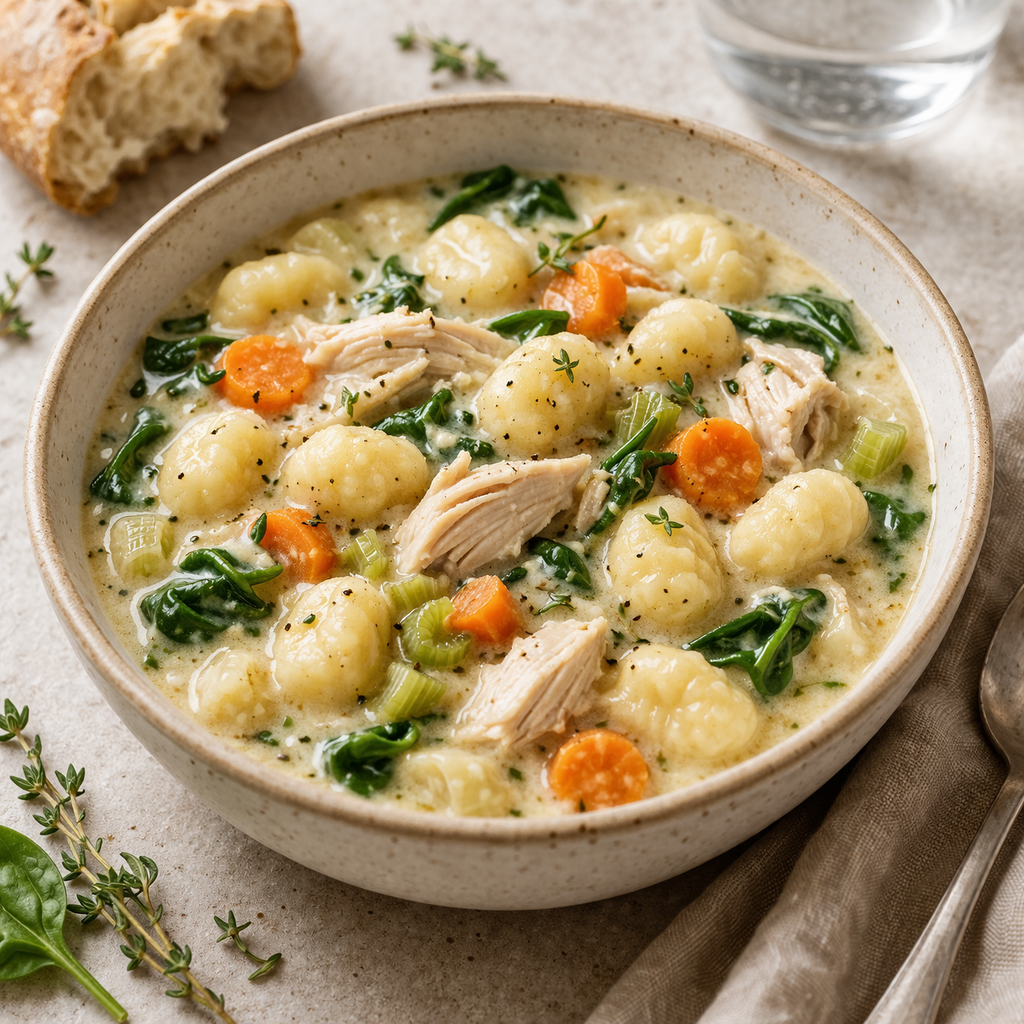
The Protein and Gnocchi
- Chicken Breast or Thighs: 1.5 pounds, diced into 1-inch pieces. Thighs offer more moisture, while breasts provide a leaner profile.
- Gnocchi: 1 pound. You may use shelf-stable, refrigerated, or homemade potato gnocchi.
The Aromatic Base (The Mirepoix)
- Onion: 1 medium, finely diced.
- Carrots: 2 medium, shredded or finely diced.
- Celery: 2 stalks, finely diced.
- Garlic: 3 cloves, minced.
The Sauce and Liquid
- Chicken Broth: 4 cups. Use a high-quality bone broth for maximum umami.
- Heavy Cream: 1.5 cups. Full-fat cream is essential for a stable, velvety texture.
- All-Purpose Flour: 3 tablespoons. This creates a light roux to stabilize the sauce.
- Butter: 2 tablespoons.
Seasoning and Finish
- Fresh Spinach: 2 cups, roughly chopped.
- Parmesan Cheese: 1/2 cup, freshly grated.
- Herbs: Fresh thyme, rosemary, and a pinch of nutmeg.
- Salt and Pepper: To taste.
Tools and Equipment You Must Have
Precision in a Chicken and Gnocchi Recipe is significantly enhanced by using the correct culinary tools.
- Dutch Oven or Large Heavy-Bottomed Pot: A 5-quart or 6-quart vessel is ideal. The thick walls prevent hot spots and maintain a steady simmer.
- Whisk: Necessary for incorporating the flour into the butter to create a smooth, lump-free roux.
- Wooden Spoon: Ideal for scraping the “fond” (browned bits) from the bottom of the pot during the deglazing phase.
- Digital Meat Thermometer: To ensure the chicken reaches exactly 165°F (74°C).
- Fine Grater (Microplane): For grating fresh Parmesan and nutmeg, which integrate better into the sauce than pre-shredded varieties.
Timing and Temperature Explained Clearly
A successful Chicken and Gnocchi Recipe follows a specific thermal timeline to preserve the integrity of each ingredient.
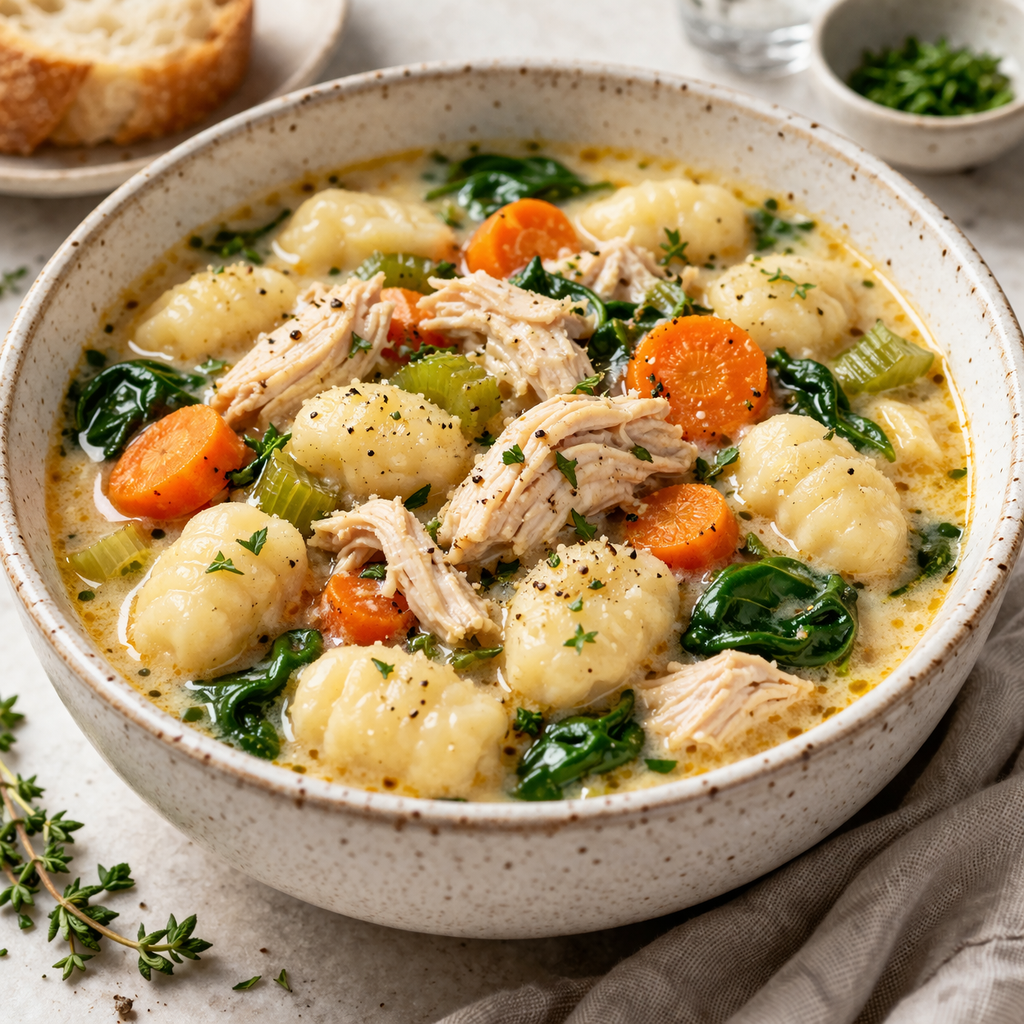
- Searing Temperature: Medium-high heat. You want the chicken to sear quickly without cooking all the way through initially.
- Sweating Temperature: Medium-low heat. Vegetables should become translucent, not brown.
- Simmering Temperature: A low bubble. Never allow the sauce to reach a rolling boil after the cream is added, as this can cause the proteins to separate and the sauce to break.
- Preparation Time: 20 minutes (chopping and measuring).
- Cook Time: 25–30 minutes.
Total Time: Approximately 50 minutes.
Step-by-Step Guide to Chicken and Gnocchi Recipe
1. Searing the Chicken
Heat one tablespoon of oil in your Dutch oven over medium-high heat. Season the chicken with salt and pepper. Add the chicken to the pot and sear for 2–3 minutes per side until golden brown. Remove the chicken and set it aside; it will finish cooking in the sauce later.
2. Sautéing the Mirepoix
In the same pot, melt the butter. Add the onion, carrots, and celery. Sauté over medium heat for 5–7 minutes until the vegetables have softened. Add the minced garlic and cook for an additional 60 seconds until fragrant.
3. Creating the Roux
Sprinkle the flour over the vegetables and stir constantly for 2 minutes. This “cooks out” the raw flour taste and creates the thickening base for your Chicken and Gnocchi Recipe.
4. Deglazing and Simmering
Slowly pour in the chicken broth while whisking or stirring constantly to prevent lumps. Bring the mixture to a gentle simmer. Add the seared chicken back into the pot, along with your thyme, rosemary, and nutmeg. Simmer for 10 minutes.
5. Incorporating the Gnocchi
Add the gnocchi directly into the simmering broth. Cook according to the package instructions (usually 3–5 minutes). The gnocchi are done when they float to the surface.
6. Finishing the Sauce
Reduce the heat to low. Stir in the heavy cream and the chopped spinach. The heat of the sauce will wilt the spinach in about 60 seconds. Finally, stir in the grated Parmesan cheese until melted and incorporated.
7. Final Adjustments
Taste the sauce and adjust salt and pepper if necessary. Remove the thyme and rosemary sprigs before serving.
Common Errors and How to Prevent Them
Even with a detailed Chicken and Gnocchi Recipe, certain technical mistakes can compromise the result.
- Overcooking the Gnocchi: Gnocchi can quickly transition from pillowy to gummy. Always add the gnocchi at the very end of the cooking process. If you are meal-prepping, consider boiling the gnocchi separately and adding them to individual bowls to prevent them from disintegrating in the leftover sauce.
- Broken Sauce: If the sauce looks oily or grainy, the heat was likely too high when the cream was added. To prevent this, ensure the pot is at a low simmer and the cream is at room temperature before it hits the hot liquid.
- Lumpy Roux: Adding broth too quickly to the flour-and-vegetable mixture can create flour pockets. Add the broth in small splashes at first, stirring into a thick paste before adding the remaining liquid.
- Dry Chicken: If the chicken is boiled for too long, the muscle fibers will tighten. By searing first and only simmering for the final 10–12 minutes, you ensure the chicken remains succulent.
Frequently Asked Questions About Chicken and Gnocchi
Can I use different vegetables?
While the traditional Chicken and Gnocchi Recipe uses the onion/carrot/celery trinity, you can certainly add mushrooms for earthiness or kale as a sturdier alternative to spinach.
Is it possible to make this recipe dairy-free?
Yes. You can substitute the heavy cream with full-fat canned coconut milk or a cashew-based cream. However, note that the flavor profile will shift slightly toward the nutty or tropical side.
How should I store leftovers?
Store in an airtight container in the refrigerator for up to 3 days. When reheating, the gnocchi will have absorbed much of the liquid. Add a splash of broth or milk before reheating on the stove to restore the creamy consistency.
Can I use frozen gnocchi?
Absolutely. Frozen gnocchi can be added directly to the pot without thawing. They may require an additional 1–2 minutes of simmer time compared to fresh or shelf-stable varieties.
Should I pan-fry the gnocchi first?
Some chefs prefer to pan-fry gnocchi in butter before adding them to the sauce to create a “crispy-soft” contrast. While this adds a step, it provides a unique texture that many find superior to the traditional boiled method.
Easy Chicken Parmesan Recipe – Crispy, Cheesy & Delicious
Quick & Delicious Chipotle Chicken Recipe for Busy Nights
Classic Poppy Seed Chicken Recipe for Family Dinners
Easy Chicken Casserole Recipe (Ritz)
Quick & Delicious Chicken Rice Recipe for Any Day
Healthy Chicken and Orzo Recipes Made Simple
The Best Chicken Lettuce Wraps Recipe for Quick Dinners