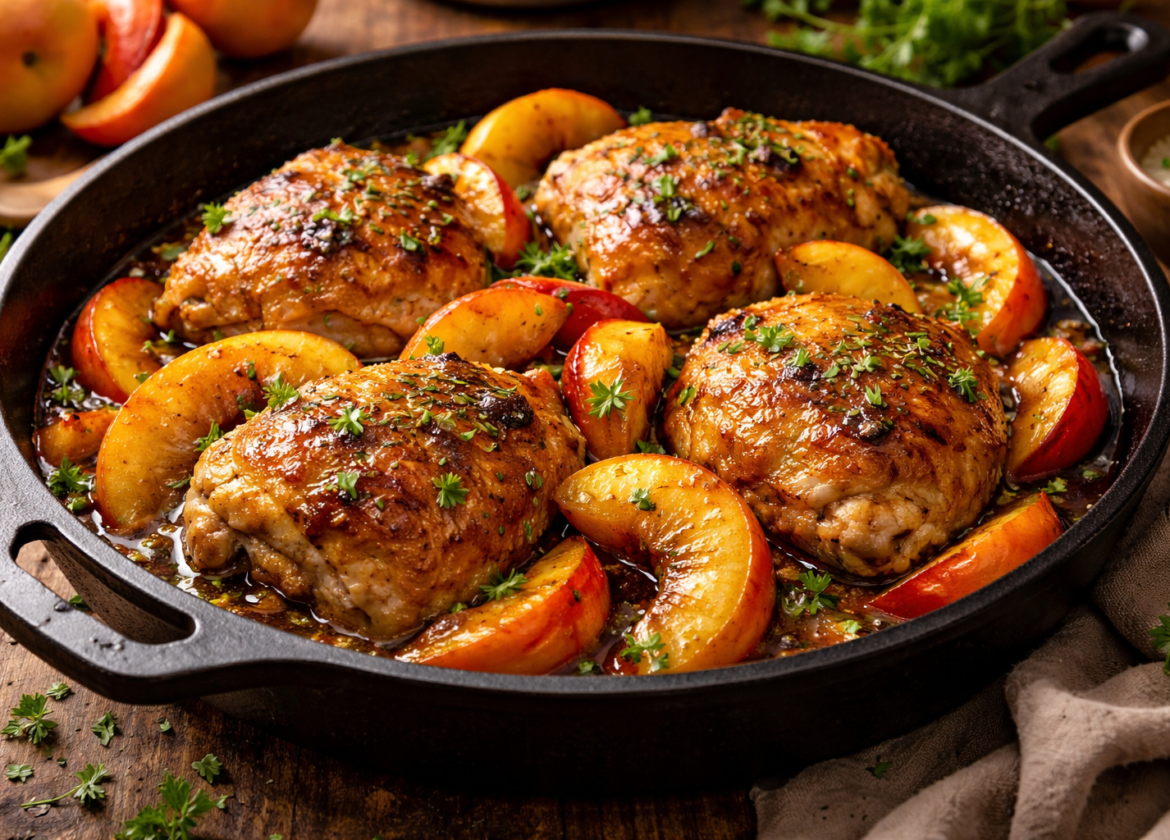
When searching for a Chicken and Peaches Recipe, most readers are looking for a way to balance savory proteins with the natural sweetness and acidity of stone fruit. This combination is a staple of “Agrodolce” (sour and sweet) cooking, which has deep roots in Mediterranean and Southern American cuisines. The primary concern for most cooks is ensuring the peaches do not turn into a mushy pulp while the chicken reaches a safe internal temperature.
Technically, a Chicken and Peaches Recipe relies on the caramelization of fruit sugars—fructose and glucose—alongside the Maillard reaction of the poultry skin. This synergy creates a complex pan sauce that requires no artificial thickeners. Whether you are looking for a quick weeknight skillet meal or a slow-roasted traybake, the key is understanding how to time the introduction of the fruit to maintain its structural integrity.
When Chicken and Peaches Is the Best Choice
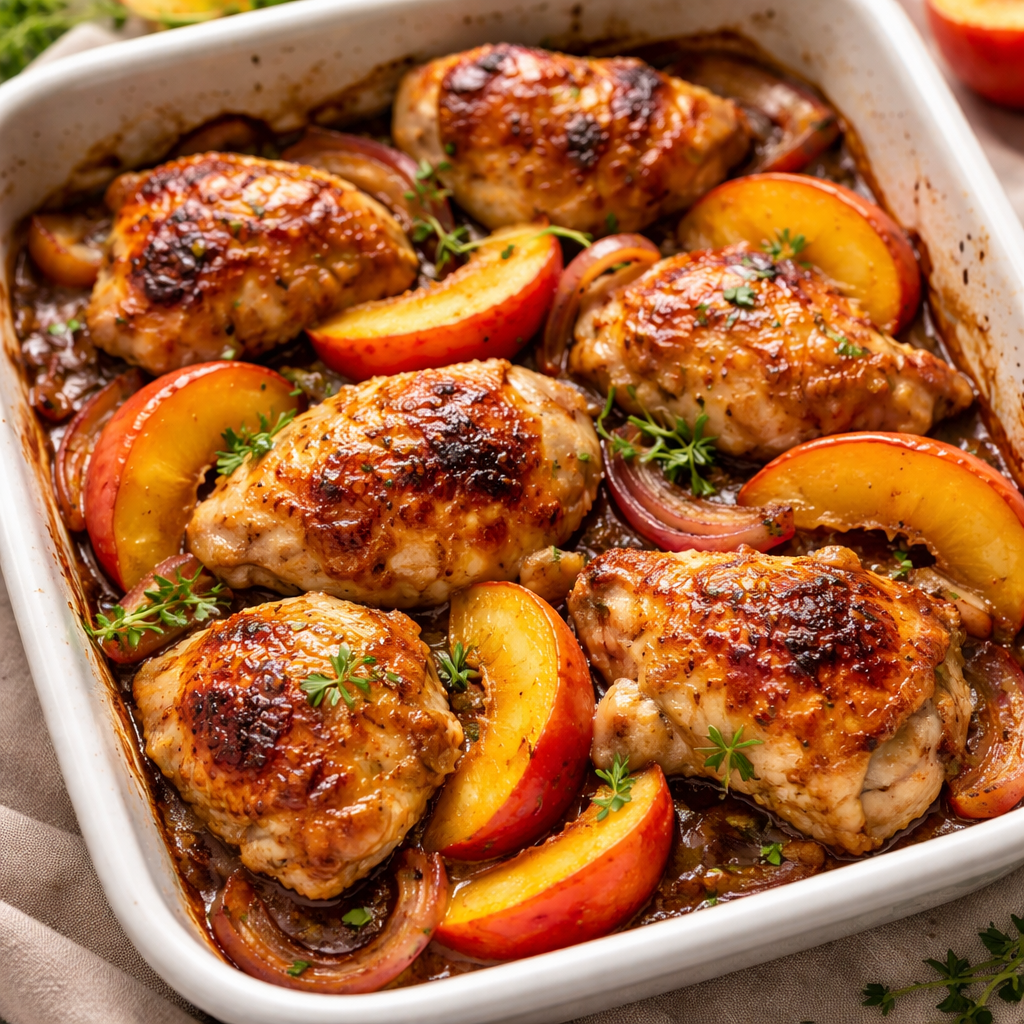
This flavor profile is particularly effective during the peak of summer, specifically from June through August, when peaches are at their most aromatic. However, a Chicken and Peaches Recipe is a versatile choice for several specific culinary scenarios:
- Al Fresco Dining: The brightness of the peach juice cuts through the richness of chicken fat, making it a refreshing option for outdoor meals.
- Low-Sodium Diets: Because peaches provide such a punch of natural acidity and sweetness, you can often reduce the amount of added salt in the dish without sacrificing flavor.
- Wine Pairing Events: This dish pairs exceptionally well with high-acidity white wines like Riesling or Viognier, which mirror the stone fruit notes in the sauce.
Ingredient Choices That Matter
To achieve a professional-grade Chicken and Peaches Recipe, you must select ingredients based on their heat tolerance and sugar content.
The Poultry
Bone-in, skin-on thighs are the preferred choice for this recipe. The dark meat stays succulent during the roasting process, and the skin provides the rendered fat necessary to “fry” the peaches in the pan. If using breasts, leave the skin on to prevent the meat from drying out.
The Peaches
The ripeness of the fruit is the most critical variable. You should look for “freestone” peaches that are firm-ripe. If the peach is too soft, it will disintegrate into a jam; if it is too hard, it will lack the sugar necessary to caramelize. Bold Tip: You can leave the skins on the peaches to help them hold their shape during high-heat cooking.
Aromatics and Acids
To prevent the dish from being cloyingly sweet, you must introduce a counter-acid. Balsamic vinegar, apple cider vinegar, or fresh lime juice are excellent choices. Fresh herbs like basil, thyme, or rosemary provide a woody, savory bridge between the meat and the fruit.
Equipment That Improves Accuracy
Precision in a Chicken and Peaches Recipe is often determined by the material of your cookware.
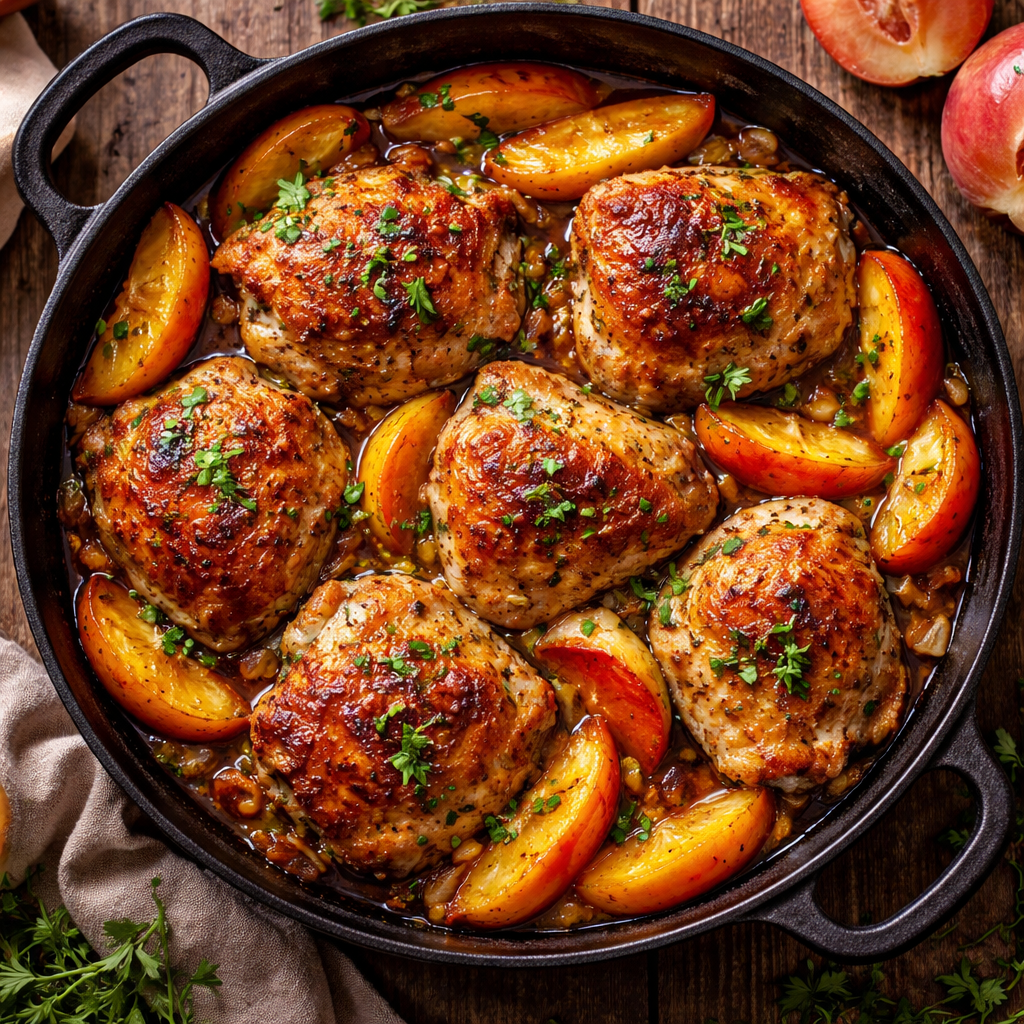
- Large Cast Iron Skillet: This is the ideal tool. It provides the heavy thermal mass needed to sear the chicken and then move directly into the oven to soften the peaches.
- Digital Instant-Read Thermometer: Essential for monitoring the chicken’s internal temperature ($74^{\circ}C$ or 165°F) without overcooking the fruit.
- Flat-Edged Wooden Spatula: Necessary for scraping the “fond” (the browned bits) from the bottom of the pan to incorporate into the peach sauce.
- Stainless Steel Tongs: For precise flipping of the peaches, ensuring they are browned on both sides without piercing the flesh.
Time and Temperature Planning
Efficiency in the kitchen starts with a clear timeline. A standard Chicken and Peaches Recipe follows this schedule:
- Prep Time: 15 minutes (slicing peaches, seasoning chicken).
- Searing Phase: 8–10 minutes on the stovetop at medium-high heat.
- Roasting/Simmering Phase: 15–20 minutes in a $200^{\circ}C$ (400°F) oven.
- Resting Phase: 5 minutes. Allowing the chicken to rest is vital for juice redistribution.
Step-by-Step Chicken and Peaches Recipe
1. Preparation
Preheat your oven to 400°F. Pat the chicken thighs bone-dry with paper towels and season liberally with salt, black pepper, and a pinch of smoked paprika. Slice your firm-ripe peaches into thick wedges (about 6 to 8 slices per fruit).
2. The Sear
Heat a tablespoon of olive oil in your skillet over medium-high heat. Place the chicken skin-side down. Sear for 5–6 minutes without moving the meat until the skin is crispy and golden brown. Flip the chicken.
3. Introducing the Fruit
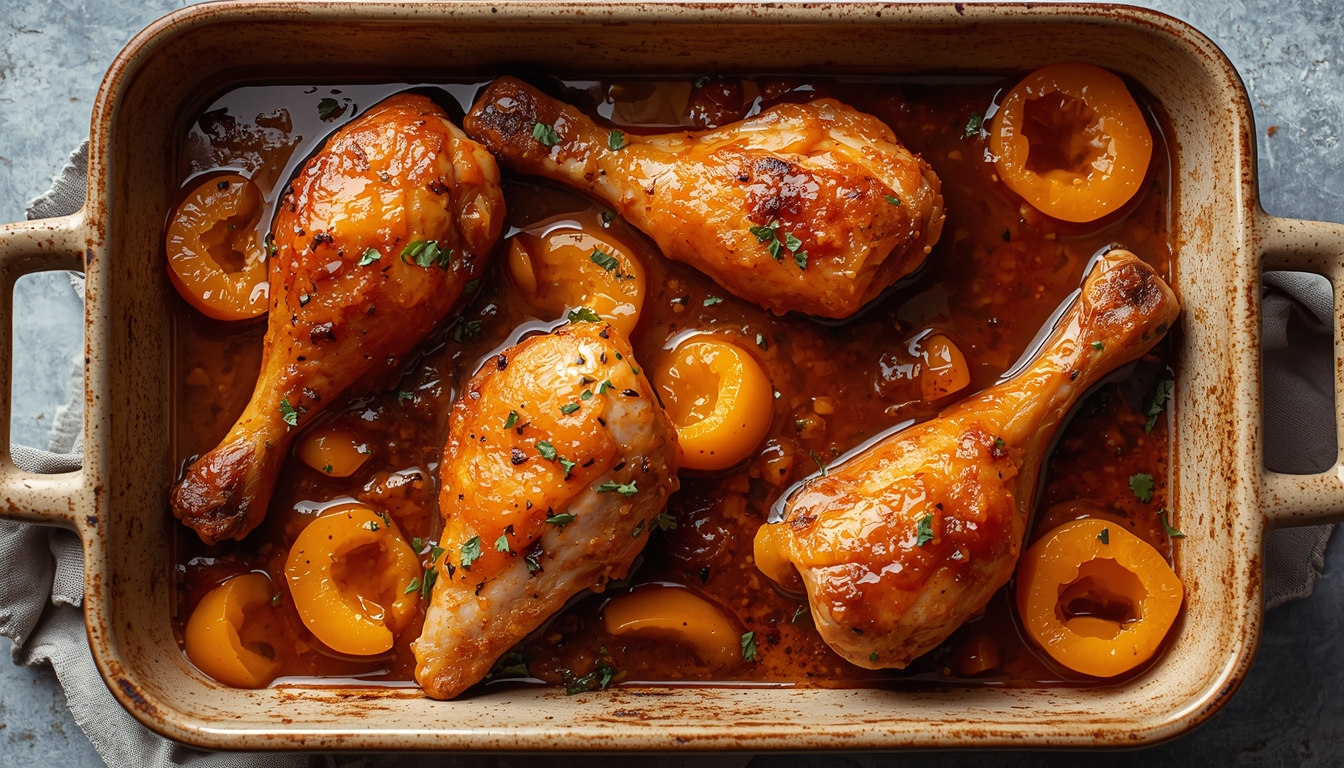
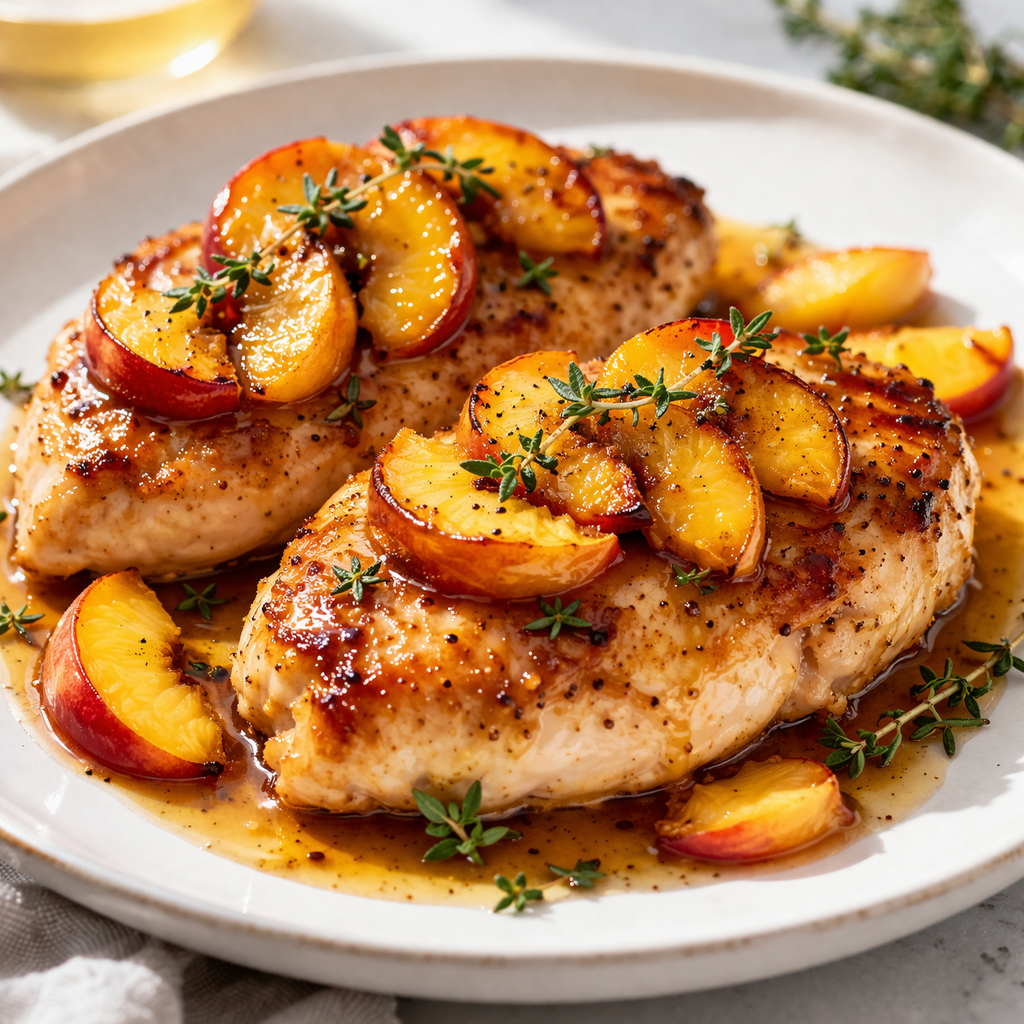
Arrange the peach wedges and halved shallots in the spaces between the chicken pieces. The peaches should make direct contact with the bottom of the pan to begin caramelizing in the rendered chicken fat.
4. Deglazing
Drizzle a tablespoon of balsamic vinegar and a splash of chicken broth over the peaches. This will loosen the flavorful bits stuck to the pan and create the base of your sauce.
5. The Roast
Transfer the skillet to the oven. Roast for 15–20 minutes. At the halfway point, use your tongs to gently flip the peaches so they brown evenly.
6. Finishing
Remove the skillet from the oven once the chicken reaches 165°F. Stir in a handful of fresh basil or thyme. Let the dish rest for 5 minutes before serving to allow the sauce to thicken naturally.
User Mistakes and Fixes
If your Chicken and Peaches Recipe does not turn out as expected, it is usually due to one of these three common errors:
- Mistake: The sauce is too watery.
- The Fix: You likely used peaches that were overripe or added too much broth. Next time, remove the chicken and fruit from the pan and simmer the liquid on high heat for 3 minutes to reduce it into a glaze.
- Mistake: The peaches are bitter.
- The Fix: This occurs if the peach skins are scorched or if the pits were not fully removed. Ensure you are roasting at 400°F—not broiling—and use a light honey drizzle if the peaches lack natural sweetness.
- Mistake: The chicken skin is soggy.
- The Fix: This happens when the peaches are placed on top of the chicken. Always place fruit around the chicken to ensure the skin remains exposed to dry heat.
Chicken and Peaches Recipe FAQ
Can I use canned or frozen peaches?
Yes, but with caveats. Canned peaches are pre-cooked and very soft; add them only in the last 5 minutes of roasting. Frozen peaches should be thawed and patted dry to prevent excess water from steaming the chicken.
Is it necessary to peel the peaches?
No. Peach skins contain fiber and pectin, which help the wedges hold their shape. The skin also adds a beautiful color to the final presentation of the Chicken and Peaches Recipe.
Can I make this dish spicy?
Absolutely. Adding sliced jalapeños or a pinch of red pepper flakes during the searing phase creates a “Hot Honey” effect that complements the peaches perfectly.
What side dishes pair well with this?
To soak up the peach and balsamic glaze, serve this dish over quinoa, polenta, or a bed of arugula. The peppery bite of arugula provides an excellent contrast to the sweet fruit.
Stoved Chicken Recipe: Tender, Flavorful, and Easy to Make
Nariyal Chicken Recipe: Easy, Delicious, and Health
Easy Chicken Vesuvio Recipe for Home Cooking
Easy Shoyu Chicken Recipe – Quick & Flavorful