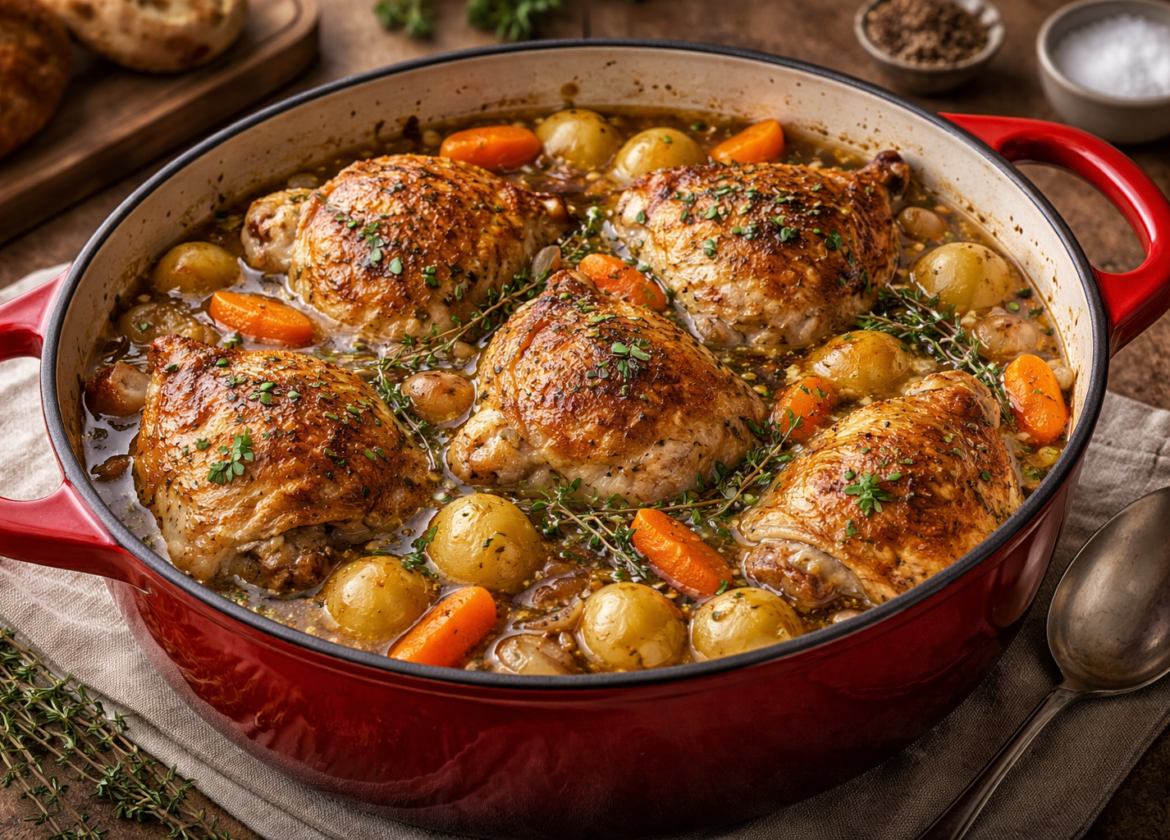
When searching for Chicken Dutch Oven Recipes, most home cooks are looking for a method that combines the deep flavor of a slow braise with the efficiency of a single-pot meal. The primary questions usually revolve around how to prevent the chicken from becoming dry, how to achieve a crispy skin while cooking in liquid, and whether the recipe can transition from the stovetop to the oven.
A Dutch oven is a heavy, thick-walled cooking pot with a tight-fitting lid, usually made of cast iron. Readers want to know how this specific piece of equipment influences the final outcome. The answer lies in its superior heat retention and the “self-basting” environment created by the heavy lid, which traps moisture and circulates aromatics. This makes Chicken Dutch Oven Recipes the gold standard for achieving succulent, “fall-off-the-bone” meat that lighter stainless steel or aluminum pans cannot replicate.
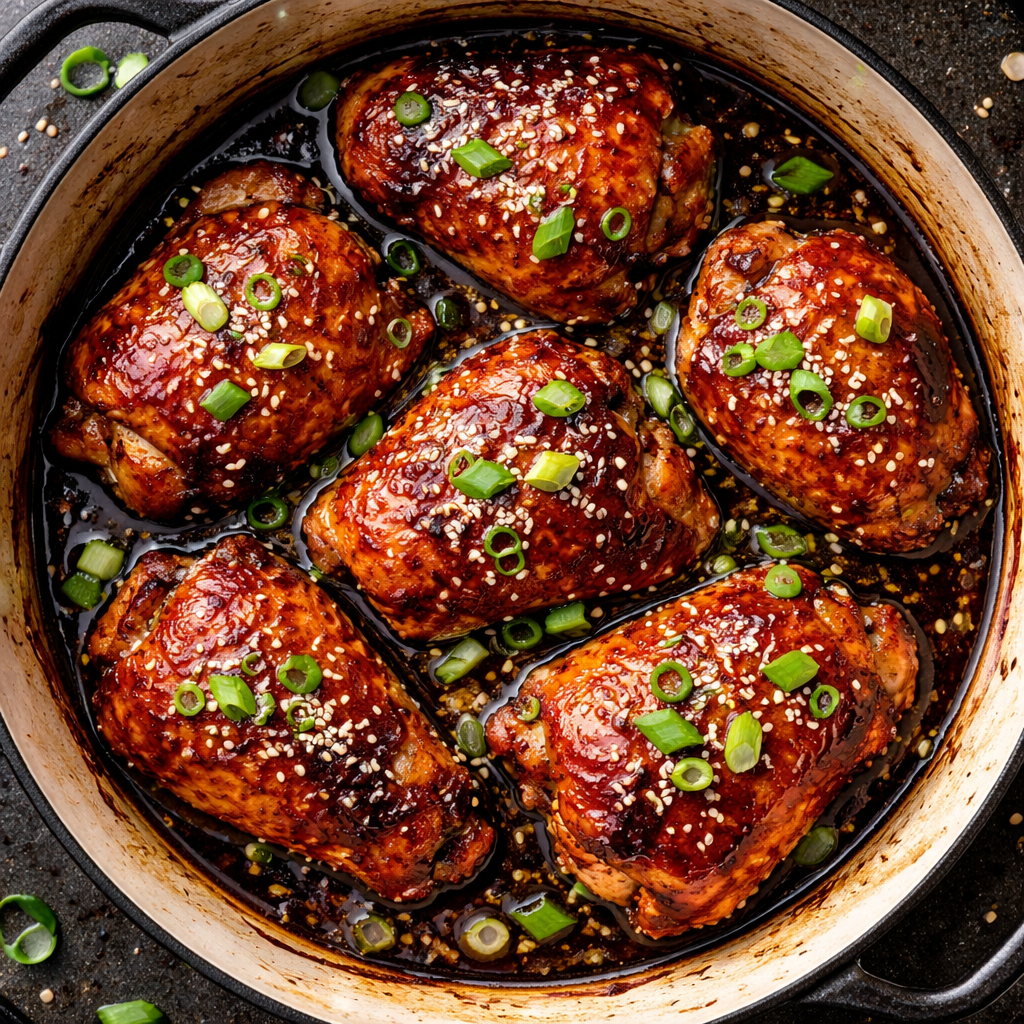
When Chicken Dutch Oven Recipes Is the Best Choice
There are specific culinary scenarios where using a Dutch oven is objectively superior to a slow cooker or a standard sheet pan. You should choose Chicken Dutch Oven Recipes when:
- Texture is a Priority: Unlike a slow cooker, a Dutch oven allows you to sear the chicken at high heat first to develop a crust (the Maillard reaction) before adding liquid.
- Sauce Reduction is Needed: Because the pot can be used uncovered on the stovetop, you can easily reduce a watery broth into a thick, glossy glaze after the chicken is finished cooking.
- High-Heat Braising: If you want to cook a meal in 45 to 60 minutes that tastes like it took four hours, the Dutch oven’s ability to maintain a consistent high temperature in the oven is unmatched.
- Uniform Cooking: When cooking a whole chicken or large bone-in pieces, the radiant heat from the thick cast-iron walls ensures the meat cooks evenly from all sides.
Ingredient Choices That Matter
The success of Chicken Dutch Oven Recipes depends on selecting proteins and liquids that can withstand sustained heat without breaking down.
The Best Chicken Cuts
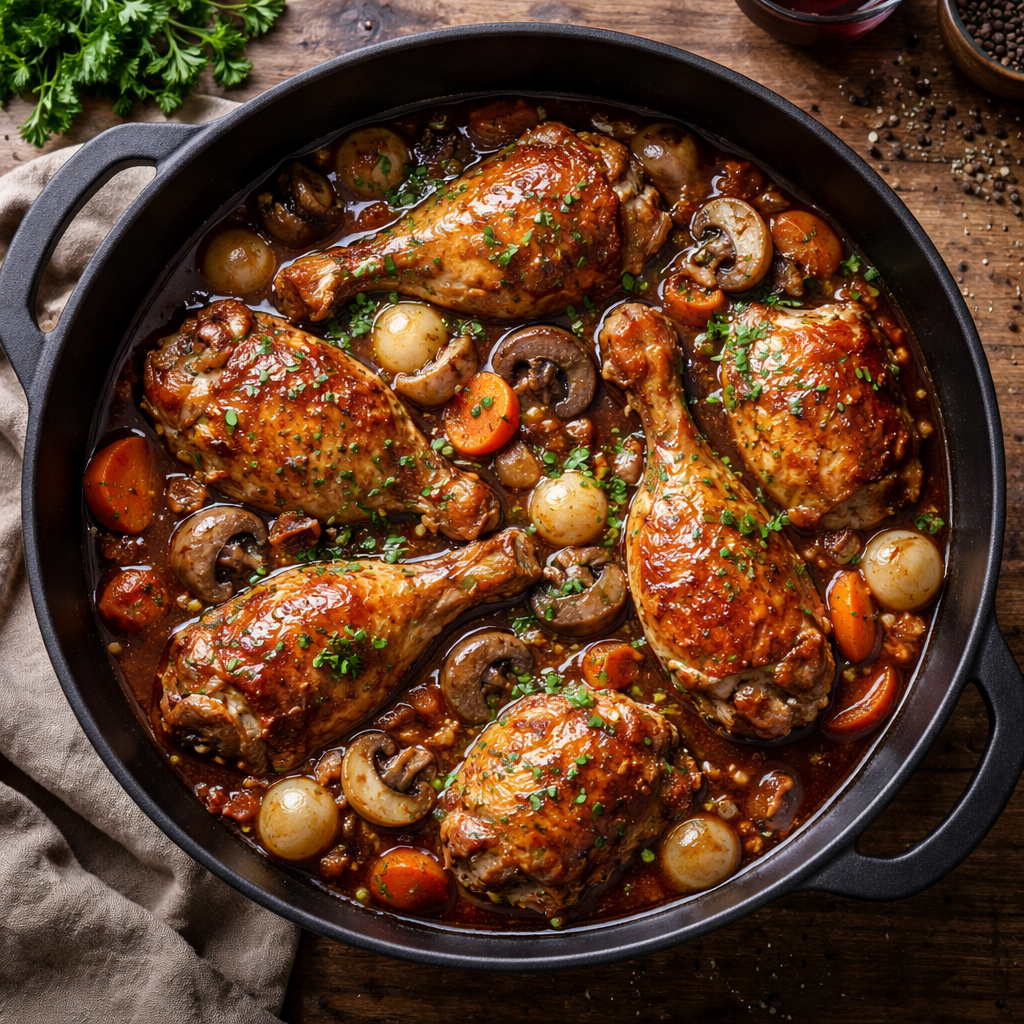
While you can use any cut, bone-in, skin-on chicken thighs or drumsticks are the most reliable choices. The bone adds depth to the cooking liquid, and the skin provides a barrier that protects the meat from drying out. If you are using chicken breasts, they should be added later in the cooking process or kept in large pieces to avoid overcooking.
Aromatics and Liquids
Because the lid creates a sealed environment, the quality of your liquid is concentrated. Use a high-quality chicken stock, dry white wine, or even a splash of apple cider. Bold Tip: Use fresh woody herbs like rosemary, thyme, or sage. These “hard” herbs hold their flavor during a long simmer much better than delicate herbs like parsley or cilantro, which should only be added at the very end.
Vegetables
Root vegetables like carrots, potatoes, and parsnips are ideal for Chicken Dutch Oven Recipes because they take roughly the same amount of time to tenderize as the chicken does to cook.
Equipment That Improves Accuracy
To get the most out of your Chicken Dutch Oven Recipes, ensure your equipment meets the following criteria:
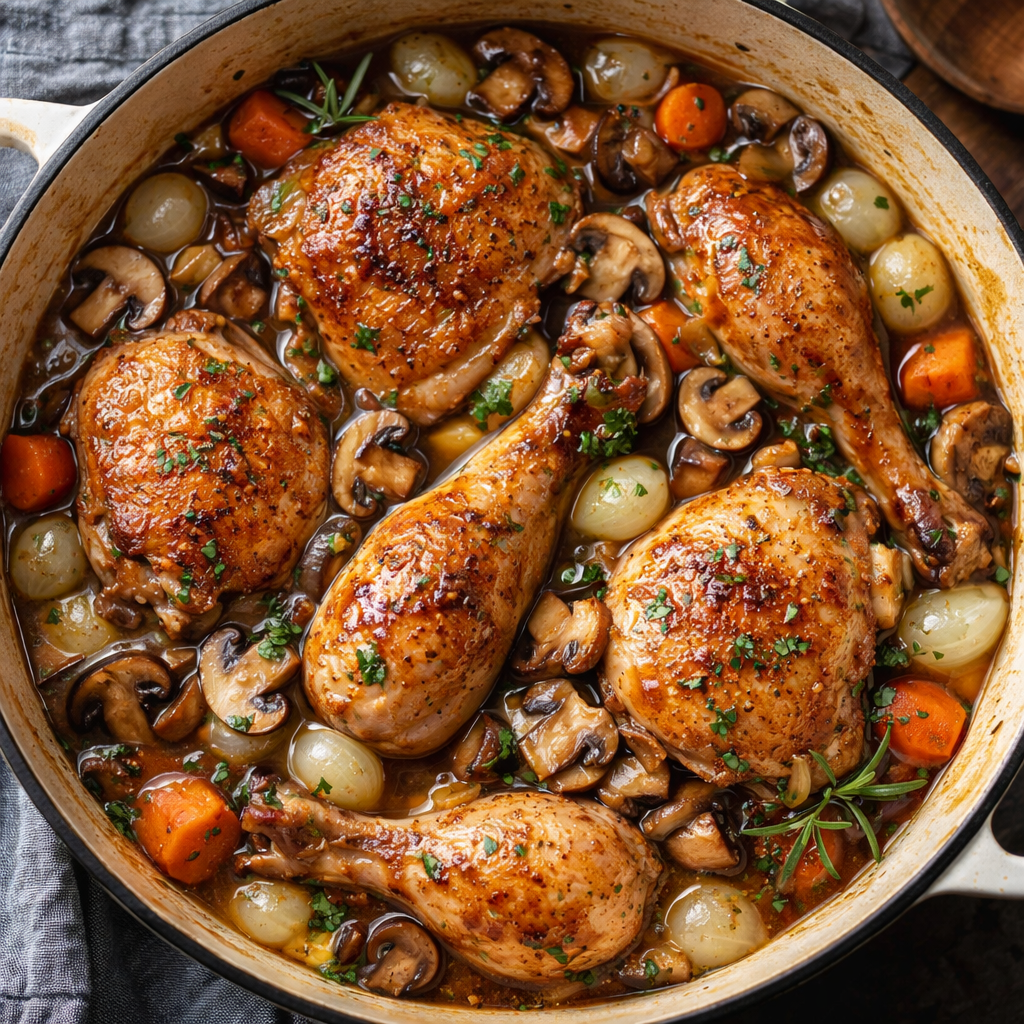
- Enameled Cast Iron: This is preferred for chicken because it is non-reactive. If you use a raw cast-iron pot with acidic ingredients like wine or tomatoes, it can impart a metallic taste to the chicken.
- Tight-Fitting Lid: If the lid has a gap, steam will escape, and your chicken will toughen. If your lid is loose, you can place a layer of parchment paper between the pot and the lid to create a tighter seal.
- Meat Thermometer: Accuracy is vital. Chicken is safely cooked at 165°F (74°C). In a Dutch oven, the carry-over heat is significant, so you may want to pull the chicken at 160°F and let it rest.
- Size Calibration: A 5.5-quart to 6-quart Dutch oven is the standard size. If the pot is too large for the amount of chicken, the liquid will evaporate too quickly; if it is too small, the chicken will steam rather than braise.
Time and Temperature Planning
Properly executing Chicken Dutch Oven Recipes requires a two-stage temperature strategy:
- The Sear (Stovetop): Medium-high heat. You are looking for a deep golden brown, which usually takes 5 to 7 minutes per side.
- The Braise (Oven): 325°F to 350°F (163°C to 177°C). This moderate temperature allows the connective tissues to break down slowly without boiling the meat.
- Total Time: Most bone-in chicken pieces will take 35 to 45 minutes in the oven, while a whole chicken may take 60 to 90 minutes.
Step-by-Step Chicken Dutch Oven Recipes
1. Preparation and Seasoning
Pat the chicken dry with paper towels. This is the only way to ensure a proper sear. Season liberally with kosher salt and black pepper on all sides.
2. The Initial Sear
Heat 2 tablespoons of oil in the Dutch oven on the stovetop over medium-high heat. Place the chicken skin-side down. Bold Tip: Do not crowd the pot. Sear in batches if necessary to ensure the skin becomes crispy and does not steam. Remove the chicken and set aside.
3. Sautéing Aromatics
In the rendered fat, sauté onions, carrots, and celery until softened (about 5 minutes). Add garlic and tomato paste (if using) and cook for another minute until fragrant.
4. Deglazing
Pour in 1/2 cup of white wine or broth. Use a wooden spoon to scrape the “fond” (the browned bits) off the bottom. This is where the concentrated flavor lives.
5. The Braise
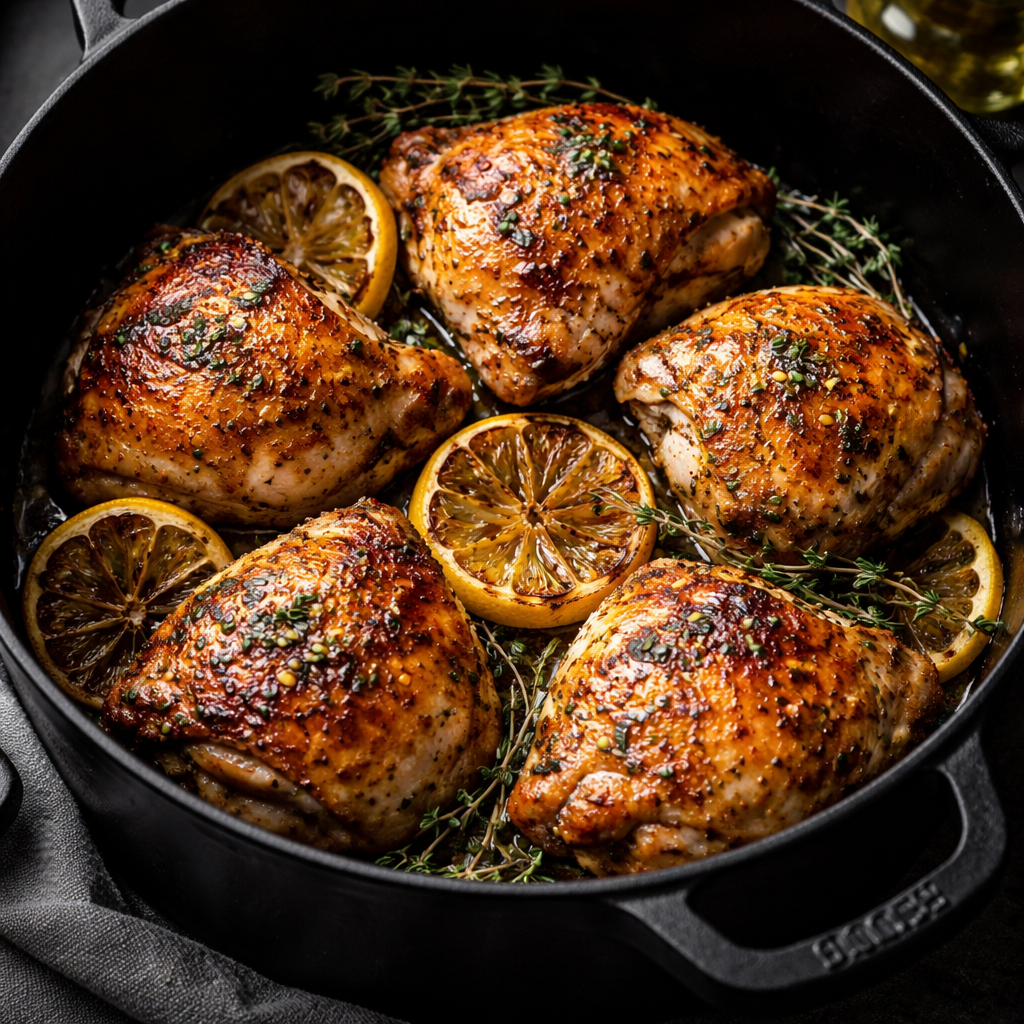
Return the chicken to the pot, skin-side up. Add enough stock to reach halfway up the chicken; do not submerge the skin if you want it to stay crispy. Add your herbs, cover with the lid, and transfer to the preheated oven.
6. The Finish
Remove the lid for the final 10 minutes of cooking to allow the skin to re-crisp. Let the dish rest for 10 minutes before serving to allow the juices to redistribute.
User Mistakes and Fixes
- Problem: The chicken is “rubbery” or tough.
- Cause: The liquid was at a hard boil rather than a gentle simmer.
- Fix: Next time, lower the oven temperature. To save the current dish, shred the chicken and let it soak in the warm sauce for 15 minutes.
- Problem: The skin is soggy.
- Cause: The chicken was completely submerged in liquid.
- Fix: Ensure the liquid level only reaches the middle of the chicken pieces. You can also place the pot under the broiler for 2 minutes at the end.
- Problem: The sauce is too thin.
- Cause: Too much stock was added or the lid was too tight.
- Fix: Remove the chicken and vegetables and boil the liquid on the stovetop for 5 to 10 minutes until it reduces and thickens.
Chicken Dutch Oven Recipes FAQ
Can I use frozen chicken?
It is not recommended for Chicken Dutch Oven Recipes. Frozen chicken will release too much water, preventing a sear and diluting the sauce. Thaw completely and pat dry before starting.
How do I store and reheat leftovers?
The flavors often improve the next day. Store in an airtight container for up to 4 days. Reheat slowly in the Dutch oven on the stovetop over low heat, adding a splash of broth if necessary.
Is a Dutch oven better than a slow cooker for chicken?
Yes, if you prefer texture. A slow cooker often results in “mushy” chicken, whereas a Dutch oven preserves the integrity of the meat while still making it tender.
What should I serve with this?
Starchy sides like mashed potatoes, polenta, or crusty sourdough bread are ideal for soaking up the nutrient-rich braising liquid.
Nutritional Information (Per Serving)
- Calories: 350-450 kcal
- Protein: 35g
- Fat: 22g
- Carbohydrates: 8g
- Fiber: 2g
- Note: Values are estimates based on a standard bone-in thigh recipe with vegetables.
Classic Chicken Artichoke Recipe Made at Home
The Best Shawarma Chicken Recipe Made at Home full guide
Classic Cheesy Chicken and Rice Recipe Made Simple
Homemade Chicken Empanada Recipe Made Simple