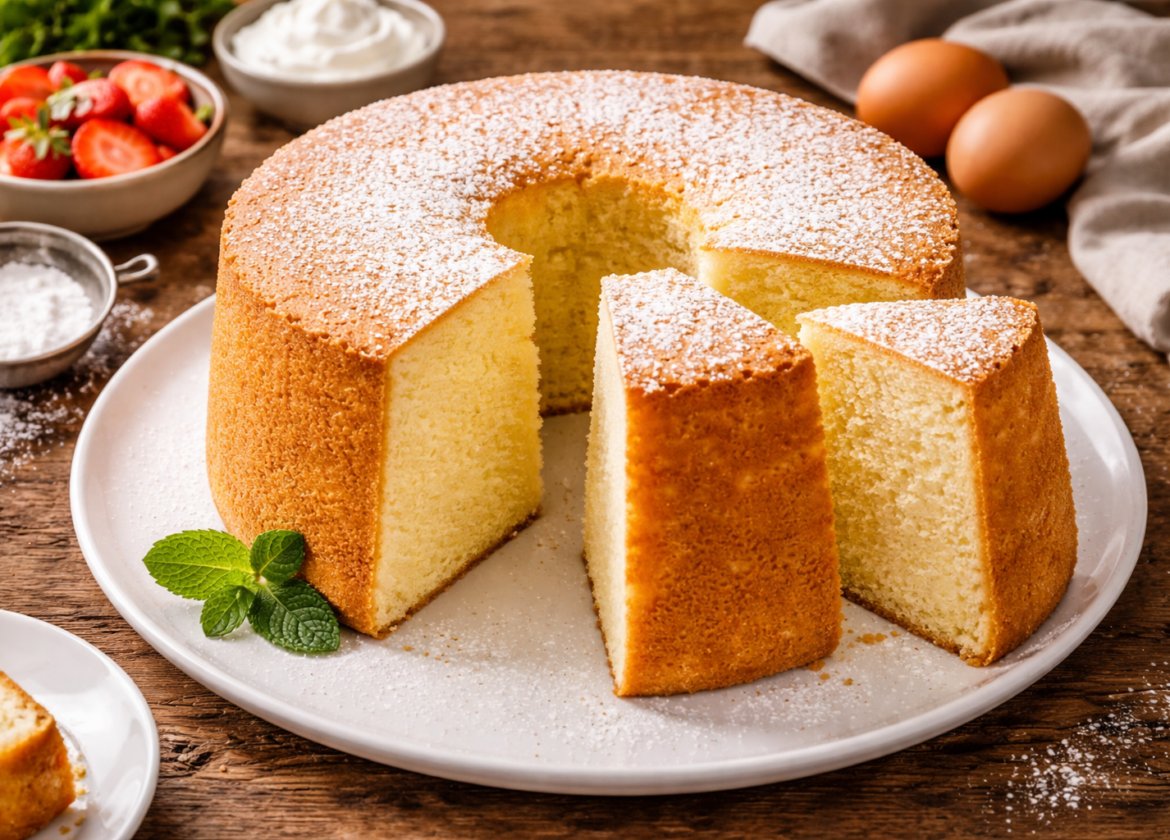
The Chiffon Cake Recipe represents a unique hybrid in the baking world, combining the rich flavor of a butter cake with the ethereal, airy texture of a sponge cake. Created in the 1920s, it changed home baking by introducing vegetable oil into a foam-based cake. Unlike a traditional sponge that can sometimes be dry, or a butter cake that can be heavy, a chiffon cake is famously moist and flexible.
For the home cook, mastering a Chiffon Cake Recipe is an exercise in structural engineering. The cake relies on a delicate balance between the chemical leavening of baking powder and the mechanical leavening of whipped egg whites. Because the oil remains liquid at room temperature, the cake stays soft for days. However, this same lightness makes the cake prone to collapsing if the technical steps are not followed with precision. Understanding the “why” behind the method is what transforms a frustrating experience into a successful, repeatable result.
What Actually Happens During Cooking
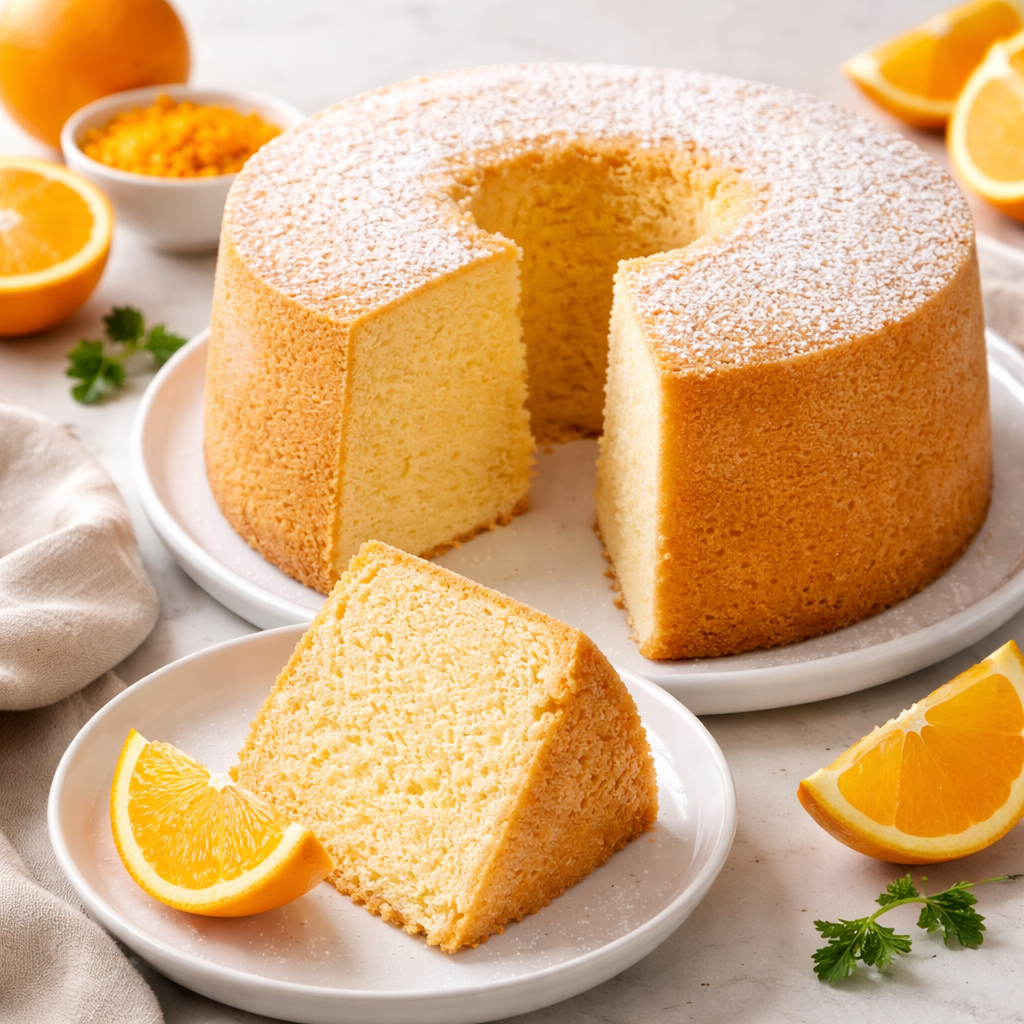
When you begin a Chiffon Cake Recipe, you are essentially creating two different mixtures that must eventually coexist. The first is the yolk base—a heavy, flavorful emulsion of oil, water, yolks, and flour. The second is the meringue—a fragile web of air bubbles trapped in egg white proteins.
As the cake bakes, the air trapped in the meringue expands. Simultaneously, the water in the batter turns to steam, providing additional lift. The flour and egg proteins eventually set, forming the “walls” of the cake’s structure. Because this cake is so light and contains a high proportion of fat from the oil and yolks, it cannot support its own weight while cooling. This is why the cake must be cooled upside down; the gravity pulls the structure taut while it cools, preventing the delicate protein walls from buckling under the weight of the moisture.
Ingredient Roles and Preparation Logic
To achieve a reliable Chiffon Cake Recipe, you have to view your ingredients as functional components rather than just flavorings.
The Flour and Leavening
Cake flour is essential. It has a lower protein content than all-purpose flour, which means less gluten development. In a chiffon cake, you want the structure provided by the eggs, not the “chew” provided by gluten. Baking powder acts as a safety net, providing extra lift to ensure the cake doesn’t turn out dense.
The Role of Oil
Vegetable oil is the secret to the chiffon’s longevity. Unlike butter, which hardens when cooled, oil stays liquid. This coats the flour proteins and prevents them from forming strong gluten bonds, contributing to that “tender” crumb.
Egg Temperature
Separate your eggs while they are cold, as the yolks are firmer and less likely to break. However, whip the egg whites at room temperature. Room temperature proteins are more elastic and can hold more air, resulting in a higher volume meringue.
Tools That Influence Cooking Accuracy
Specific tools are required to manage the unique physics of a Chiffon Cake Recipe.
- Tube Pan (Specifically NOT Non-Stick): This is the most critical tool. A chiffon cake needs to “climb” the walls of the pan to rise. If the pan is non-stick, the batter will slip and fail to reach its full height.
- Fine-Mesh Sieve: Sifting the flour and dry ingredients twice ensures they are aerated and clump-free, making them easier to fold into the delicate meringue.
- Stand Mixer or Hand Mixer: While a hand whisk can work, the stability of the meringue is better achieved with the consistent speed of a mixer.
- Rubber Spatula: A wide, flexible spatula is necessary for the folding process. It allows you to reach the bottom of the bowl without deflating the air bubbles.
Structuring the Cooking Process
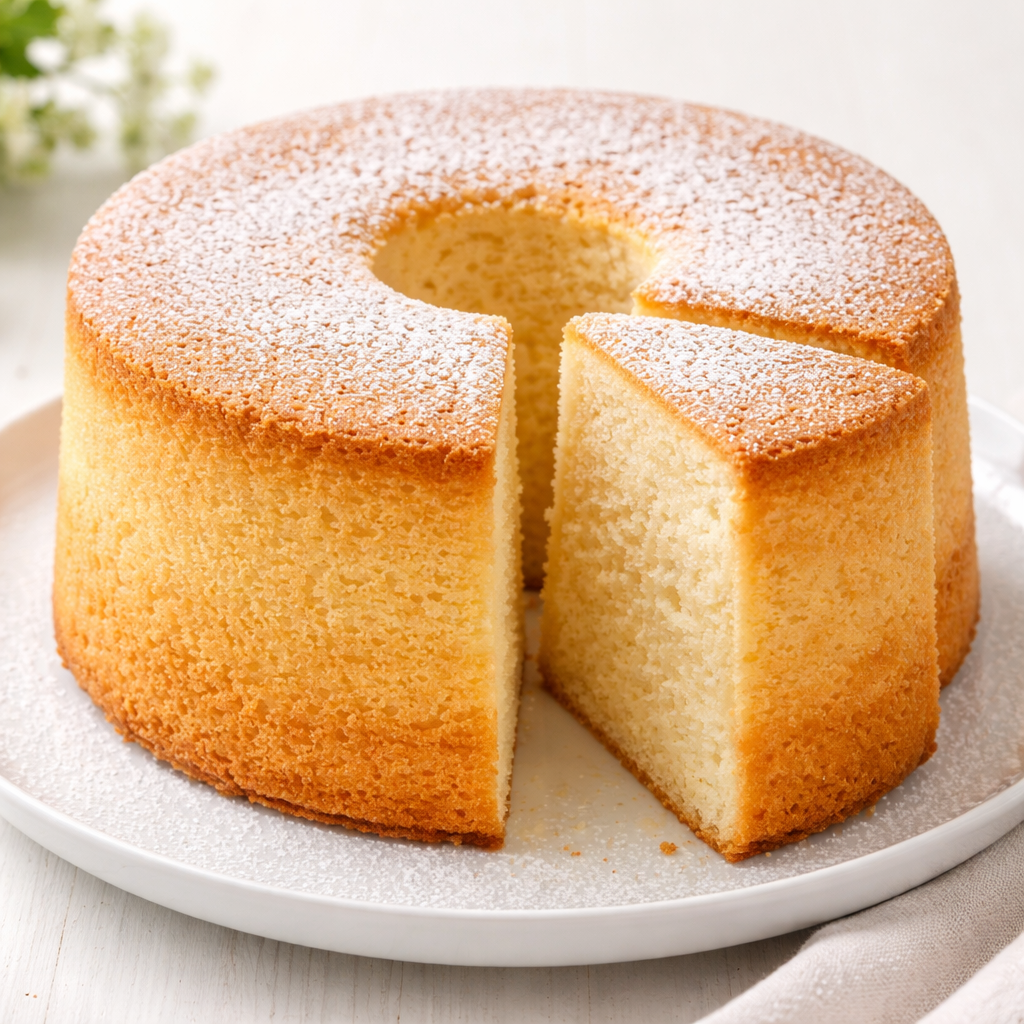
A successful Chiffon Cake Recipe follows a very specific workflow. Disrupting this order often leads to a loss of volume.
- Phase 1: The Yolk Base (10 Minutes): Combining the dry ingredients with the yolks, oil, and liquid. This mixture can be whisked vigorously.
- Phase 2: The Meringue (8-10 Minutes): Whipping the whites to stiff, glossy peaks. This is the engine of the cake.
- Phase 3: The Fold (5 Minutes): Combining the two mixtures gently.
- Phase 4: The Bake and Inversion (1 Hour +): Baking until set and then cooling upside down for at least 90 minutes.
Writing a Natural Chiffon Cake Recipe Walkthrough
1. Preparation
Preheat your oven to 325°F (165°C). Ensure your tube pan is completely clean and dry. Do not grease the pan. Sift 2 cups of cake flour, 1.5 cups of sugar, 1 tablespoon of baking powder, and 1 teaspoon of salt into a large bowl.
2. The Liquid Mix
In the center of your dry ingredients, create a well. Add 5 large egg yolks, 1/2 cup of vegetable oil, 3/4 cup of water, and 2 teaspoons of vanilla extract. Whisk until the batter is completely smooth.
3. The Meringue
In a separate, perfectly clean bowl, whip 7 large egg whites with 1/2 teaspoon of cream of tartar. Once the whites are frothy, gradually add the remaining 1/4 cup of sugar. Continue whipping until stiff, glossy peaks form. When you lift the beaters, the peak should stand straight up without drooping.
4. The Folding Technique
Add about one-quarter of the meringue to the yolk base and whisk it in to lighten the batter. Then, add the remaining meringue. Using a rubber spatula, gently fold the mixtures together using a “cut and fold” motion. Stop as soon as no white streaks remain.
5. Baking and Cooling
Pour the batter into the tube pan. Bake for 55 to 65 minutes. The cake is done when the top springs back when lightly touched. Immediately invert the pan onto a wire rack (or over the neck of a bottle). Let it cool completely—usually about 1.5 to 2 hours—before running a thin knife around the edges to release it.
Practical Issues Encountered During Cooking
Even a seasoned baker can face challenges with a Chiffon Cake Recipe. Here is how to troubleshoot common real-world problems.
- The Cake Falls Out of the Pan While Inverted: This usually happens if the pan was greased or if the cake was underbaked. The structure wasn’t strong enough to hold onto the walls of the pan.
- Large Holes in the Crumb: This is caused by large air pockets trapped during the pouring of the batter. Tip: Once the batter is in the pan, run a knife through it in a zigzag pattern or tap the pan firmly on the counter once to release large bubbles.
- The Cake Shrinks Excessively: This is often a sign of over-mixing during the folding stage or the oven temperature being too high, causing the cake to rise and fall too rapidly.
- Dense Layer at the Bottom: This occurs if the yolk base and meringue were not fully incorporated. The heavier yolk mixture sinks to the bottom during baking.
FAQ Based on Common Reader Concerns
Can I use all-purpose flour instead?
You can, but the texture will be noticeably tougher. If you must use all-purpose, replace 2 tablespoons of every cup with cornstarch to mimic the lower protein of cake flour.
Why is my chiffon cake sticking to the pan?
Because we don’t grease the pan, the cake is supposed to stick slightly. This is solved by using a thin, flexible palette knife to carefully “saw” the cake away from the edges once it is completely cold.
Can I make this in a regular round cake pan?
It is not recommended. A Chiffon Cake Recipe needs the central tube of a tube pan to help heat reach the middle of the cake and to provide more surface area for the batter to cling to as it rises.
Is cream of tartar necessary?
Yes. It is an acid that stabilizes the egg white proteins, allowing them to hold more air and preventing the meringue from collapsing while you fold in the other ingredients.
How should I store chiffon cake?
Because of the oil, it stays moist longer than most cakes. Keep it in an airtight container at room temperature for up to 3 days, or in the refrigerator for up to a week. It also freezes exceptionally well.
Classic Shrimp Cakes Recipe Made at Hom
The Best Recipe for Wacky Cake Everyone Will Love
Easy Raspberry Cake Recipe – Moist & Fruity
Classic Pear Cake Recipe Made at Home
Classic Moist White Cake Recipe Made Simple