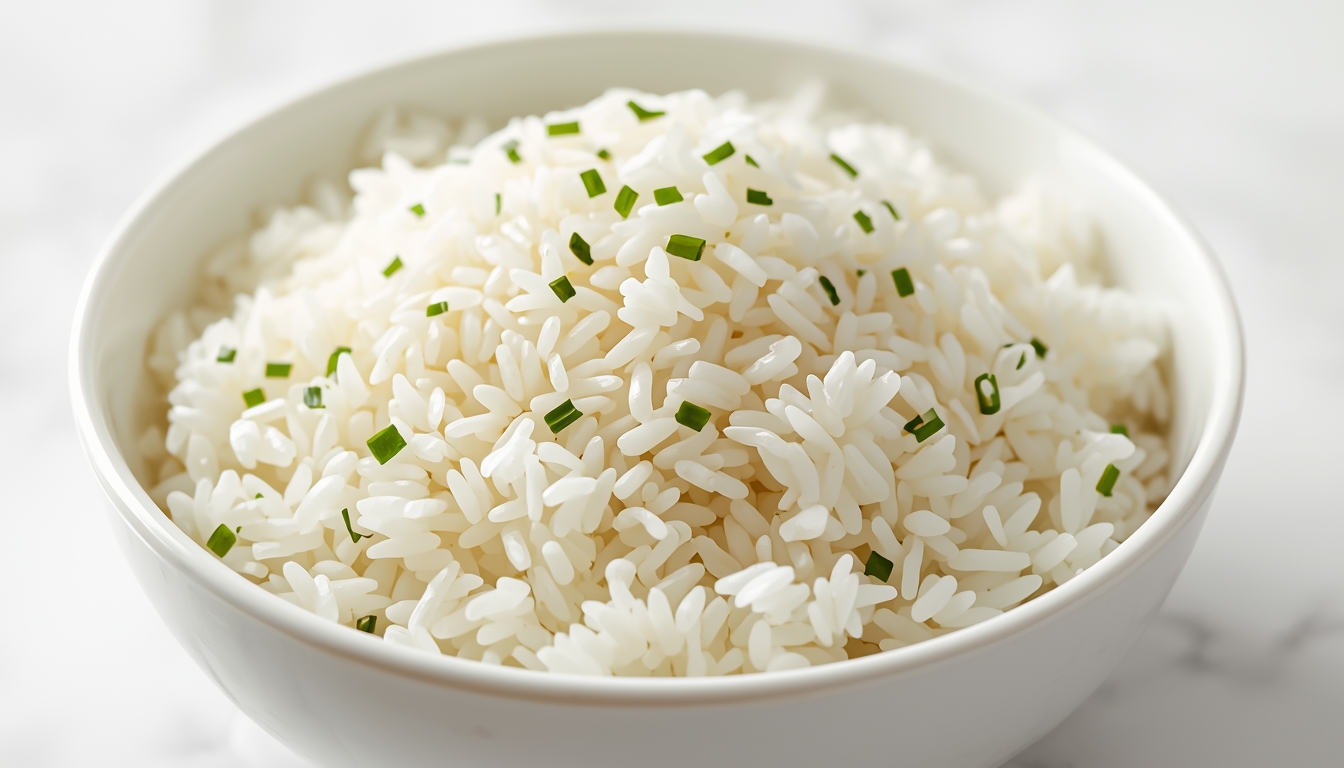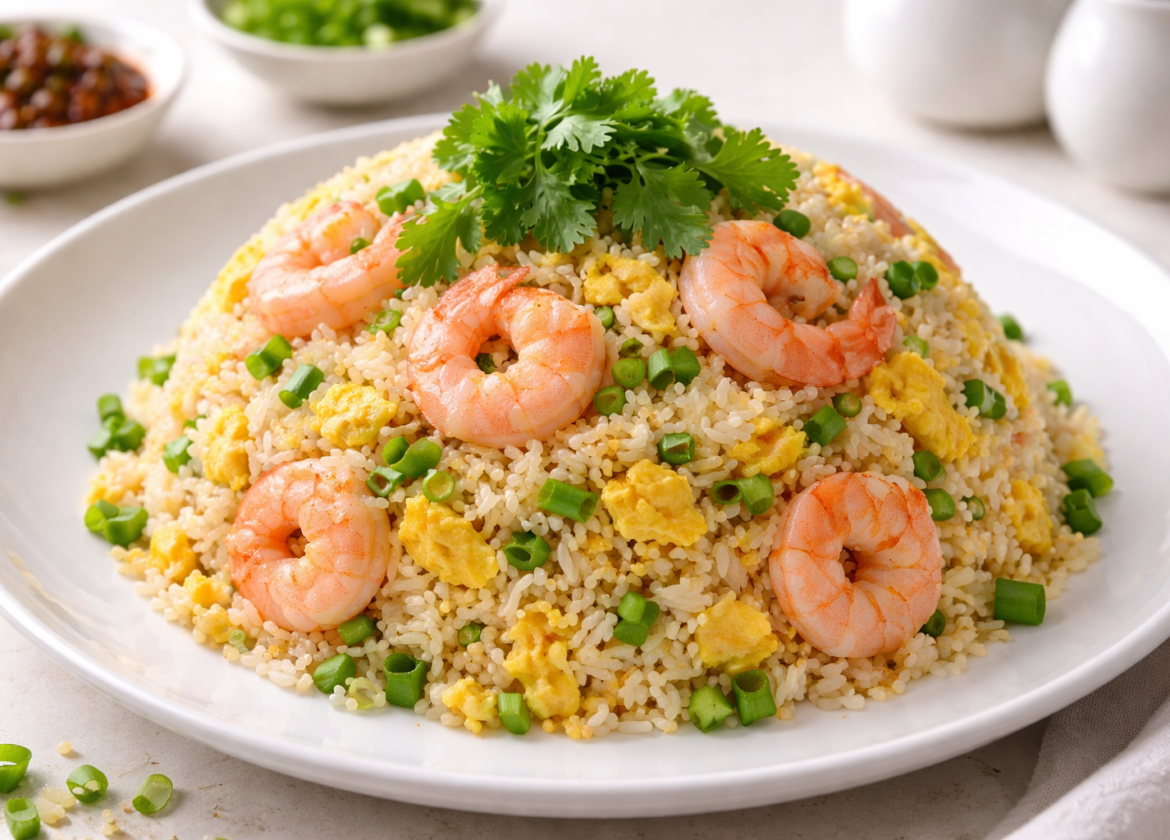
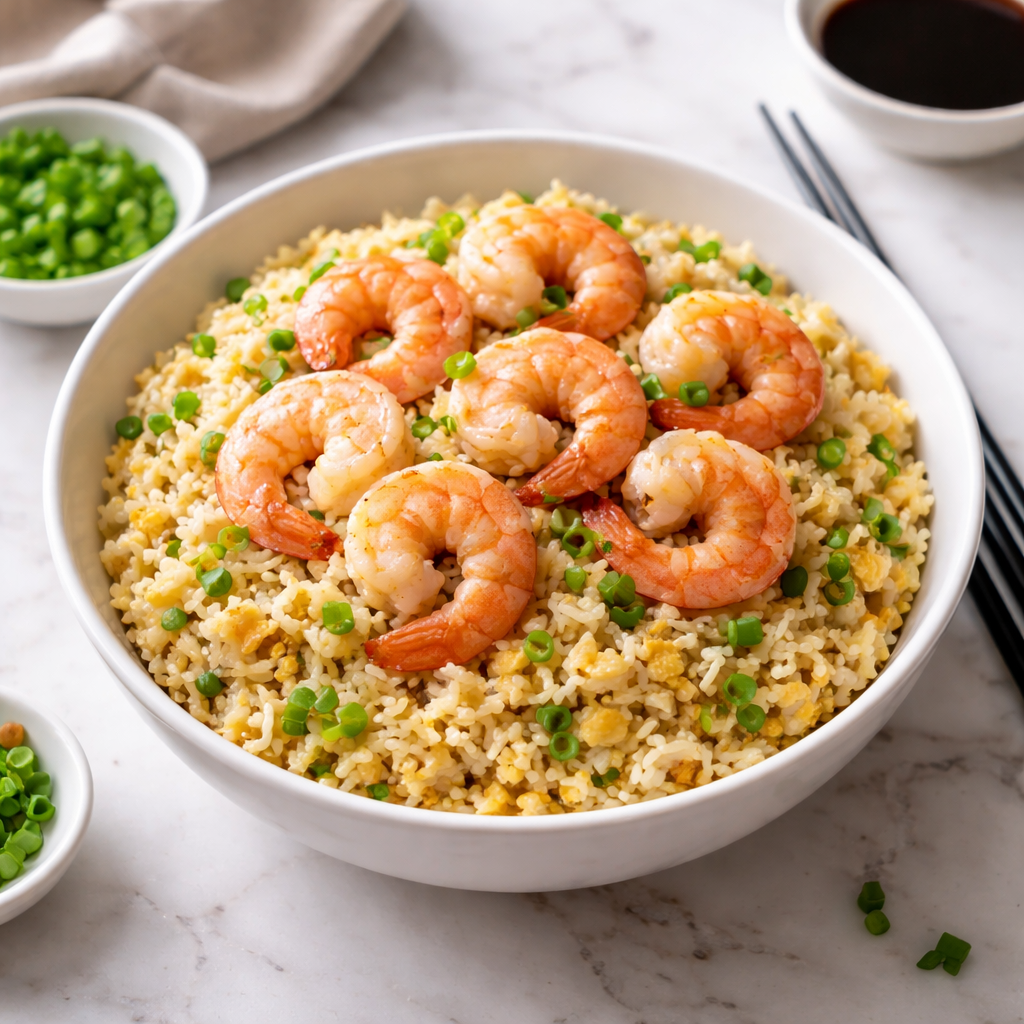
The Din Tai Fung Fried Rice Recipe is world-renowned for its minimalist elegance and technical precision. Unlike many versions of fried rice that rely on heavy soy sauces, dark oils, or a multitude of vegetables, this specific style focuses on the purity of the ingredients. The dish is characterized by its pale, golden hue, individual grains of rice that do not stick together, and the clean, savory aroma of toasted eggs and green onions.
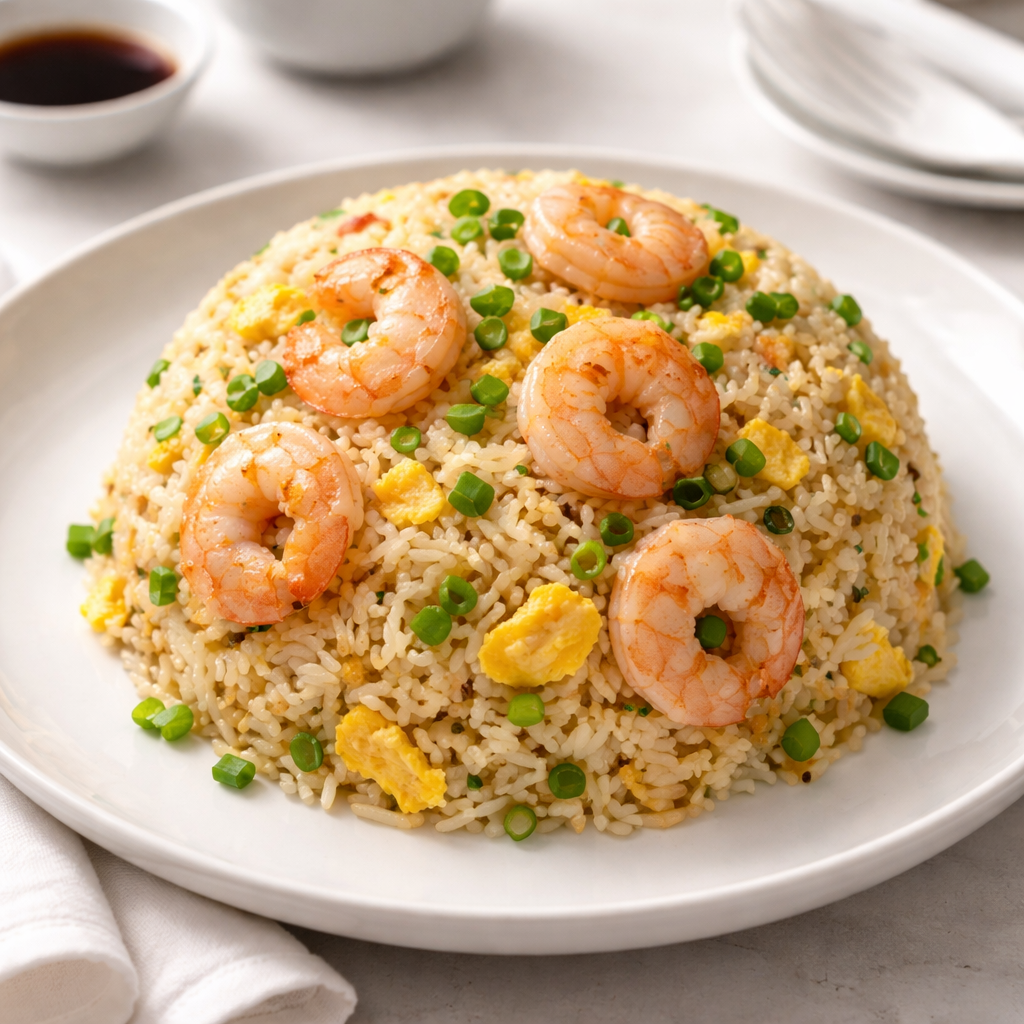
To achieve a high-quality result at home, one must understand that this is a technique-driven dish rather than an ingredient-driven one. The goal is to achieve a “pearl-like” quality in the rice, where each grain is coated in a thin layer of oil and egg. By following a structured approach to heat management and moisture control, any home cook can replicate the clean, refined taste of a professional Din Tai Fung Fried Rice Recipe.
When and Why to Use This Recipe
The Din Tai Fung Fried Rice Recipe is the ideal choice when you require a versatile side dish or a light, satisfying main course. Because it lacks the heavy sodium and sugars found in typical takeout fried rice, it pairs exceptionally well with delicate proteins like steamed fish, soup dumplings, or sautéed greens.
This recipe is also a superior choice for those who appreciate the texture of rice. In many stir-fry methods, the rice becomes mushy or clumped. This method specifically prevents that outcome, making it an excellent skill-building exercise for home cooks. Furthermore, because the ingredient list is short, it is a cost-effective way to produce a high-end dining experience using basic pantry staples.
Ingredient List With Practical Notes
Each component of the Din Tai Fung Fried Rice Recipe plays a specific structural role. Substitutions should be made with caution to maintain the authenticity of the dish.
The Rice
- Type: Use medium-grain white rice (such as Calrose) or short-grain Jasmine rice.
- State: Bold Tip: Use rice that has been cooked and refrigerated for at least 12–24 hours. Freshly cooked rice contains too much surface moisture, which will cause the dish to steam and clump rather than fry.
The Eggs
- Quantity: Typically 2 large eggs per 2 cups of cooked rice.
- Function: The eggs provide both color and the “glue” that coats the rice grains during the initial stages of frying.
The Aromatics
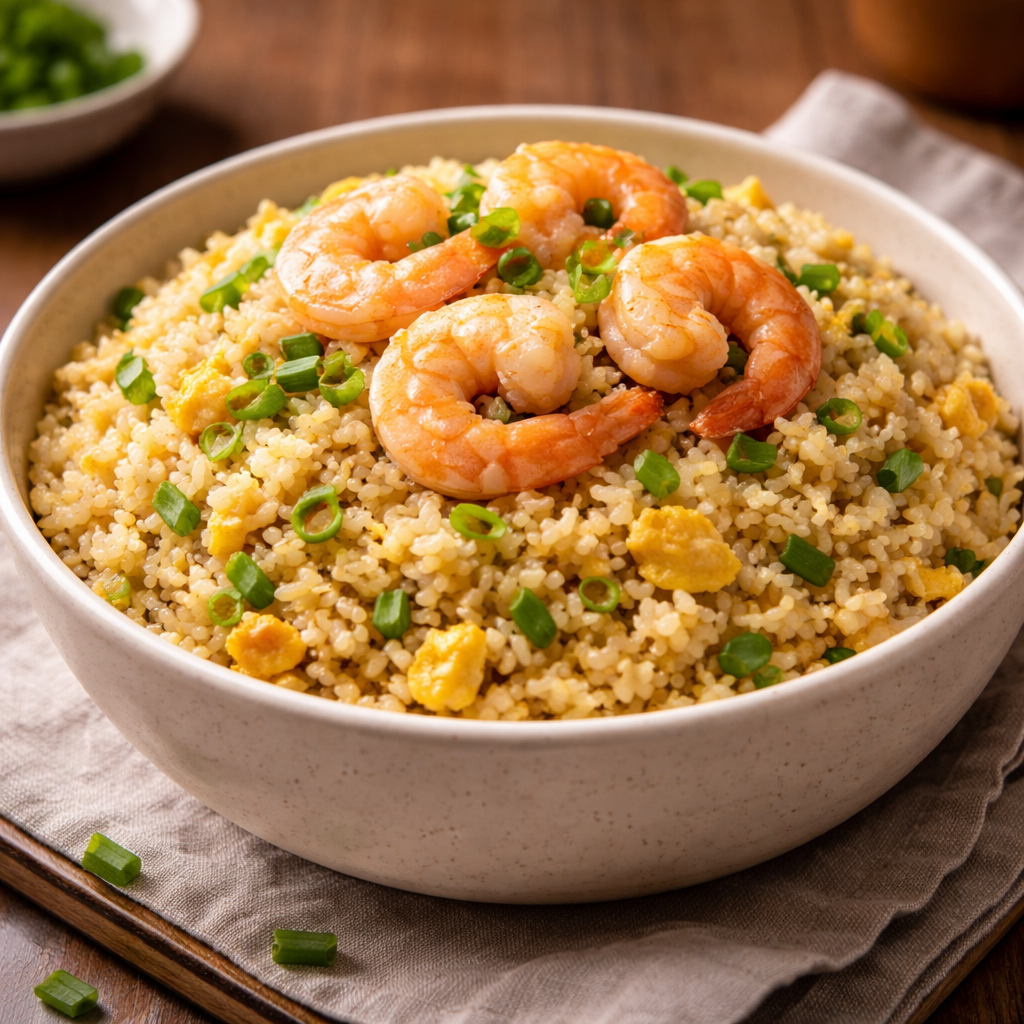
- Green Onions (Scallions): Use both the white and green parts. The white parts provide a sharp, pungent base, while the green parts add color and a fresh finish.
- Garlic: While optional in the most traditional versions, a small amount of finely minced garlic adds depth.
Seasoning and Fat
- Cooking Oil: Use a neutral oil with a high smoke point, such as grapeseed, peanut, or avocado oil.
- Salt and White Pepper: White pepper is essential here; it provides heat without the visible black flecks that would mar the clean aesthetic of the dish.
- MSG or Chicken Powder: A small pinch is often used in professional kitchens to provide the “umami” punch that defines the Din Tai Fung Fried Rice Recipe.
Kitchen Tools Checklist
The equipment used determines how effectively you can manage heat and moisture during the cooking process.
- A Carbon Steel Wok or Large Cast-Iron Skillet: These materials retain heat efficiently, allowing for “Wok Hei” (the breath of the wok), which gives the rice a subtle smoky flavor.
- A Flat Spatula (Chuan): This allows you to press down on the rice clumps and toss the ingredients rapidly without breaking the grains.
- A Fine-Mesh Strainer: If you choose to include shrimp or pork, use this to drain any excess moisture after a quick blanching or sear.
- Rice Paddle: Useful for breaking up the cold, refrigerated rice into individual grains before they enter the hot pan.
Start-to-Finish Cooking Timeline
Efficiency is vital when executing a Din Tai Fung Fried Rice Recipe, as the actual frying time is very short.
- Prep Window (10 Minutes): Dicing the scallions, whisking the eggs, and breaking up the cold rice grains by hand.
- The Searing Phase (2 Minutes): Cooking the protein (if using) and the eggs.
- The Integration Phase (3–5 Minutes): Adding the rice and tossing it until it is heated through and coated in egg.
- The Finish (1 Minute): Adding the green onions and final seasonings.
- Resting: This dish should be served immediately; it does not require a resting period.
How to Cook Din Tai Fung Fried Rice Recipe Correctly
1. Preparing the Rice
Take your cold, day-old rice out of the refrigerator. Using clean hands or a rice paddle, break up any large clumps until the grains are mostly separated. Bold Tip: If the rice is particularly dry, you can add a few drops of oil to your hands to help separate the grains.
2. Heating the Vessel
Place your wok over high heat. Add 2 tablespoons of oil. Swirl the oil to coat the entire surface of the pan. The oil should be shimmering and just beginning to smoke.
3. The Egg Foundation
Pour the lightly whisked eggs into the center of the wok. They should puff up immediately. Use your spatula to quickly scramble them into small, soft curds. Do not let them brown; they should remain a bright, pale yellow.
4. Adding the Rice
Immediately add the rice on top of the soft eggs. Using a pressing and tossing motion, combine the rice with the eggs. The goal is to break down any remaining clumps of rice so that the egg and oil coat every grain.
5. Seasoning
Sprinkle the salt, white pepper, and a pinch of chicken powder (or MSG) over the rice. Continue to toss the rice over high heat for 3 to 4 minutes. You should hear the rice “popping” or “dancing” in the pan—this indicates that the surface moisture has evaporated and the rice is truly frying.
6. The Final Aromatic Toss
Add the sliced green onions and any pre-cooked protein (such as sautéed shrimp or diced pork). Toss for an additional 60 seconds. The green onions should be fragrant and bright green but not wilted or browned.
7. Plating
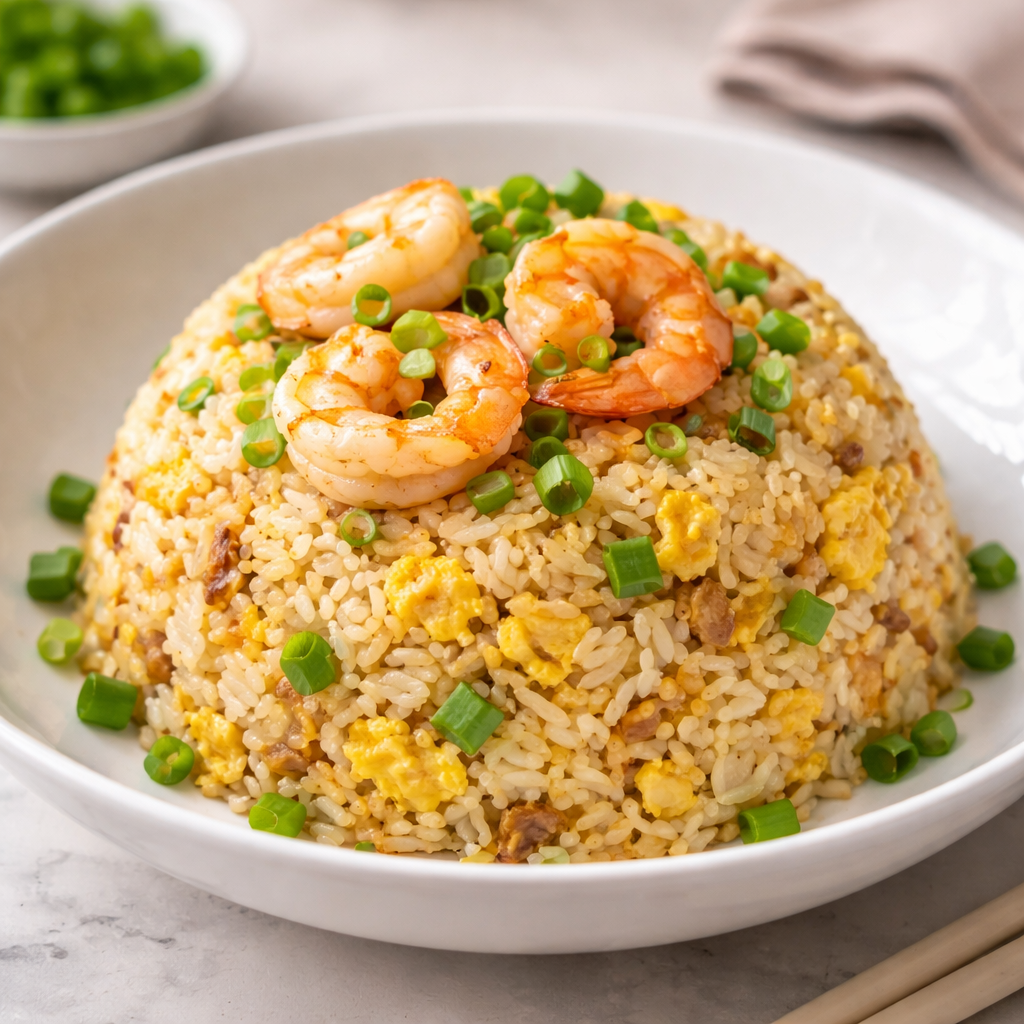
Transfer the rice to a bowl. For an authentic Din Tai Fung Fried Rice Recipe presentation, press the rice into a small bowl and invert it onto a plate to create a perfect dome.
What Can Go Wrong and Why
Even with a structured Din Tai Fung Fried Rice Recipe, environmental factors can lead to suboptimal results.
- The Rice is Mushy: This is the result of using fresh, warm rice or using too much oil. Fresh rice releases starch as it is stirred, creating a paste. Always use cold, dry rice.
- The Rice is Too Hard: If the rice was kept in a poorly sealed container in the fridge, it may have dehydrated too much. Bold Tip: To fix this, add a tablespoon of water or broth to the pan during the frying phase and cover it with a lid for 30 seconds to steam the grains slightly.
- The Eggs are Brown and Rubbery: The heat was either too high or the eggs were cooked too long before the rice was added. The eggs should be added and the rice immediately placed on top to buffer the heat.
- The Dish is Bland: This recipe relies on white pepper and the quality of the salt. If the flavor is flat, ensure you are using enough white pepper to provide that characteristic “back-of-the-throat” heat.
Din Tai Fung Fried Rice Recipe FAQ Section
Why is white pepper used instead of black pepper?
White pepper is traditional in the Din Tai Fung Fried Rice Recipe because it provides a sharper, more fermented heat without the floral notes of black pepper. Additionally, it preserves the clean, uniform appearance of the golden rice.
Can I use brown rice for this recipe?
While you can use brown rice, it will not achieve the same “pearl-like” texture. Brown rice has an outer bran layer that prevents the egg from coating the grain as effectively. The flavor profile will also become nuttier, moving away from the intended refined taste.
How do I store and reheat leftovers?
Store in an airtight container for up to 3 days. To reheat, it is best to use a skillet over medium heat with a teaspoon of water. Microwaving often results in uneven heating and can make the rice grains tough.
Is it necessary to use a wok?
While a wok is preferred for its heat distribution and shape, a large cast-iron or stainless steel skillet is a functional substitute. Avoid non-stick pans if possible, as they cannot safely reach the high temperatures required for true frying.
What is the secret to the golden color?
The secret is the timing of the egg. By adding the rice while the egg is still wet and “jammy,” you allow the egg to coat the rice grains. As you continue to fry, the egg dries onto the grain, creating a vibrant golden shell.
Can I add soy sauce?
A true Din Tai Fung Fried Rice Recipe does not use soy sauce. Soy sauce adds too much moisture and turns the rice brown. If you desire more saltiness, increase the amount of kosher salt or add a drop of fish sauce, which provides salt without as much color.
The Best Pineapple Rice Recipe for Quick Weeknight Meals
Simple Jasmine Rice Recipes for Lunch & Dinner