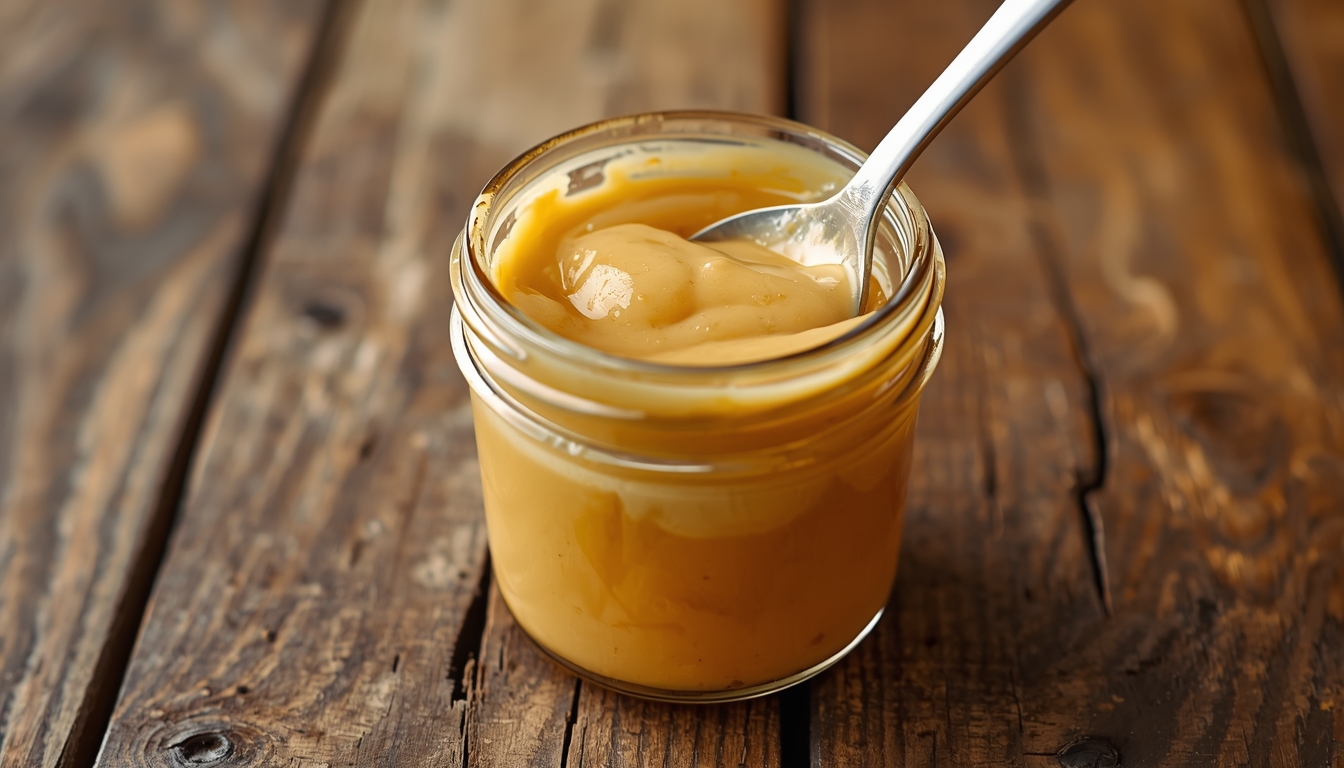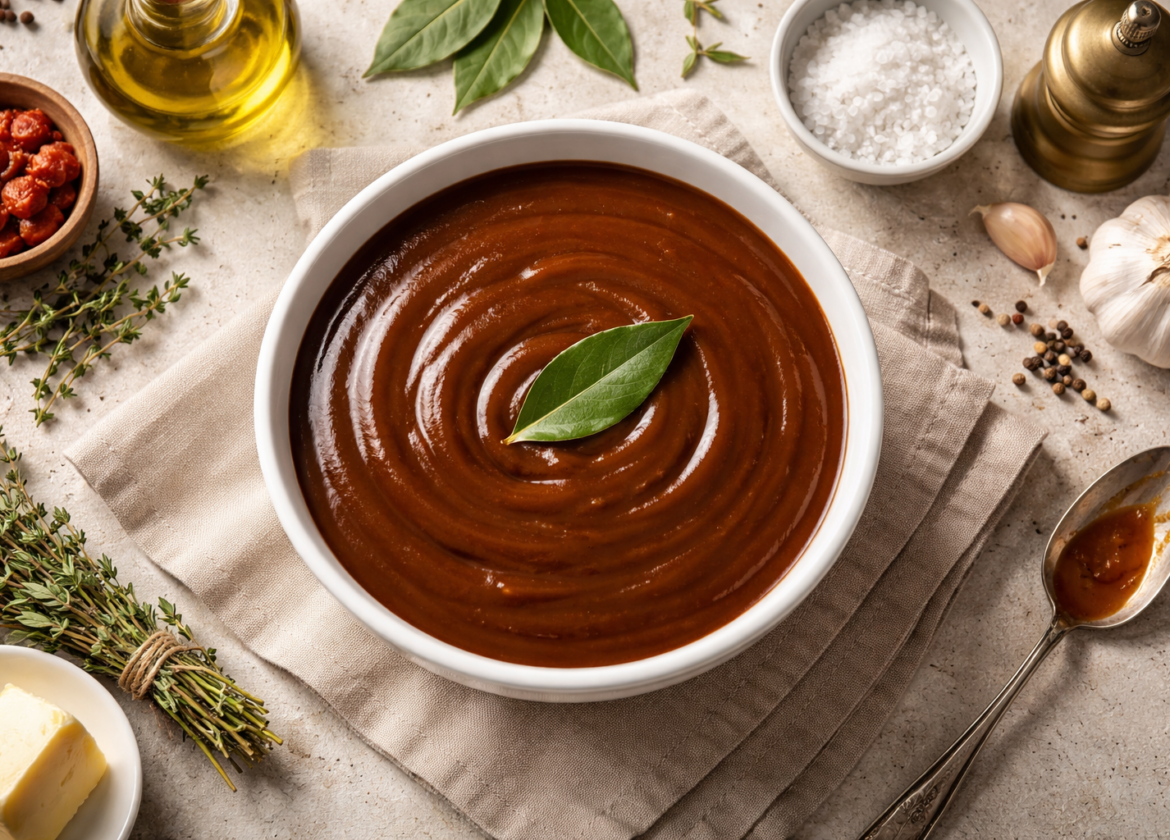
The Espagnole Sauce Recipe, often referred to as “Brown Sauce,” is one of the five mother sauces of classical French cuisine. Mastering this sauce is essential for any cook who wishes to create sophisticated secondary sauces like Demi-Glace, Bordelaise, or Sauce Robert. Unlike lighter mother sauces, Espagnole is defined by its deep color, rich umami profile, and a complex preparation process that involves browning ingredients to their physical limit without burning them.
Planning is the most critical phase of the Espagnole Sauce Recipe. Because this sauce requires a long simmering time to achieve its signature velvety texture and flavor concentration, it is not a dish that can be rushed. Success depends on the systematic development of a brown roux, the caramelization of mirepoix, and the slow reduction of a high-quality brown stock. It is advisable to dedicate a full afternoon to the process to ensure the sauce reduces properly and the impurities are skimmed away effectively.
Preparing Ingredients for Espagnole Sauce Recipe
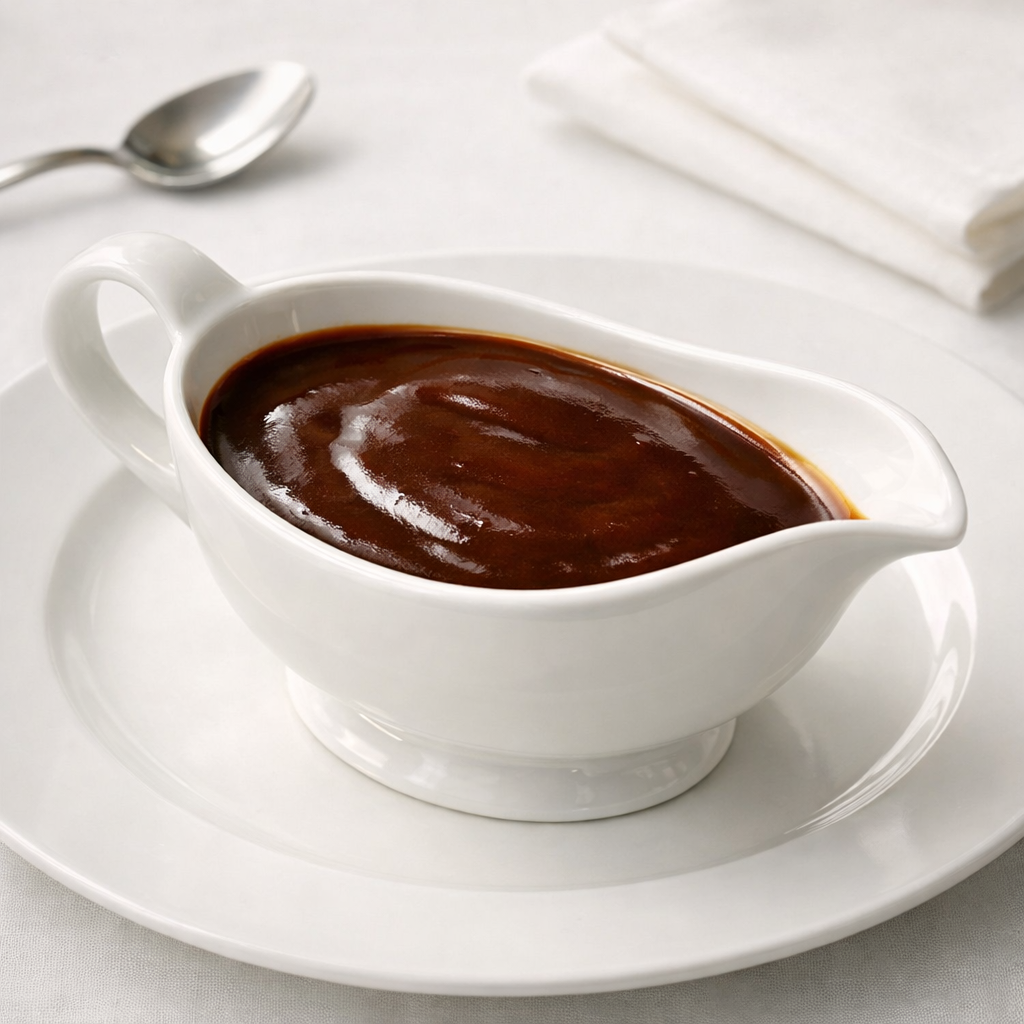
The foundation of the Espagnole Sauce Recipe relies on three main components: a brown roux, a dark mirepoix, and a rich brown veal or beef stock. Each must be prepared with precision to ensure the final sauce is not bitter or overly greasy.
The Roux Component
You will need equal parts of clarified butter and all-purpose flour. Using clarified butter is preferable because it has a higher smoke point, which is necessary during the prolonged cooking required to reach the “brown” stage of the roux.
The Mirepoix and Aromatics
- Onions, Carrots, and Celery: These should be diced uniformly to ensure even caramelization.
- Tomato Purée: This provides acidity and contributes to the deep mahogany color.
- Sachet d’Epices: A small cheesecloth bundle containing peppercorns, bay leaves, thyme, and parsley stems.
Ingredient Handling and Seasoning
Handling ingredients correctly is the difference between a cloudy sauce and a professional, glossy finish. For the Espagnole Sauce Recipe, the brown stock should be unsalted or very low in sodium.
Bold Tip: As the sauce reduces, the salt concentration will intensify; therefore, seasoning with salt should only occur at the very end of the process. The tomato purée should be cooked out with the mirepoix until it turns a rusty brick color. This removes the raw, metallic taste of the tomato and replaces it with a deep, savory sweetness. When adding the stock to the roux, ensure the temperatures are regulated. Adding cold stock to a hot roux (or vice-versa) helps prevent lumping, ensuring a smooth emulsion.
Required Cooking Equipment
Because the Espagnole Sauce Recipe involves long simmering and the potential for scorching, high-quality equipment is a necessity.
- Heavy-Bottomed Saucepan or Dutch Oven: A thick base prevents the flour in the roux from burning during the long browning process.
- Fine-Mesh Sieve (Chinois): To achieve the classic silken texture, the sauce must be strained through a fine-mesh sieve to remove mirepoix solids and sachet particles.
- Whisk and Wooden Spoon: A whisk is required for the initial emulsion, while a wooden spoon is better for scraping the bottom of the pot during the simmer.
- Skimmer or Ladle: Essential for removing the “scum” or fat that rises to the surface during reduction.
Managing Cooking Time Efficiently
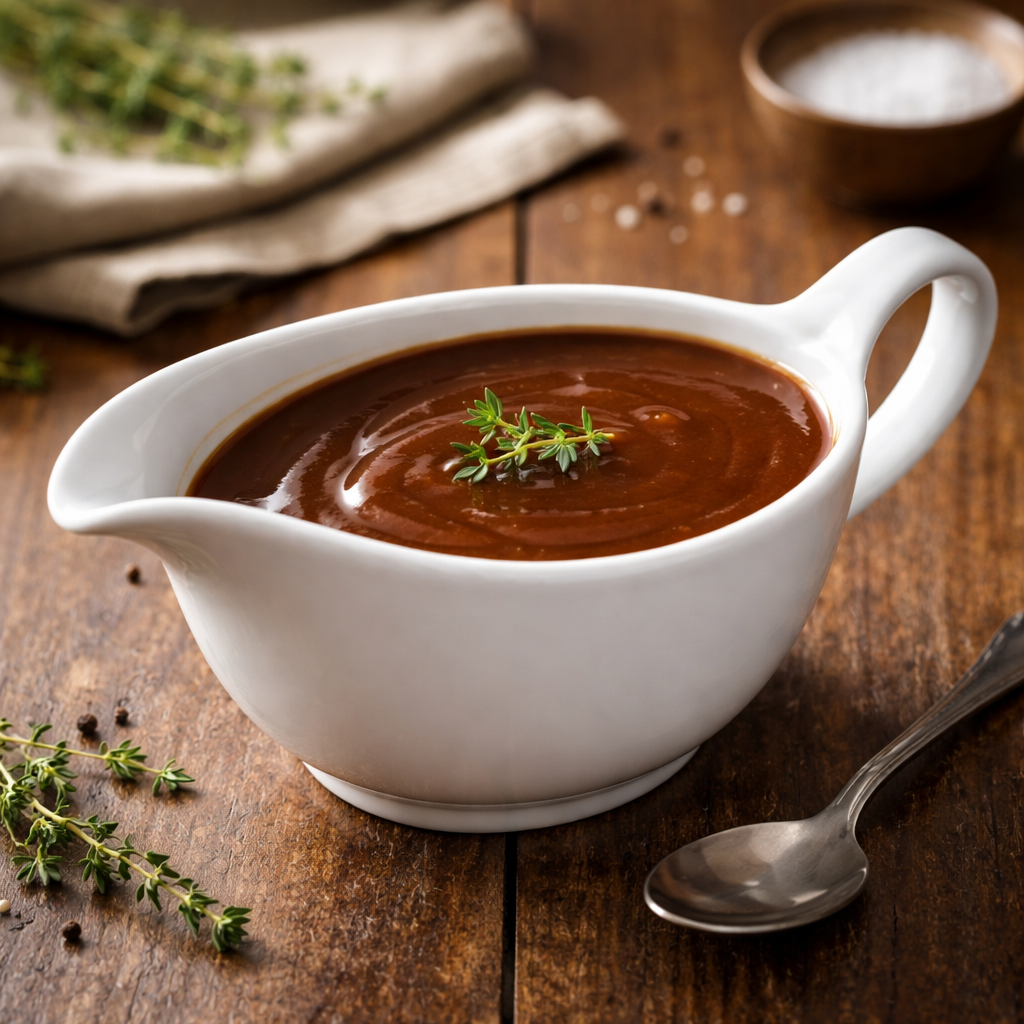
The total time for an Espagnole Sauce Recipe can range from 2 to 3 hours. Managing this window effectively ensures a productive workflow.
- Phase 1: The Brown Roux (20–30 Minutes): This requires constant attention. The roux must be cooked over medium-low heat until it smells nutty and reaches the color of a penny.
- Phase 2: Caramelization (15 Minutes): While the roux is browning, you can sauté your mirepoix in a separate pan to save time.
- Phase 3: The Simmer (1–1.5 Hours): Once the stock and roux are combined, the sauce requires minimal active labor, only periodic skimming every 15 minutes.
- Phase 4: Straining and Finishing (10 Minutes): The final step involves passing the sauce through the chinois and adjusting final seasonings.
Espagnole Sauce Recipe Execution Steps
1. Creating the Brown Roux
Melt 1/2 cup of clarified butter in a heavy saucepan. Whisk in 1/2 cup of all-purpose flour. Cook over medium-low heat, stirring constantly. The roux will pass from white to blond, then to brown. Stop when it reaches a deep brown color but before it begins to smoke.
2. Sautéing the Mirepoix
In a separate skillet, sauté diced onions, carrots, and celery in butter until they are deeply browned. Stir in 2 tablespoons of tomato purée and cook for an additional 3 minutes until the paste darkens.
3. Combining Components
Slowly whisk 6 cups of warm brown veal or beef stock into the brown roux. Ensure there are no lumps. Add the caramelized mirepoix and tomato mixture into the pot.
4. The Simmer and Sachet
Add the sachet d’epices. Bring the liquid to a boil, then immediately reduce to a very low simmer. Bold Tip: Do not cover the pot; evaporation is necessary for the sauce to thicken and flavors to concentrate.
5. Skimming
As the sauce simmers, grey foam and fat will rise to the top. Use a skimmer to remove this regularly. This step is vital for a clear, glossy final product.
6. Straining
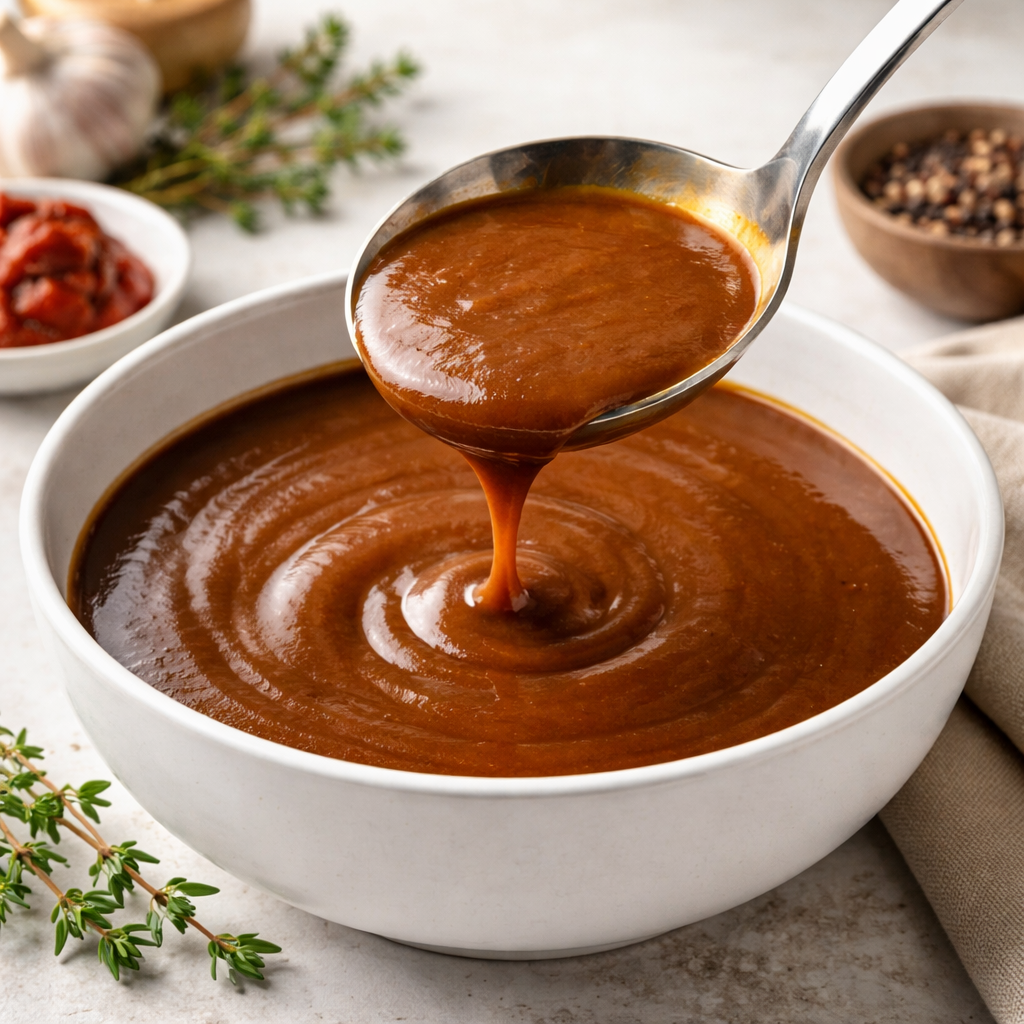
After the sauce has reduced by about one-third and coats the back of a spoon, remove it from the heat. Pass it through a fine-mesh sieve into a clean bowl or pot. Discard the solids.
Workflow Mistakes to Avoid
- Rushing the Roux: If you use high heat to brown the roux quickly, the flour will burn, resulting in black specks and a bitter taste. The roux will lose its thickening power if it is scorched.
- Neglecting the Skimming: Failing to skim the sauce leads to a cloudy, greasy result that lacks the refined mouthfeel expected of a mother sauce.
- Boiling Instead of Simmering: A hard boil will emulsify the fat back into the sauce, making it impossible to skim and ruining the clarity.
- Using Salty Stock: Because the Espagnole Sauce Recipe involves significant reduction, using standard boxed broth can result in a sauce that is inedibly salty.
FAQ: Espagnole Sauce Recipe Workflow
What is the difference between Espagnole and Demi-Glace?
Espagnole is the mother sauce. Demi-glace is a secondary sauce made by combining equal parts Espagnole and brown stock, then reducing that mixture by half again.
Can I make Espagnole sauce in advance?
Yes. It can be stored in the refrigerator for up to 5 days or frozen for up to 3 months. When reheating, you may need to add a splash of stock to restore the consistency.
Why is my sauce bitter?
Bitterness is usually the result of burning the roux or the tomato paste. Ensure you maintain medium-low heat during the browning stages.
Can I use a different fat besides butter?
Clarified butter is traditional, but rendered beef fat (tallow) can be used to enhance the beefy profile of the Espagnole Sauce Recipe. Avoid vegetable oils as they lack the necessary flavor contribution.
How do I achieve a perfectly glossy finish?
Professional chefs often finish the sauce with a “monter au beurre”—whisking in a few knobs of cold, unsalted butter right before serving.
Easy Thai Peanut Sauce Recipe – Creamy & Flavorful
How to Make Jerk Sauce recipe at Home – Easy & Flavorful
Authentic Béarnaise Sauce Recipe Made Simple
Easy Bordelaise Sauce Recipe for Steak & Meats
Quick & Flavorful Potsticker Sauce Recipe – Step-by-Step
The Ultimate General Tso Sauce Recipe for Your Favorite Chicken