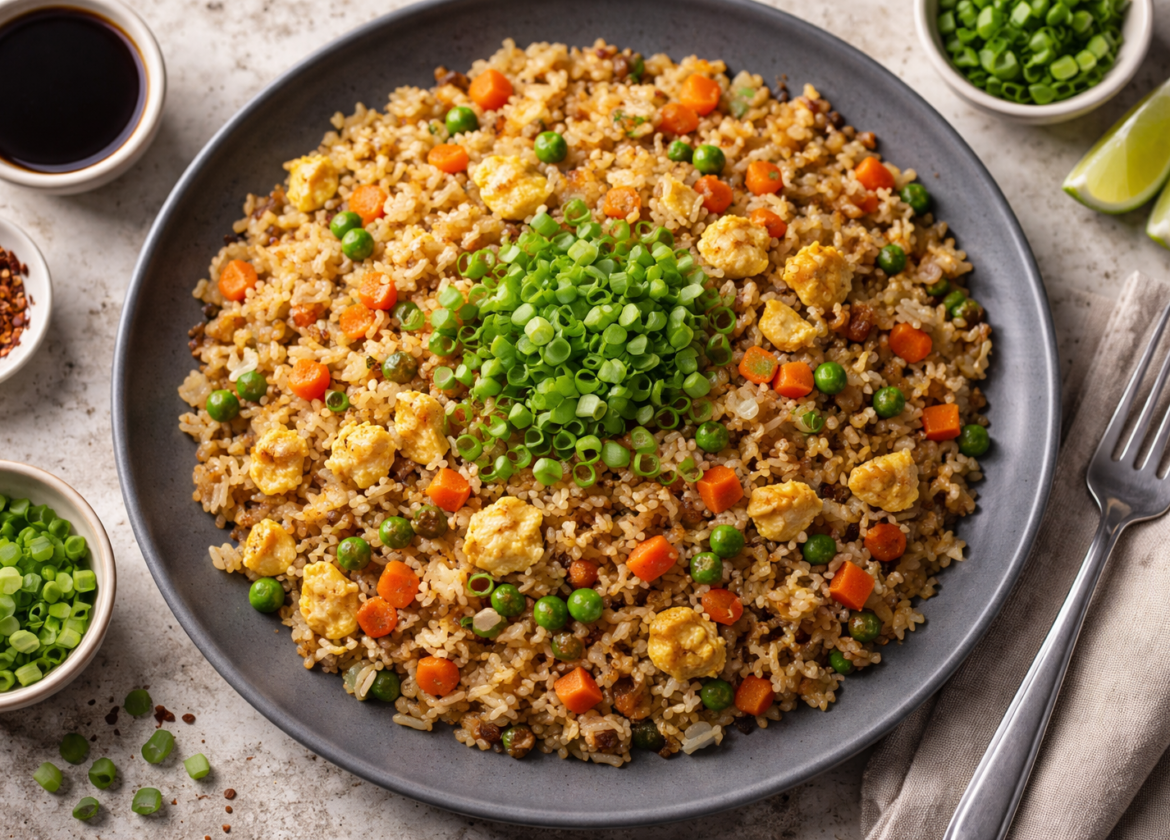
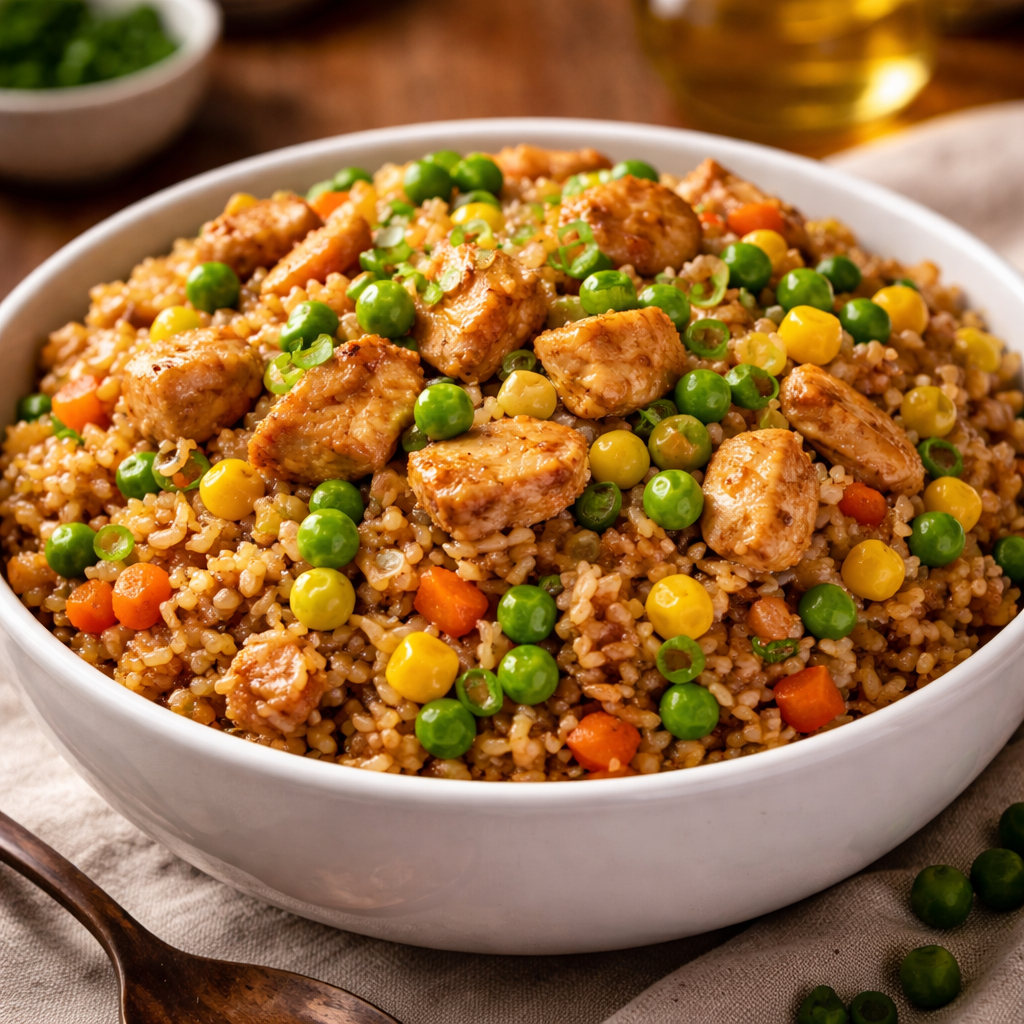
The Fried Rice Recipe Blackstone method has revolutionized the way home cooks approach outdoor griddling. While traditional fried rice is prepared in a wok over a high-intensity gas flame, the flat-top griddle offers a significantly larger surface area, allowing for better moisture evaporation and more consistent caramelization. This transition from the kitchen stove to the outdoor griddle allows for the preparation of restaurant-quality meals in larger quantities, making it an ideal solution for families and social gatherings.
A successful Fried Rice Recipe Blackstone execution relies on the principle of “space.” On a standard stovetop, ingredients are often crowded, leading to steaming rather than frying. The Blackstone griddle eliminates this issue, providing distinct heat zones where proteins, vegetables, and rice can be seared simultaneously before being integrated into a cohesive dish. This article provides a technical framework for mastering this outdoor cooking staple, focusing on the variables that ensure a perfect, non-mushy texture every time.
Key Advantages of Fried Rice Recipe Blackstone
Transitioning your fried rice preparation to a Blackstone griddle offers several functional benefits that improve both the process and the final product.
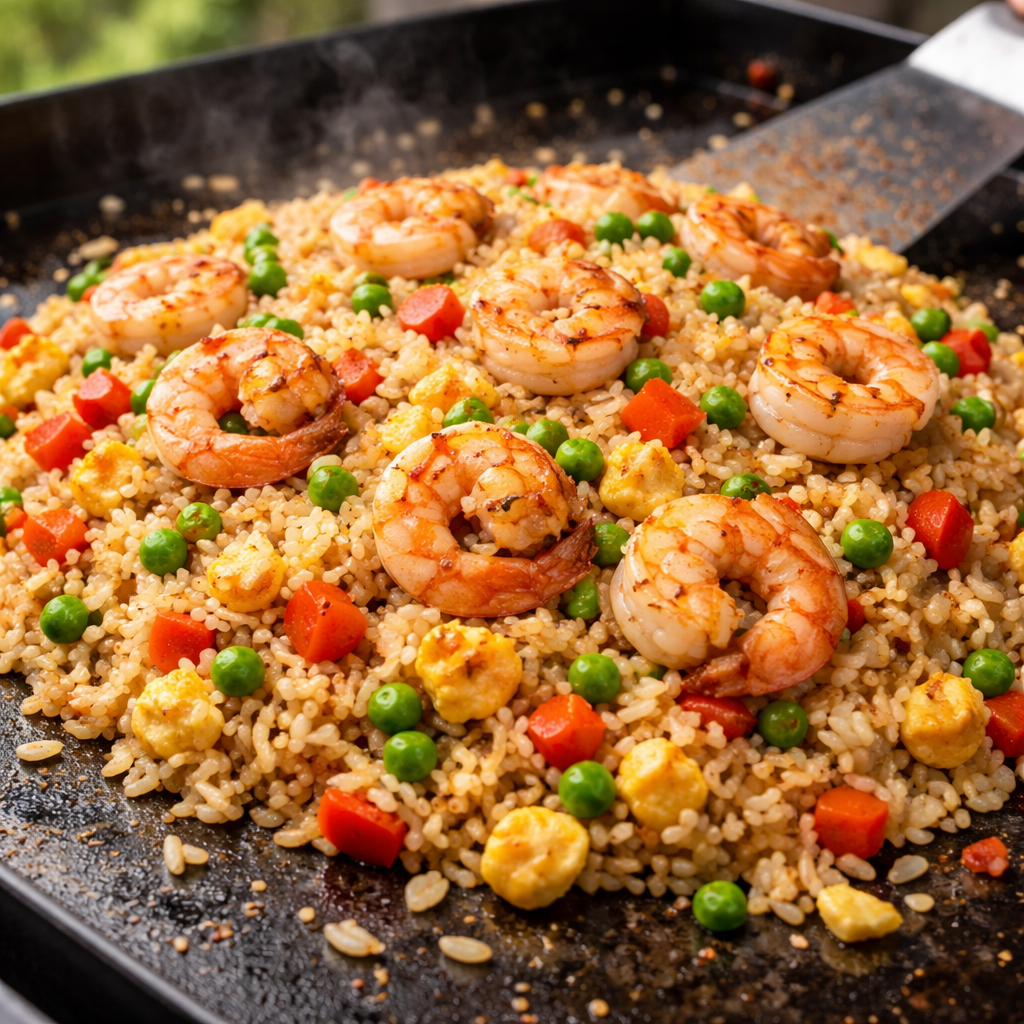
- Superior Moisture Control: The primary enemy of fried rice is excess moisture. The expansive surface of a Blackstone allows you to spread the rice thin, ensuring that every grain makes contact with the hot metal. This facilitates the rapid evaporation of steam, which is essential for achieving the “fried” texture.
- Zonal Cooking: Most Blackstone models feature multiple burners, allowing you to create high-heat zones for searing meat and lower-heat zones for keeping vegetables tender. This level of control is difficult to achieve in a single wok.
- The “Maillard Reaction” at Scale: Because you can spread ingredients across 28 to 36 inches of steel, you achieve a much more uniform sear. This creates a deeper, nuttier flavor profile across the entire batch of rice.
- High Volume Output: A Fried Rice Recipe Blackstone can easily accommodate four to six servings at once without the temperature drop that typically occurs in smaller pans.
Ingredient Selection and Preparation
Precision in ingredient selection is the foundation of a reliable Fried Rice Recipe Blackstone. Because the cooking process moves rapidly, all preparation must be completed before the griddle is ignited.
The Rice: The Critical Component
The most important factor is the state of the rice. Bold Tip: Use long-grain white rice or Jasmine rice that has been cooked and refrigerated for at least 24 hours. Freshly cooked rice contains too much internal moisture; when it hits the hot griddle, it will turn into a sticky paste. Day-old rice has dehydrated slightly, allowing the grains to remain individual and firm during the frying process.
Proteins and Vegetables
- Proteins: Chicken breast, flank steak, shrimp, or firm tofu should be cut into small, uniform pieces to ensure they cook at the same rate as the rice.
- Vegetables: A classic mix of peas, carrots, and white onions is standard. Finely diced aromatics like garlic and ginger are essential for the aromatic base.
- The Fat: Use a neutral oil with a high smoke point, such as grapeseed, peanut, or avocado oil. Avoid butter for the initial sear, as the milk solids will burn at the temperatures required for griddling.
Required Kitchen Equipment
To execute a Fried Rice Recipe Blackstone properly, you need tools designed for high-heat, flat-top cooking.
- Dual Griddle Spatulas: You will need two long, stainless steel spatulas. This allows you to “toss” the rice and move large volumes of food quickly, mimicking the tossing motion of a wok.
- Infrared Thermometer: To ensure the griddle has reached the optimal temperature before you begin.
- Steam Cover (Melting Dome): Useful if you are adding harder vegetables (like broccoli) that require a quick steam to tenderize.
- Squeeze Bottles: Professional griddle cooks use squeeze bottles for oil, water, and soy sauce. This allows for precise distribution across the rice without over-saturating specific areas.
Cooking Duration and Temperature Control
Temperature management is the most technical aspect of the Fried Rice Recipe Blackstone. Unlike an indoor stove, an outdoor griddle is subject to environmental factors like wind and ambient temperature.
- Target Temperature: The griddle surface should be between 400°F and 450°F (204°C and 232°C). At this temperature, the oil will shimmer and produce light wisps of smoke.
- Preheating: Allow the Blackstone to preheat for at least 10 to 15 minutes. This ensures the heavy steel plate has absorbed enough thermal energy to prevent a temperature crash when the cold rice is added.
- The Workflow: Total cooking time is generally 10 to 12 minutes.
- Minutes 1-4: Searing proteins and hard vegetables.
- Minutes 5-8: Frying the rice and aromatics.
- Minutes 9-10: Integrating eggs and final sauces.
- Minute 11-12: Finishing with sesame oil and garnishes.
Detailed Fried Rice Recipe Blackstone Instructions
1. Preparation of the Surface
Once the griddle is preheated to 400°F, apply a thin layer of high-smoke-point oil. Use your spatula to spread the oil across the entire cooking surface.
2. Searing Proteins
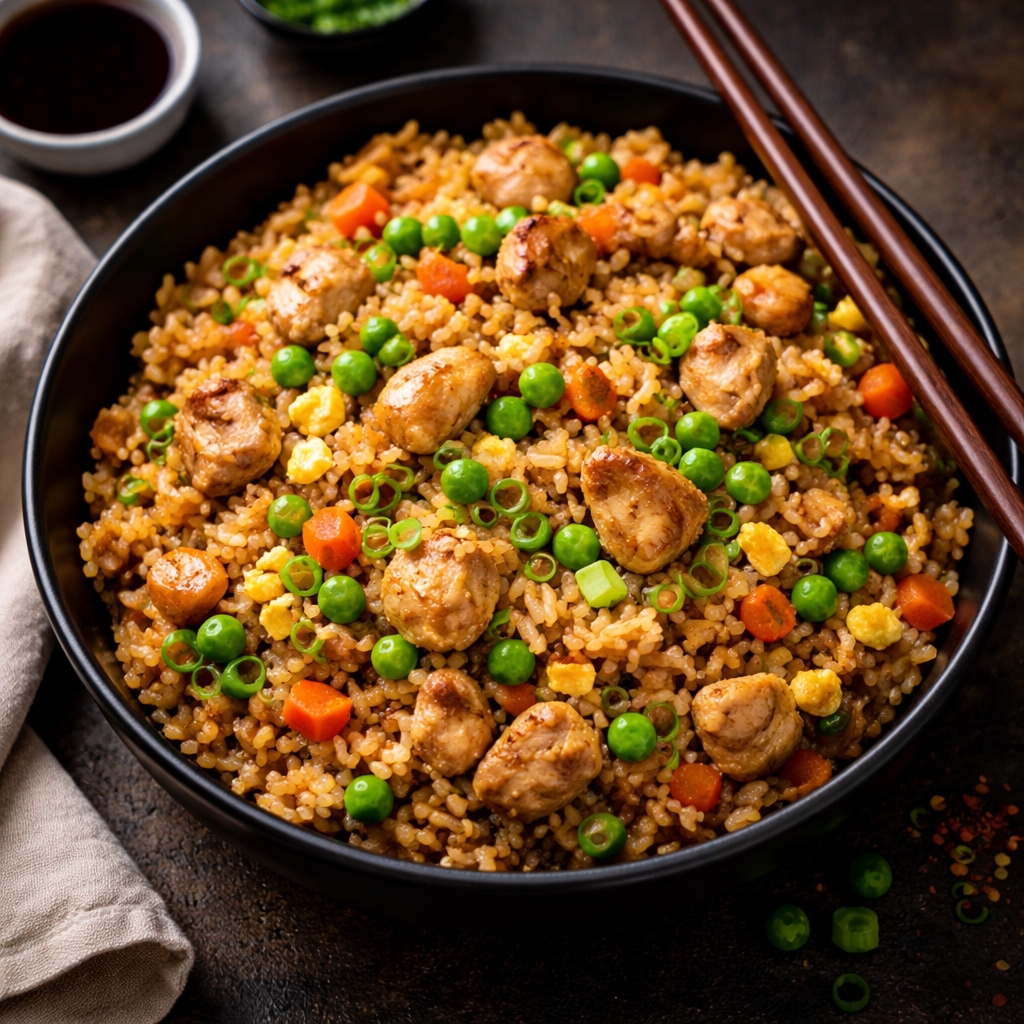
Place your seasoned proteins on one side of the griddle. Let them sear undisturbed for 2 minutes to develop a crust. Once seared, move them to the cooler “buffer zone” (the outer edges of the griddle).
3. Sautéing the Vegetables
On the hottest part of the griddle, add your onions, peas, and carrots. Sauté until the onions are translucent. Add the minced garlic and ginger during the last 30 seconds to prevent burning.
4. The Rice Fry
Apply a fresh squirt of oil to the center of the griddle. Dump the cold, separated rice onto the oil. Spread it out flat so it covers as much surface area as possible. Let it sit for 60 seconds without moving it to develop a “crisp.” Bold Tip: If the rice grains are sticking together, add a very small splash of water; the steam will help separate the grains.
5. Integration and Seasoning
Move the rice, proteins, and vegetables into one large pile. Using both spatulas, toss the mixture vigorously. Drizzle 3 tablespoons of soy sauce and a pinch of white pepper over the pile. Continue to toss until the rice is uniformly colored.
6. The Egg Well
Clear a small circle on the griddle surface. Pour 3 whisked eggs into the circle. Scramble them quickly with the edge of your spatula. Once they are 80% cooked, fold them into the rice mixture.
7. The Finish
Turn off the burners. Drizzle a tablespoon of toasted sesame oil over the rice and toss one last time. The residual heat of the griddle will be enough to finish the dish. Garnish with sliced green onions and sesame seeds.
Troubleshooting Common Cooking Issues
Even with a high-quality Fried Rice Recipe Blackstone, specific technical errors can occur.
- Issue: The rice is mushy or gummy.
- Cause: You likely used fresh rice or too much liquid (soy sauce/water).
- Fix: Ensure you use day-old, refrigerated rice. If the rice becomes mushy on the griddle, spread it as thin as possible and increase the heat to evaporate the excess moisture.
- Issue: The rice is sticking to the griddle.
- Cause: The griddle was not sufficiently seasoned or the temperature was too low.
- Fix: Clean the surface and apply a thin layer of oil before the next batch. Ensure the griddle is at least 400°F.
- Issue: The garlic is bitter.
- Cause: The garlic was added too early and burned.
- Fix: Always add garlic and ginger at the very end of the vegetable sauté, just before the rice is added.
- Issue: The dish is too salty.
- Cause: Over-application of soy sauce or using salted butter.
- Fix: Use low-sodium soy sauce. You can balance excess saltiness at the end by adding a teaspoon of sugar or a squeeze of lime juice.
Fried Rice Recipe Blackstone FAQ
Why do I need to use cold rice for the Blackstone? Cold rice has undergone a process called starch retrogradation. The grains become firmer and less sticky. On a high-heat surface like a Blackstone, this allows the rice to fry and become crispy rather than clumping together.
Can I use a Blackstone for cauliflower fried rice? Yes. The Blackstone is excellent for cauliflower rice because it evaporates the high water content of the cauliflower much faster than a standard frying pan, preventing the dish from becoming “soupy.”
How do I clean the griddle after making fried rice? While the griddle is still warm, use a scraper to remove any stuck-on rice or egg. Apply a small amount of water to steam off the remaining residue, wipe clean with a paper towel, and apply a very thin coat of oil to protect the seasoning.
What is the best oil for this Fried Rice Recipe Blackstone? Peanut oil is the professional choice due to its high smoke point and subtle nutty flavor. However, grapeseed oil is a great flavor-neutral alternative.
How do I prevent the rice from flying off the edges? Use the “two-spatula method.” Use one spatula as a wall or “stop” while the other spatula pushes the food against it. This keeps the rice contained in the center of the griddle.
Is it necessary to use MSG? While not mandatory, a small amount of MSG (or chicken bouillon powder) provides the specific umami flavor associated with restaurant fried rice. If you prefer not to use it, ensure you use a high-quality soy sauce and fresh aromatics.
Broccoli Rice Casserole Recipe – Creamy, Flavorful & Easy
Easy Shrimp Fried Rice Recipe – Quick, Flavorful & Delicious
Hibachi Fried Rice Recipe – Quick, Flavorful & Authentic