
Hibachi Fried Rice Recipe Craving that smoky, savory hibachi fried rice from your favorite Japanese steakhouse? You don’t need to wait for takeout or pay extra fees. This quick hibachi fried rice recipe lets you whip up restaurant-quality bites in under 30 minutes right in your kitchen.
Picture this: fluffy grains tossed with tender veggies, juicy protein, and a glossy sauce that hits all the right notes. It’s the perfect fix for busy weeknights when you want bold flavors without the fuss. Best of all, it uses simple ingredients you likely have on hand. Why settle for soggy leftovers when homemade shines brighter? Let’s dive into how you can nail this dish every time.Hibachi Fried Rice Recipe
Section 1: Mastering the Foundation – The Secret to Perfect Fried Rice
Great hibachi fried rice starts with solid basics. Skip these steps, and you end up with mush. Focus here to build a strong base that supports all the tasty layers to come.
The Essential Role of Day-Old Rice
Day-old rice is key to that light, separate texture in hibachi fried rice. Freshly cooked rice holds too much moisture. It turns sticky and clumps when you stir-fry.
When rice cools overnight, starches harden in a process called retrogradation. This makes grains firm and ready for high heat. Use jasmine or long-grain white rice for best results. Cook a batch the day before, spread it on a sheet to dry, then store in the fridge. No day-old rice? Rinse warm rice and chill it for an hour. Trust me, this small step makes a big difference in your final dish.
Avoid short-grain types like sushi rice. They stay too gummy. Aim for cold rice straight from the fridge to mimic pro chefs.
Essential Equipment: The Power of the Wok (or Skillet)
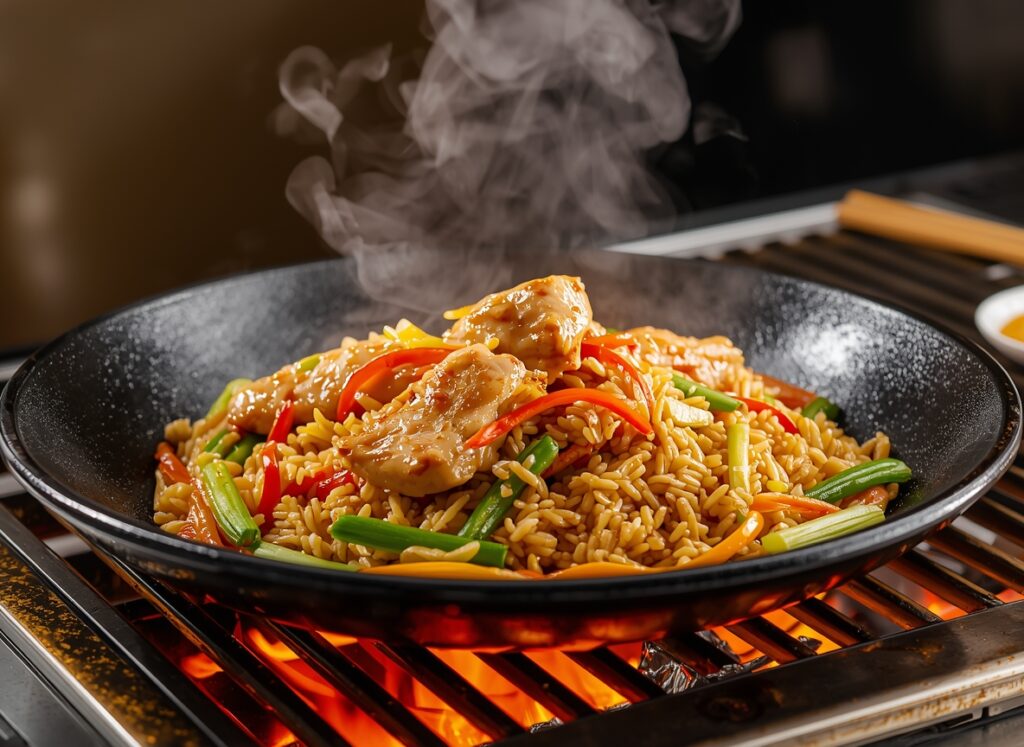
A hot wok brings the magic to hibachi fried rice. It spreads heat fast and evenly. This lets you cook at high temps without burning.
Carbon steel woks season over time for a slick surface. They hold heat well and add a subtle smoky taste called wok hei. If you lack a wok, grab a large cast-iron skillet. It works fine for home batches. Preheat on medium-high for five minutes before adding oil.
Don’t crowd the pan. Work in batches if needed. High sides on a wok keep everything contained as you toss. This setup ensures crisp edges and even flavor.Hibachi Fried Rice Recipe
Ingredient Prep: Mise en Place for Speed
Prep saves time in fast stir-fries like this. Chop everything first so you’re not scrambling. Start with proteins: dice chicken or devein shrimp.
Next, tackle veggies. Julienne carrots, chop onions, and measure peas or corn. Mince garlic and grate ginger last to avoid oxidation. Have sauces measured in small bowls. This order keeps things efficient.
Lay out ingredients near the stove. The whole cook takes just minutes. With prep done, you focus on technique. It’s like assembling a puzzle before the race starts.
Section 2: Building Authentic Hibachi Flavor Profiles
Hibachi fried rice stands out with its umami punch. It’s not your basic fried rice. Layer these elements for that steakhouse vibe at home.
The Trinity of Aromatics: Garlic, Ginger, and Onion
Aromatics form the flavor backbone in hibachi fried rice recipes. Sauté them right to unlock sweet, pungent notes. Heat oil in your wok, then add onions first.
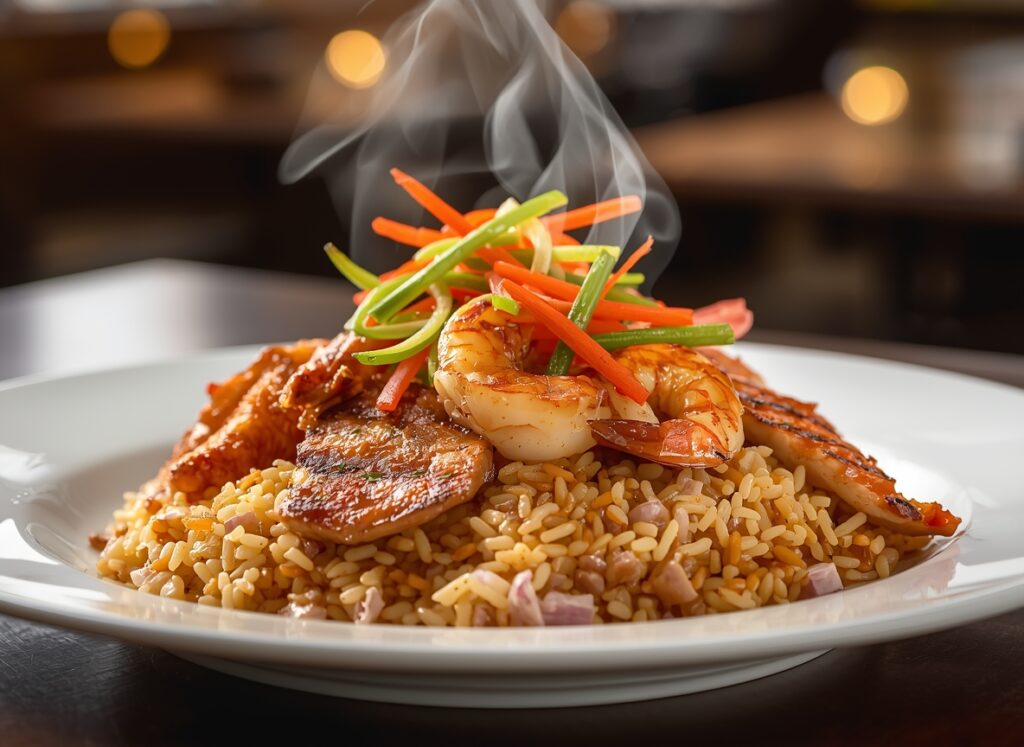
Cook onions until soft and golden, about two minutes. Stir in minced garlic next. It burns easy, so watch close. Grate fresh ginger for a zesty kick; it blends smoother than chunks.
Mince garlic fine for even distribution. This trio perfumes the whole dish. Overcook them, and you get bitterness. Time it with the protein for max impact.Hibachi Fried Rice Recipe
The Signature Sauce Blend: Beyond Simple Soy Sauce
Soy sauce alone won’t cut it for authentic hibachi taste. Mix low-sodium soy with oyster sauce for depth. Add a teaspoon of sugar or mirin to balance saltiness.
For a standard four-serving batch, use three tablespoons soy, two tablespoons oyster sauce, one tablespoon mirin, and a pinch of white pepper. Stir this blend in a bowl before cooking. Taste and adjust; vegetarian? Swap oyster for hoisin or mushroom sauce.
This combo creates glossy, savory grains. Drizzle it late to coat without sogginess. It’s the secret to that addictive glaze.
Fat Selection: Butter vs. Oil
Oil handles the high heat in hibachi fried rice. Canola or peanut oil smokes less at 400 degrees. Start with two tablespoons to coat the wok.Hibachi Fried Rice Recipe
Butter adds creamy richness at the end. Toss in a tablespoon during the last stir. It melts into the rice for nutty aroma. Some recipes use garlic butter for extra flair.
Mixing both gives balance: oil for searing, butter for finish. Avoid olive oil; its low smoke point turns bitter. This duo elevates simple ingredients.
Section 3: Step-by-Step Hibachi Fried Rice Cooking Technique
Follow these steps for foolproof results. High heat is your friend here. Move quick to keep things crisp.
High Heat Searing: Cooking the Protein First
Start with protein to build flavor in the wok. Heat oil until shimmering. Add shrimp or thin chicken slices in a single layer.
Sear one side for 90 seconds, then flip. Cook until pink or opaque, about two minutes total. Remove to a plate. This prevents overcooking later.Hibachi Fried Rice Recipe
Season lightly with salt. Juices from protein flavor the base. For steak, slice against the grain for tenderness.
The Veggie Flash Fry
Veggies add crunch to hibachi fried rice. After protein, toss in carrots. They take longest, so stir-fry three minutes.
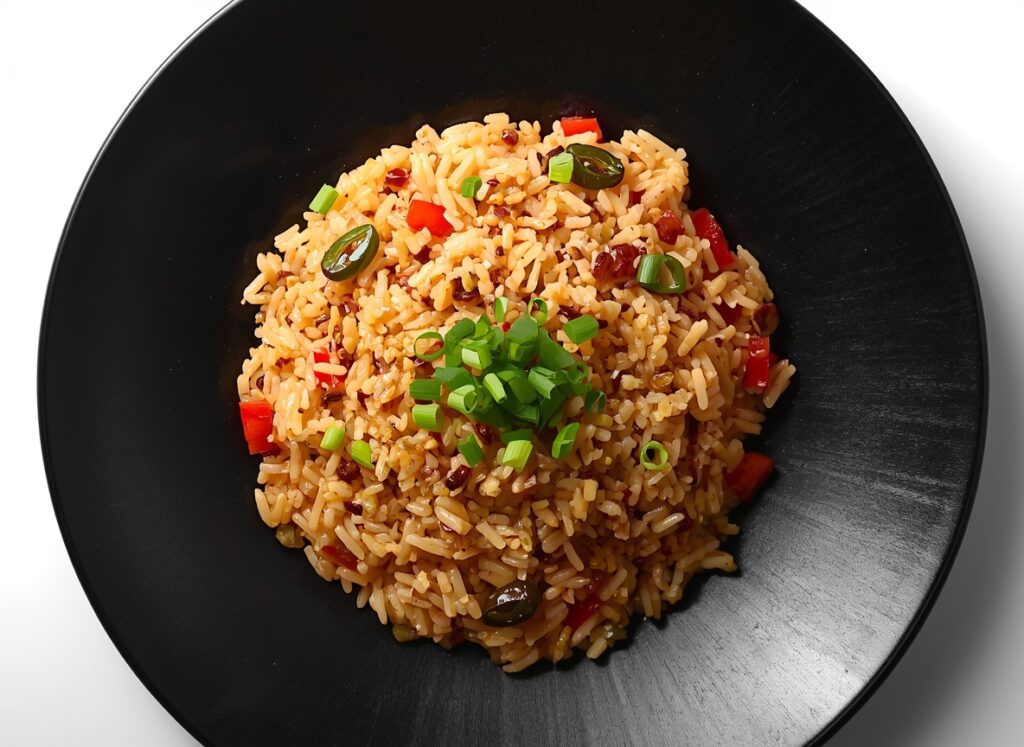
Add peas and corn next; they heat fast. Finally, throw in cabbage or more onions for wilted bits. Keep heat high and stir often. Each veggie should stay bright and tender, not limp.
One cup total veggies per four servings works well. Don’t overload; it drops the temp. This sequence ensures even doneness.
The Rice Incorporation and Seasoning Sequence
Now the star: cold rice. Push everything to the sides. Add rice to the center.Hibachi Fried Rice Recipe
Break up clumps with a spatula. Toss vigorously for three minutes. Grains should separate and get edges crisp. Pour in sauce blend; stir to coat evenly.
Let it sizzle a bit for wok hei. Fold in protein and veggies. Taste; add more soy if needed. Off heat, stir in butter.Hibachi Fried Rice Recipe
Section 4: Customization and Pro Tips for Restaurant Results
Tweak this hibachi fried rice recipe to fit your taste. Pro tips fix common slips. Make it yours with these ideas.

Incorporating Eggs Properly (The Scramble Technique)
Eggs bring protein and silkiness. After rice goes in, push it aside. Crack two eggs into the empty spot.
Scramble fast with your spatula. Cook until set but soft, about one minute. Mix back into the rice.
This method avoids watery eggs. For fried egg fans, cook separately and top at serve. It adds golden flecks throughout.
Advanced Flavor Boosters and Variations
Boost with sesame oil drizzled at end. One teaspoon adds nutty depth. Try mushroom broth if cooking rice fresh.
For variations, swap shrimp for tofu in veggie versions. Add grilled pineapple for sweet hibachi twist. Or mix in kimchi for spice.Hibachi Fried Rice Recipe
These keep things fresh. Experiment once basics click. Your kitchen becomes the steakhouse.
Troubleshooting Common Fried Rice Mistakes
Soggy rice? You used warm grains or too much sauce. Stick to day-old and add liquid gradually.
Burnt bits mean heat spiked too soon. Preheat steady and stir constant. If rice sticks, more oil helps.
Low flavor? Up the aromatics. Fresh ginger packs more punch than powdered. Practice fixes these quick.
FAQ – Hibachi Fried Rice Recipe
1. What makes hibachi fried rice different from regular fried rice?
Hibachi fried rice is cooked on high heat with a bit of sesame oil, garlic, and soy sauce, giving it a smoky, restaurant-style flavor. It often includes eggs, vegetables, and sometimes protein like chicken or shrimp.
2. Can I make hibachi fried rice at home?
Yes! With cooked rice, fresh veggies, soy sauce, and a hot skillet or wok, you can easily recreate this quick and authentic fried rice at home.Hibachi Fried Rice Recipe
3. What type of rice works best?
Long-grain white rice or jasmine rice works best. Use rice that has been cooked and cooled—day-old rice prevents it from getting mushy.
4. Can I add meat or seafood?
Absolutely! Chicken, shrimp, steak, or even tofu can be added for extra protein. Cook them first before adding rice for the best texture.
5. How do I make it flavorful like the restaurant version?
High heat, garlic, butter, sesame oil, soy sauce, and green onions are key. Stir constantly and cook quickly for that smoky “hibachi” taste.
6. Can I make it vegetarian or vegan?
Yes! Skip eggs and meat, and use plant-based butter or oil. Add more vegetables like carrots, peas, and bell peppers for a hearty meal.Hibachi Fried Rice Recipe
7. Should I use freshly cooked rice or leftover rice?
Day-old or leftover rice is ideal. Freshly cooked rice can be too soft and may clump together in the pan.
8. How long does hibachi fried rice take to cook?
Once the ingredients are prepped, it usually takes 10–15 minutes to cook on a stovetop.
9. Can I store leftovers?
Yes! Store in an airtight container in the fridge for up to 3 days. Reheat in a skillet or microwave with a splash of water to keep it moist.Hibachi Fried Rice Recipe
Spanish Yellow Rice Recipe – Vibrant & Delicious
Charleston Red Rice recipe – Simple & Delicious
Conclusion: Your New Go-To Weeknight Delight
Mastering hibachi fried rice boils down to day-old grains, blazing heat, and smart layering. You’ve got the tools now for quick, flavorful meals that rival any restaurant. Skip the takeout line and savor the wins at home.Hibachi Fried Rice Recipe
This recipe shines for its ease and punch. Grab those leftovers rice and fire up the wok tonight. You’ll wonder why you waited so long. Enjoy every savory bite!Hibachi Fried Rice Recipe
[…] Hibachi Fried Rice Recipe – Quick, Flavorful & Authentic […]