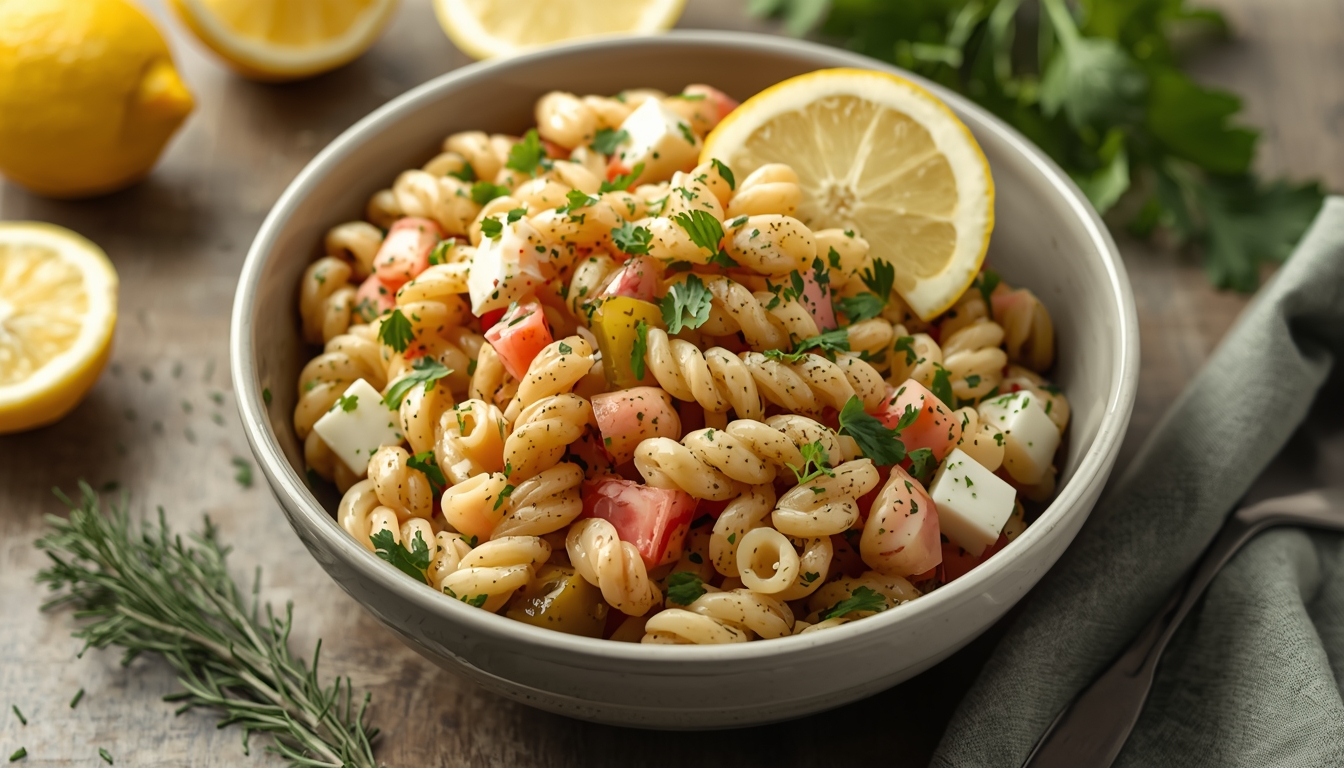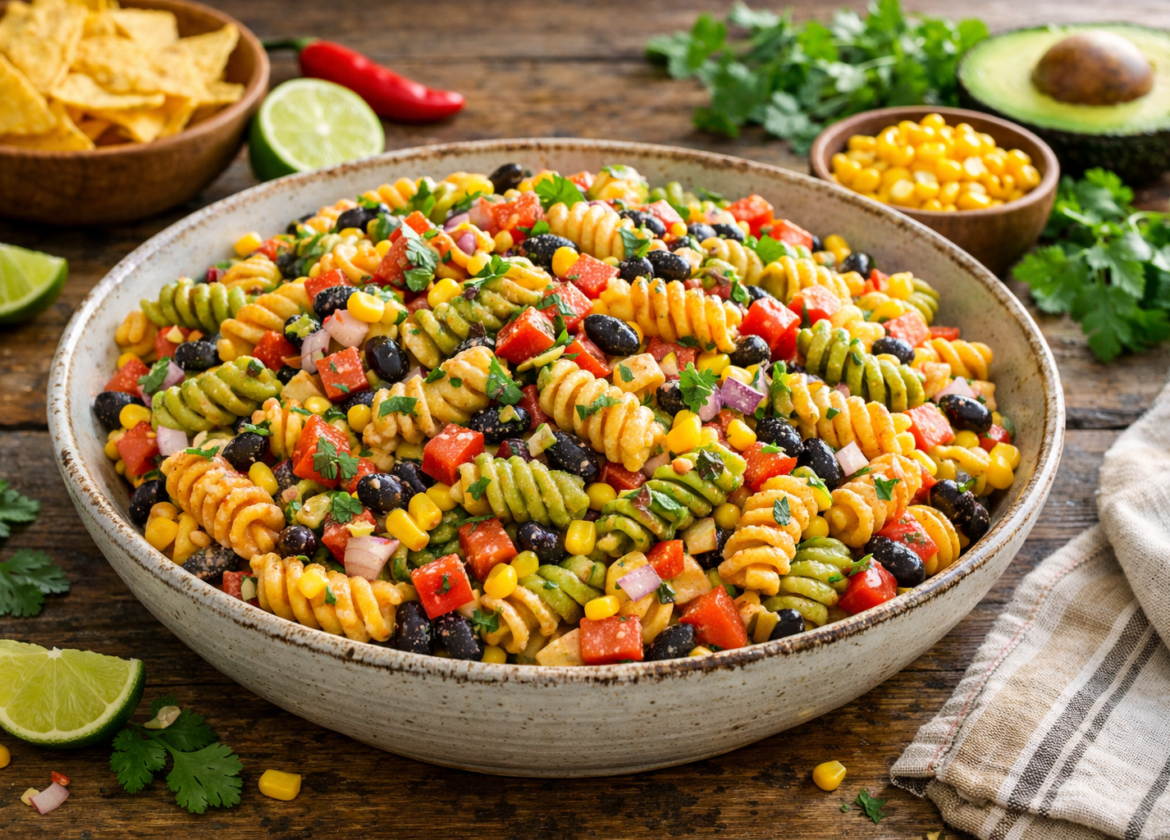
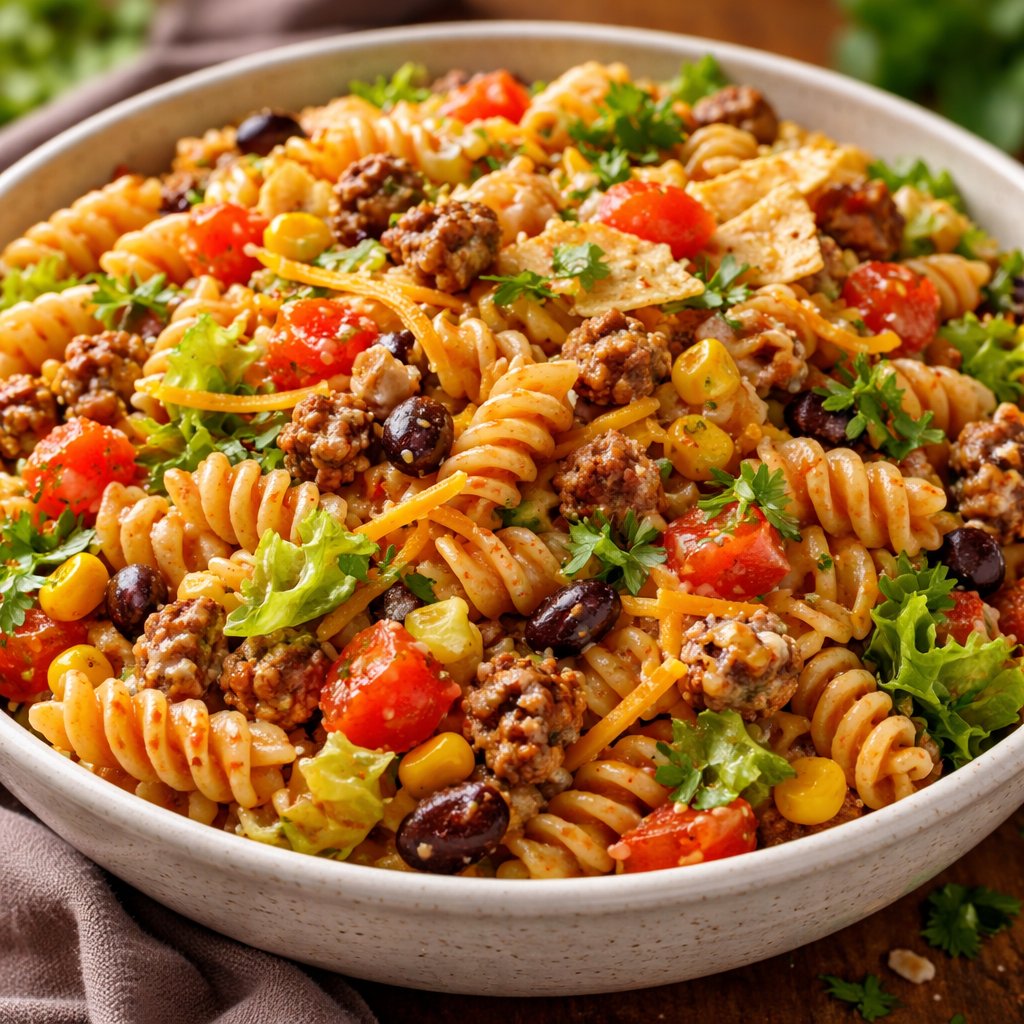
When a cook searches for a Mexican Pasta Salad Recipe, they are usually looking for a dish that bridges the gap between a traditional Italian pasta salad and the vibrant, bold flavors of Mexican street food. The expectation is a meal that is refreshing enough for a summer afternoon but hearty enough to serve as a standalone lunch or a substantial side dish for a barbecue.
Technically, this dish is defined by its contrast. You expect the chewiness of the pasta to be met with the crunch of fresh vegetables, the creaminess of a spiced dressing, and the acidic brightness of lime. A high-quality Mexican Pasta Salad Recipe should avoid being overly heavy or “gloppy.” Instead, it should achieve a zesty profile where the spices—typically cumin, chili powder, and smoked paprika—enhance the natural sweetness of corn and the earthiness of black beans.
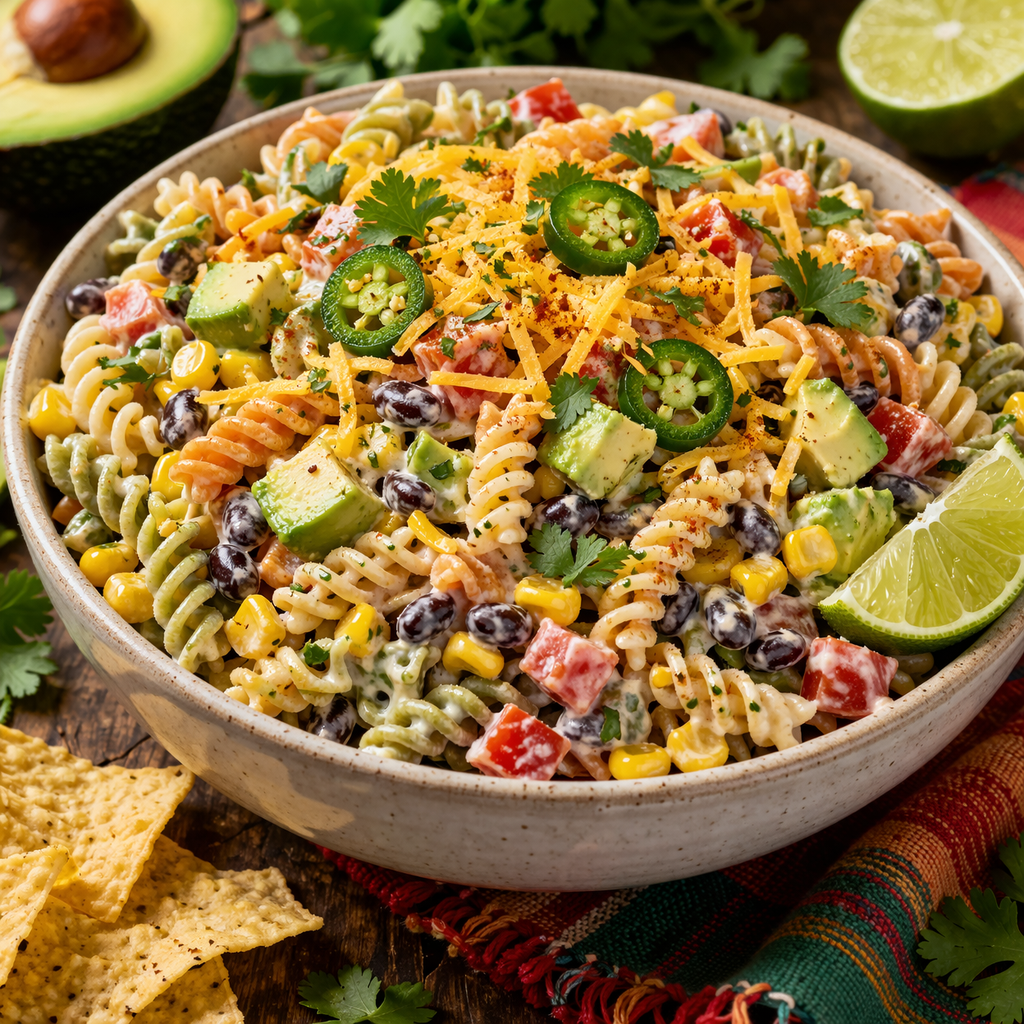
How This Method Delivers Better Results
The primary challenge in any pasta salad is moisture management. Pasta is a sponge; if you dress it too early, it absorbs the liquid and becomes bloated. If you dress it too late, the flavors remain topical rather than integrated. This specific method focuses on a “two-stage dressing” technique to ensure a professional result.
- The Flavor Infusion: By tossing the warm pasta in a small amount of lime juice and oil immediately after draining, you season the noodle from the inside out.
- The Emulsion Stability: Instead of using a thin vinaigrette, this Mexican Pasta Salad Recipe utilizes a base of sour cream or Greek yogurt. This provides a structural coating that stays on the pasta rather than sliding to the bottom of the bowl.
- Ingredient Integrity: By adding delicate ingredients like avocado and fresh cilantro only at the moment of serving, you prevent oxidation and wilting, maintaining the visual appeal of the dish.
Ingredient Planning and Preparation
The success of a Mexican Pasta Salad Recipe is found in the “Mise en Place”—having everything cut and measured before the pasta finishes boiling.
The Pasta Choice
Short, ridged pasta shapes are the most effective. Rotini, Fusilli, or Cavatappi are ideal because their spirals trap the corn, beans, and dressing, ensuring every bite is balanced. Avoid long strands like spaghetti, which are difficult to eat in a salad format.
The Produce
- Corn: While frozen corn is convenient, charred fresh corn sliced off the cob adds a smoky depth that defines the dish.
- Black Beans: Use canned beans for consistency, but ensure they are rinsed until the water runs clear to prevent the dressing from turning grey.
- Bell Peppers and Red Onions: These provide the necessary “crunch” factor. Dice them to the same size as the corn kernels for a uniform texture.
The Dressing Base
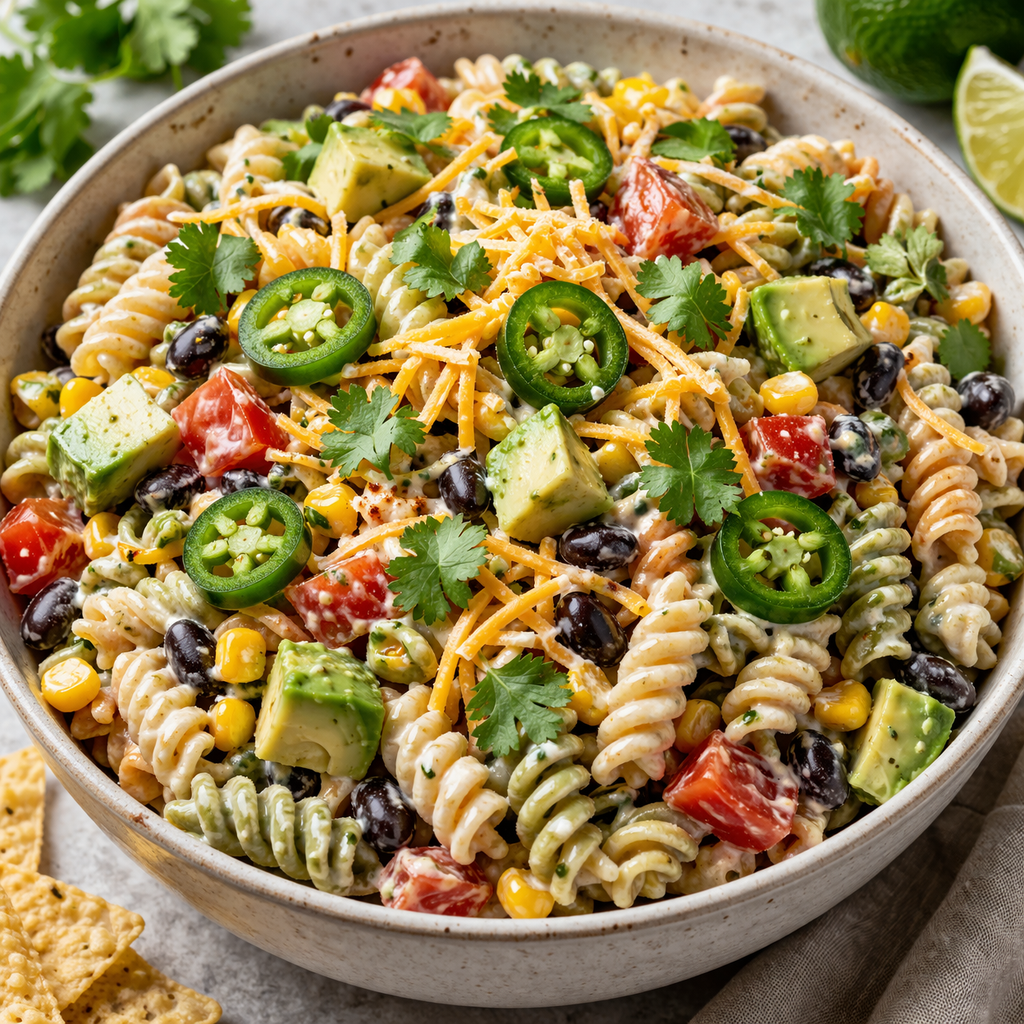
For a truly authentic feel, a blend of mayonnaise and sour cream (or Mexican Crema) is standard. This creates the “Esquites” style flavor profile. If you prefer a lighter version, whole-milk Greek yogurt is a functional substitute, though it adds a sharper tang.
Required Equipment Overview
You do not need specialized tools for a Mexican Pasta Salad Recipe, but using the right standard equipment improves the texture of the vegetables and the emulsification of the dressing.
- Large Stockpot: Pasta needs room to move. Boiling in a cramped pot leads to excess starch release, making the salad sticky.
- Fine-Mesh Colander: Essential for draining the pasta and thoroughly rinsing the black beans.
- Large Glass or Stainless Steel Mixing Bowl: Avoid plastic bowls if possible, as they can retain oils and odors from previous meals which might clash with the lime and cilantro.
- Whisk: Necessary to fully incorporate the dry spices into the creamy dressing base.
- Chef’s Knife: A sharp blade is required to finely mince the cilantro and red onion, preventing “bruising” which leads to a bitter taste.
Time and Temperature Planning
Efficiency in a Mexican Pasta Salad Recipe is about managing the “Cooling Window.”
- Prep Time: 20 minutes (chopping and whisking).
- Cook Time: 8–10 minutes (boiling pasta).
- Cooling Phase: 15 minutes. Never mix mayo-based dressing with hot pasta. It will cause the fats to break and turn the salad greasy.
- Chilling Phase: 1 hour. This is the “marinating” period where the spices in the dressing fully hydrate and develop.
Total Time: Approximately 1 hour and 45 minutes.
Clear and Natural Mexican Pasta Salad Recipe Steps
1. Boiling the Foundation
Bring a large pot of heavily salted water to a boil. Add 1 lb of rotini pasta. Cook until it is al dente. Tip: Cook the pasta for exactly one minute less than the package instructions. It will soften further as it sits in the dressing.
2. The Acid Flash
Drain the pasta and rinse it briefly with cold water to stop the cooking. While the pasta is still slightly warm, toss it with 1 tablespoon of olive oil and the juice of half a lime. This prevents sticking and infuses the grain with acidity.
3. Whisking the Dressing
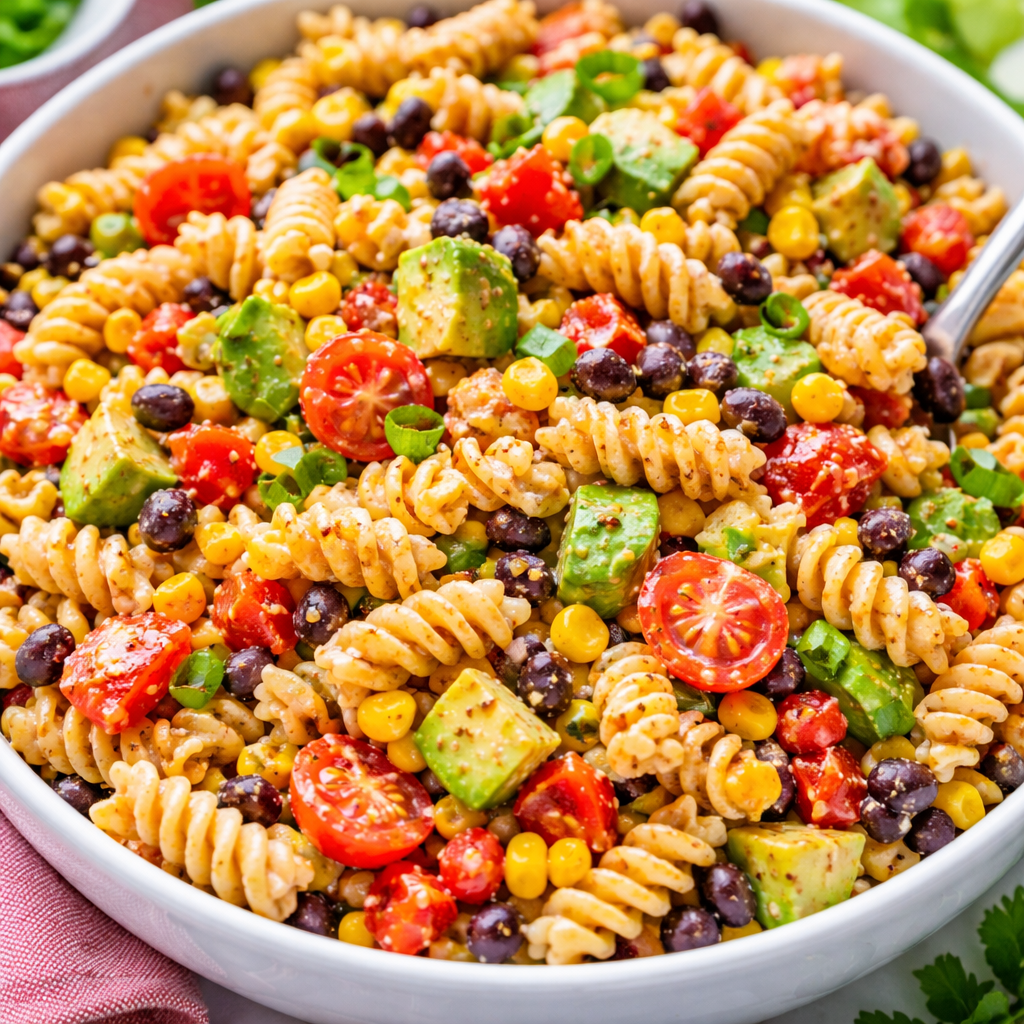
In a separate bowl, combine 1/2 cup sour cream, 1/4 cup mayonnaise, 2 tablespoons lime juice, 1 teaspoon cumin, 1 teaspoon chili powder, and 1/2 teaspoon smoked paprika. Whisk until smooth. Taste and add salt as needed.
4. Component Assembly
In your large mixing bowl, combine the cooled pasta with 1 can of rinsed black beans, 1 cup of charred corn, 1 diced red bell pepper, and 1/4 cup of finely minced red onion.
5. The Marriage
Pour the dressing over the pasta mixture. Use a large spatula to fold the ingredients together gently. Ensure every spiral of pasta is coated.
6. The Final Additions
Just before serving, fold in 1/2 cup of crumbled Cotija cheese and a generous handful of chopped fresh cilantro. If you are adding avocado, slice it and place it on top at the very last second to keep it bright green.
Mistakes That Affect Final Results
Even a reliable Mexican Pasta Salad Recipe can suffer if these common technical errors occur:
- Overcooking the Pasta: If the pasta is soft when it enters the bowl, it will turn into a mash by the time the salad is served. The pasta must have a firm “bite” to stand up to the heavy dressing and crunchy vegetables.
- Under-Seasoning: Cold dishes dull the palate’s perception of salt and spice. You may find that the dressing tastes “too strong” when you whisk it, but once it is distributed over a pound of pasta and vegetables, it will be perfectly balanced.
- Using “Taco Seasoning” Packets: These often contain cornstarch or thickeners that can make the dressing feel chalky. It is always better to use individual dry spices.
- Neglecting the Rinse: If you don’t rinse the pasta, the residual starch will thicken the dressing into a paste. A quick cold rinse is essential for a “clean” salad texture.
FAQ: Honest Answers for Beginners
Can I make this Mexican Pasta Salad Recipe a day in advance?
Yes, but with a strategy. Prepare the pasta, vegetables, and dressing, but keep the dressing in a separate container. Mix them 2 to 4 hours before serving. This prevents the pasta from drinking up all the moisture and becoming dry.
What can I use if I cannot find Cotija cheese?
Cotija is a dry, salty, crumbly cheese. The closest substitute is a mild Feta or even a dry Ricotta Salata. If you want something that melts slightly into the salad, a sharp White Cheddar diced into tiny cubes is a functional alternative.
Is this salad served hot or cold?
This Mexican Pasta Salad Recipe is strictly a cold or room-temperature dish. The cream-based dressing is not designed to be heated, as the sour cream and mayo will separate.
How do I make this recipe spicy?
The standard recipe is mild. To add heat, finely mince a jalapeño (remove seeds for less heat) and add it to the vegetable mix, or add a teaspoon of chipotle powder to the dressing for a smoky “kick.”
Can I add meat to this recipe?
Absolutely. Grilled chicken breast, chopped carne asada, or even chilled blackened shrimp turn this side dish into a high-protein main course. Add the meat during the assembly phase.
Easy Tortellini Pasta Salad Recipe – Fresh & Flavorful
Chickpea Pasta Recipe – Gluten-Free & Delicious
Easy Pappardelle Pasta Recipes You Can Make at Home
How to Make Squid Ink Pasta recipe at Home – Simple & Delicious