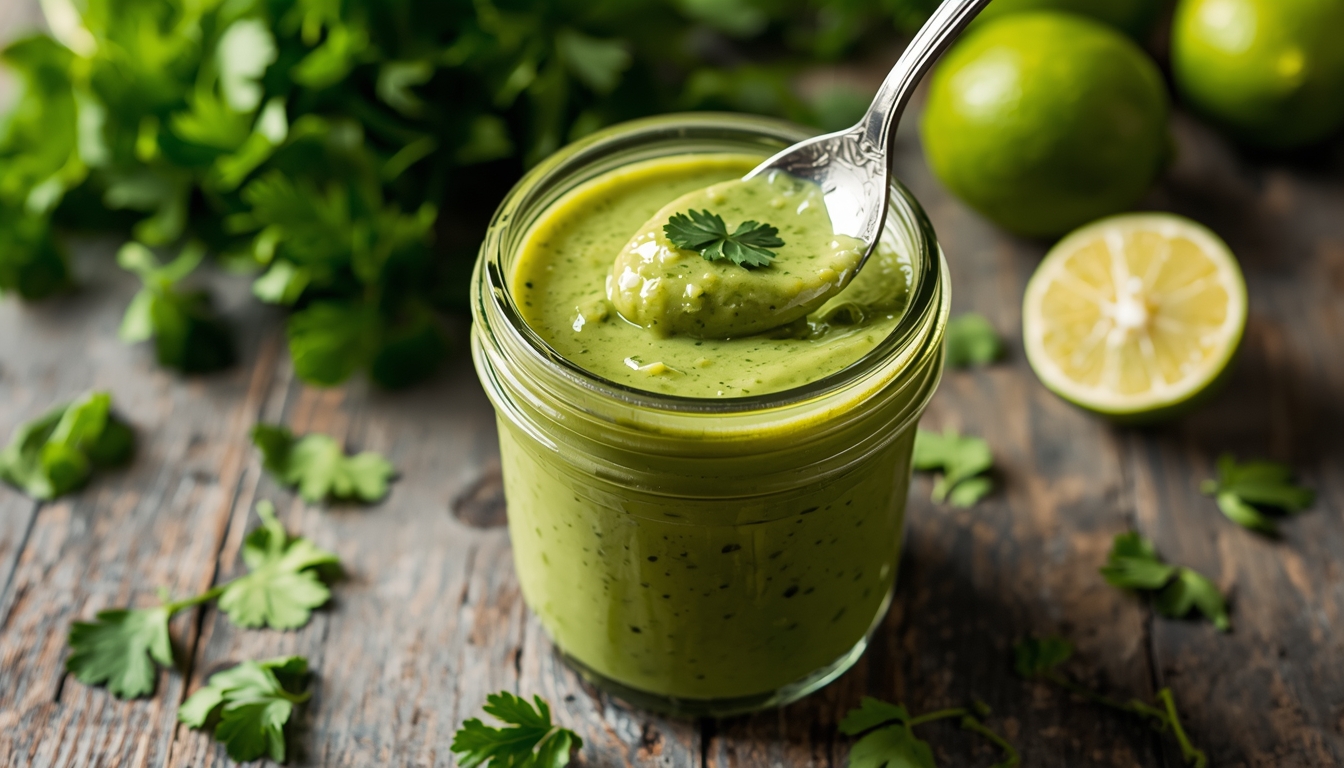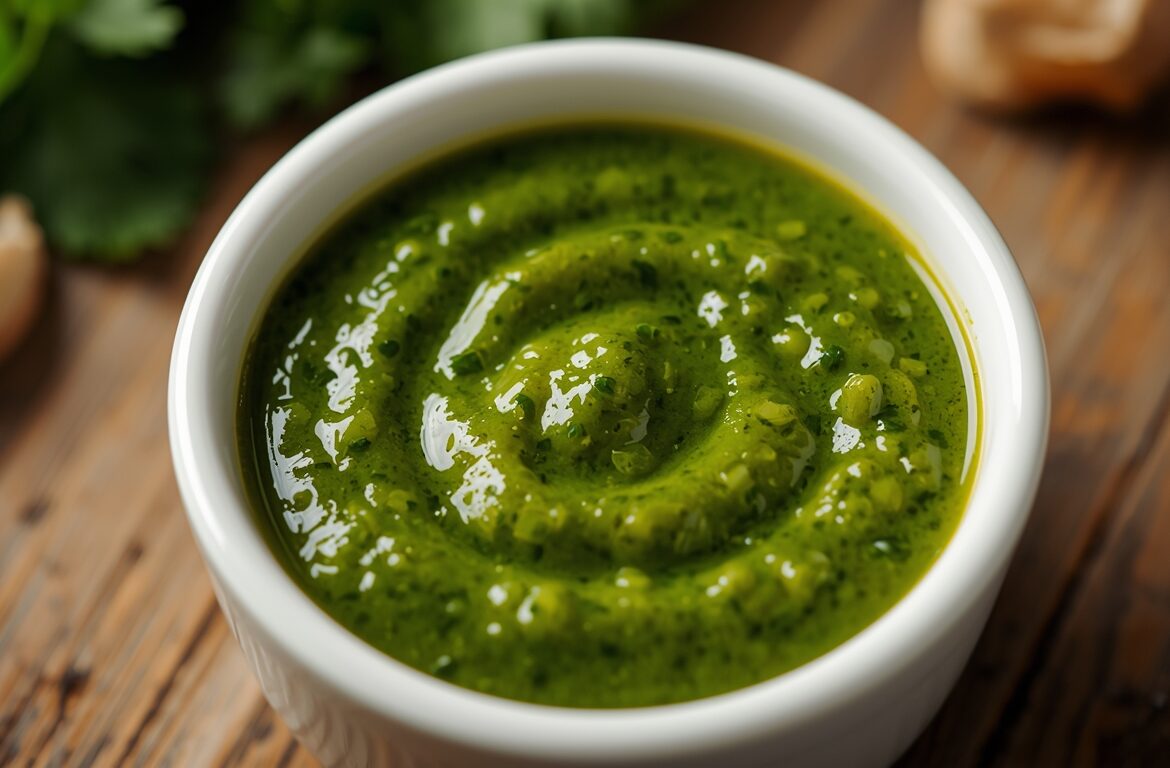
One of the most frequent frustrations for home cooks is the “muted flavor” trap. You spend an hour preparing a high-quality protein or a tray of fresh vegetables, only for the final result to taste flat, one-dimensional, or overly heavy. Often, we try to fix this by adding more salt or heavy fats, but this rarely solves the underlying issue: a lack of bright, acidic contrast and aromatic depth.
Another common hurdle is the lack of versatility in home-cooked condiments. Many sauces are tied to a specific dish—a marinara is for pasta, a gravy is for roasts—and they don’t bridge the gap between different cuisines or ingredients. This leads to a cluttered refrigerator full of half-used jars and a repetitive weekly menu. Home cooks often struggle to find that “secret weapon” ingredient that can act as a marinade, a dipping sauce, and a finishing glaze all at once.
Why Mojo Sauce Solves These Problems
The Mojo Sauce Recipe is the ultimate solution to culinary monotony. Originating from the Canary Islands and perfected in the Caribbean—specifically Cuba—Mojo is a garlic-and-citrus-forward sauce that relies on the chemical reaction between raw aromatics and hot fats. It provides an immediate “punch” of flavor that cuts through the richness of pork, chicken, and starchy vegetables like yuca or potatoes.
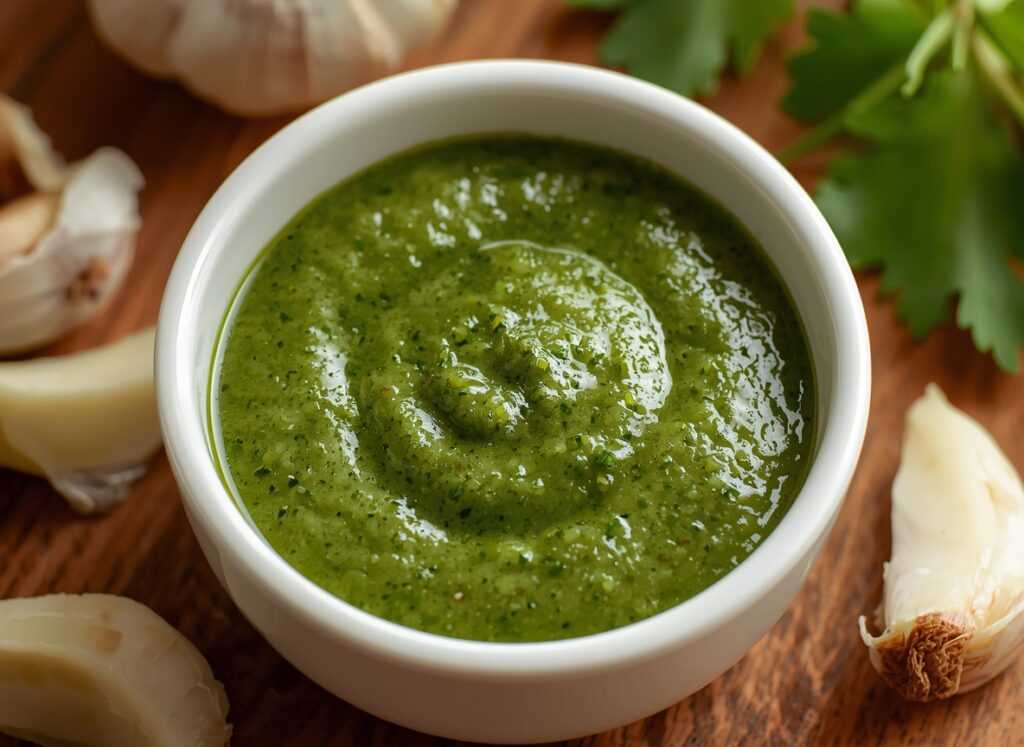
Because a Mojo Sauce Recipe is built on a foundation of acidity (sour orange or lime) and healthy fats (olive oil), it acts as a natural tenderizer when used as a marinade and a vibrant flavor enhancer when used as a condiment. It solves the “flat flavor” problem by hitting multiple taste receptors simultaneously: the sharpness of garlic, the tang of citrus, and the earthy warmth of cumin. It is a clean, bright, and incredibly efficient way to elevate basic ingredients into a professional-tier meal.
Ingredient Handling for Better Control
To achieve a restaurant-quality Mojo Sauce Recipe, you have to look at your ingredients as volatile components that need to be managed.
The Garlic Factor
Garlic is the heart of Mojo, but it is also the most dangerous ingredient. If chopped too coarsely, the raw bite can be overwhelming and bitter. If burnt, it ruins the entire batch. Bold Tip: Use a mortar and pestle to mash the garlic into a paste with a pinch of salt. This breaks down the cellular walls of the garlic, releasing the oils and creating a smoother, more integrated flavor profile than dicing with a knife.
The Citrus Balance
Authentic Mojo uses “Naranja Agria” (sour orange). Since these can be hard to find in many grocery stores, you must learn to recreate the profile. A 2:1 ratio of orange juice to lime juice (with a splash of lemon) provides the necessary sweetness and sharp acidity that defines a true Mojo Sauce Recipe. Always use fresh citrus; the bottled juice lacks the volatile oils found in the zest which are crucial for the sauce’s aroma.
Selecting the Oil
Choose a high-quality extra virgin olive oil, but ensure it is one with a “mild” or “buttery” profile. A very “peppery” or robust olive oil can compete with the garlic rather than complement it. Since the oil is a primary carrier of flavor here, quality matters.
Equipment Choices That Reduce Errors
Precision in a Mojo Sauce Recipe is often about how you apply heat and how you emulsify the ingredients.
- Mortar and Pestle (Crucial): As mentioned, this is the traditional and most effective way to create the garlic base. It creates a “slurry” that emulsifies better with the oil.
- Small Heavy-Bottomed Saucepan: You aren’t “cooking” the sauce in the traditional sense; you are “blooming” the aromatics. A heavy bottom prevents the oil from heating too rapidly and scorching the garlic.
- Microplane: Ideal for zesting the citrus before juicing. The zest contains the essential oils that provide the “high notes” of the sauce’s scent.
- Glass Mason Jar: For storage. The acidity in the Mojo Sauce Recipe can react with plastic containers over time, and glass keeps the flavors crisp.
Preventive Planning Before Cooking
Mojo is a fast-moving recipe once the heat is involved. Planning prevents the most common error: burnt aromatics.
- Mise en Place (5 Minutes): Have your garlic mashed, your spices measured, and your citrus juiced and ready in a bowl before you even touch the stove.
- The “Temperature Bridge”: If you pour ice-cold citrus juice into scorching hot oil, it will splatter violently and can break the emulsion. Let your juice sit at room temperature while you prep the garlic.
- The Infusion Window: Understand that Mojo is better after two hours. While you can use it immediately, the “harshness” of the raw garlic mellows and the cumin deepens if the sauce is allowed to sit.
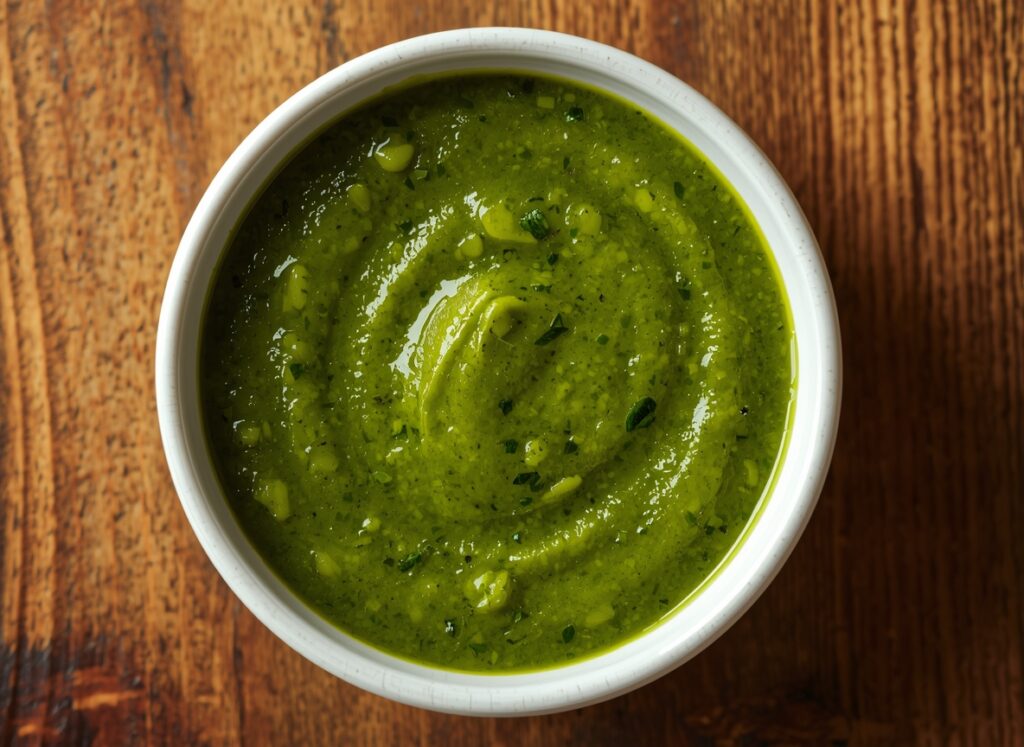
Executing the Mojo Sauce Recipe
1. The Garlic Mash
Peel 8 to 10 large cloves of garlic. Place them in your mortar with 1 teaspoon of kosher salt. Grind until you have a smooth paste. Stir in 1 teaspoon of toasted cumin and 1/2 teaspoon of dried oregano.
2. The Citrus Blend
Juice your oranges and limes into a bowl. You want about 1 cup of total liquid. If you are using the “cheat” method for sour orange, mix 2/3 cup orange juice with 1/3 cup lime juice.
3. Heating the Oil
In your saucepan, heat 1/2 cup of extra virgin olive oil over medium heat. You aren’t looking for a smoke point. You want the oil to be hot enough that a small piece of garlic sizzles instantly, but doesn’t brown immediately.
4. Blooming the Aromatics
Remove the pan from the heat. Carefully stir in the garlic and spice paste. Bold Tip: The residual heat of the oil is enough to “cook” the garlic and remove the raw sulfurous bite without browning it. Stir for about 30 to 60 seconds until fragrant.
5. The Emulsion
Slowly whisk the citrus juice into the warm oil and garlic mixture. The salt in the garlic paste helps act as a minor emulsifier, bringing the oil and juice together into a cloudy, vibrant sauce.
Fixing Texture or Flavor Problems
Even with a simple Mojo Sauce Recipe, things can go off-track. Here is how to troubleshoot like a pro:
- The Garlic is Too Bitter: This usually means the garlic was starting to sprout (the green germ inside) or it was slightly over-browned. To fix, add a tiny pinch of sugar or a bit more orange juice to counteract the bitterness.
- The Sauce is Too Oily: If the oil and juice are completely separated, you may have added the juice too fast. Give it a vigorous shake in a sealed jar or a quick pulse in a blender to re-bind the fats and liquids.
- It Lacks “Punch”: This usually means it needs more salt or more zest. Salt is the bridge that connects the citrus and the garlic. Add it in small pinches until the flavors “pop.”
- It’s Too Sharp: If the raw garlic flavor is too aggressive, let the sauce sit on the counter for an hour. The acid in the citrus will “cook” the garlic further (similar to ceviche), mellowing the bite.
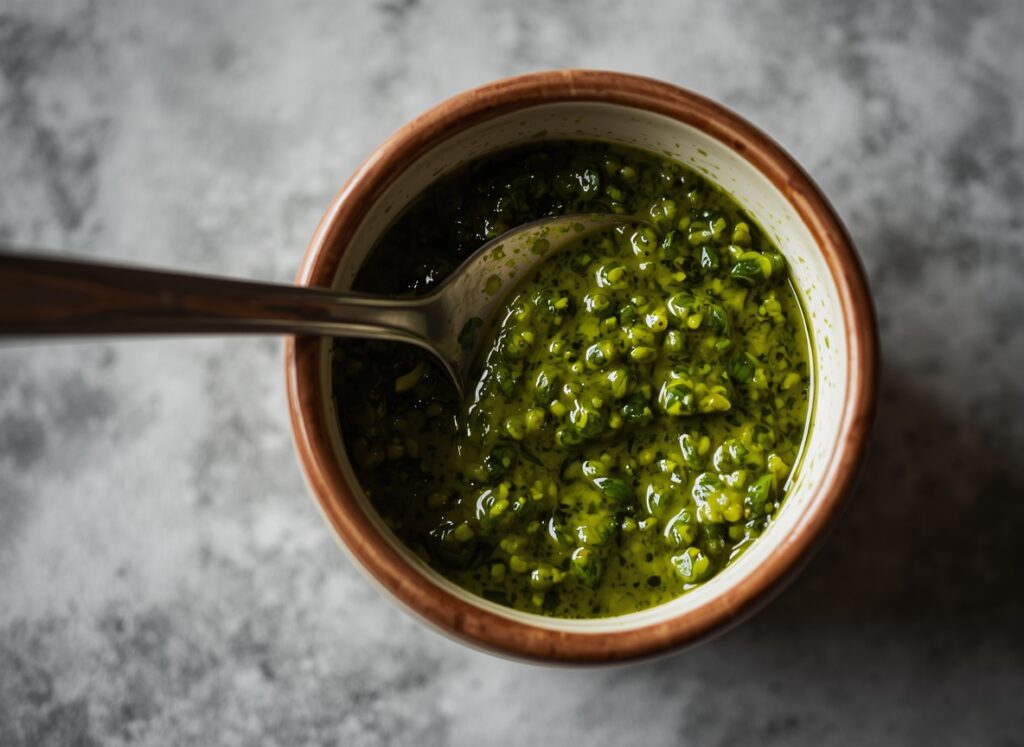
Frequently Asked Questions Explained Simply
How long does Mojo sauce last? Because of the high acidity and oil content, a Mojo Sauce Recipe will stay fresh in the refrigerator for up to 7 days. However, the oil will solidify when cold. Simply set the jar on the counter for 15 minutes or run it under warm water to liquefy it before use.
Can I use a blender instead of a mortar and pestle? Yes, you can. It is much faster, but the flavor is slightly different. A blender shears the garlic, which can lead to a more aggressive, “spicier” garlic flavor. If you use a blender, pulse it rather than running it on high to avoid turning the sauce into a thick, aerated foam.
What are the best uses for Mojo?
- Marinade: Use it for pork shoulder (Lechon Asado) or chicken thighs.
- Vegetables: Pour it over boiled yuca, roasted sweet potatoes, or grilled asparagus.
- Dipping: Use it as a bright dip for crusty Cuban bread or plantain chips.
Is Mojo sauce spicy? Traditionally, no. It is aromatic and “sharp” from the garlic and citrus, but it doesn’t contain heat. If you prefer a spicy version, you can add a minced jalapeño or a dash of red pepper flakes to the garlic paste.
Can I freeze Mojo sauce? You can, though the citrus flavor may lose some of its “brightness” upon thawing. If you freeze it, do so in ice cube trays for easy portioning, then transfer to a freezer bag.
Why did my sauce turn cloudy? Cloudiness is a sign of a good emulsion between the oil and the citrus. It is perfectly normal and indicates that the flavors are well-blended.
Remoulade Sauce Recipe – Tangy, Creamy & Easy to Make
Big Mac Sauce Recipe – Easy, Classic & Homemade
Homemade Hot Fudge Sauce Recipe – Chocolate Lovers’ Dream
Easy Adobo Sauce Recipe for Beginners
Easy Boom Boom Sauce Recipe – Creamy, Spicy & Delicious
Hainanese Chicken Rice Chilli Sauce – Authentic, Fresh & Spicy