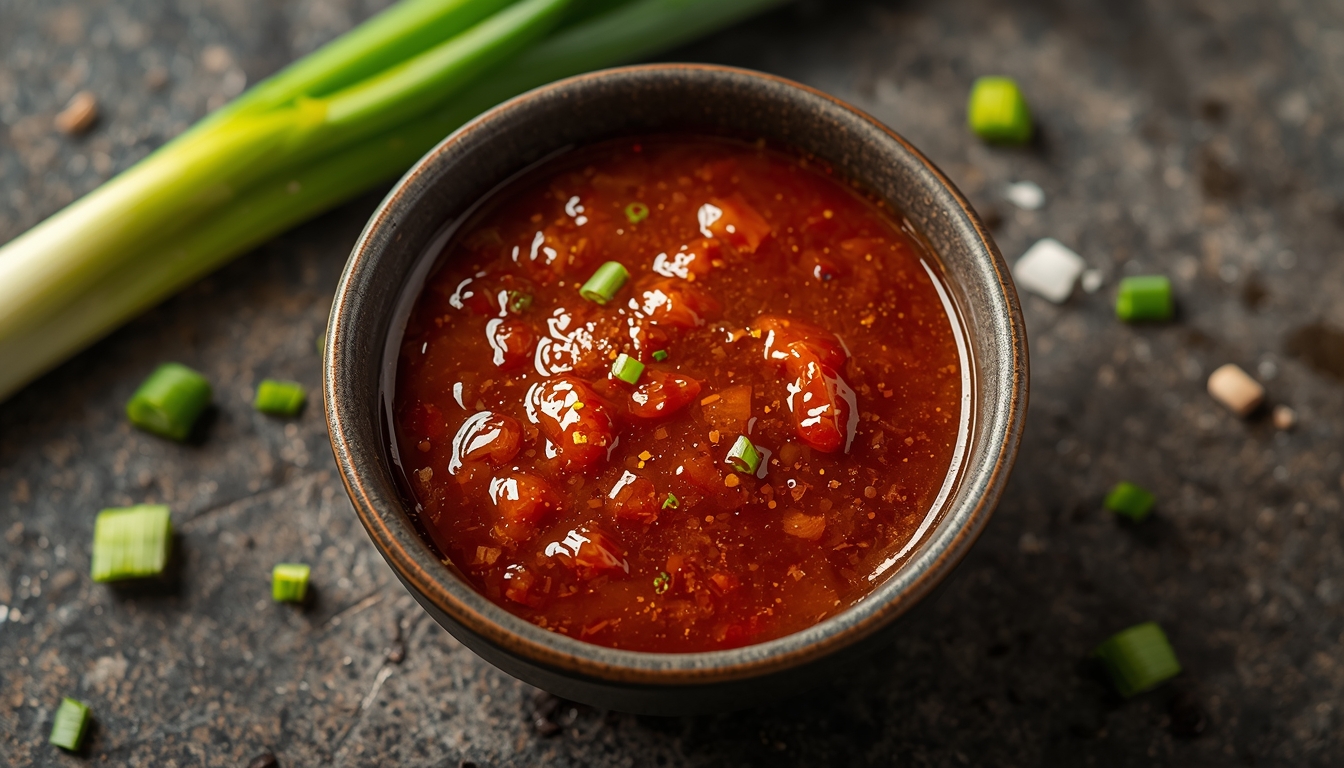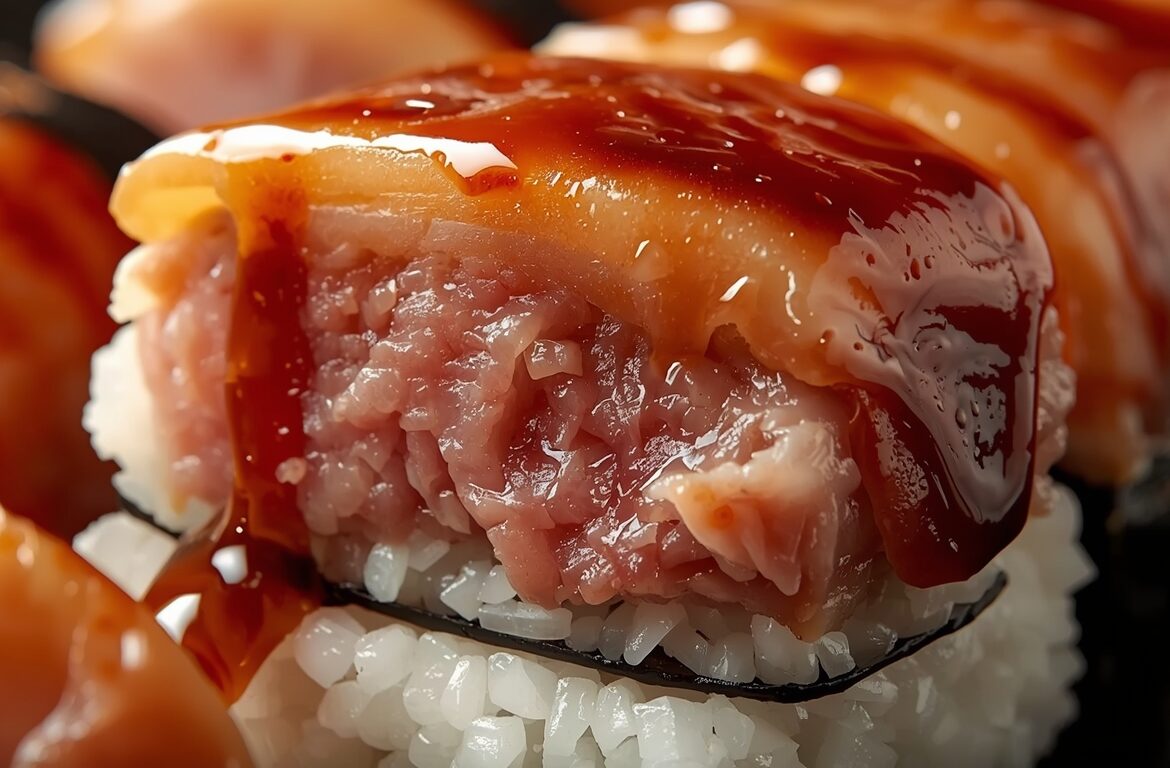
The secret to a truly unforgettable Spam Musubi lies not just in the grilled meat or the seasoned rice, but in the glaze that binds them together. A high-quality Musubi Sauce Recipe provides that essential balance of salty, sweet, and umami flavors that defines Hawaiian comfort food. This sauce acts as both a marinade and a finishing glaze, transforming a simple canned protein into a gourmet snack.
While many people associate this dish with a quick convenience store bite, a homemade musubi sauce elevates the experience significantly. By controlling the ratios of sugar to soy, you can achieve a depth of flavor that pre-packaged versions simply cannot match. This guide will walk you through the nuances of creating a glaze that is thick enough to cling to the meat without being overly cloying.
Why This Dish Deserves a Try
Mastering an easy musubi sauce recipe is a game-changer for any home cook interested in fusion cuisine. This sauce is incredibly versatile; while it is designed for the iconic Spam Musubi, its flavor profile works beautifully with grilled chicken, tofu, or even as a stir-fry base. It relies on a few pantry staples, making it accessible even on short notice.

Furthermore, making your own sauce allows you to skip the preservatives and excessive sodium found in commercial teriyaki glazes. You can fine-tune the consistency to your liking—whether you prefer a thin, subtle coating or a thick, caramelized lacquer. It is the most cost-effective way to bring a taste of the islands into your kitchen.
Ingredients Explained in Detail
The beauty of this Musubi Sauce Recipe is its simplicity. However, the quality of these few ingredients will dictate the final result.
- Soy Sauce (Shoyu): This provides the salt and the deep umami base. For a traditional flavor, Japanese-style soy sauce is preferred over Chinese varieties, which can be slightly more fermented and heavy.
- Granulated Sugar: Sugar is necessary to create the sticky, caramelized exterior on the Spam. It balances the saltiness of the soy sauce and the meat itself.
- Mirin: This Japanese sweet rice wine adds a distinct luster (sheen) to the sauce and a subtle tang that cuts through the fat of the protein.
- Oyster Sauce (Optional but Recommended): Adding a tablespoon of oyster sauce introduces a savory complexity and helps thicken the glaze naturally.
- Ginger and Garlic: While some prefer a plain glaze, fresh aromatics provide a bright, zesty top note that rounds out the heavy flavors.
Ingredient Alternatives & Swaps
If you are missing an ingredient or have dietary restrictions, these swaps will keep your homemade musubi sauce tasting delicious:
- Low-Sodium Option: Use “Less Sodium” soy sauce if you are sensitive to salt. Since Spam is already quite salty, this is a popular choice for many families.
- Sugar Substitutes: Brown sugar can be used for a more molasses-forward flavor, or honey can be used for a floral sweetness (though it will burn faster, so watch the heat).
- Alcohol-Free: If you don’t have mirin, you can substitute it with a mixture of white vinegar and a pinch of extra sugar to mimic the acidity.
- Gluten-Free: Replace the soy sauce with Tamari or liquid aminos to make the sauce safe for those with gluten sensitivities.
Kitchen Essentials
You don’t need much to execute this easy musubi sauce recipe, but a few specific items will help with consistency:
- Small Non-Stick Saucepan: A non-stick surface is vital because the high sugar content can stick and burn easily as the sauce reduces.
- Whisk or Silicone Spatula: To ensure the sugar fully dissolves into the liquid.
- Glass Mason Jar: For storing any leftover sauce. Glass is better than plastic as it won’t absorb the strong scents of garlic and soy.
Time Required for Preparation
- Prep Time: 5 minutes
- Cook Time: 8–10 minutes
- Cooling Time: 5 minutes
- Total Time: Approximately 20 minutes
Step-by-Step Musubi Sauce Recipe
1. Combine the Base Liquids
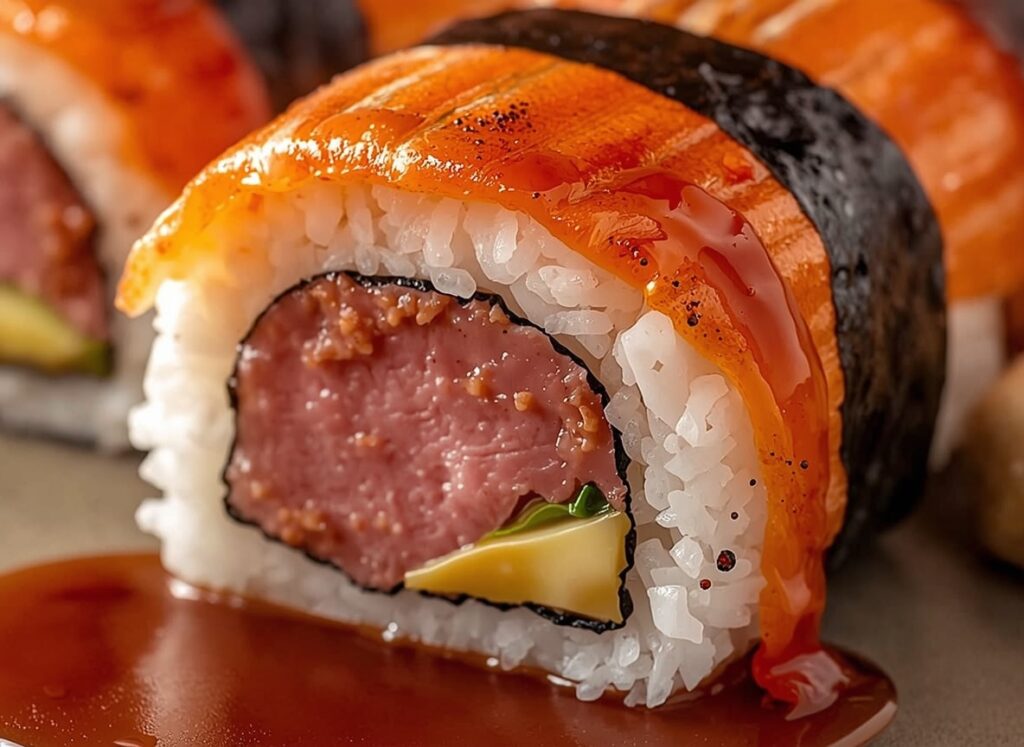
In a small saucepan, whisk together 1/2 cup of soy sauce, 1/2 cup of granulated sugar, and 2 tablespoons of mirin.
2. Add Aromatics and Depth
Stir in 1 tablespoon of oyster sauce (if using), 1/2 teaspoon of freshly grated ginger, and 1 clove of minced garlic.
3. Dissolve the Sugar
Place the saucepan over medium heat. Stir constantly until the sugar has completely dissolved and the mixture is smooth.
4. Simmer and Reduce
Bring the sauce to a gentle simmer. Lower the heat and let it bubble for 5–7 minutes. You are looking for the volume to reduce by about one-third. The sauce should coat the back of a spoon.
5. Strain (Optional)
If you prefer a perfectly smooth glaze, pour the sauce through a fine-mesh sieve to remove the bits of garlic and ginger.
6. The Glazing Process
When cooking your musubi, fry the Spam slices first. Once they are crispy, pour the sauce directly into the pan. Flip the slices repeatedly until the sauce thickens into a sticky glaze that clings to every side of the meat.
Tips for Perfect Musubi Sauce
- Watch the Heat: Because of the high sugar content, the sauce can go from caramelized to burnt in seconds. Always simmer on low-medium heat.
- The “Nappe” Test: To check if the sauce is thick enough, dip a spoon into it. Run your finger across the back of the spoon. If the line stays clear and the sauce doesn’t run, it is ready.
- Grate Your Aromatics: Instead of chopping garlic and ginger, use a microplane. This allows the juices to infuse the sauce more effectively without leaving large chunks in your musubi.
Cooking Mistakes to Avoid
- Over-Reducing: If you cook the sauce too long in the pot, it will become like hard candy once it hits the cold rice. Stop while it is still a pourable syrup.
- Adding to Raw Meat: Always sear your protein first. Adding the Musubi Sauce Recipe to the pan too early will prevent the meat from getting crispy and will likely result in a burnt sauce.
- Skipping the Mirin: While it’s tempting to just use soy and sugar, the mirin provides the professional “shine” you see in restaurant-quality musubi.
Best Ways to Serve This Dish
Once you have mastered the homemade musubi sauce, use it to assemble the perfect snack.
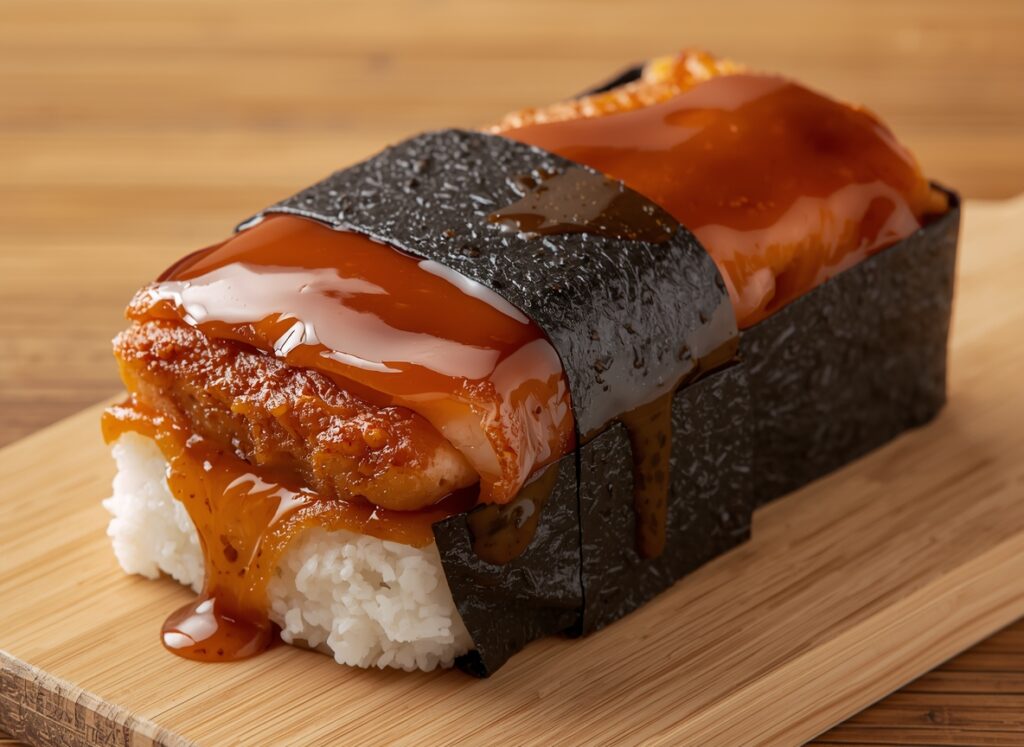
- Traditional Spam Musubi: Layer seasoned sushi rice, a glazed slice of Spam, and wrap with a strip of Nori (seaweed).
- As a Dip: This sauce is excellent as a side dip for fried gyoza or tempura vegetables.
- Bowl Style: Drizzle the sauce over a bowl of steamed rice, sliced avocado, and grilled pineapple for a “Musubi Bowl.”
- Garnish: Always finish your dish with a sprinkle of Furikake (Japanese rice seasoning) or toasted sesame seeds to complement the sauce.
When to Make Musubi Sauce
This easy musubi sauce recipe is perfect for beach days or picnics, as Musubi is one of the few snacks that tastes great at room temperature. It is also an excellent addition to a game day appetizer spread. Since the sauce keeps so well, you can make a large batch on a Sunday and use it for quick lunches throughout the week.
Estimated Nutrition Information
(Per 2-tablespoon serving)
| Nutrient | Amount |
| Calories | 85 kcal |
| Sodium | 890 mg |
| Total Carbohydrates | 18g |
| Sugars | 16g |
| Protein | 1g |
Proper Storage Methods
Properly stored homemade musubi sauce has a surprisingly long shelf life due to the high sugar and salt content.
- Refrigeration: Store in a sealed glass jar for up to 2 weeks.
- Freezing: You can freeze the sauce in ice cube trays for up to 3 months. This is perfect for when you only need a small amount for a single serving of musubi.

Reheating Without Losing Flavor
If the sauce has thickened too much in the fridge, do not boil it again. Simply place the jar in a bowl of warm water for 5 minutes, or microwave it in 10-second bursts, stirring in between. If it is too thick to pour, whisk in a teaspoon of warm water to restore the consistency.
Musubi Sauce FA
Q: Can I make this sauce without sugar?
A: You can use a sugar alternative like Allulose or Stevia, but keep in mind that these will not caramelize the same way. The sauce will taste similar but won’t have the same “sticky” texture.
Q: Is Musubi Sauce the same as Teriyaki Sauce?
A: They are very similar, but Musubi sauce tends to have a higher sugar-to-soy ratio to ensure it creates a thick glaze on the Spam. It is often simpler and sweeter than a traditional ginger-heavy teriyaki.
Q: Why is my sauce too salty?
A: This usually happens if you use a heavy dark soy sauce or if you over-reduce the liquid. You can balance the saltiness by adding a splash of water and a little more sugar.
Homemade Peruvian Green Sauce Recipe Everyone Loves
Quick Garlic Cream Sauce Recipe in 10 Minutes
Classic White Pasta Sauce Recipe Everyone Loves
Homemade Hot Honey Sauce Recipe Everyone Loves
The Best Shrimp Sauce Recipe for Seafood Lovers