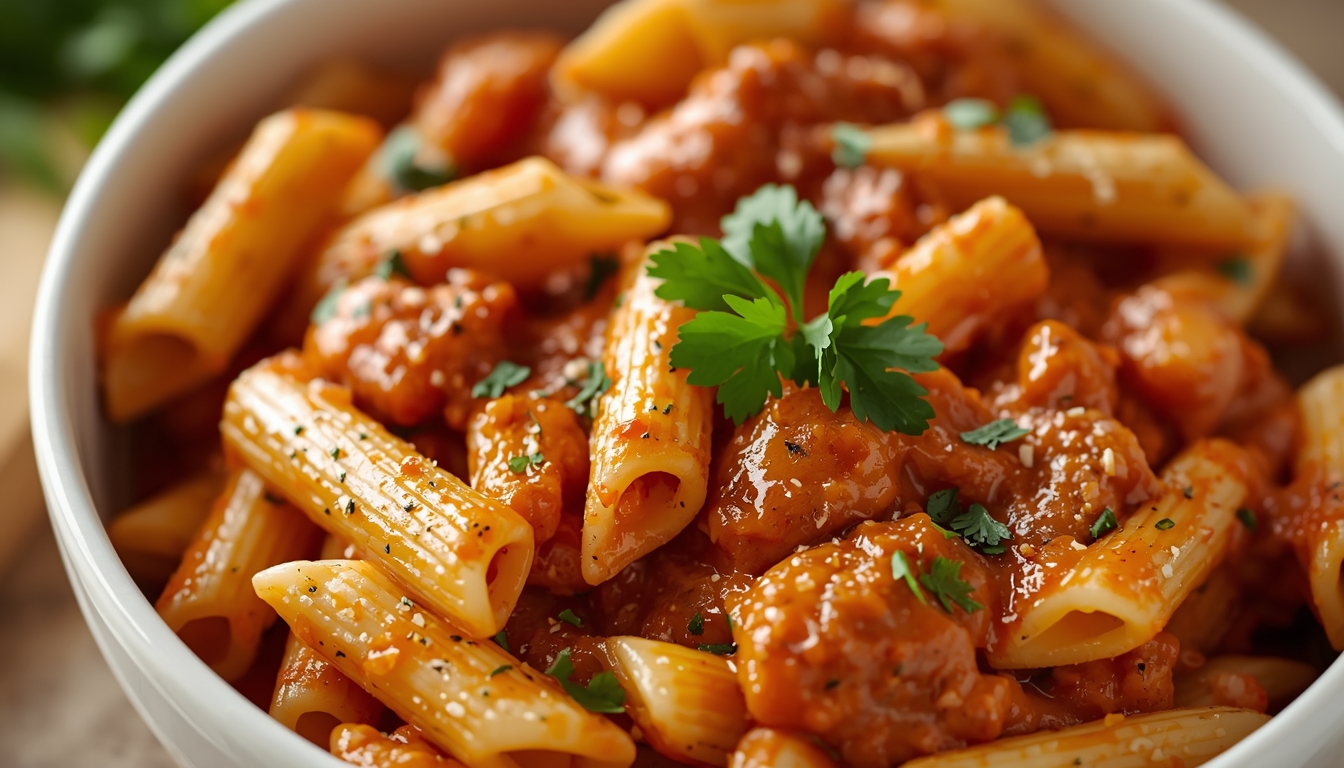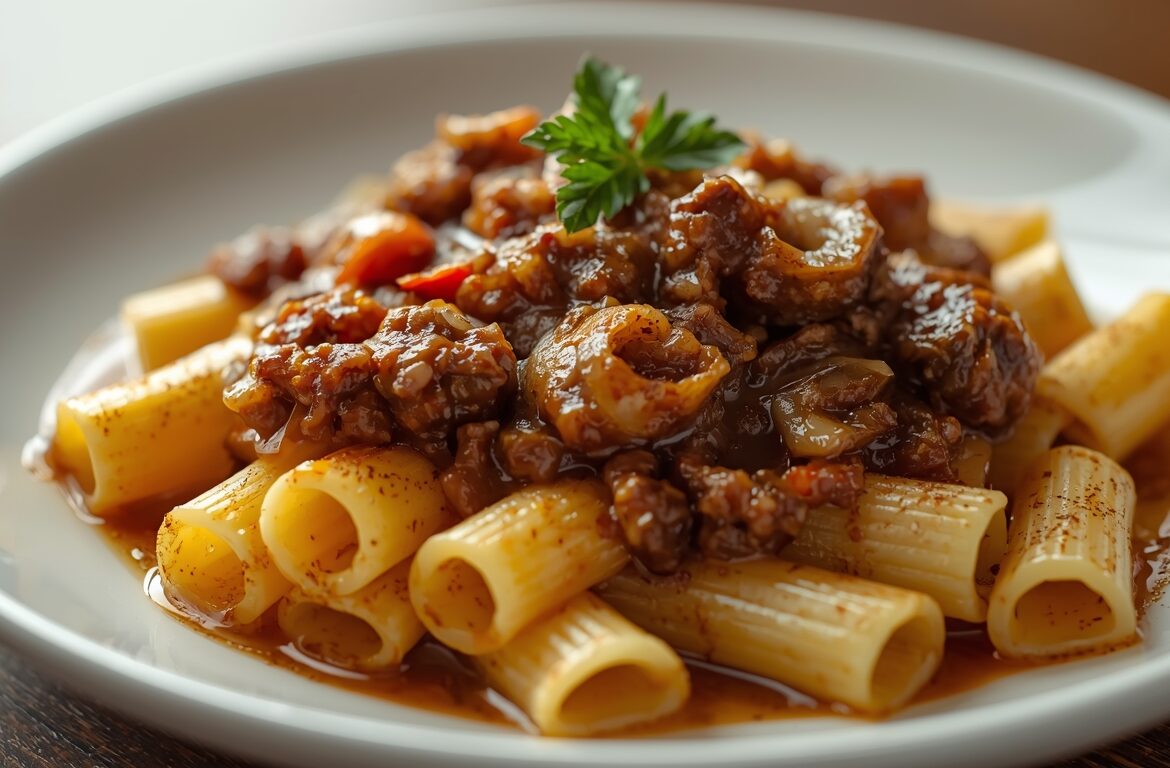
Despite what the name might suggest to a casual diner, the Pasta Genovese Recipe does not involve pesto or the city of Genoa. Instead, it is one of the most soul-satisfying pillars of Neapolitan cuisine. This dish is essentially a masterclass in patience, transforming a staggering amount of onions and a humble cut of beef into a thick, mahogany-colored sauce that is sweet, savory, and incredibly deep in flavor.
Historically, this dish likely arrived in Naples via Genoese merchants, but the city of Naples made it entirely its own. While a traditional ragù relies on tomatoes, the Genovese relies on the slow breakdown of onions. Over several hours, the onions lose their sharp bite and liquefy into a jam-like consistency. It is a rustic, honest dish that requires very little active work but demands a significant amount of time. Understanding the Pasta Genovese Recipe means understanding that the onions are not a garnish; they are the liquid, the body, and the soul of the sauce.
How This Cooking Method Changes Results
The magic of this recipe lies in the “low and slow” thermal transition. When you cook onions for five to ten hours, you aren’t just softening them; you are facilitating a massive enzymatic breakdown and a slow-motion Maillard reaction.
Standard sautéing reaches high temperatures quickly, which can lead to bitterness. However, in a Pasta Genovese Recipe, the onions are simmered in the juices released by the beef. This moisture keeps the temperature capped around the boiling point, preventing burning while allowing the sugars to concentrate.
The beef, typically a tough cut with plenty of connective tissue, undergoes a parallel transformation. The collagen melts into gelatin, which thickens the sauce and provides a “sticky” mouthfeel that coats the pasta perfectly. The result is a sauce that tastes fundamentally different from any quick-fix onion gravy. It becomes a rich, complex reduction where the sweetness of the onion is balanced by the savory fat of the beef.
Ingredients and Their Purpose
To get the most out of your Pasta Genovese Recipe, the quality and ratio of ingredients are non-negotiable.
The Onions (The Bulk)
You will need a ratio of roughly 2:1 or even 3:1 of onions to meat by weight.
- Yellow or Copper Onions: These are preferred for their high sugar content and structural integrity. They hold up better over long cook times than white or red onions.
The Meat (The Depth)
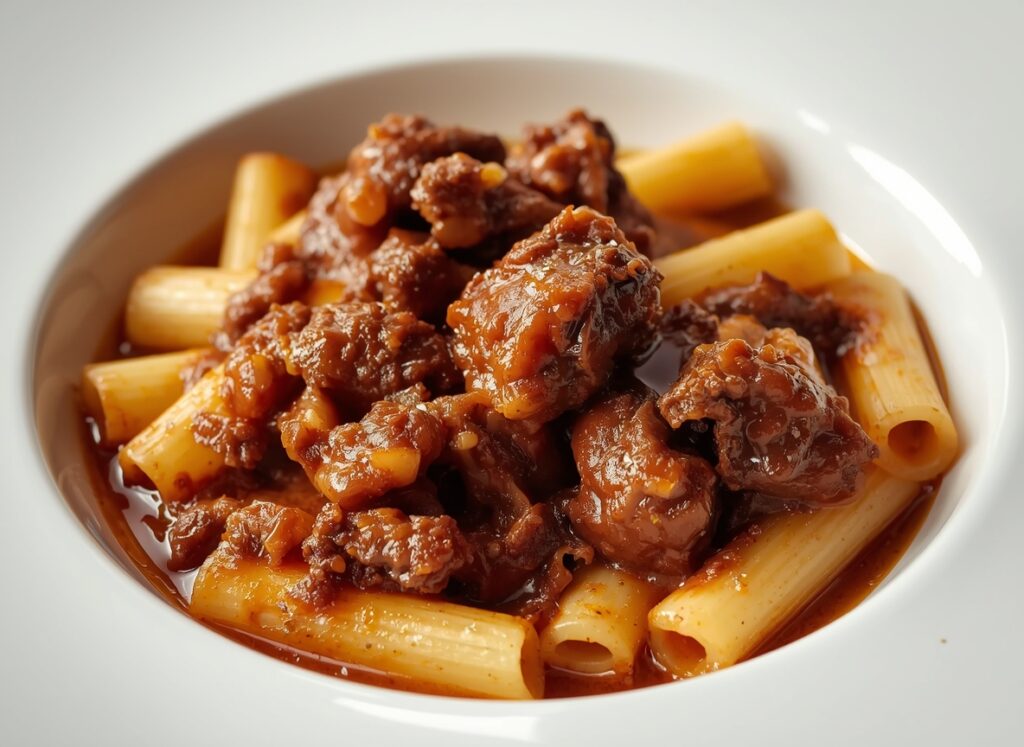
- Chuck Roast or Shin: You need “tough” cuts. Lean meats like tenderloin will dry out and turn into flavorless chalk. You want the fat and sinew of the chuck to melt into the onions.
The Aromatics and Liquids
- Carrots and Celery: Very finely minced (a battuto). They provide a subtle vegetal backbone that cuts through the sweetness of the onions.
- White Wine: A dry, crisp white wine (like Pinot Grigio) is used to deglaze the pot, adding acidity to balance the richness.
- Salami or Pancetta (Optional): Some traditionalists add a small amount of cured pork to jumpstart the savory base.
Equipment Needed for Proper Execution
Because this dish simmers for half a day, the vessel you choose is the difference between a successful meal and a scorched pot.
- Dutch Oven or Heavy-Bottomed Pot: Cast iron coated in enamel is the gold standard. It retains heat exceptionally well and distributes it evenly, which is crucial when you aren’t stirring every five minutes.
- A Sharp Chef’s Knife or Mandoline: You will be slicing upwards of five pounds of onions. A sharp blade reduces the release of sulfuric compounds (the stuff that makes you cry) and ensures uniform slices that melt at the same rate.
- Wooden Spoon: Ideal for scraping the “fond” (the brown bits) off the bottom of the pot without scratching your cookware.
- Pasta Pot: For boiling the large, tubular pasta traditionally paired with this sauce.
Cooking Schedule and Preparation Flow
Timing is the biggest hurdle for the home cook. You cannot rush a Pasta Genovese Recipe. If you try to finish it in two hours, you will simply have onion and beef soup.
- Hour 0–1: Slicing onions and browning the meat. This is the only labor-intensive part.
- Hour 1–3: The “sweating” phase. The onions will release a massive amount of water. The pot will look full, almost overflowing.
- Hour 3–6: The reduction phase. The water evaporates, and the sauce begins to turn golden. The volume will drop by more than half.
- Hour 6–8: The darkening. This is where the flavor peaks. The sauce turns a deep, dark brown.
- Final 30 Minutes: Boiling the pasta and marrying it to the sauce.
Bold Tip: This sauce actually tastes better the next day. If you have the time, cook it a day in advance and reheat it slowly before serving.
Human-Written Step-by-Step Pasta Genovese Recipe
1. Prep the Aromatics
Finely dice one carrot and one rib of celery. Slice 4 to 5 pounds of yellow onions into thin half-moons. Do not worry about the quantity; they will reduce significantly.
2. Brown the Meat
Cut 2 pounds of chuck roast into large chunks (about 3 inches). Season them heavily with salt. In your Dutch oven, heat a bit of olive oil and sear the meat until a dark crust forms on all sides. Remove the meat and set it aside.
3. Build the Base
In the same pot, add the diced carrot and celery. Sauté for 3 minutes, then add all the onions. It will seem like too many onions for the pot, but they will wilt quickly. Add a pinch of salt to help draw out the moisture.
4. The Long Simmer
Place the beef chunks back into the bed of onions. Cover the pot with a tight-fitting lid and turn the heat to its lowest setting. Bold Tip: You do not need to add water or stock. The onions will provide all the liquid necessary. Let this cook undisturbed for at least 4 hours.
5. Deglazing and Uncovering
After 4 hours, the onions should be soft and yellow. Remove the lid. If the beef is tender, you can break it apart slightly with your spoon. Pour in 1 cup of dry white wine. Increase the heat slightly to a medium-low simmer.
6. The Final Reduction
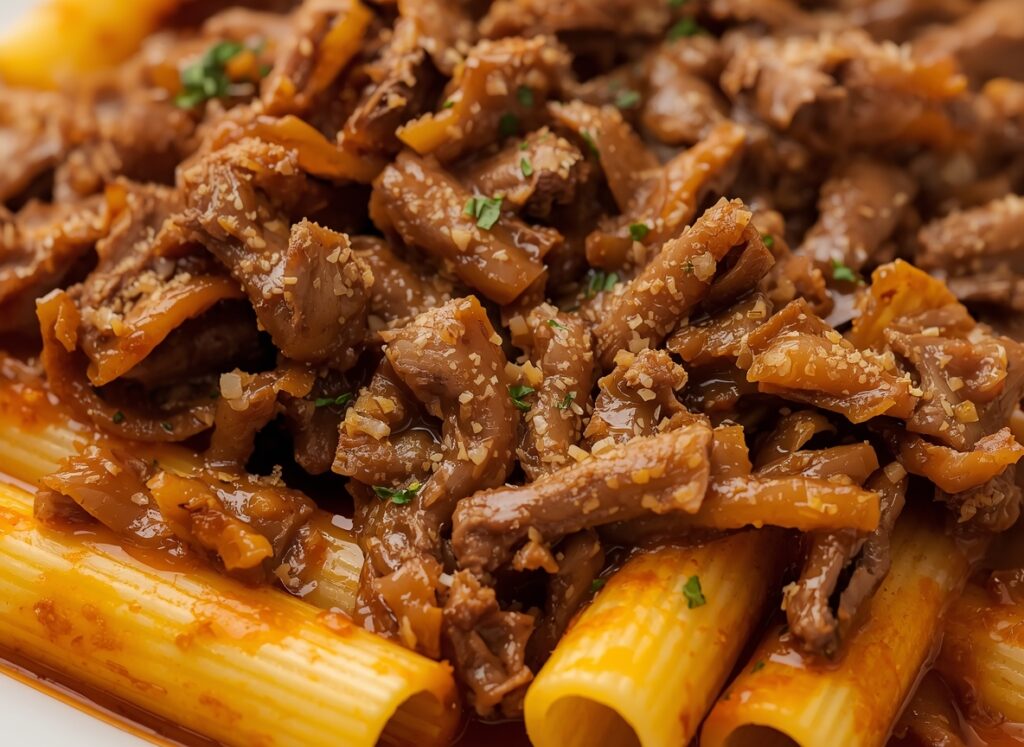
Continue cooking uncovered for another 2 to 3 hours. Stir every 20 minutes now, as the water is mostly gone and the sugars are prone to sticking. The sauce is ready when it is thick, dark brown, and the onions have completely disintegrated into a jam.
7. Finishing the Pasta
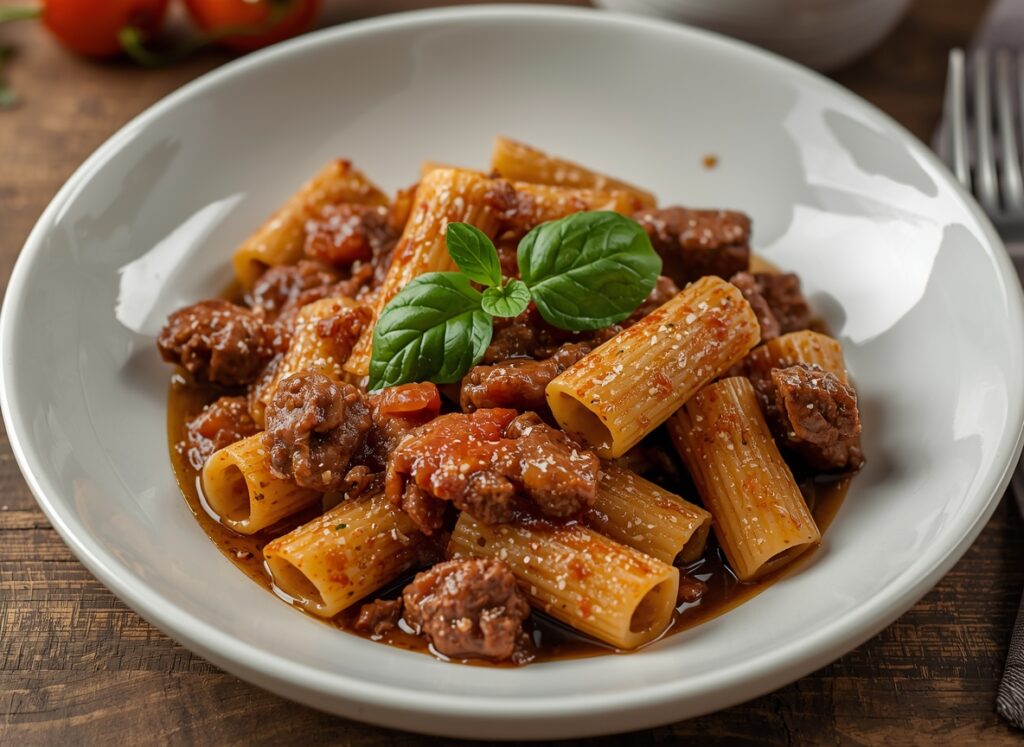
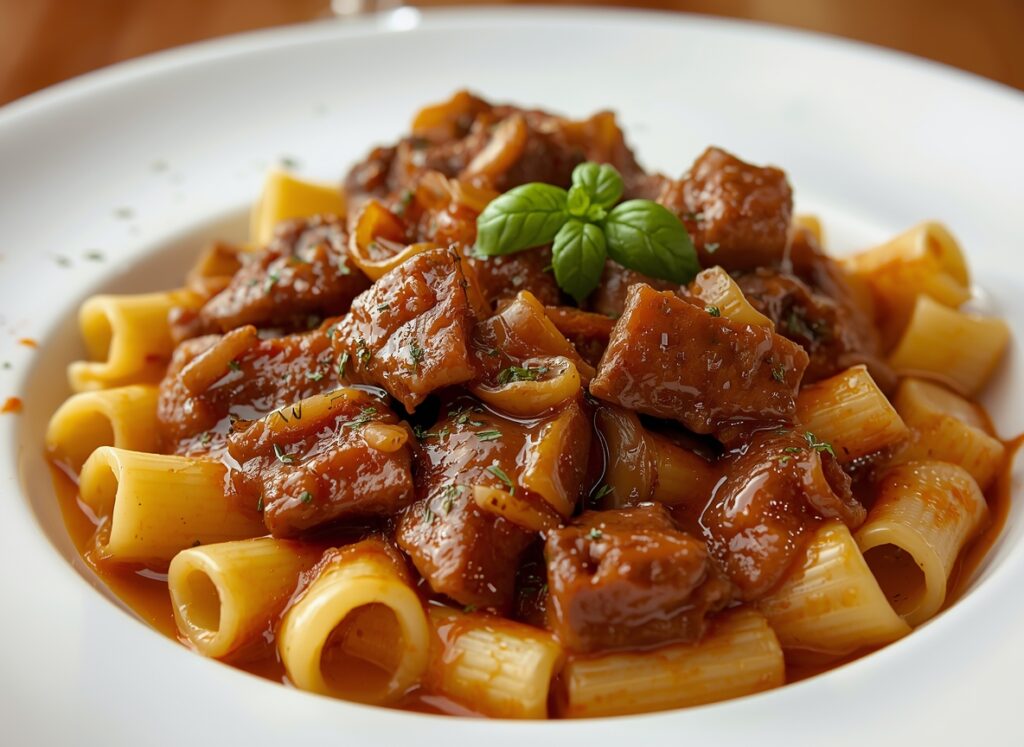
Boil a pot of salted water and cook Ziti or Rigatoni until al dente. Drain the pasta, reserving a splash of water. Toss the pasta directly into the sauce. Finish with a generous amount of grated Pecorino Romano or Parmigiano-Reggiano.
Real-World Cooking Mistakes to Avoid
- Adding Tomato: A Pasta Genovese Recipe is a “white” ragù. Adding tomato paste or canned tomatoes will mask the delicate sweetness of the caramelized onions and turn it into a standard meat sauce.
- Using High Heat: If you see the onions browning in the first hour, your heat is too high. The onions should steam in their own juices for the first several hours.
- Insufficient Salt: Onions are very sweet. Without enough salt to balance the flavor, the dish can taste almost like a dessert. Season in layers—at the beginning, middle, and end.
- Rushing the Liquid: If the onions look dry, do not add water immediately. Stir them and make sure the heat isn’t too high. Adding water dilutes the flavor; the onions should provide their own moisture.
Frequently Asked Questions From Home Cooks
Which pasta shape is best for a Pasta Genovese Recipe? The traditional choice is Ziti, often broken by hand into smaller pieces. Rigatoni or Paccheri also work well. You want a sturdy, tubular pasta that can catch the thick, jam-like onion sauce both inside and out.
Can I make this in a slow cooker? Yes, you can. However, a slow cooker does not allow for evaporation. You will need to transfer the sauce to a stovetop pot for the final hour of cooking to reduce the liquid and achieve that dark brown color and thick consistency.
Is it supposed to be this sweet? Yes, onions are naturally full of sugar. The sweetness is the hallmark of the dish. If it feels overwhelming, increase the amount of black pepper and Pecorino Romano cheese at the end to provide a salty, spicy contrast.
Can I freeze the sauce? Absolutely. The Pasta Genovese Recipe freezes beautifully. In fact, many families make a double batch and freeze half. It will stay fresh in an airtight container for up to three months.
What kind of wine should I use? Use a wine you would actually drink. A dry Italian white like Greco di Tufo or a simple Pinot Grigio is perfect. Avoid sweet wines, as the onions provide more than enough sugar on their own.
Chickpea Pasta Recipe – Gluten-Free & Delicious
Quick & Delicious Creamy Ditalini Pasta Recipe
Easy Pistachio Paste Recipe – Smooth & Homemade
Easy Pappardelle Pasta Recipes You Can Make at Home
How to Make Squid Ink Pasta recipe at Home – Simple & Delicious