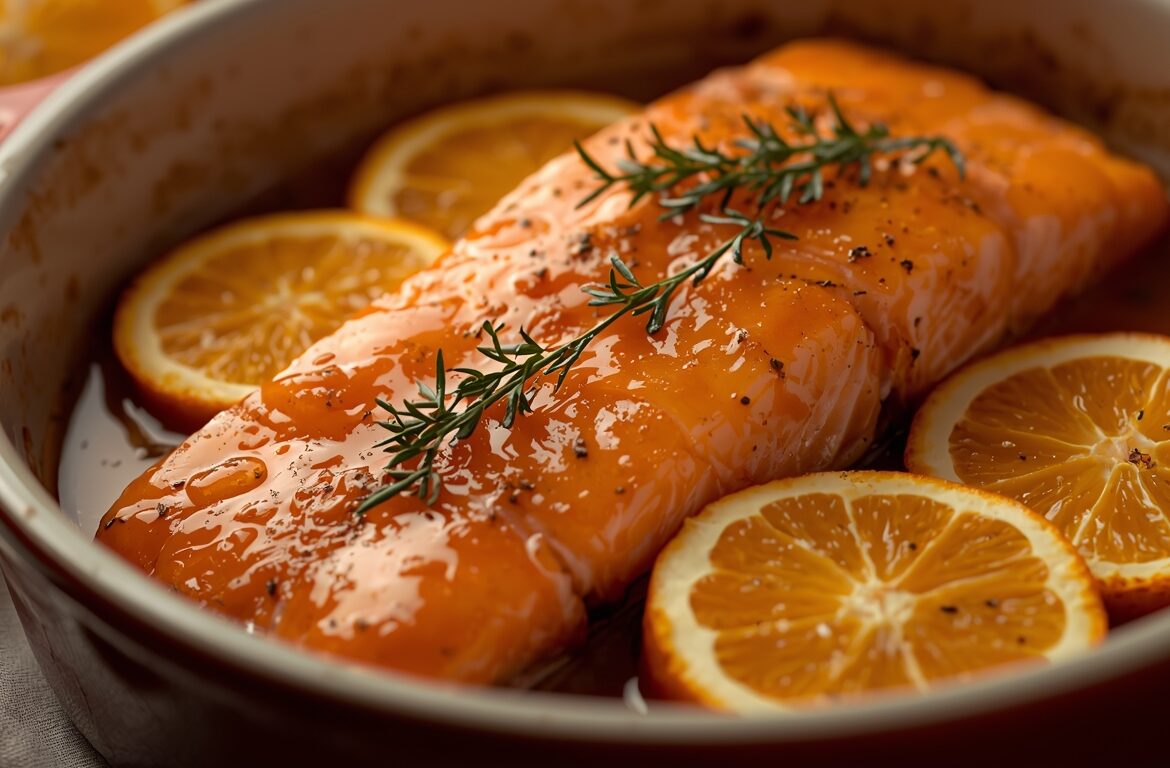
Mastering the Orange Salmon Recipe is a gateway to understanding the delicate balance between protein, acidity, and sugar. In the culinary world, salmon is prized for its high fat content and rich, buttery texture. However, that same richness requires a “counterpoint” to keep the dish from feeling overly heavy on the palate. This is where the citrus comes in.
The core concept of this recipe isn’t just about putting fruit on fish; it is about creating a glaze that undergoes a physical transformation in the pan. We are moving from a thin, watery juice to a thick, syrupy reduction that clings to the salmon. By the end of this guide, you won’t just be following a set of instructions—you will be learning how to control heat and moisture to achieve a restaurant-quality sear and a balanced glaze.
Building Confidence With the Method
If you have ever felt intimidated by cooking fish, you aren’t alone. Salmon is often a source of anxiety because it can go from underdone to dry in a matter of sixty seconds. Building confidence with the Orange Salmon Recipe requires shifting your focus from the timer to the visual and tactile cues of the fish.
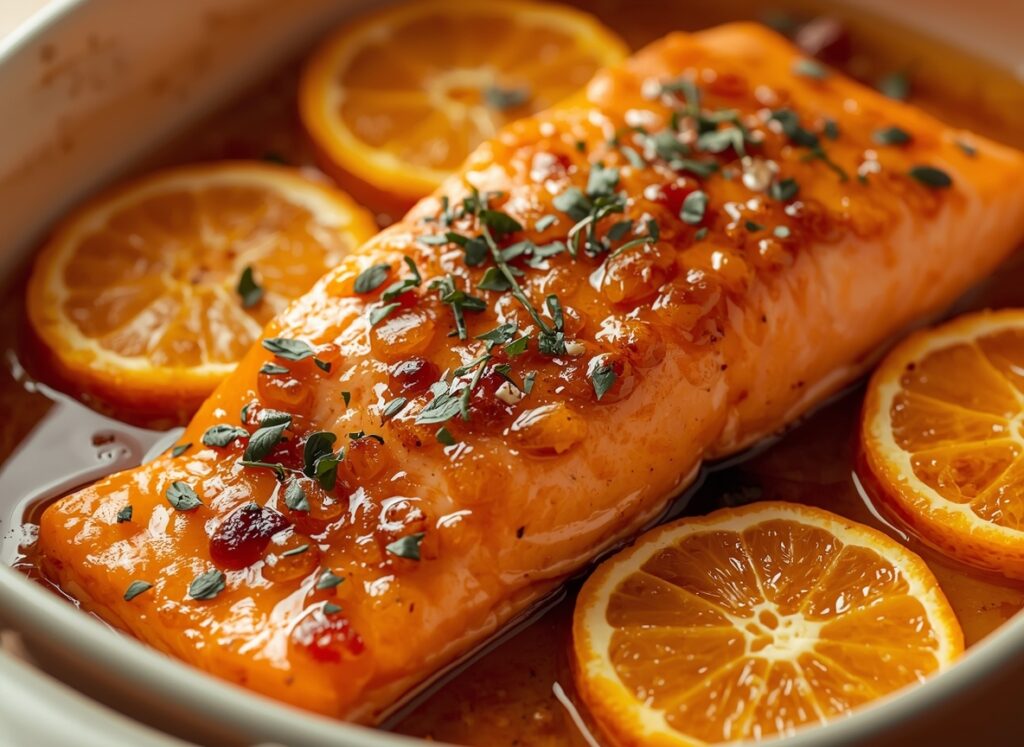
The method we are using involves a “two-stage” approach. First, we sear the salmon to develop a crust and render some of the fat. Second, we introduce the orange-based liquid to “braise-finish” the fish. This technique is much more forgiving than straight grilling or roasting. The liquid creates a steam-cushion that protects the salmon from drying out, while the sugars in the juice caramelize to create a deep, amber color. Once you understand that the sauce is both a flavoring agent and a protective barrier, your confidence in the kitchen will grow.
Ingredient Preparation Step by Step
A great Orange Salmon Recipe depends on how you handle your raw materials. Precision during the prep phase prevents chaos once the pan is hot.
1. The Salmon Selection
Choose “Center-Cut” fillets if possible. These are uniform in thickness, which means the entire piece of fish will finish cooking at the same time. Bold Tip: Always pat the salmon skin bone-dry with paper towels before cooking. Any surface moisture will create steam, which prevents the skin from getting crispy.
2. The Citrus Component
Fresh oranges are mandatory. Bottled orange juice often contains stabilizers and added sugars that can burn in the pan or leave a “tinny” aftertaste. You’ll need both the juice and the zest. The zest contains the essential oils that provide the floral aroma, while the juice provides the acidity and natural sugars for the reduction.
3. The Supporting Flavors
- Soy Sauce: Adds the salt and umami (savory) notes to balance the sweet orange.
- Honey or Maple Syrup: A tiny amount helps the sauce thicken faster and adds a different dimension of sweetness.
- Fresh Ginger and Garlic: These should be grated finely. They provide a foundational heat that cuts through the fat of the salmon.
Understanding Your Cooking Tools
You don’t need a kitchen full of gadgets, but you do need a few specific items to ensure the Orange Salmon Recipe behaves the way you want it to.
- Stainless Steel or Cast Iron Skillet: Avoid thin, cheap non-stick pans if you want a real sear. A heavy-bottomed skillet retains heat, which is what creates that golden-brown crust (the Maillard reaction).
- Flexible Fish Spatula: This tool is thin and slotted, allowing you to slide under the delicate skin of the salmon without tearing it.
- Microplane Zester: Essential for getting the orange zest and grating the ginger into a fine paste.
- Instant-Read Thermometer: This is the ultimate “confidence-builder.” It removes the guesswork by telling you exactly when the fish is safe and succulent.
Planning the Cooking Process
The Orange Salmon Recipe moves quickly once the fish hits the oil. Organizing your workspace—mise en place—is the best way to ensure success.
- Preparation (10 Minutes): Zesting, juicing, and grating. Combine your sauce ingredients (juice, soy sauce, honey, ginger) in a small jar or bowl so you can pour it in all at once.
- Searing (4–5 Minutes): This is the high-heat phase where we focus on texture.
- Glazing (3–4 Minutes): This is the medium-heat phase where we focus on the reduction and finishing the internal cook.
- Resting (2 Minutes): Allowing the protein fibers to relax so the juices don’t run out when you cut into it.
Applying the Orange Salmon Recipe
1. The Seasoning
Season your fillets with kosher salt and black pepper just before they go into the pan. If you salt them too early, the salt will draw moisture to the surface, making the skin soggy.
2. The Sear
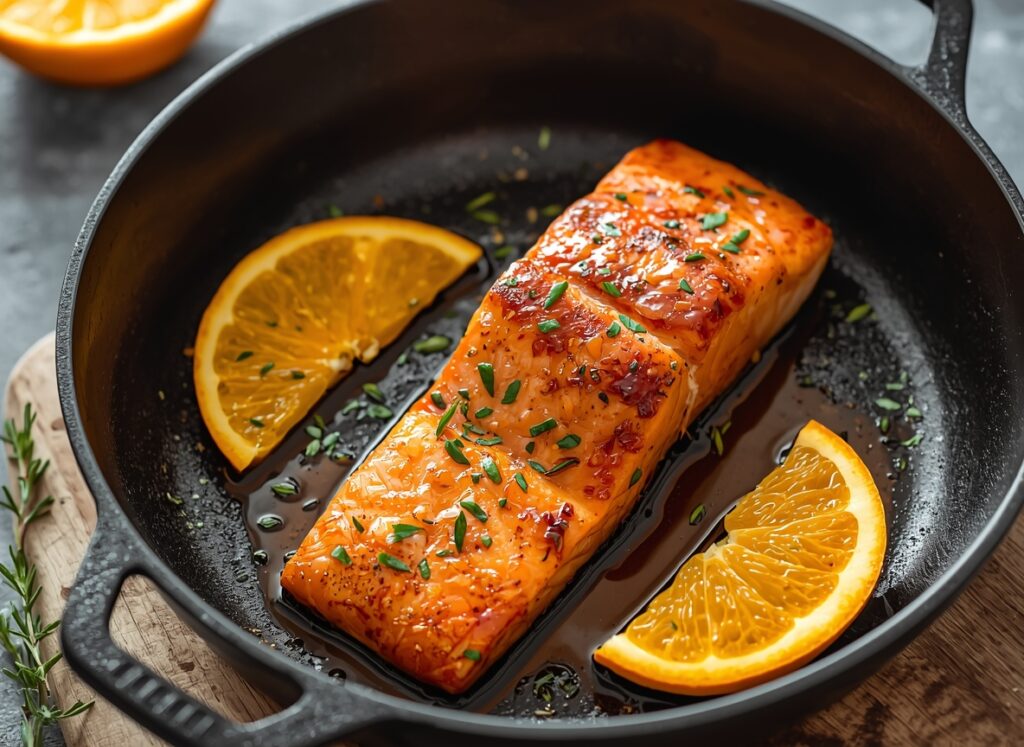
Heat a tablespoon of neutral oil (like grapeseed or avocado oil) until it shimmers. Place the salmon skin-side down. Bold Tip: Use your spatula to press down on each fillet for about 10 seconds. This prevents the skin from curling up and ensures even contact with the heat.
3. The Flip
Once the skin is crispy and the fish is cooked about halfway up the side (you’ll see the color change from translucent to opaque), flip the fillets gently.
4. The Glaze Introduction
Immediately pour your orange sauce mixture into the pan. It will bubble and steam. This is exactly what you want. The steam finishes cooking the top of the fish while the liquid begins to reduce.
5. Basting
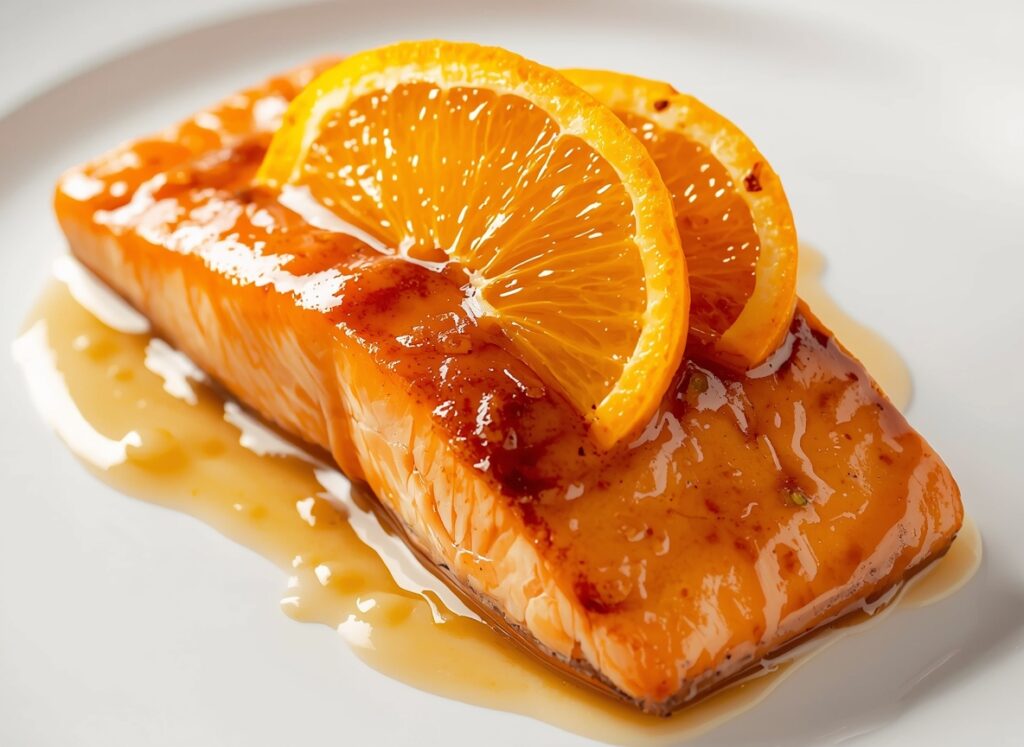
As the sauce thickens, use a spoon to repeatedly pour the glaze over the top of the salmon. This “basting” creates a thick, glossy lacquer on the fish. Remove the pan from the heat when the sauce has reduced by half and the salmon reaches an internal temperature of 135°F–140°F (for medium).
Learning From Common Setbacks
Every cook encounters hurdles. Here is how to learn from the most common issues with the Orange Salmon Recipe:
- The Skin Stuck to the Pan: This usually happens if the pan wasn’t hot enough or if you tried to flip the fish too early. Salmon will “release” itself from the pan once the skin is sufficiently crisped. If it’s sticking, give it another 30 seconds.
- The Sauce Burned: Orange juice has a lot of natural sugar. If the heat is too high during the reduction phase, the sugar will go from “caramel” to “burnt” very fast. If the sauce looks dark and smells bitter, add a tablespoon of water or broth to thin it out and kill the heat immediately.
- The White Stuff (Albumin) Leaking Out: If you see white beads forming on the surface of the salmon, it’s a sign that the fish is overcooking or the heat was too high. It’s just coagulated protein and is perfectly safe to eat, but next time, pull the fish 5 degrees earlier.
- The Glaze is Too Thin: If the fish is done but the sauce is still watery, remove the salmon to a plate and keep boiling the sauce alone for another 60 seconds until it reaches your desired thickness.
FAQ for Skill Improvement
Can I use frozen salmon for this recipe? Yes, but it must be fully thawed and patted extremely dry. Frozen salmon often contains more internal moisture, so you may need to sear it slightly longer to get a good crust.
What is the best type of orange to use? Navel oranges are great for juice, but Valencia oranges are often sweeter. If you want a more complex flavor, try a Blood Orange—it will give your Orange Salmon Recipe a stunning deep-red hue.
How do I know the salmon is done without a thermometer? Use a fork to gently press on the top of the fillet. If the flakes begin to separate (flake) easily, the fish is done. If it feels bouncy or “springy,” it likely needs another minute.
Can I make this in the oven instead of a skillet? You can, but you won’t get the same crispy skin. To do it in the oven, pour the glaze over the fish and bake at 400°F for 10–12 minutes, basting halfway through.
Is it okay to eat the salmon skin? In an Orange Salmon Recipe, the skin is often the best part! Because we seared it and then glazed it, it should be salty, sweet, and crispy. As long as the scales were properly removed, it is delicious and packed with Omega-3s.
What should I serve as a side? To complement the citrus, I recommend something neutral like jasmine rice or quinoa, and a green vegetable like steamed bok choy or roasted asparagus. The rice is particularly good at soaking up any extra orange glaze.
By focusing on these teaching points, you aren’t just making a single meal; you are building a foundation of skills that will help you cook any type of fish with confidence. The Orange Salmon Recipe is a perfect teacher for anyone looking to bridge the gap between “home cook” and “chef.
Easy Coho Salmon Recipe – Tender & Flavorful
Easy Salmon Poke Bowl Recipe – Fresh & Healthy
Restaurant-Style Cedar Plank Salmon Recipe
Sockeye Salmon Recipe – Fresh, Tender & Delicious