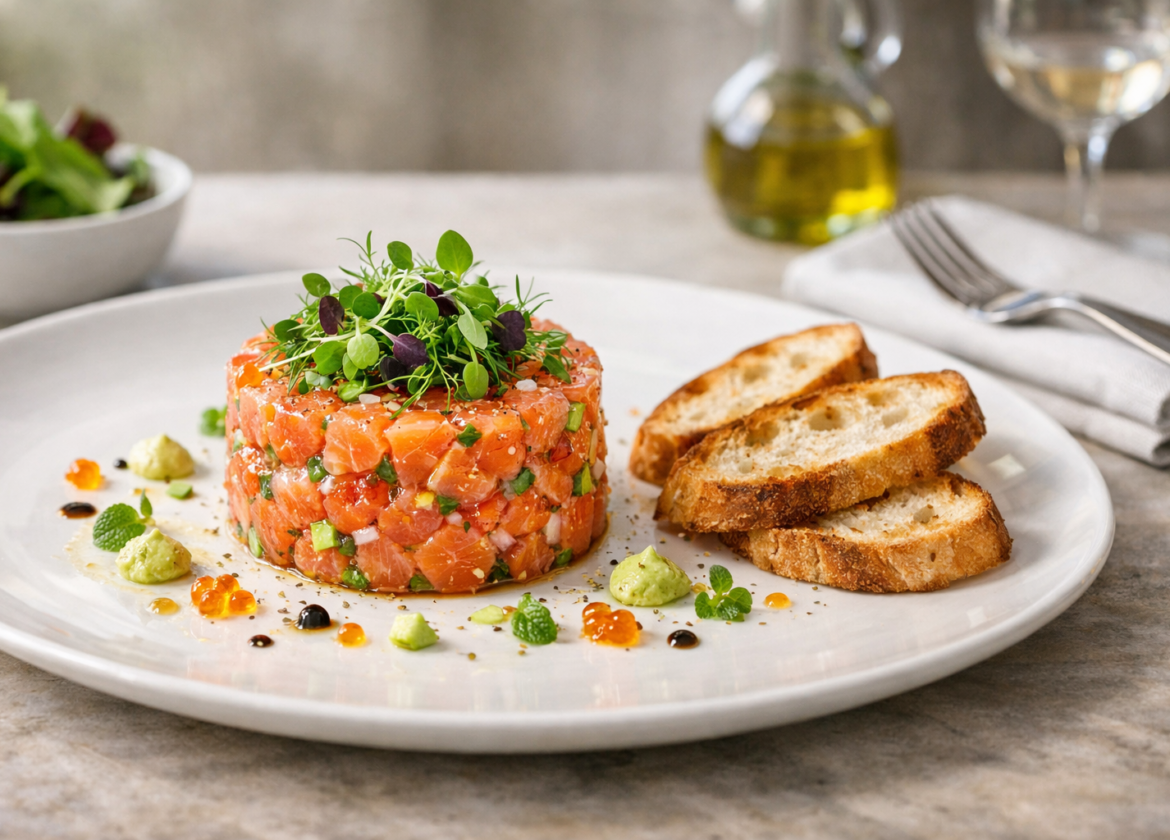
A high-quality Salmon Tartare Recipe represents the pinnacle of seafood preparation, emphasizing the natural flavor, texture, and freshness of the fish. Unlike cooked salmon dishes, tartare relies entirely on the integrity of the raw ingredients and the precision of the chef’s knife work. This dish is a staple in fine dining because it balances rich, fatty proteins with bright acidity and aromatic herbs.
To achieve a professional result at home, one must view the Salmon Tartare Recipe not merely as a set of instructions but as a series of controlled choices. From the sourcing of the fish to the temperature of the serving plates, every detail contributes to the final sensory experience. This article provides a comprehensive framework for mastering this delicate preparation, ensuring a safe, delicious, and aesthetically pleasing outcome.
Factors That Influence Recipe Quality
Several critical factors determine the success of a Salmon Tartare Recipe. Because the protein is not subjected to heat, there is no opportunity to mask imperfections through browning or heavy sauces.
Source and Freshness
The most significant factor is the quality of the salmon. Only “sushi-grade” or “sashimi-grade” salmon should be used. These terms indicate that the fish has been frozen to specific temperatures for a duration sufficient to eliminate parasites, making it safe for raw consumption.
Fat Content
The variety of salmon chosen significantly impacts the mouthfeel. King (Chinook) salmon is prized for its high fat content and buttery texture, which is ideal for a Salmon Tartare Recipe. Atlantic salmon is a more accessible option that still provides a clean flavor and good fat marbling.
Balance of Flavors
A successful tartare must balance the “salt, fat, acid, and heat” components. The richness of the salmon requires a sharp acidic element (such as lemon juice or rice vinegar) and a savory salty element (such as capers or sea salt) to reach its full potential.
Nutritional Overview
The Salmon Tartare Recipe is nutritionally dense, offering high levels of Omega-3 fatty acids, which are essential for heart health. It is also a significant source of high-quality protein, Vitamin D, and Selenium. Because it is served raw and typically mixed with vegetables and light oils, it is a low-carbohydrate option suitable for various dietary needs.
Selecting and Preparing Ingredients
The preparation phase is where the foundation of a great Salmon Tartare Recipe is built.
The Salmon
When purchasing salmon, look for flesh that is firm to the touch and has a vibrant, consistent color. Avoid fish with a “fishy” odor or any visible bruising. Once purchased, keep the fish on ice until the exact moment of preparation.
The Aromatics
- Shallots: These provide a milder, more sophisticated bite than standard onions.
- Chives: Offering a delicate onion flavor without overwhelming the fish.
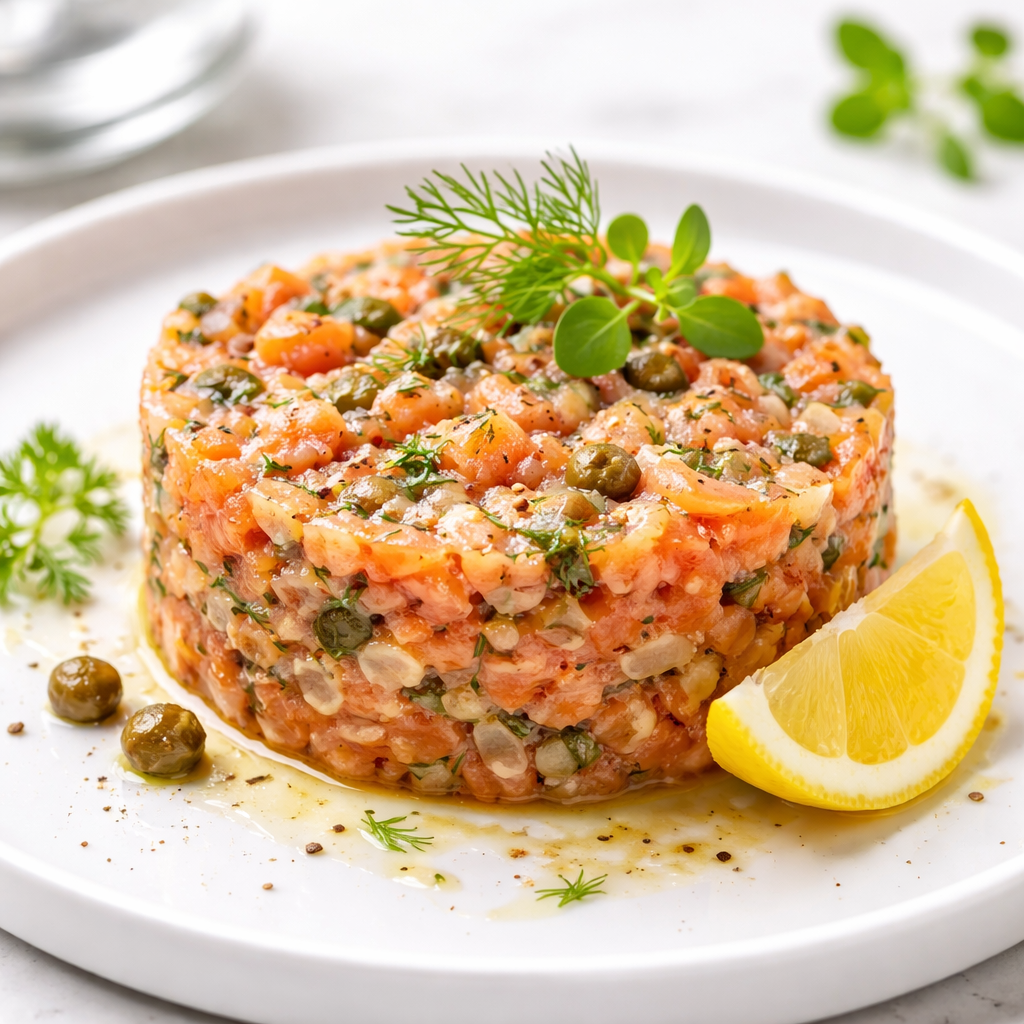
- Capers: Their briny, fermented profile adds essential salt and texture.
The Binding Agent
While some versions use mayonnaise, a premium Salmon Tartare Recipe often utilizes a high-quality extra virgin olive oil or a touch of sesame oil. This enhances the glossiness of the dish without masking the salmon’s natural flavor.
Bold Tip: Always remove the dark “blood line” (the brownish meat along the skin side) from the salmon fillet, as it has a very strong flavor that can ruin the delicacy of the tartare.
Equipment Setup for Precision Cooking
Although no heat is applied, the “cooking” in a Salmon Tartare Recipe is done through knife work and chemical interaction (acid).
- A Sharp Chef’s Knife or Santoku: This is the most important tool. A dull knife will crush the delicate cell structure of the salmon, resulting in a mushy texture. You want clean, distinct cubes.
- Stainless Steel Mixing Bowl: Place this bowl inside a larger bowl filled with ice. This ensures the salmon stays at a food-safe temperature throughout the mixing process.
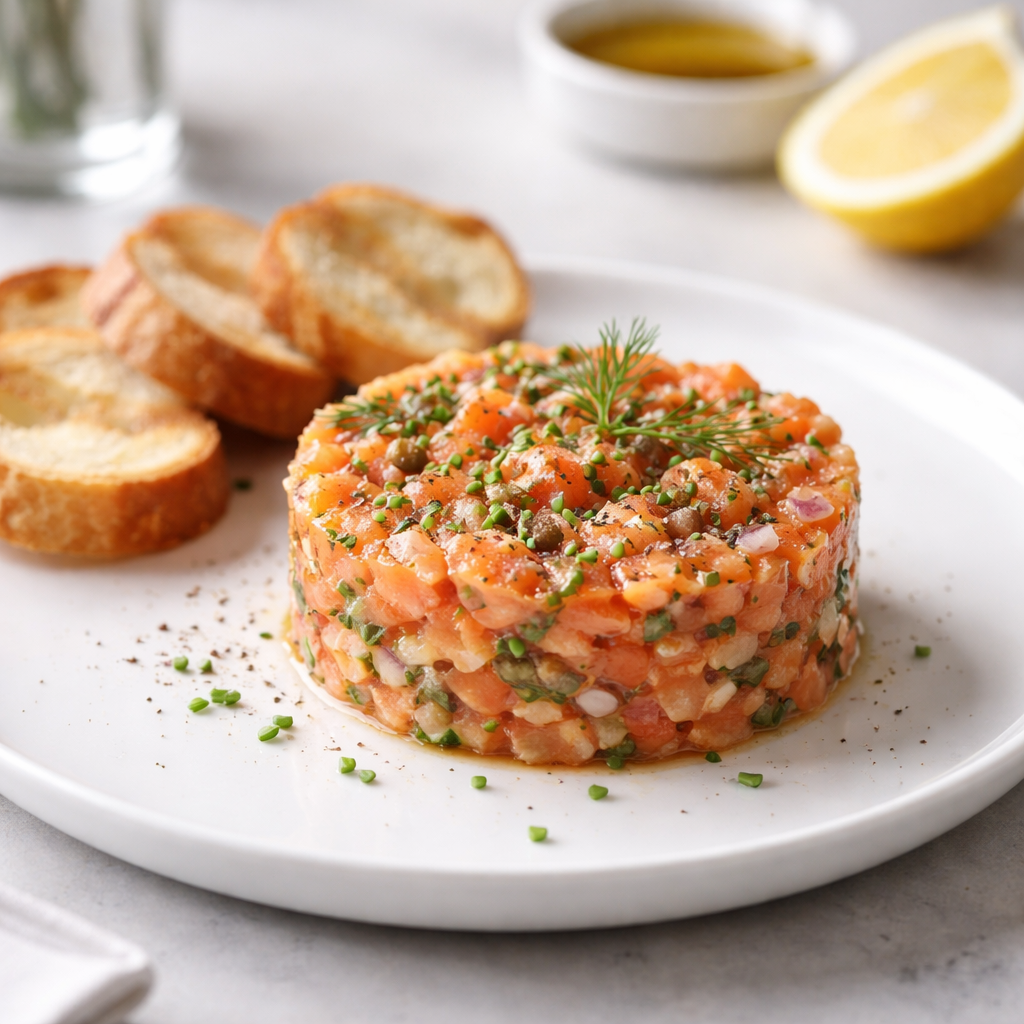
- Ring Molds: For a professional presentation, ring molds are used to shape the tartare into a perfect cylinder on the plate.
- Chilled Plates: Serving raw fish on a warm plate will degrade the quality rapidly. Chill your plates in the refrigerator for 30 minutes before serving.
How to Serve
A Salmon Tartare Recipe should be served immediately after assembly. It is commonly accompanied by:
- Toasted Crostini: Provides a crunchy contrast to the soft fish.
- Cucumber Slices: A low-carb, refreshing alternative to bread.
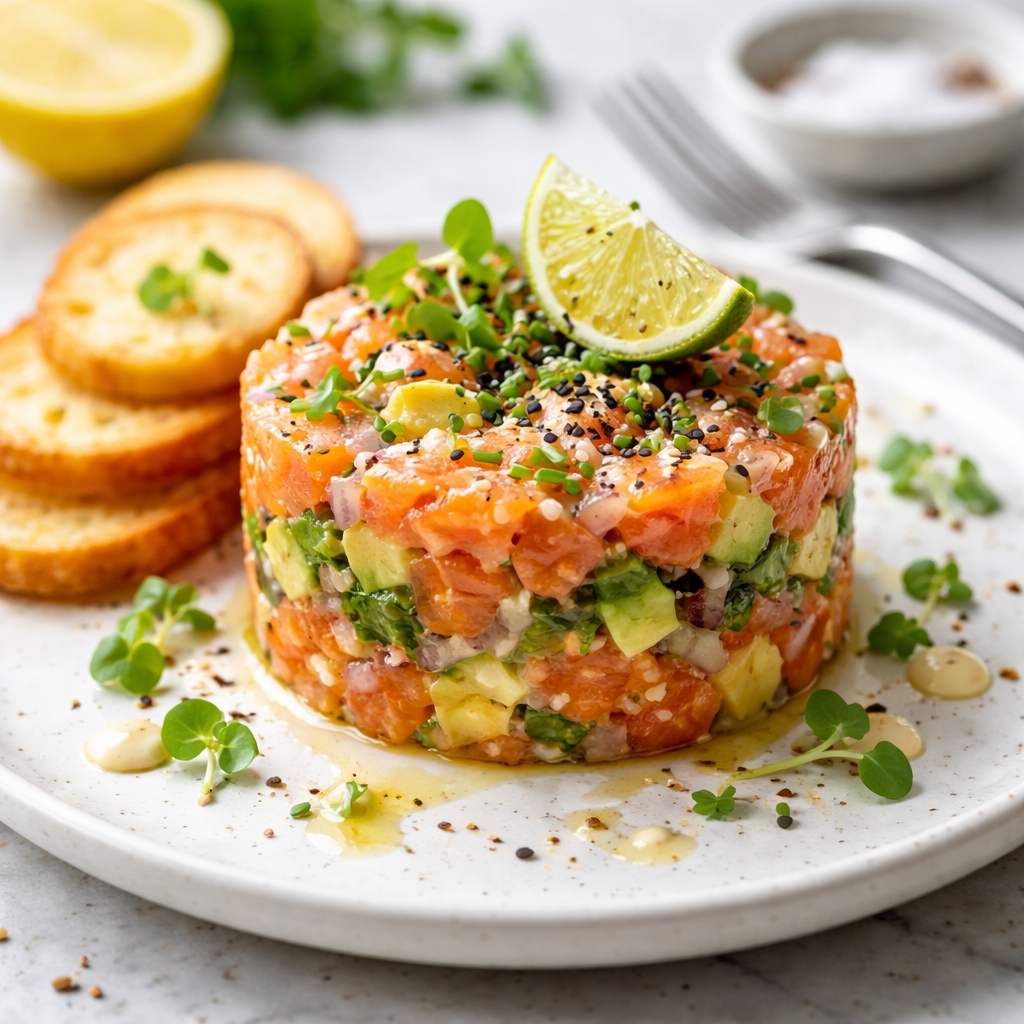
- Avocado: Often layered at the bottom of the ring mold to provide a creamy base.
Temperature Control and Timing
In a Salmon Tartare Recipe, temperature control is the primary safety and quality hurdle.
The 40°F (4°C) Rule
The salmon should never exceed 40°F (4°C) during preparation. If the fish warms up, the fat begins to soften too much, and the risk of bacterial growth increases. Bold Tip: Put your knife and cutting board in the freezer for 10 minutes before you start dicing the fish.
The Acid Timing
Acid (citrus juice or vinegar) “cooks” the fish through denaturation. If you add the lemon juice too early, the salmon will lose its vibrant pink color and turn opaque and firm. For the best quality, add the acidic components only in the final 60 seconds before serving.
Executing the Salmon Tartare Recipe
1. Dicing the Salmon
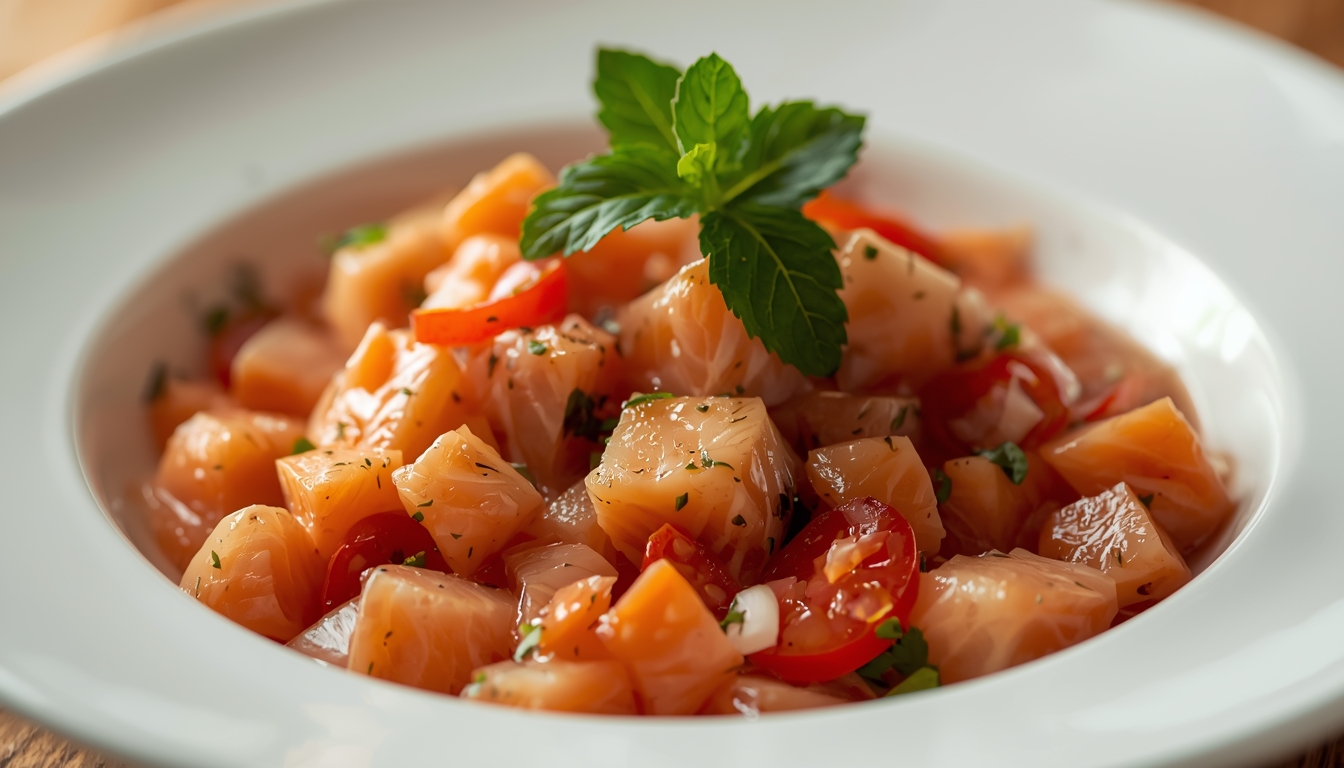
Remove the skin and any bones. Slice the cold salmon into 1/4-inch strips, then turn and cut into 1/4-inch cubes. Precision here ensures that every bite has a consistent texture. Place the cubes in the chilled stainless steel bowl over ice.
2. Preparing the Garnish
Finely mince one small shallot and a tablespoon of capers. Finely snip enough chives to yield one tablespoon.
3. Creating the Dressing
In a separate small bowl, whisk together 1 tablespoon of extra virgin olive oil, 1 teaspoon of Dijon mustard, and a pinch of sea salt.
4. Assembly
Add the shallots, capers, and chives to the salmon. Pour the dressing over the mixture. Use a spoon to gently fold the ingredients together. Bold Tip: Do not over-mix, as this will cause the salmon to release its oils and become greasy.
5. The Final Touch
Just before plating, add 1 tablespoon of fresh lemon juice and a crack of black pepper. Perform a final gentle toss.
6. Plating
Place a ring mold in the center of a chilled plate. Fill with the tartare, pressing down gently with the back of a spoon to ensure it holds its shape. Carefully lift the mold. Garnish with a sprig of microgreens or a thin slice of radish.
Estimated Calories & Macronutrients
- Calories: 220 kcal (per serving)
- Protein: 24g
- Total Fat: 13g
- Saturated Fat: 2.5g
- Carbohydrates: 2g
- Fiber: 0g
- Note: Values are based on 4oz of salmon and standard aromatics without bread/crackers.
Quality Problems and Corrections
Even with a detailed Salmon Tartare Recipe, environmental factors can lead to suboptimal results.
- Problem: The tartare is too watery.
- Correction: This usually happens if the salmon was previously frozen and not patted dry. Always use a paper towel to remove excess moisture from the fish before dicing.
- Problem: The fish has turned grey.
- Correction: The acid was added too early or too much was used. Ensure the lemon juice is the very last ingredient added and served immediately.
- Problem: The flavor is “flat” or dull.
- Correction: The dish likely lacks salt or acid. Raw fish requires a surprising amount of salt to highlight its sweetness. Add an extra pinch of sea salt or a drop of citrus.
- Problem: The tartare falls apart when the mold is removed.
- Correction: The cubes may be too large, or there wasn’t enough “binder” (mustard or oil). Ensure your dice is consistent at 1/4-inch and press more firmly into the mold.
Frequently Asked Questions (FAQ)
Can I use regular grocery store salmon for a Salmon Tartare Recipe?
Unless the salmon is specifically labeled as “sushi-grade” or you have confirmed it has been frozen according to FDA parasite destruction guidelines, it is not recommended for raw consumption. Standard fresh salmon may contain parasites that are only killed by cooking to 145°F.
How long does salmon tartare stay fresh?
Salmon tartare should be consumed within 2 hours of preparation. It does not store well as the acid continues to break down the proteins, and the raw fish quality degrades rapidly once exposed to air.
What is the difference between salmon tartare and salmon ceviche?
The difference lies in the amount of acid and the timing. Ceviche is marinated in a large amount of citrus juice for an extended period (15–30 minutes) to fully “cook” the fish. Tartare is a light dressing added at the last second to preserve the raw texture.
Is salmon tartare safe for pregnant women?
Medical professionals generally advise pregnant women to avoid raw fish due to the risk of listeriosis and other foodborne illnesses. It is best to consult with a healthcare provider.
Can I add avocado directly into the mix?
While you can, avocado is soft and can make the mixture look muddy. It is aesthetically superior to layer the avocado at the bottom of the mold and place the salmon on top.
What wine pairs best with this Salmon Tartare Recipe?
A high-acid white wine, such as a Sancerre, Sauvignon Blanc, or a Dry Riesling, pairs exceptionally well with the fatty salmon and citrus notes.
Easy Coho Salmon Recipe – Tender & Flavorful
Easy Salmon Poke Bowl Recipe – Fresh & Healthy
Restaurant-Style Cedar Plank Salmon Recipe
Homemade Teriyaki Salmon Recipe with Sticky Glaze
How to Make Salmon Crudo recipe at Home – Simple & Fresh