When searching for a Thai Basil Fried Rice Recipe, most readers are looking for three specific things: authenticity, restaurant-quality texture, and speed. Unlike standard Chinese fried rice, which often relies on soy sauce and sesame oil for its profile, the Thai version is defined by a bold, aromatic punch of fresh basil, fish sauce, and bird’s eye chilies.
The most common question home cooks ask is how to achieve “Wok Hei”—the smoky “breath of the wok”—without professional equipment. While a high-powered burner is helpful, the secret lies in heat management and using the correct type of rice. By following a structured approach, you can create a dish that is salty, sweet, spicy, and fragrant in under 20 minutes.
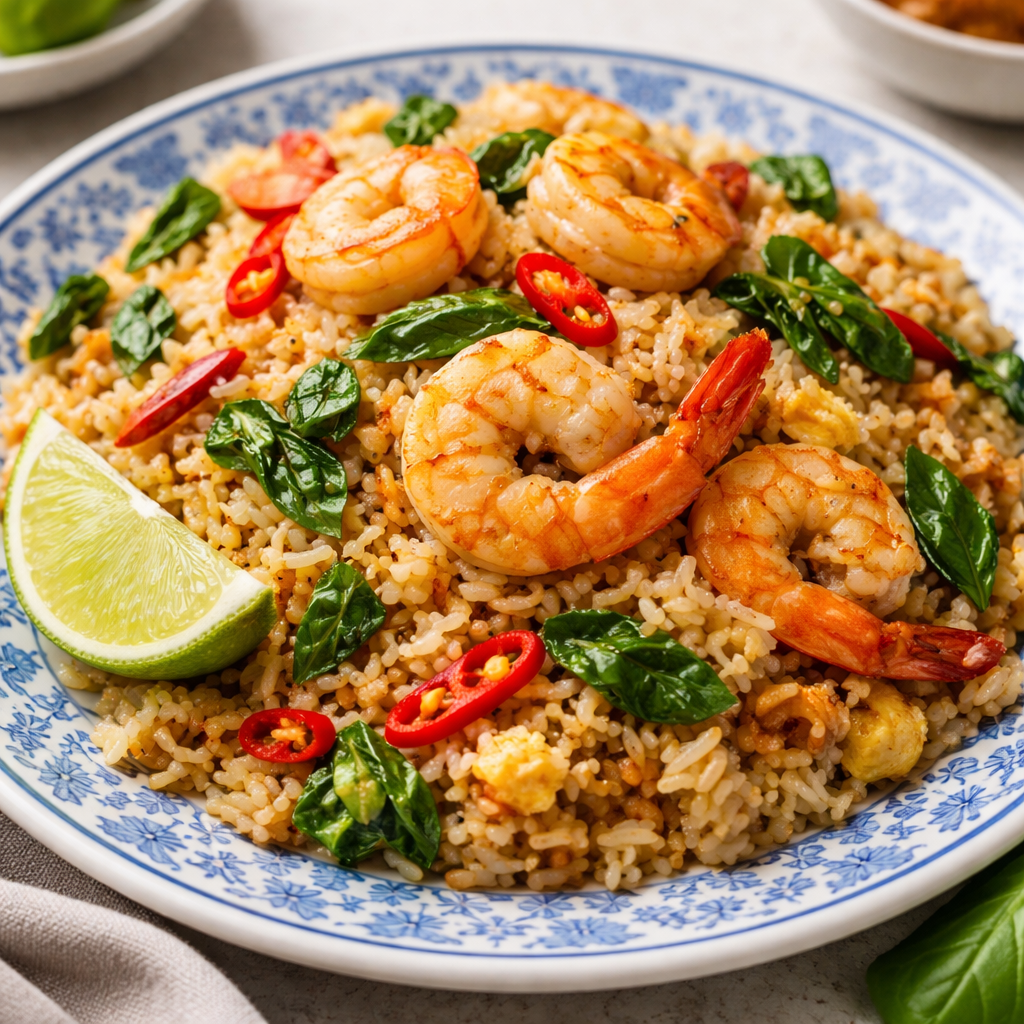
When Thai Basil Fried Rice Recipe Is the Best Choice
A Thai Basil Fried Rice Recipe is an ideal culinary solution for several scenarios:
- Weeknight Efficiency: Since the cooking process takes less than 10 minutes once the prep is complete, it is a perfect high-flavor, low-effort dinner.
- Utilizing Leftovers: This recipe is specifically designed for day-old rice, making it an excellent way to reduce food waste.
- Customizable Heat Levels: You can easily scale the number of Thai chilies to suit your audience, from mild to “Thai spicy.”
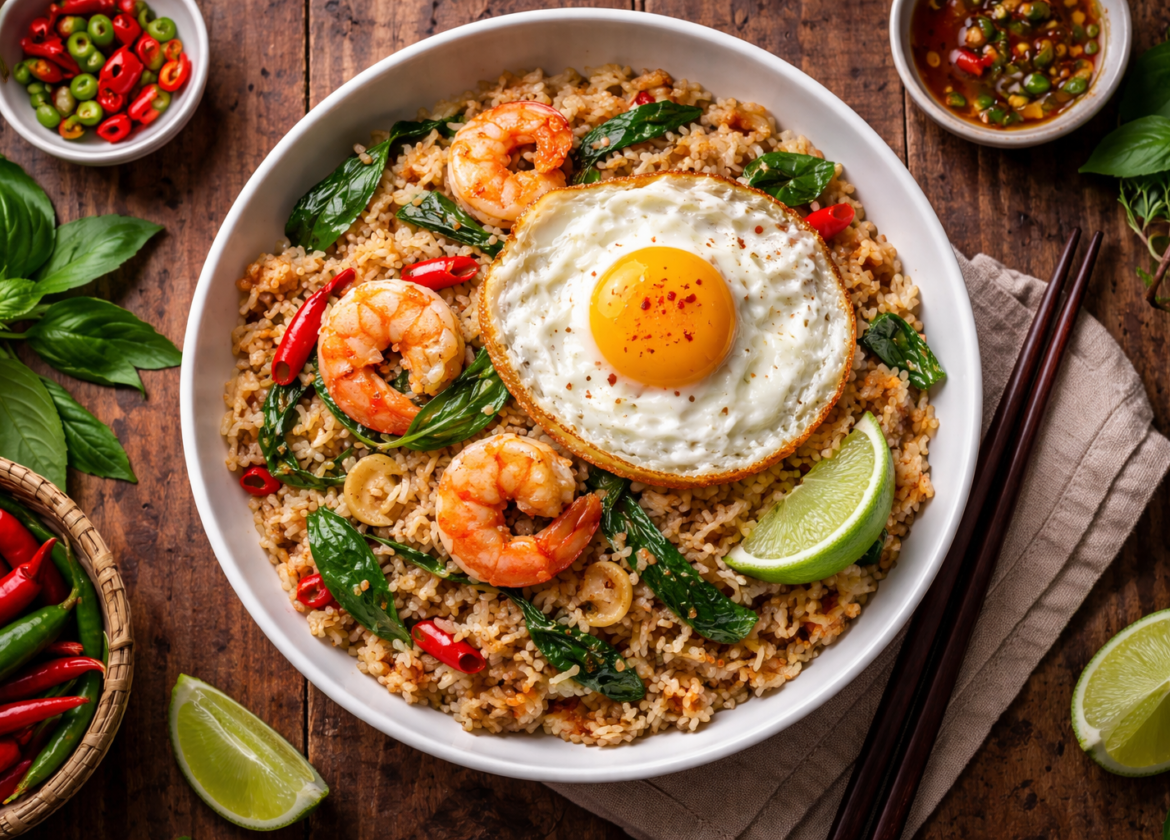
- Impressive Presentation: The addition of a crispy fried egg (Kai Dao) transforms a simple rice dish into a visually striking and complete meal.
Ingredient Choices That Matter
For a truly successful Thai Basil Fried Rice Recipe, specific ingredient selections are vital.
- The Rice: Use Jasmine Rice. It must be day-old and cold. Freshly cooked rice contains too much moisture, which leads to a gummy, clumped texture during stir-frying.
- The Basil: Authentic recipes use Holy Basil (Kaphrao), which has a peppery, clove-like flavor. If unavailable, Thai Basil (Horapha) is the standard substitute, offering anise or licorice notes. Mediterranean sweet basil should only be a last resort.
- The Chilies: Thai Bird’s Eye Chilies provide the characteristic sharp heat. If you prefer less spice, deseed the chilies or substitute with Serrano peppers.
- The Umami Base: A combination of Oyster Sauce, Fish Sauce, and Dark Soy Sauce creates the necessary depth. Dark soy sauce is primarily used for its rich, caramel color and subtle sweetness.
Equipment That Improves Accuracy
While you can make a Thai Basil Fried Rice Recipe in a standard skillet, certain tools provide more consistent results.
- Carbon Steel Wok: A wok allows you to toss the ingredients quickly over high heat, ensuring even cooking and preventing the rice from sticking.
- Mortar and Pestle: This is the traditional way to crush garlic and chilies together. Pounding these aromatics into a coarse paste releases more essential oils than simple mincing.
- High-Heat Spatula: A metal or high-temp silicone spatula allows you to scrape the bottom of the pan vigorously to prevent the sugars in the sauce from burning.
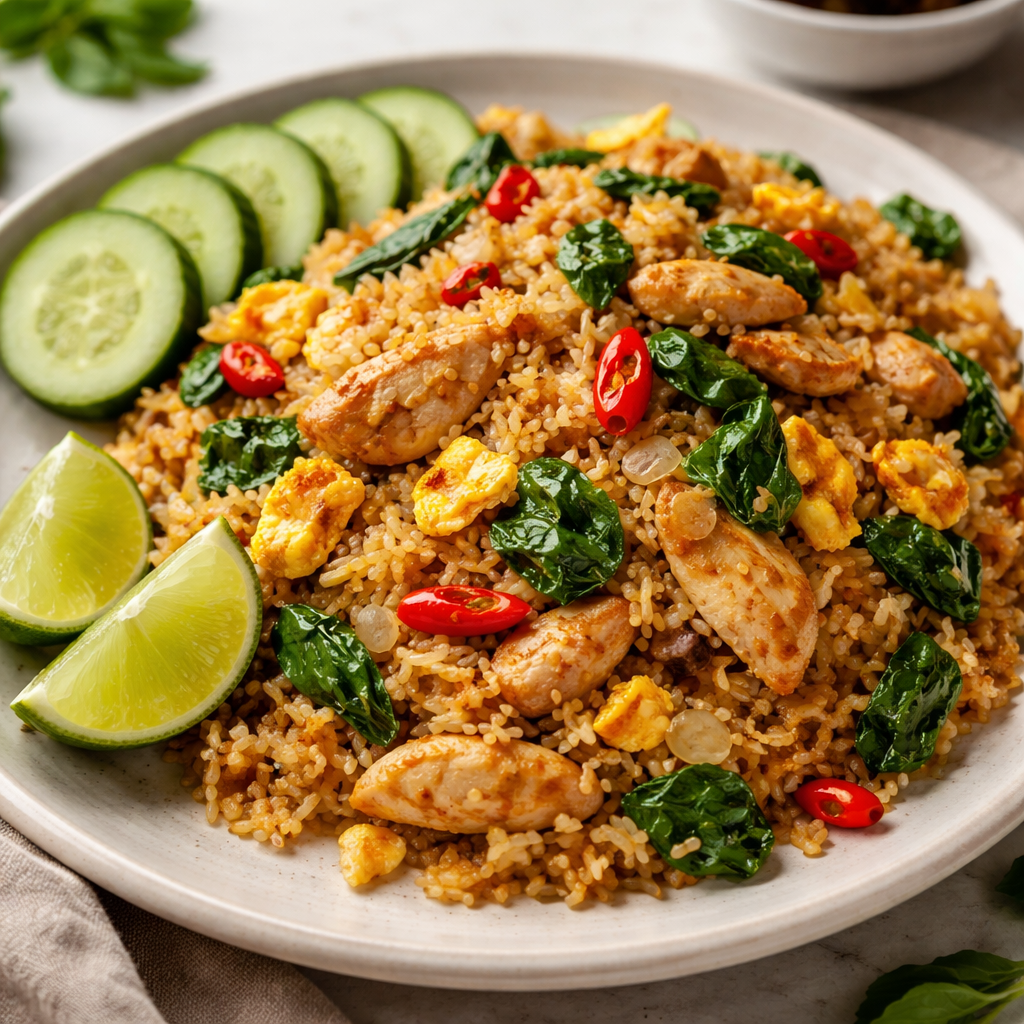
Time and Temperature Planning
Stir-frying is a high-speed process. To prevent errors, follow this timeline:
- Mise en Place (15 Minutes): All ingredients must be chopped, measured, and placed in bowls near the stove. There is no time to prep once the heat is on.
- The Sizzle (1–2 Minutes): Sautéing aromatics until fragrant but not burnt.
- The Stir-Fry (5–7 Minutes): Tossing the protein and rice over high heat.
- The Finish (30 Seconds): Folding in the basil leaves at the very end to prevent them from turning bitter or black.
Step-by-Step Thai Basil Fried Rice Recipe
1. The Aromatic Paste
Using a mortar and pestle, crush 5 cloves of garlic and 2–5 Thai chilies into a coarse paste. If you do not have a mortar, mince them as finely as possible.
2. The Stir-Fry Sauce
In a small bowl, whisk together 1.5 tablespoons of oyster sauce, 1 tablespoon of fish sauce, 1 teaspoon of dark soy sauce, and 1 teaspoon of palm sugar (or brown sugar).
3. Searing the Protein
Heat 2 tablespoons of neutral oil in a wok over high heat. Add the aromatic paste and stir-fry for 30 seconds. Add your protein (minced chicken, shrimp, or tofu) and cook until browned and nearly cooked through.
4. Toasting the Rice
Add 3 cups of cold, day-old jasmine rice. Use the back of your spatula to break up any clumps. Spread the rice in a thin layer and let it sit for 30 seconds to “toast” before tossing.
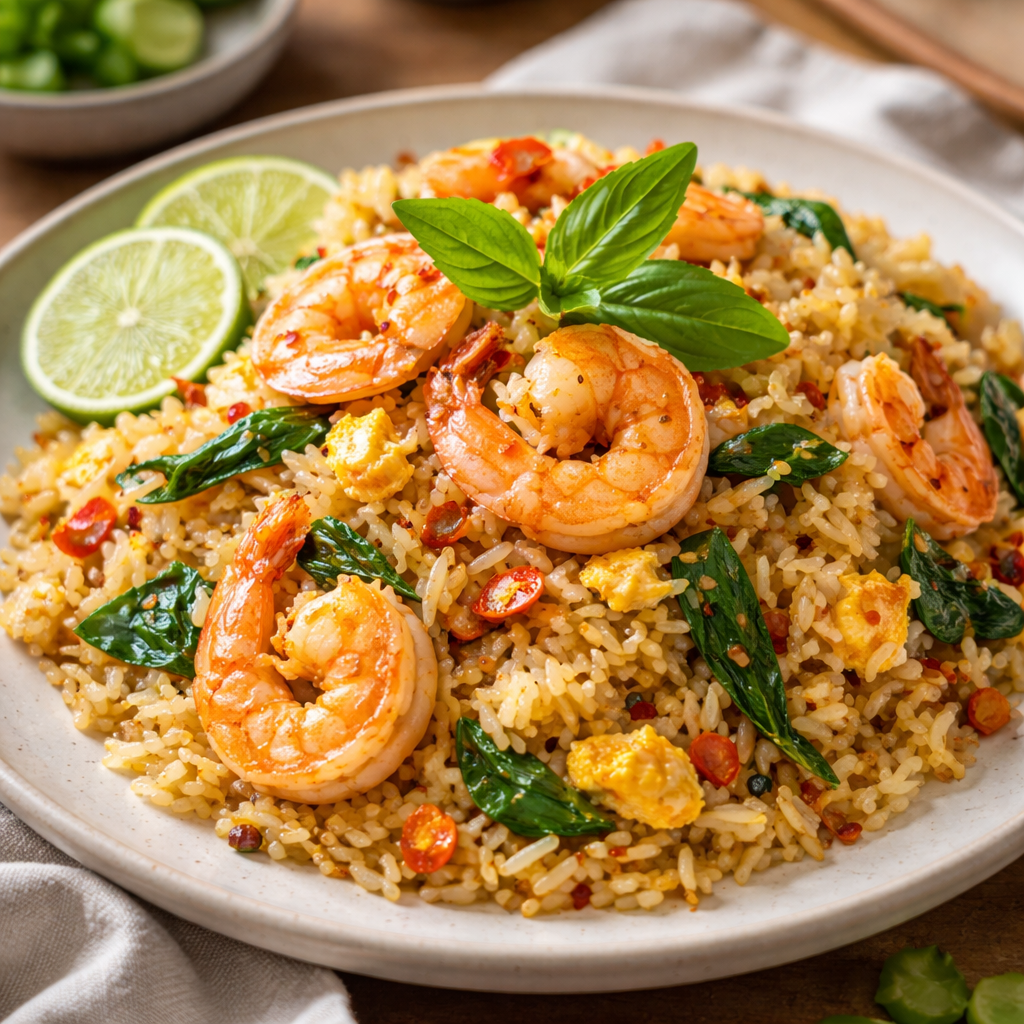
5. Integrating the Flavors
Pour the sauce mixture over the rice. Stir-fry vigorously for 2 minutes until every grain is coated and the rice begins to pop and sizzle.
6. The Basil Finish
Turn off the heat. Add 1 packed cup of fresh basil leaves. Toss gently until the leaves are just wilted. The residual heat is sufficient to release the basil’s aroma without destroying its color.
User Mistakes and Fixes
Many home versions of the Thai Basil Fried Rice Recipe fall short due to a few common errors:
- Mistake: Mushy Rice.
- Fix: You likely used fresh rice. If you must use fresh rice, spread it on a baking sheet and place it in the freezer for 15 minutes to dry out the exterior of the grains.
- Mistake: Burnt Garlic.
- Fix: Garlic burns quickly at high temperatures. Add your protein immediately after the garlic becomes fragrant to lower the pan’s temperature slightly.
- Mistake: Lack of Color.
- Fix: Ensure you are using Dark Soy Sauce. Regular soy sauce provides salt but will not give the rice that deep, golden-brown restaurant appearance.
- Mistake: Overcooked Basil.
- Fix: Always add the basil after turning off the heat. High heat for too long destroys the delicate oils that give the dish its signature scent.
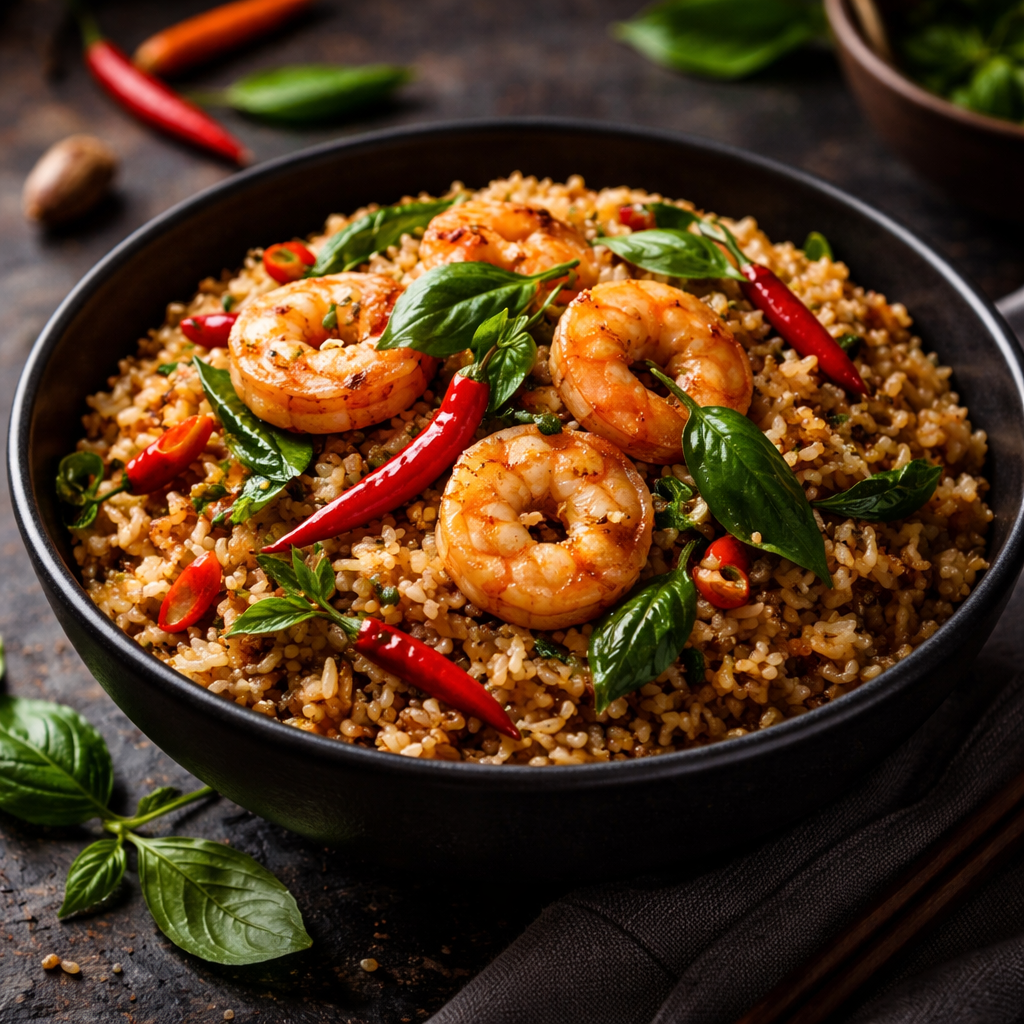
Thai Basil Fried Rice Recipe FAQ
Q: Can I make this recipe vegetarian? A: Yes. Substitute the oyster sauce with vegetarian mushroom sauce and the fish sauce with a high-quality light soy sauce or sea salt.
Q: How many calories are in a serving? A: A typical serving of Thai Basil Fried Rice contains approximately 350–500 calories, depending on the amount of oil and protein used. Adding a fried egg adds roughly 90 calories.
Q: What is the best way to reheat leftovers? A: Reheat in a skillet over medium heat with a teaspoon of water to restore moisture. Avoid the microwave if possible, as it can make the rice rubbery.
Q: Can I use brown rice? A: You can, but the texture will be significantly chewier and the rice will not absorb the sauce as effectively as jasmine rice.
By mastering these techniques, you ensure that your Thai Basil Fried Rice Recipe delivers a perfect balance of savory umami and fresh herbal notes every time.
Quick Cuban Rice Recipe Perfect for Dinner
The Best Shrimp with Rice Recipes for Family Dinners
Easy Spinach Rice Recipe – Healthy & Flavorful
Easy French Onion Rice Recipe – Rich & Savory